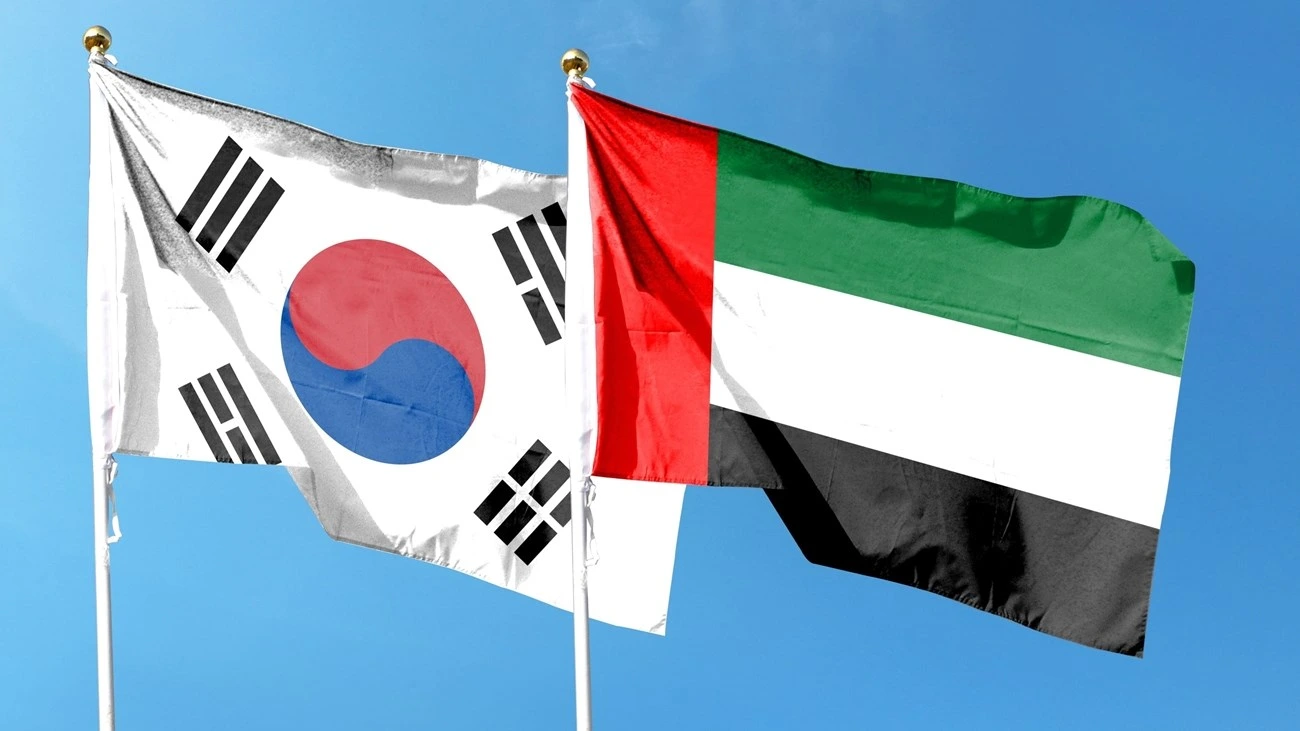
The United Arab Emirates and South Korea have officially activated their Comprehensive Economic Partnership Agreement (CEPA), eliminating or reducing tariffs on 91.2% of traded goods and services over the next decade. The deal — South Korea’s first free trade pact with any Middle Eastern nation — was first agreed in October 2023 after three years of negotiations and formally signed in May 2024. South Korea’s National Assembly ratified the agreement on March 31, 2026, completing the domestic procedures needed for implementation. The CEPA is set against the backdrop of a rapidly expanding bilateral relationship that now spans defence cooperation worth $65 billion in joint projects, collaboration on the UAE’s Stargate AI data centre campus, and plans to jointly export nuclear energy technology to third countries.
Markets move fast; don’t get left behind. We’ve paired the Serrari Group Market Index with a curated Marketplace and a comprehensive Wealth Builder Platform to ensure you have the data—and the skills—to act on it.
Key Overview
- Tariff elimination: Duties on 91.2% of traded goods and services will be reduced or removed over 10 years, covering Korean exports such as foodstuffs, cosmetics, automobiles, and defence products.
- Crude oil impact: South Korea’s existing 3% tariff on UAE crude oil imports will be phased out entirely over a decade.
- Bilateral trade base: Non-oil trade between the two nations reached $5.3 billion by end of 2022, with total bilateral trade volumes hitting $20.8 billion.
- Investment pipeline: The two countries are pursuing cooperation projects valued at more than $65 billion across defence, investment, and technology.
- Strategic firsts: This is South Korea’s first trade pact with a Gulf Cooperation Council or Middle East and North Africa country, and the UAE’s latest activation in its growing CEPA programme of 27 agreements.
A Historic First for Both Nations
The activation of the UAE-South Korea CEPA marks a watershed moment in Middle Eastern trade diplomacy. For South Korea, it represents the country’s first ever free trade agreement with a nation in the Gulf Cooperation Council or the broader Middle East and North Africa region. For the UAE, it is another milestone in an ambitious programme of bilateral trade deals that has already produced 27 signed agreements with partners across Asia, Africa, Europe, and Latin America.
The agreement’s journey to activation was not instantaneous. Negotiations between Abu Dhabi and Seoul began in October 2021 and concluded two years later. The deal was formally signed during UAE President Sheikh Mohamed bin Zayed Al Nahyan’s state visit to Seoul in May 2024 — the first by a sitting Emirates leader. South Korea’s National Assembly then ratified the agreement on March 31, 2026, after the ratification bill had cleared the Foreign Affairs and Unification Committee earlier that month. South Korea’s government subsequently notified the UAE that all domestic procedures required for implementation had been completed.
What the CEPA Covers: Tariffs, Market Access, and Regulatory Alignment
At its core, the agreement eliminates or reduces tariffs on 91.2% of traded goods and services between the two economies. This phased liberalisation will unfold over the next 10 years, progressively lowering barriers across a wide spectrum of products.
For South Korean exporters, the deal opens up significant new opportunities. Key product categories that stand to benefit include foodstuffs, cosmetics, beauty products, automobiles, and defence goods. South Korea’s defence industry in particular is expected to gain substantially, given the broader context of tens of billions of dollars in joint defence projects between the two countries.
On the UAE side, the most significant tariff impact concerns crude oil. South Korea currently imposes a 3% tariff on crude imports from the UAE, and under the CEPA, this duty will be gradually reduced to zero over the next decade. Given that the UAE is one of South Korea’s largest suppliers of crude oil and liquefied natural gas, this reduction is expected to deliver meaningful savings for Korean energy importers and refiners.
Beyond tariffs, the agreement addresses non-tariff barriers, improves regulatory alignment between the two countries, and establishes a structured framework for investment and collaboration across priority sectors. These include renewable energy, healthcare, advanced technology, food security, intellectual property, and information and communications technology.
Building on a Rapidly Expanding Bilateral Relationship
The CEPA does not exist in a vacuum. It sits atop a bilateral relationship that has deepened dramatically over the past several years, driven by high-level political engagement and a growing web of commercial and strategic interests.
The UAE and South Korea first established diplomatic relations in 1980. By 2022, non-oil bilateral trade had reached $5.3 billion, reflecting growth of over 14% compared to 2021. Total bilateral trade volume — including oil — reached $20.8 billion. The UAE is currently South Korea’s second-largest trade partner in the Arab world, while South Korea ranks as the UAE’s 11th-largest non-Arab Asian trading partner.
In February 2026, the relationship took another leap forward when the two countries announced cooperation projects worth more than $65 billion. This includes approximately $35 billion in defence industry cooperation — covering design, training, maintenance, and repair — and $30 billion in broader investment cooperation. The UAE had previously pledged to invest around $30 billion in South Korea during President Yoon Suk-yeol’s state visit to Abu Dhabi in January 2023, and this framework is designed to help implement that commitment while also financially backing Korean companies entering the Gulf market and expanding jointly into third-country markets.
Context is everything. While you follow today’s updates, use the Serrari Group Market Index and Marketplace to spot emerging shifts. Need to sharpen your edge? Our Wealth Builder Platform turns these insights into a professional-grade strategy.
Nuclear Energy: The Foundational Partnership
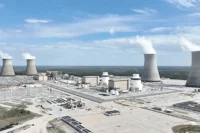
One of the most tangible symbols of the UAE-South Korea relationship is the Barakah nuclear power plant in Abu Dhabi’s Al Dhafra region. Built by a consortium led by Korea Electric Power Corporation (KEPCO), Barakah is the first commercial nuclear power station in the Arab world.
The plant comprises four APR1400 nuclear reactors with a total installed capacity of 5.6 gigawatts and generates 40 terawatt-hours of electricity annually, meeting approximately 25% of the UAE’s electricity needs. The fourth and final unit entered commercial operation in September 2024. Beyond electricity generation, the plant prevents an estimated 22.4 million tonnes of annual carbon emissions, contributing significantly to the UAE’s 2030 decarbonisation commitments.
With the CEPA now in force, the two countries intend to leverage this foundation to pursue joint nuclear energy exports. During the November 2025 summit between South Korean President Lee Jae-myung and UAE President Sheikh Mohamed, both leaders agreed to develop a cooperative model to jointly enter global nuclear markets based on the Barakah experience. Cooperation will extend to nuclear fuel supply, plant maintenance, the integration of artificial intelligence into operations, and workforce development.
Artificial Intelligence and the Stargate Connection
Perhaps the most forward-looking dimension of the bilateral relationship is their joint work in artificial intelligence. South Korea has agreed to participate in the UAE’s Stargate project, one of the world’s largest AI infrastructure initiatives.
The Stargate UAE campus, being developed by Khazna Data Centres — a unit of Abu Dhabi AI firm G42 — in partnership with OpenAI, Oracle, Nvidia, Cisco, and SoftBank, will span 19.2 square kilometres in Abu Dhabi. The project is expected to cost more than $30 billion and will feature a maximum capacity of five gigawatts. The first phase is expected to be completed in the third quarter of 2026.
South Korean companies are set to serve as priority partners in the project, with opportunities spanning energy infrastructure, batteries, climate-tech, semiconductor supply chains, and AI startups. The initial phase alone involves investment exceeding KRW 30 trillion (approximately $20 billion), according to South Korea’s presidential secretary for future AI strategy. The two countries have also signed a memorandum of understanding to expand cooperation across the AI sector, including exchanges among research institutions, support for private-sector engagement, and the establishment of a bilateral AI policy council.
The UAE’s Broader CEPA Strategy
The South Korea deal fits within the UAE’s wider trade liberalisation strategy, which has become one of the most ambitious in the world. Since launching its CEPA programme in 2021, the UAE has signed agreements with 27 countries. Ten of these — with India, Indonesia, Israel, Turkey, Cambodia, Georgia, Costa Rica, Mauritius, Serbia, and Jordan — are already operational.
The programme has delivered measurable results. In 2024, the UAE’s non-oil foreign trade reached a record AED 3 trillion ($816.7 billion), growing 14.6% year-on-year. Non-oil exports to CEPA partner nations reached AED 135 billion, an increase of 42.3% over the previous year and accounting for 24% of total non-oil exports.
By 2025, the UAE had already smashed its own targets. Non-oil foreign trade surpassed $1 trillion (AED 3.8 trillion) — a milestone originally targeted for 2031, achieved five years ahead of schedule. Non-oil exports alone reached AED 813.8 billion, exceeding targets by AED 13.8 billion and growing more than 45.5% from the previous year.
The UAE’s trade minister, Dr Thani Al Zeyoudi, has described the CEPA programme as central to the country’s efforts to cement its position as a global centre for business and to stimulate long-term, sustainable economic growth. Additional negotiations are underway or concluded with countries including Japan, Pakistan, Thailand, the Philippines, and the Mercosur bloc nations in South America.
What the Deal Means for South Korea’s Trade Landscape
For South Korea, the CEPA with the UAE addresses a significant gap in its free trade network. As of early 2025, South Korea had 21 FTAs in effect with 59 countries, covering 85% of global GDP. However, none of those agreements extended to the oil-rich Gulf region, which remains a critical source of energy imports and a growing market for Korean manufactured goods, technology, and services.
The deal is expected to strengthen East-West supply chains and enhance two-way foreign direct investment. Industry analysts have noted that the agreement could promote collaborative research and knowledge exchange across a diverse range of sectors, including advanced manufacturing, green economy initiatives, space technology, and tourism.
South Korea is also negotiating FTAs with several other partners, including Thailand, Mongolia, Bangladesh, and Serbia, while working to upgrade existing agreements with India, Chile, and the United Kingdom. The UAE CEPA thus represents one part of a broader push by Seoul to expand and diversify its trade relationships at a time of shifting global supply chains and growing geopolitical uncertainty.
Implications for the Private Sector
The practical impact of the CEPA will be felt most directly by businesses operating in both countries. For Korean firms, reduced tariffs on consumer goods, cosmetics, and food products make the UAE a more attractive export destination — particularly as the Emirates continues to build out its retail and hospitality sectors. Korean defence manufacturers stand to benefit from the structured framework the CEPA provides, especially given the $35 billion in defence cooperation already on the table.
For UAE-based businesses and multinationals operating out of the country’s extensive network of free zones, the agreement offers improved access to South Korea’s advanced technology ecosystem, its semiconductor supply chains, and its sophisticated consumer market. The deal also aligns with the UAE’s strategy of positioning itself as a logistics and re-export hub connecting Asian manufacturing centres with markets across the Middle East, Africa, and South Asia.
South Korea’s export credit agency has also committed $2 billion in financing to the Abu Dhabi National Oil Company (ADNOC), further underscoring the depth of commercial engagement between the two economies.
Looking Ahead
The activation of the UAE-South Korea CEPA is not an endpoint but rather the beginning of a new phase. Both governments have indicated that an economic cooperation committee will be established to oversee implementation and identify further areas of collaboration. Senior UAE official Khaldoon Khalifa Al Mubarak, chairman of Abu Dhabi’s Executive Affairs Authority, was expected to visit South Korea in the spring of 2026 to continue consultations on follow-up measures.
With its combination of tariff liberalisation, regulatory alignment, and strategic cooperation in cutting-edge sectors like AI, nuclear energy, and defence, the CEPA positions both nations to capitalise on each other’s strengths. For the UAE, it brings a technologically advanced partner into its expanding trade network. For South Korea, it opens a gateway to the Gulf and the broader Middle East — a region where Korean culture, technology, and industry are enjoying growing popularity and demand.
As global trade patterns continue to shift amid tariff uncertainty and supply chain restructuring, partnerships like this one offer a template for how bilateral trade agreements can go beyond simple market access to build deep, multidimensional economic relationships that span energy, technology, defence, and innovation.
Your financial future isn’t something you wait for—it’s something you build.
The real question is: when do you begin?
Move beyond simply staying informed.
Navigate the markets with clarity—track trends through the Serrari Group Market Index, uncover opportunities in the Serrari Marketplace, and build practical knowledge with our Curated Wealth Builder Platform.
Stay connected to what truly matters.
Get daily insights on macro trends and financial movements across Kenya, Africa, and global markets—delivered through the Serrari Newsletter.
Growth opens doors.
Advance your career through professional programs including ACCA, HESI A2, ATI TEAS 7 , HESI EXIT , NCLEX – RN and NCLEX – PN, Financial Literacy!🌟—designed to move you forward with confidence.
See where money is flowing—clearly and in real time.
Track Money Market Funds, Treasury Bills, Treasury Bonds, Green Bonds, and Fixed Deposits, alongside global and African indexes, key economic indicators, and the evolving Crypto and stablecoin landscape—all within Serrari’s Market Index.