Nigeria’s Dangote Refinery has recorded a 770% surge in jet fuel exports over the past two years, climbing from roughly 18,000 barrels per day in April 2024 to a record 158,000 bpd in April 2026, according to shipment data from analytics firm Kpler. The explosive growth has been driven by rising global aviation fuel demand and a geopolitical reconfiguration of energy supply chains, as Middle East disruptions linked to the Iran War have made traditional Gulf-to-Europe shipping routes longer, costlier, and riskier. Europe has emerged as the largest destination, receiving 70,000 bpd in April 2026 — up from zero two years earlier — while African regional exports rose 283% to 69,000 bpd over the same period. Separately, Aliko Dangote’s proposal to build a 650,000 bpd refinery in East Africa has drawn criticism from the World Bank and IMF, igniting a fierce debate over Africa’s industrialisation ambitions and the role of international lenders in shaping the continent’s energy future.
Markets move fast; don’t get left behind. We’ve paired the Serrari Group Market Index with a curated Marketplace and a comprehensive Wealth Builder Platform to ensure you have the data—and the skills—to act on it.
Key Overview
- Export surge: Jet fuel exports grew 770% in 24 months, from 18,000 bpd to a record 158,000 bpd, according to Kpler data.
- European pivot: Exports to Europe reached 70,000 bpd in April 2026, up from zero in April 2024 and 30,000 bpd in April 2025.
- African market growth: Intra-African exports rose 283% to 69,000 bpd, reducing dependence on imports from the Mediterranean and Asia.
- Rapid scaling: Total exports nearly doubled in four months — from 81,000 bpd in December 2025 to 158,000 bpd in April 2026 — as Middle East tensions intensified.
- East Africa plan: Dangote has pledged to build a 650,000 bpd refinery at Tanga Port, Tanzania, within four to five years, backed by Kenya, Uganda, South Sudan, and the DRC.
- NNPC milestones: Crude oil trading hit a five-year high of 1.71 million bpd, with subsidiary NEPL reaching an all-time peak of 365,000 bpd in December 2025.
From Regional Startup to Global Supplier
In just 24 months, the Dangote Petroleum Refinery has undergone what industry analysts describe as a seismic transformation — evolving from a facility running trial export shipments to a dominant global supplier of aviation fuel. The Kpler data tells the story in stark numbers: when jet fuel exports began in April 2024, the refinery shipped roughly 18,000 bpd, focused entirely on regional African markets with no deliveries to Europe.
By April 2025, exports had begun diversifying, with Europe receiving around 30,000 bpd and African markets absorbing growing volumes. But it was the period between December 2025 and April 2026 that marked the refinery’s most dramatic expansion. As the Iran War disrupted maritime traffic through the Strait of Hormuz and the Red Sea remained a high-risk zone for tankers, total exports nearly doubled from 81,000 to 158,000 bpd — a 95% expansion in just four months.
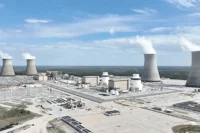
The $20 billion facility, located in the Lekki Free Zone near Lagos, has a nameplate capacity of 650,000 barrels per day, making it one of the largest single-train refineries in the world. The Nigerian National Petroleum Company Limited retains a 7.25% equity stake and participates in crude-for-naira supply arrangements that help feed the refinery with domestic crude.
Why Europe Turned to West Africa
The most significant shift in the Kpler data is the dramatic emergence of Europe as Dangote’s largest export destination. In April 2024, European-bound jet fuel shipments from the refinery were zero. By April 2025, they had reached 30,000 bpd. By April 2026, that figure had grown to approximately 70,000 bpd — a 133% increase in 12 months alone.
Energy traders attribute the pivot to a fundamental reconfiguration of logistics. With the Red Sea remaining a contested zone and the Strait of Hormuz effectively closed to commercial traffic since early March 2026, the traditional route from the Persian Gulf to Rotterdam has become significantly longer and more expensive. Tankers must now take longer diversionary routes, facing elevated freight costs and soaring maritime insurance premiums.
By contrast, a tanker from Lagos can reach European ports in roughly half the time without navigating contested waters. For European airlines and fuel distributors seeking to de-risk their supply chains, the West African alternative has become both cheaper and more reliable. Earlier in April, Bloomberg reported that jet fuel shipments from the refinery to Europe had already reached 50,000 bpd, a record that has since been surpassed.
The irony is not lost on observers. As several commentators have noted, Europe — which for decades purchased Nigerian crude oil, refined it in European facilities, and sold the finished products back to Nigeria at a premium — is now buying refined products directly from an African refinery. The reversal underscores how quickly geopolitical disruptions can reshape established trade flows.
Context is everything. While you follow today’s updates, use the Serrari Group Market Index and Marketplace to spot emerging shifts. Need to sharpen your edge? Our Wealth Builder Platform turns these insights into a professional-grade strategy.
Africa’s Growing Self-Sufficiency
While Europe has captured the headlines, the growth in intra-African exports is equally significant for the continent’s long-term energy security. Shipments to African markets rose from 18,000 bpd in April 2024 to 69,000 bpd by April 2026, a 283% increase. Within the most recent 12-month period alone, from April 2025 to April 2026, exports to African neighbours grew by approximately 115%.
This trend is reducing African airlines’ and fuel marketers’ traditional dependence on imports from Europe, the Mediterranean, and Asia. By providing a localised source of aviation fuel, the refinery has helped insulate regional carriers from the worst logistics-induced price spikes seen in other parts of the world during the current crisis.
The development comes at a critical time. Several East and Southern African countries depend on the Middle East for as much as 75% of their fuel imports. Over the past decade, refineries across the continent — from Mombasa to Lusaka, Durban, and Limbe — have either shut down or scaled back operations, deepening the region’s reliance on imported refined products and leaving it acutely vulnerable to exactly the kind of supply shock now playing out.
Exports to the Americas showed a more volatile pattern, peaking at about 55,000 bpd in February 2025 before easing to approximately 14,000 bpd in April 2026. Analysts say the decline reflects a strategic reallocation of volumes towards higher-margin European contracts rather than any loss of market competitiveness. Other shipments to South America and parts of Asia were estimated at around 19,000 bpd.
NNPC Reports Its Own Milestones
Running parallel to the Dangote export story, the Nigerian National Petroleum Company Limited released its One-Year Mandate Report covering April 2025 to April 2026, highlighting a five-year high in crude oil trading at 1.71 million bpd.
NNPC’s upstream subsidiary NEPL recorded an all-time peak production of 365,000 bpd in December 2025. The company also announced the resolution of the long-standing OPL 245 dispute, converting the asset into a new Production Sharing Contract to unlock further investment. In the gas sector, NNPC completed critical sections of the Ajaokuta-Kaduna-Kano gas pipeline and reported national gas supply of 7.5 billion standard cubic feet per day.
NNPC Group CEO Bashir Bayo Ojulari described the period as one marked by stronger transparency, operational discipline, and internal reforms — a signal that Nigeria’s state oil company is positioning itself as a more credible partner for both domestic and international stakeholders.
The East Africa Refinery Debate
While the Dangote Refinery’s export performance makes the case for large-scale African refining, a parallel controversy has erupted over plans to replicate that model in East Africa.
At the Africa We Build Summit in Nairobi on 23 April 2026, Aliko Dangote announced that his group was ready to construct a 650,000 bpd refinery in East Africa within four to five years. The proposed facility would be located at Tanga Port in northeastern Tanzania, where the East African Crude Oil Pipeline terminates. It would process crude from the Democratic Republic of Congo, Kenya, South Sudan, and Uganda, with a pipeline from Tanga to Mombasa feeding into the existing Kenya Pipeline to distribute refined products across the region.
Kenyan President William Ruto and Ugandan President Yoweri Museveni both publicly endorsed the initiative. Ruto framed the project as central to regional energy security, stating that East African nations had made the decision to pursue a joint refinery rather than allowing crude to be exported unprocessed. Museveni confirmed that Uganda would contribute surplus crude from its own domestic production, while maintaining plans for a smaller 60,000 bpd facility at Hoima for internal consumption.
However, the proposal has run into reported opposition from the World Bank and IMF. According to African industry leaders and media reports, the institutions have raised concerns about monopoly risks associated with a single entity controlling such a large share of regional refining capacity. Neither the World Bank nor the IMF has issued a formal public statement on the proposal, and the absence of an official denial has only deepened suspicion among critics.
Africa’s Industrialisation Debate
The controversy has ignited a broader debate about Africa’s industrialisation prospects and the role of international financial institutions. Critics argue that concerns over monopoly contrast sharply with the longstanding presence of major foreign energy companies operating refineries across the continent without similar objections. They also point to a historical pattern in which international lenders have favoured smaller refinery projects that often struggled commercially, leaving Africa dependent on imported refined products.
Separately, the World Bank recently faced backlash in Nigeria after publishing a policy report recommending the reopening of petrol imports to restore competition. Dangote Industries responded sharply, arguing that importation without enforceable quality standards would invite substandard fuel and undercut domestic refining capacity. The Bank subsequently removed the report from its website and shifted its emphasis, suggesting that any move towards a competitive retail market should follow a “well-sequenced implementation strategy”.
For proponents of the East Africa refinery, the timing of the Dangote Refinery’s export success reinforces their case. The facility that was built outside the traditional Western lending system — financed with personal and syndicated private capital — is now serving the very European markets that once sold Nigeria its own refined oil. If a similar facility can be built in East Africa, the argument goes, the region could transform itself from one of the world’s most energy-import-dependent corridors to a self-sufficient refining hub.
Questions remain about crude supply. Even with all four contributing countries producing oil, the combined output from Uganda, South Sudan, the DRC, and Kenya would total roughly 170,000 barrels per day — less than half the planned daily capacity of a 650,000 bpd facility. Supplementary crude would need to be sourced from international markets, adding cost and complexity.
But with the Iran War demonstrating in real time how devastating energy import dependence can be, the political momentum behind the project appears strong. As analysts have noted, the debate raises fundamental questions about who gets to build at scale in Africa, who finances it, and whether international institutions are supporting or obstructing the continent’s quest for energy security and industrial sovereignty.
Your financial future isn’t something you wait for—it’s something you build.
The real question is: when do you begin?
Move beyond simply staying informed.
Navigate the markets with clarity—track trends through the Serrari Group Market Index, uncover opportunities in the Serrari Marketplace, and build practical knowledge with our Curated Wealth Builder Platform.
Stay connected to what truly matters.
Get daily insights on macro trends and financial movements across Kenya, Africa, and global markets—delivered through the Serrari Newsletter.
Growth opens doors.
Advance your career through professional programs including ACCA, HESI A2, ATI TEAS 7 , HESI EXIT , NCLEX – RN and NCLEX – PN, Financial Literacy!🌟—designed to move you forward with confidence.
See where money is flowing—clearly and in real time.
Track Money Market Funds, Treasury Bills, Treasury Bonds, Green Bonds, and Fixed Deposits, alongside global and African indexes, key economic indicators, and the evolving Crypto and stablecoin landscape—all within Serrari’s Market Index.