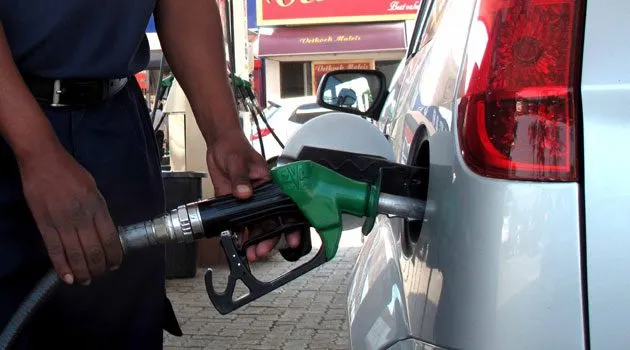
Ghana’s government has announced emergency plans to scrap a basket of fuel taxes and supply-chain charges within a week, in a bid to cushion consumers from steep pump-price increases triggered by the ongoing US-Israeli war on Iran. Government spokesperson Felix Kwakye Ofosu said the measures — adopted at an emergency Cabinet meeting chaired by President John Dramani Mahama — will take effect ahead of the next pricing window that opens on 16 April 2026, run for an initial four weeks, and be reviewed thereafter based on global crude prices and developments in the Middle East. The National Petroleum Authority (NPA) had earlier raised mandatory minimum price floors for the 1–15 April window, pushing petrol up roughly 15% to 13.30 cedis per litre and diesel up 19% to 17.10 cedis — among the sharpest fortnightly increases in recent years. Economists have praised the relief measure but warn it could strain Ghana’s IMF-backed fiscal consolidation programme if crude prices remain elevated for long.
Key Overview
- Petrol up 15% to GH¢13.30 ($1.21) per litre; diesel up 19% to GH¢17.10 ($1.55) in the 1–15 April 2026 pricing window.
- Ghana imports roughly 70% of its refined fuel, leaving the pump heavily exposed to global crude shocks.
- Special Petroleum Tax to be abolished; select customs, excise duties and multiple energy-sector levies to be consolidated or suspended.
- Measures take effect ahead of the 16 April pricing window and will last an initial four weeks, after which Cabinet will review.
- 100 Metro Mass Transit buses to be fast-tracked onto high-demand routes at below private operator fares.
- Ghana’s 2026 budget was built on a crude benchmark of $76.22/barrel; March averaged above $100/barrel, generating windfall revenue estimated at over GH¢8 billion.
- Fuel taxes and margins make up roughly 26.5% to 51% of Ghana’s pump price, depending on the measure used.
- The intervention comes against the backdrop of an IMF-supported programme and unresolved power-sector debts.
Markets move fast; don’t get left behind. We’ve paired the Serrari Group Market Index with a curated Marketplace and a comprehensive Wealth Builder Course to ensure you have the data—and the skills—to act on it.
An Emergency Cabinet Response to an Imported Crisis
Ghana’s move came together quickly. At an emergency Cabinet meeting on 9 April 2026, President Mahama directed Finance Minister Dr Cassiel Ato Forson and Energy Minister John Jinapor to engage stakeholders and implement a temporary reduction in selected taxes and margins on petroleum products. The tight timeline — measures effective before the next pricing window opens on 16 April — reflects how quickly political pressure has mounted since the 1–15 April window showed the full impact of the Middle East war on Ghanaian wallets.
“We are taking immediate steps to reduce fuel prices and ease transport costs for Ghanaians,” Kwakye Ofosu told reporters after the Cabinet meeting, framing the intervention as a targeted fiscal response rather than a broad subsidy. He confirmed the suspension would last an initial four weeks, after which the government would review the situation. Critically, he attributed the pump-price increases “solely” to the Iran conflict, a framing designed to reassure both voters and IMF programme monitors that the shock was exogenous.
What Exactly Gets Cut
The full list of suspended taxes will be confirmed only after stakeholder consultations in the coming days. But extracts from the Cabinet briefing carried by local broadcasters point to a meaningful package. According to reporting, the measures include the abolition of the Special Petroleum Tax — a long-standing levy that has been a perennial target of protest by drivers and civil-society groups — together with the removal or reduction of certain customs and excise duties associated with petroleum products.
More consequentially, Cabinet is also proposing a temporary restructuring and consolidation of multiple energy-related charges — including the Energy Debt Recovery Levy, Energy Sector Recovery Levy, Delta Fund, Price Stabilisation and Recovery Levy, and Sanitation and Pollution Levy — into a single consolidated Energy Sector Shortfall and Debt Repayment Levy. That restructuring is significant because the Mahama administration introduced the GH¢1-per-litre Energy Sector Shortfall and Debt Repayment Levy through the Energy Sector Levy (Amendment) Act, 2025 (Act 1141), which took effect on 16 July 2025 and doubled levies on petrol, diesel, marine gas oil and naphtha. The levy had been nicknamed the “Dumsor Levy” by critics, referencing Ghana’s persistent power-supply crises.
How much relief those cuts ultimately deliver depends on how many levies are actually removed or reduced and for how long. Fuel taxes and margins have historically represented a substantial share of pump prices in Ghana; the Chamber of Petroleum Consumers notes that fuel taxes alone constitute 26.5% of pump prices, while earlier industry breakdowns from the Chamber of Bulk Oil Distributors suggested taxes, levies and margins together make up 49%–51% of the ex-pump price.
The Price Shock in Context
The scale of Ghana’s April price move is what forced the government’s hand. The National Petroleum Authority raised mandatory minimum price floors for the 1–15 April pricing window, pushing petrol up around 15% to 13.30 cedis ($1.21) per litre and diesel up roughly 19% to 17.10 cedis ($1.55) per litre.
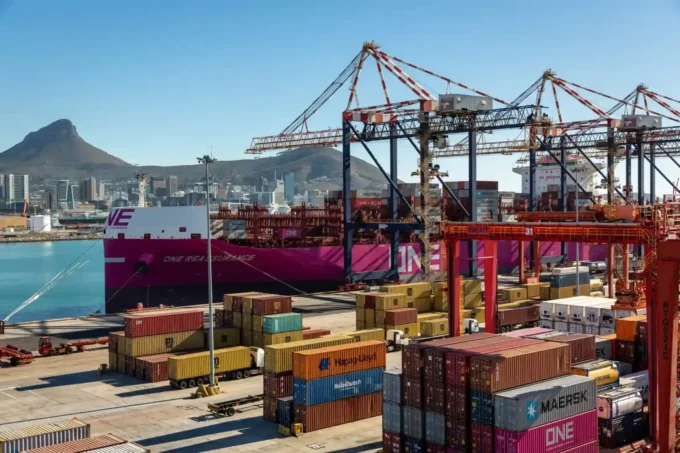
The timing sits squarely within the global oil shock caused by Operation Epic Fury and the subsequent closure of the Strait of Hormuz. Brent crude spent much of March above $100 per barrel and briefly touched $114, a level Ghana’s 2026 budget architects did not anticipate. The country imports about 70% of its refined fuel, leaving its pricing formula tightly coupled to international product markets that have been whipsawed by the Hormuz crisis.
For a country where transport costs feed directly into food inflation and household budgets, the 15–19% jump was politically untenable. Ghana has also been navigating a post-debt-restructuring fiscal recovery under an IMF programme, meaning even modest consumer-price shocks carry outsized political weight.
Context is everything. While you follow today’s updates, use the Serrari Group Market Index and Marketplace to spot emerging shifts. Need to sharpen your edge? Our Wealth Builder Course turns these insights into a professional-grade strategy.
The Windfall Argument
One of the clearest fiscal justifications for the intervention comes from the revenue side of the same Middle East shock. Ghana produces crude oil at the Jubilee, TEN and Sankofa fields, and the 2026 budget was built on a benchmark crude oil price of $76.22 per barrel. With actual prices exceeding $100 per barrel for much of March 2026, former Energy Minister Dr Amin Adam — now in opposition — has argued that the government has been accruing windfall crude export revenue of more than GH¢8 billion, providing fiscal space to absorb a levy reduction without breaching budget targets.
The arithmetic is intuitive: the same geopolitical shock that pushes retail fuel costs up also increases the dollar value of every barrel of crude Ghana exports. Using part of the windfall to cushion consumers arguably restores some fiscal fairness, especially in a country where the upside of high oil prices flows to government coffers while the downside lands on household budgets. Kwakye Ofosu’s argument that “reducing petroleum taxes will not affect the 2026 budget” rests directly on that windfall logic.
The Bus Fleet Play
In parallel with the tax package, Cabinet has directed Transport Minister Joseph Nikpe to fast-track the deployment of 100 newly acquired Metro Mass Transit (MMT) buses onto high-demand routes, with the buses required to charge lower fares than private operators.
The measure is designed to provide immediate relief for commuters. In Ghana’s urban economy, private trotro and taxi fares respond rapidly to pump-price changes, and fare hikes in April have already squeezed household budgets in Accra, Kumasi and Takoradi. Subsidised MMT service, even on a limited number of corridors, offers a circuit-breaker that reduces the dependence on private fare adjustments for short-distance trips — particularly for lower-income workers commuting into city centres.
Economists Split on the Wisdom of Broad Cuts
Not everyone is convinced. Ben Boakye, executive director of the Africa Centre for Energy Policy (ACEP), has warned that removing fuel levies will not deliver lasting relief and could shift costs to consumers through other channels. According to ACEP, more than GH¢20 billion has been raised through levies on petroleum products for the energy sector over the past decade — funds that could otherwise have financed infrastructure to reduce fuel consumption. “In most cases, you are just standing in traffic consuming petrol and diesel, when you could move if we had the highways,” Boakye argued.
Boakye also noted that taxes paid directly to the Ministry of Finance account for about 12–13% of fuel prices, while total margins exceed 25%, pointing to inefficiencies in the pricing structure itself rather than pure taxation as the cost driver. Ghana’s energy-sector debt to independent power producers and fuel suppliers remains a structural drag; cutting the levies that service that debt risks pushing more liabilities onto the central balance sheet.
Joe Jackson of Dalex Finance has voiced similar concerns on local TV panels. “It may give temporary relief, but you are taking away money needed to pay down energy debts and fund essential services, and you may actually drive up food prices if the cedi weakens and import costs rise,” he cautioned on JoyNews.
The IMF Factor
Ghana’s fiscal policy does not operate in a vacuum. The country is under an IMF-supported programme that generally discourages broad, untargeted subsidies. While the Fund has in the past described fuel-levy increases as “prudent” for debt management, a rapid reversal in the opposite direction — even if temporary — raises questions about programme discipline.
Analysts note that the government’s framing of the cuts as “temporary and targeted” is partly a signal to programme monitors: a four-week suspension with a built-in review clause reads differently from a structural giveaway. Whether the IMF and rating agencies accept that distinction will depend on how oil prices, inflation and public finances evolve over the coming month. If Brent drops back toward the $80s on a durable ceasefire, Ghana can comfortably unwind the suspension and restore the levy base. If prices spike back above $100, the fiscal pressure to extend the relief — and the IMF pressure against doing so — will escalate in parallel.
A Country Caught in the Middle
Ghana is far from alone. The Iran conflict has forced governments across Africa to confront uncomfortable trade-offs between consumer relief, energy-sector financing and external programme conditions. For Accra, the particular bind is acute because the country is simultaneously a crude oil exporter and a net importer of refined products — meaning its fiscal upside and its consumer downside from the same crude-price shock land on different parts of the economy.
The policy choice reveals how tight the domestic political space has become. Public pressure to act was substantial in the days before the Cabinet meeting, with the Chamber of Petroleum Consumers Executive Secretary Duncan Amoah urging tax restructuring and civil-society voices warning that further increases could trigger protests. Transport operators had already signalled intentions to raise fares, a move that historically cascades into food-price inflation within days.
What to Watch Ahead of 16 April
The next week will be consequential. Three specific markers will determine whether the intervention delivers meaningful relief or gets overtaken by events.
First, the final list of suspended taxes. If Cabinet confirms abolition of the Special Petroleum Tax and meaningful reductions in customs and excise duties, along with the consolidation of the energy-sector levies, the pass-through to pump prices could exceed GH¢1.50 per litre — a figure that would materially lower the April-16 price floor.
Second, what happens at the margin side. Amoah and others have argued that distribution and retail margins are ripe for trimming, and Cabinet has signalled a willingness to touch those too. Margin reductions would be politically less costly than tax cuts because they hit private intermediaries rather than the state’s debt-service revenues.
Third, the global oil backdrop. If Brent continues to retreat from the $114 late-March peak on back of any durable easing in Hormuz flows, the combination of lower crude and levy cuts could push Ghanaian pump prices below the 1 April level by mid-May. If the ceasefire collapses and Brent reverts toward $115 — the upside scenario in Goldman’s own analysis — even a significant tax cut will only partially offset the pump-price impact.
For now, the government is betting that a temporary, structured four-week intervention can bridge the window between the worst of the oil shock and a global market normalisation. Whether that bet pays off will depend less on what happens at 16 April pricing window and more on what happens in Hormuz over the next fortnight.
Your financial future isn’t something you wait for—it’s something you build.
The real question is: when do you begin?
Move beyond simply staying informed.
Navigate the markets with clarity—track trends through the Serrari Group Market Index, uncover opportunities in the Serrari Marketplace, and build practical knowledge with our Curated Wealth Builder Course.
Stay connected to what truly matters.
Get daily insights on macro trends and financial movements across Kenya, Africa, and global markets—delivered through the Serrari Newsletter.
Growth opens doors.
Advance your career through professional programs including ACCA, HESI A2, ATI TEAS 7 , HESI EXIT , NCLEX – RN and NCLEX – PN, Financial Literacy!🌟—designed to move you forward with confidence.
See where money is flowing—clearly and in real time.
Track Money Market Funds, Treasury Bills, Treasury Bonds, Green Bonds, and Fixed Deposits, alongside global and African indexes, key economic indicators, and the evolving Crypto and stablecoin landscape—all within Serrari’s Market Index.