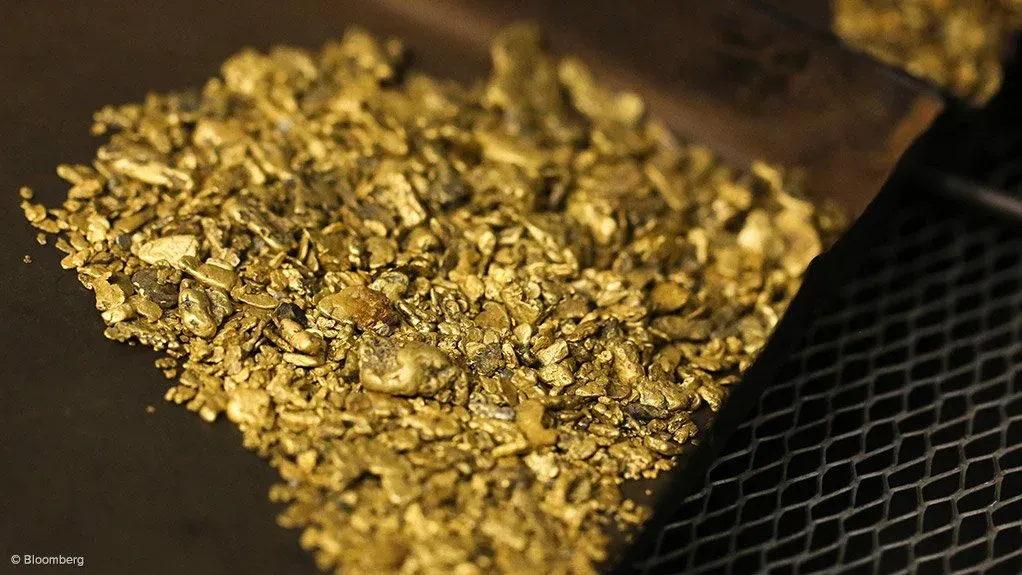
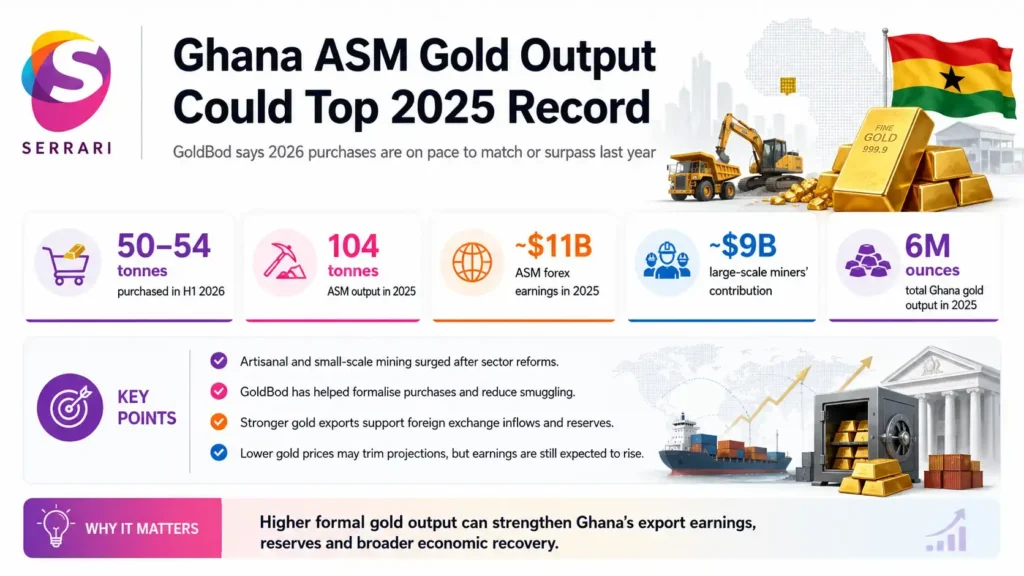
Ghana’s artisanal and small-scale gold mining sector is on course to match or exceed its record 2025 output after the Ghana Gold Board purchased between 50 and 54 metric tonnes during the first half of 2026.
GoldBod Chief Executive Officer Samuel Gyamfi said the current pace of purchases could place annual output above the 104 metric tonnes recorded in 2025, when artisanal and small-scale miners overtook large-scale producers for the first time.
The stronger formal gold trade is expected to support export earnings, foreign-exchange inflows and Ghana’s broader economic recovery. However, lower-than-expected bullion prices have reduced GoldBod’s original revenue projections for 2026.
Key Overview
- GoldBod purchased approximately 50–54 metric tonnes of artisanal and small-scale gold in the first half of 2026.
- The sector produced a record 104 metric tonnes in 2025.
- Artisanal output exceeded large-scale mining production for the first time during 2025.
- GoldBod says the sector generated nearly US$11 billion in foreign exchange last year.
- Large-scale miners contributed about US$9 billion, according to GoldBod.
- Ghana is still expected to earn more from gold exports in 2026 despite weaker prices than initially forecast.
First-Half Purchases Signal Another Record Year
According to the latest GoldBod production update, the state entity purchased between 50 and 54 metric tonnes of gold from artisanal and small-scale miners during the first six months of 2026.
That level represents roughly half of the 104 metric tonnes produced by the sector in the whole of 2025. If purchases continue at a similar pace, annual volumes could match or exceed last year’s record.
The figures should nevertheless be interpreted carefully. GoldBod’s first-half number reflects gold purchased through the official system, while the 2025 figure is described as sector output. Purchases can serve as a strong indicator of formal production, but they may not capture every ounce produced or traded outside authorised channels.
Ghana’s total gold production also reached a record level in 2025. Provisional industry data showed the country produced about six million ounces, with artisanal and small-scale mining contributing approximately 3.1 million ounces and large-scale mines producing around 2.9 million ounces.
GoldBod Reforms Pull Trade Into Formal Channels
The surge follows reforms intended to reduce gold smuggling, centralise purchases and retain more foreign exchange within Ghana’s financial system.
GoldBod was established as the sole authorised buyer and exporter of gold produced by licensed artisanal and small-scale miners. The model replaced a fragmented trading system involving numerous licensed exporters and aggregators.
The government also introduced a national task force to strengthen enforcement against illegal gold trading. By the first five months of 2025, the reformed system had already facilitated 55.7 metric tonnes of exports worth approximately US$5 billion.
Centralising purchases gives the state better visibility over volumes, export proceeds and foreign-currency flows. It can also reduce the opportunity for gold to leave the country without being recorded in official trade statistics.
However, the reforms do not resolve every challenge in artisanal mining. Authorities must still address illegal extraction, environmental degradation, mercury use, unsafe working conditions and encroachment into forests and water bodies.
Context is everything. Stay ahead of shifting trends with today’s market updates, and uncover emerging opportunities using the Serrari Group Market Index and Marketplace. Then, take control of your own financial future by exploring our Money & Life Reset Transformation Blueprint ™ to build stronger habits, create better systems, and design a path toward lasting wealth.
Gold Earnings Support Ghana’s External Position
Gold remains Ghana’s largest export and a critical source of foreign currency. Stronger official exports can increase dollar liquidity, support central-bank reserves and reduce pressure on the cedi.
GoldBod said artisanal and small-scale exports generated nearly US$11 billion in foreign-exchange earnings during 2025, compared with approximately US$9 billion from large-scale producers.
The Bank of Ghana reported that total merchandise exports rose to US$31.25 billion in 2025, driven largely by higher receipts from gold and other major commodities.
These inflows matter because Ghana is recovering from a debt and financial crisis that led to an International Monetary Fund-supported restructuring programme. Strong commodity exports improve the country’s capacity to rebuild reserves, service external obligations and finance imports.
The government has also expanded its domestic gold-purchase strategy. From July 2026, Ghana began purchasing 30% of large-scale miners’ output to strengthen reserves and support local refining.
Lower Gold Prices Temper Revenue Forecasts
Despite stronger volumes, GoldBod’s initial earnings expectations have been reduced by a decline in international bullion prices.
Gyamfi said the board prepared its 2026 forecasts using an average gold price of about US$5,000 per ounce and weekly purchases of around 2.5 metric tonnes. Actual prices have since fallen below that planning assumption.
GoldBod nevertheless expects 2026 export earnings to exceed the previous year because average prices remain higher than in 2025 and purchase volumes are still strong.
The distinction between volume and value is important. Ghana could export more gold while earning less than originally projected if prices remain below GoldBod’s assumptions. Conversely, sustained production and formal purchasing may partially offset weaker prices.
Stronger Oversight Is Needed as Output Expands
Ghana is also pursuing wider mining reforms to increase state revenue, strengthen local participation and curb illegal activity. Cabinet has approved amendments to the mining law that would revise licensing, introduce district mining committees and require community-development agreements.
These changes could improve accountability if they are implemented transparently and consistently. They may also help Ghana increase domestic value addition rather than relying mainly on the export of unrefined gold.
For GoldBod, the immediate challenge is to sustain formal purchases while ensuring that rising volumes come from legally licensed and traceable sources.
If first-half momentum continues, artisanal and small-scale miners could set another production record in 2026. The longer-term economic benefit will depend on whether Ghana can convert those volumes into durable reserves, stable foreign-exchange earnings, stronger environmental controls and broader local development.
Sources: Reuters / Ghana Gold Board / Bank of Ghana / Ghana Chamber of Mines
Your financial future isn’t something you wait for—it’s something you build.
The real question is: when do you begin?
Move beyond simply staying informed.
Navigate the markets with clarity—track trends through the Serrari Group Market Index, uncover opportunities in the Serrari Marketplace, and build practical knowledge with our Curated Wealth Builder Platform.
Stay connected to what truly matters.
Get daily insights on macro trends and financial movements across Kenya, Africa, and global markets—delivered through the Serrari Newsletter.
Growth opens doors.
Advance your career through professional programs including ACCA, HESI A2, ATI TEAS 7 , HESI EXIT , NCLEX – RN and NCLEX – PN, Financial Literacy!🌟—designed to move you forward with confidence.
See where money is flowing—clearly and in real time.
Track Money Market Funds, Treasury Bills, Treasury Bonds, Green Bonds, and Fixed Deposits, alongside global and African indexes, key economic indicators, and the evolving Crypto and stablecoin landscape—all within Serrari’s Market Index.