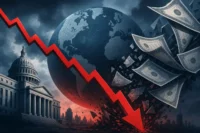

















Germany, Europe’s largest economy and a global industrial powerhouse, is projected to remain the eurozone’s economic underperformer until 2026, according to the European Commission’s Autumn Forecast. The forecast paints a grim picture for Germany, which is expected to face a 0.1% contraction in GDP in 2024, making it the only economy in the eurozone predicted to shrink next year.
The broader eurozone is expected to achieve modest growth of 0.8% in 2024, emphasizing Germany’s lagging performance in the economic bloc. This forecast marks a downward revision for Germany, which was previously projected to experience 0.1% GDP growth in earlier estimates.
Challenges Weighing on Germany’s Economy
The European Commission attributes Germany’s economic struggles to multiple factors, including:
- Weak Global Demand for Industrial Goods
Germany’s export-driven economy has been hit hard by reduced global demand for industrial goods. Key export markets such as China have slowed, dampening demand for German machinery, automobiles, and high-tech products. - High Uncertainty in Consumption and Investment
Rising uncertainty among consumers and businesses has stifled domestic spending and investment. Households are cautious due to persistent inflationary pressures, while businesses face hesitancy amid volatile global markets and geopolitical tensions. - Energy Transition Challenges
Germany’s ambitious energy transition, aimed at reducing reliance on fossil fuels, has led to higher costs for energy-intensive industries. This has reduced competitiveness, particularly in sectors such as chemicals, automotive manufacturing, and heavy industry. - Structural Issues
Long-term structural challenges, including an aging workforce, labor shortages in key sectors, and slow adoption of digital technologies, are also dragging on economic growth.
Economic Outlook Through 2026
Germany’s economic outlook offers a mix of cautious optimism and persistent challenges.
2024
The forecast predicts a contraction of 0.1% in GDP, making Germany the worst-performing economy among the Group of Seven (G7) industrialized nations. This marks the second consecutive year of economic contraction after a modest decline in 2023.
2025-2026
Domestic demand is expected to become the primary driver of growth as inflation eases, and real wages rise. GDP growth is projected to rebound to 0.7% in 2025 and further accelerate to 1.3% in 2026. However, this growth will still lag behind the eurozone average of 1.6%.
Inflation Trends and Household Impact
Germany has experienced significant relief from inflationary pressures. Harmonized inflation rates, which peaked at 11.6% in October 2022, have declined sharply to 2.4% in October 2024, primarily due to falling energy prices.
- 2024 Inflation Forecast: Average inflation is projected at 2.4%.
- 2025-2026 Forecast: Inflation is expected to moderate further, reaching 2.1% in 2025 and 1.9% in 2026.
With inflation easing, real household incomes are set to recover, supporting a slow but steady increase in private consumption.
Policy Challenges and Reforms
Despite the expected recovery, Germany faces significant policy challenges to sustain growth and improve its competitiveness:
- Energy Policy Adjustments
The transition to renewable energy, while essential for long-term sustainability, requires policies that minimize the economic burden on businesses and households. Incentives for energy efficiency and investments in green technologies are critical to maintaining industrial competitiveness. - Boosting Domestic Investment
To counteract declining exports, Germany must stimulate domestic investment. This includes upgrading infrastructure, supporting small and medium-sized enterprises (SMEs), and fostering innovation in digital technologies. - Labor Market Reforms
Addressing labor shortages through immigration reform and reskilling programs will be crucial in tackling demographic challenges and maintaining productivity. - Trade Diversification
With global demand for industrial goods slowing, Germany must diversify its trade relationships beyond traditional markets. Expanding into emerging economies in Africa and Southeast Asia could provide new growth opportunities.
Eurozone Context
Germany’s underperformance is in stark contrast to the modest growth anticipated in the broader eurozone, which is expected to expand by 0.8% in 2024. Southern European economies like Spain and Italy are forecast to grow faster, driven by resilient tourism sectors and robust domestic demand.
- France: Expected to grow by 0.9% in 2024, buoyed by domestic spending and government stimulus measures.
- Spain and Italy: Both are projected to exceed 1% growth, leveraging gains in tourism and infrastructure investment.
Germany’s struggles underscore a shift in economic momentum within the eurozone, where Southern and Eastern European nations are increasingly driving growth.
Long-Term Implications for the EU
Germany’s economic slowdown has significant implications for the European Union as a whole. As the bloc’s largest economy, Germany’s performance directly impacts the EU’s fiscal policies, trade dynamics, and monetary policy decisions by the European Central Bank (ECB).
- ECB Policy: Persistent weakness in Germany may influence the ECB to adopt a more accommodative stance, delaying further interest rate hikes to support growth.
- EU Budget Contributions: Germany, as the largest net contributor to the EU budget, may face challenges in sustaining its financial commitments if economic conditions remain weak.
Conclusion
Germany’s economic struggles highlight the need for structural reforms and policy innovation to navigate the challenges of a rapidly evolving global economy. While the medium-term forecast indicates a recovery driven by domestic demand, Germany’s growth trajectory will remain below the eurozone average through 2026.
Addressing structural challenges, fostering innovation, and diversifying trade relationships will be essential for Germany to regain its status as Europe’s economic engine. As the European Union’s economic landscape continues to shift, Germany’s performance will remain a critical factor in shaping the region’s future.
Ready to take your career to the next level? Join our dynamic courses: ACCA, HESI A2, ATI TEAS 7 and HESI EXIT !🌟 Dive into a world of opportunities and empower yourself for success. Explore more at Serrari Ed and start your exciting journey today! ✨
photo source: Google
By: Montel Kamau
Serrari Financial Analyst
18th November, 2024