

















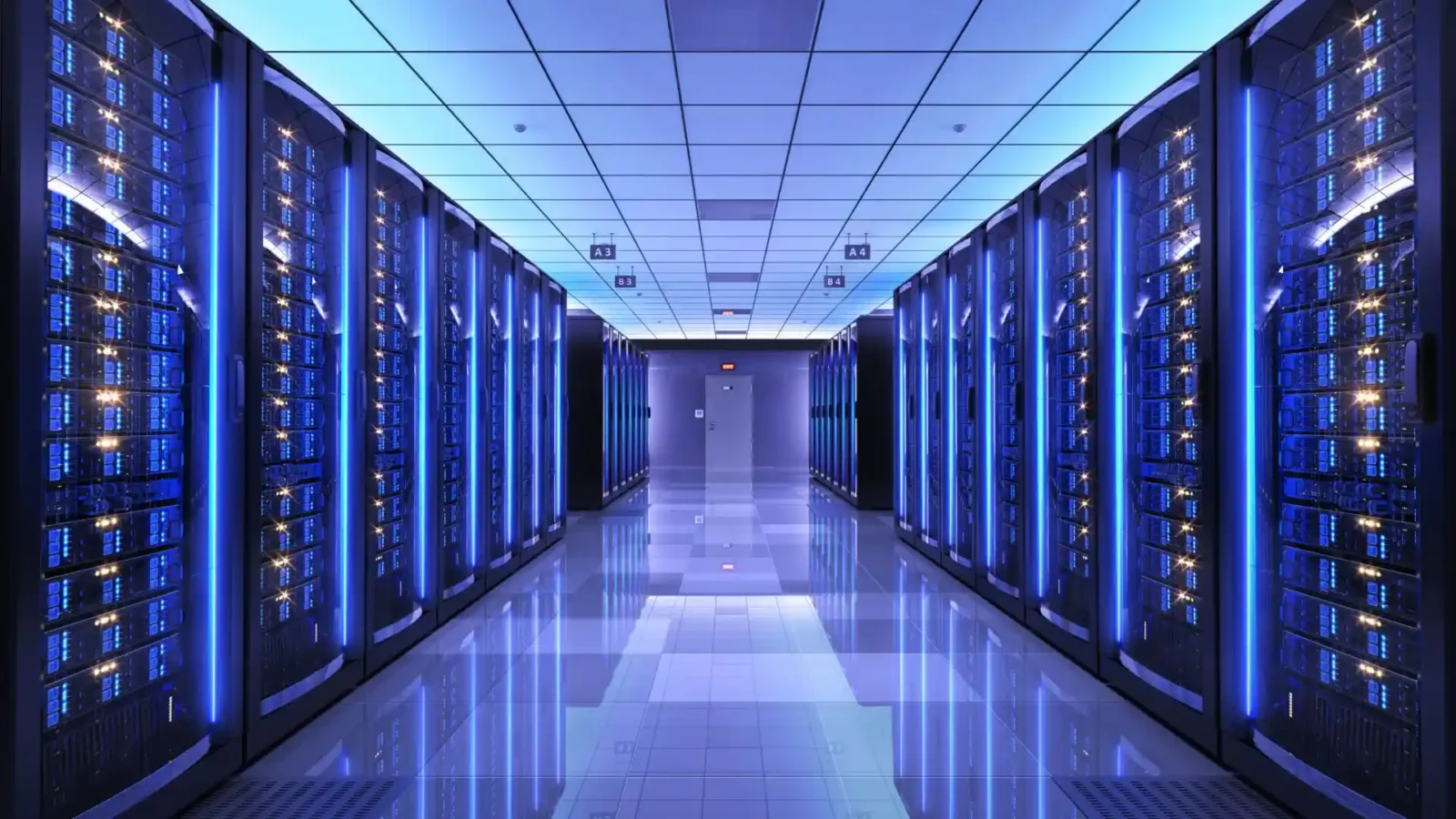
The rapid expansion of artificial intelligence is fundamentally reshaping global electricity demand, and Africa faces a growing mismatch between the scale of emerging digital infrastructure needs and its current energy planning frameworks. The continent’s data centre capacity stands at an estimated 300–400 MW, with projections reaching 1.5–2.2 GW by 2030, while electricity demand from data centres is rising at 20–25% annually. Yet Africa’s energy strategies remain largely built around incremental, megawatt-scale capacity additions that are misaligned with the concentrated, always-on power demands of AI workloads. The challenge is expected to take centre stage at African Energy Week 2026, where a dedicated AI and Data Center Track will focus on aligning energy planning with digital infrastructure needs. With the global data centre market valued at $243 billion in 2025 and projected to double by 2032, and AI workloads expected to triple global demand for data centre capacity by 2030, the continent must decide whether to plan in megawatts or compete in gigawatts.
Markets move fast; don’t get left behind. We’ve paired the Serrari Group Market Index with a curated Marketplace and a comprehensive Wealth Builder Platform to ensure you have the data—and the skills—to act on it.
Key Overview
- Africa’s current data centre capacity: 300–400 MW operational
- Projected capacity by 2030: 1.5–2.2 GW
- Annual demand growth rate: 20–25%
- Near-term electricity demand from data centres: ~8,000 GWh
- Africa’s share of global data centre capacity: 0.6%
- Number of data centre facilities: 220–230 across 38 countries
- Market value: $3.49 billion in 2024, projected to reach $6.81 billion by 2030 (CAGR of 11.79%)
- Investment needed: $10–20 billion by 2030
- Global data centre electricity demand (2030 projection): ~945 TWh
- Global benchmark — Northern Virginia: World’s largest data centre hub, exceeding 4 GW capacity
- Africa’s natural gas reserves: Over 600 trillion cubic feet
- Key summit: African Energy Week 2026, Cape Town
The Scale of the Global Shift
The artificial intelligence revolution is not just a software phenomenon — it is rapidly becoming an infrastructure challenge defined by energy. Data centre facilities that previously required tens of megawatts of power are now being designed at 100–200 MW scale, with hyperscale campuses increasingly aggregating demand at the gigawatt level. According to the International Energy Agency, global electricity consumption for data centres is projected to double to approximately 945 TWh by 2030, representing just under 3% of total global electricity consumption. Data centre electricity consumption is growing at roughly 15% per year — more than four times faster than consumption growth from all other sectors combined. Accelerated servers driven by AI adoption are growing at 30% annually and account for almost half the net increase in global data centre electricity demand.
The United States and China are the dominant forces, accounting for nearly 80% of global data centre electricity consumption growth to 2030, with the US alone adding around 240 TWh. The concentration of this demand is perhaps best illustrated by Northern Virginia, the world’s largest data centre market, which is home to more than 35% of all known hyperscale data centres worldwide — approximately 150 facilities — and where roughly 70% of global internet IP traffic is created or passes through Loudoun County’s “Data Center Alley.” The region’s data centres consumed 25% of Virginia’s electricity in 2025 and could account for 46% by 2030. Globally, over 670 hyperscale projects are in the pipeline, with approximately 35 GW of capacity under construction in North America alone.
Africa’s Starting Position: Small but Accelerating
Against this global backdrop, Africa’s data centre sector remains at an early stage but is growing rapidly. Operational capacity currently stands at approximately 300–400 MW across 220 to 230 facilities in 38 countries, representing just 0.6% of global data centre capacity. The African data centre market was valued at $3.49 billion in 2024 and is projected to reach $6.81 billion by 2030, growing at a CAGR of 11.79%, according to the African Energy Chamber’s State of African Energy 2026 report. Capacity is concentrated in four countries: South Africa, Nigeria, Kenya, and Egypt.
The continent’s data centre needs are expected to increase 3.5 to 5.5 times by 2030, requiring $10 to $20 billion in investment. Power demand from data centres is rising at 20–25% annually and is projected to reach approximately 8,000 GWh in the near term. Yet Africa’s per-capita data centre electricity consumption is the lowest in the world at less than 1 kWh in 2024, projected to rise to slightly less than 2 kWh by the end of the decade, according to the IEA. South Africa is the exception, with per-capita consumption more than 15 times the continental average, projected to exceed 25 kWh per capita by 2030.
A 2026 study on data centres in Africa found that total installed capacity is expected to triple to about 1.2 GW of IT load by 2030, but this growth will merely track global expansion rather than close the gap. Outside South Africa, only about one-third of built data centre capacity is fully utilised. Even in South Africa, 74% of capacity is fitted out and in use. Operators say they are building ahead of demand, planning on 10- to 20-year horizons.
Context is everything. While you follow today’s updates, use the Serrari Group Market Index and Marketplace to spot emerging shifts. Need to sharpen your edge? Our Wealth Builder Platform turns these insights into a professional-grade strategy.
The Megawatt vs. Gigawatt Problem
The core challenge the article identifies is a structural mismatch in planning. Africa’s energy frameworks remain oriented around incremental, megawatt-scale capacity additions — tied to localised demand or short-term capacity gaps. But AI-driven infrastructure requires something fundamentally different: concentrated, continuous, high-quality power with built-in redundancy that places new demands on grid design, prioritising stability, capacity, and long-term scalability over piecemeal expansion.
NJ Ayuk, Executive Chairman of the African Energy Chamber, has framed this as an existential competitiveness issue. “If we continue to plan in megawatts, we will struggle to compete in an economy that is already moving at the gigawatt scale,” Ayuk said. “Building larger, more resilient power systems is not just about meeting demand – it is about creating the conditions for investment, innovation and long-term growth.”
The issue is not a lack of resources. Africa holds over 600 trillion cubic feet of proven natural gas reserves, a significant share of global supply, yet much of its production has historically been geared toward exports rather than domestic consumption. Major gas projects — including Mozambique’s offshore developments, which are expected to produce over 13 million tonnes per year of LNG — underscore the scale of potential supply. The argument from proponents of gas-to-power development is that natural gas offers dispatchable, baseload energy suited to the always-on requirements of data centres, unlike intermittent renewables. Globally, data centres already consume around 1.5% of total electricity, with demand growing at roughly 12% annually.
The Investment Opportunity: Data Centres as Grid Catalysts
The African Energy Chamber has developed a thesis that positions data centres not merely as consumers of power but as catalysts for investment in the broader energy grid. The argument is twofold. First, large data centres provide bankable, predictable demand — the kind of long-tenor offtake profile that supports utility-scale generation finance. Second, the same offtake strengthens the case for new generation capacity and grid expansion, with knock-on benefits for local markets where data centres are built.
This “anchor demand” logic mirrors how industrial zones and mining operations have historically unlocked infrastructure investment in developing economies. In the data centre context, it means that a committed AI or cloud computing tenant can de-risk the financing of an adjacent power plant or transmission line, unlocking capacity that also serves residential and commercial consumers.
However, a circular dependency complicates this picture. Data centres require power certainty before committing capital; power infrastructure requires anchor demand before attracting investment. Gas-to-power projects co-located with data centre campuses could break this cycle by providing both generation assets and a committed offtake arrangement simultaneously — a model already being explored in Texas, where a single 7.7 GW gas generation project was approved in 2026 dedicated exclusively to private data centre grid supply.
Several African countries are already moving. Kenya carries roughly 40 MW of IT-load capacity with a projected 30% compound annual growth rate through 2028. Nigeria has 17 data centres requiring around 137 MW of power capacity in 2025, though the limitations of its national grid present fundamental obstacles. Côte d’Ivoire has launched its largest solar power plant in Boundiali, delivering 37.5 MWp toward a national goal of sourcing 45% of electricity from renewable energy by 2030. In April 2025, African states adopted the Africa Declaration on Artificial Intelligence in Kigali, committing $60 billion toward continental AI ambitions and establishing an Africa AI Council comprising seven ICT ministers and eight independent members. Fifteen African countries have now adopted a national AI strategy or policy.
The Structural Drivers Behind Local Data Centres
The shift toward domestic data centre infrastructure in Africa is not driven solely by AI ambition. Two structural forces are accelerating it. First, mobile data usage across Africa is forecast to quadruple per user by 2028, from 4.6 GB per month to 18 GB, driven by rising youth populations and increasingly competitive mobile pricing. Smartphone adoption in sub-Saharan Africa is projected to rise from 51% in 2022 to 87% by 2030, according to GSMA’s Mobile Economy Report. Every phone that loads a search engine, a shopping site, or a business application is adding to the computing load.
Second, data sovereignty regulations are tightening. A growing web of laws across African jurisdictions now requires certain sensitive data to stay in-country, shifting traffic away from European-hosted African data and toward domestic facilities. Latency requirements reinforce this trend — for applications ranging from fintech to telemedicine, the physical proximity of computing infrastructure to users is a performance-critical factor.
Talent, Water, and the Constraints Ahead
Even if the energy and investment challenges are solved, other constraints will shape Africa’s data centre trajectory. The Uptime Institute projects the global data centre industry will require 2.5 million full-time staff by the end of 2025. In Africa, 39% of operators cite retention of skilled staff as their main human resources challenge; in Nigeria, that figure reaches 67%. To address this, experts launched the Data Centre Talent Project for Africa in 2025, a three-month programme aiming to enrol over 100 engineering graduates across Nigeria, Kenya, and South Africa, with at least 30 job placements in its first cycle.
Water is another critical consideration. Data centres are notoriously water-intensive due to cooling requirements. Nations with vast areas of desert and savannah may struggle to allow data centres to compete for water with agriculture, potentially forcing reliance on regional power pools and neighbouring countries to support cross-border energy and computing arrangements.
African Energy Week 2026: The Policy Conversation
These dynamics are now moving to the centre of the policy conversation. At African Energy Week 2026 in Cape Town, a newly created AI and Data Center Track — branded “NexaGrid Africa: Create. Enable. Build Africa’s Finest AI Data Centers for the Future” — will focus on the infrastructure required to support this transition. The track will tackle regulatory and fiscal frameworks, with the AEC working with governments on policy that supports parallel data centre, AI, and energy expansion.
Lagos-headquartered Heirs Energies has signed on as a Gold Sponsor and has already deployed Starlink-powered connectivity at its remote Nigerian oilfield sites for real-time monitoring and IoT integration — an early example of the energy-and-digital convergence the track aims to promote.
The AEC’s broader argument is that Africa’s digital economy could reach $1.5 trillion by 2030, but achieving that target requires data centre capacity to evolve from scarce infrastructure into a reliable local backbone for cloud services, AI, and public systems. As Ayuk has put it: “Data centres and AI are not just consumers of power — they are catalysts for investment, innovation and access. If we structure this correctly, we are not just powering servers; we are powering economies and closing the energy access gap at scale.”
Whether Africa can make that leap will depend on whether its policymakers, energy developers, and infrastructure investors can move beyond the incremental thinking that has defined the continent’s power sector for decades — and begin planning at the scale the AI economy demands.
Your financial future isn’t something you wait for—it’s something you build.
The real question is: when do you begin?
Move beyond simply staying informed.
Navigate the markets with clarity—track trends through the Serrari Group Market Index, uncover opportunities in the Serrari Marketplace, and build practical knowledge with our Curated Wealth Builder Platform.
Stay connected to what truly matters.
Get daily insights on macro trends and financial movements across Kenya, Africa, and global markets—delivered through the Serrari Newsletter.
Growth opens doors.
Advance your career through professional programs including ACCA, HESI A2, ATI TEAS 7 , HESI EXIT , NCLEX – RN and NCLEX – PN, Financial Literacy!🌟—designed to move you forward with confidence.
See where money is flowing—clearly and in real time.
Track Money Market Funds, Treasury Bills, Treasury Bonds, Green Bonds, and Fixed Deposits, alongside global and African indexes, key economic indicators, and the evolving Crypto and stablecoin landscape—all within Serrari’s Market Index.