India is considering emergency measures to shore up its foreign exchange reserves, including curbing non-essential imports such as gold and electronic goods and hiking fuel prices, as the ongoing Middle East conflict continues to strain the country’s external finances, Bloomberg News reported on 11 May 2026. Officials in the Prime Minister’s Office and Finance Ministry have held discussions with the Reserve Bank of India on several measures to limit the damage from soaring oil prices. The report came a day after Prime Minister Narendra Modi made a public appeal at a BJP event in Hyderabad, asking citizens to avoid buying gold jewellery and travelling abroad for at least one year to conserve foreign exchange. Indian markets fell sharply on Monday, with the Sensex dropping over 1,300 points and the rupee hitting a record closing low, as Brent crude surged above $104 a barrel. India, which imports approximately 85% of its crude oil and is one of the world’s largest buyers of gold, spent $174.9 billion on crude and petroleum products in the financial year ended March 2026 — 22% of its total import bill.
Markets move fast; don’t get left behind. We’ve paired the Serrari Group Market Index with a curated Marketplace and a comprehensive Wealth Builder Platform to ensure you have the data—and the skills—to act on it.
Key Overview
- Bloomberg report: India considering emergency steps including import curbs on gold and electronics, and fuel price hikes
- Key discussions: Prime Minister’s Office, Finance Ministry, and Reserve Bank of India
- Modi’s public appeal: Avoid gold purchases and foreign travel for one year; cut fuel use, prefer Made-in-India goods
- Forex reserves (March 2026): $691.11 billion, providing approximately 11 months of import cover
- Reserve decline: Forex reserves fell by over $40 billion from their February 2026 peak of $728.5 billion
- Oil dependence: India imports ~85% of its crude; spent $174.9 billion on crude and petroleum products in FY2025–26
- Gold imports (FY2025–26): $72 billion, second only to China globally
- Market reaction (11 May): Sensex fell 1,313 points (1.7%); Nifty 50 dropped 360 points (1.5%); rupee hit record low of 95.31/$
- Brent crude: Surged nearly 3% to ~$104/barrel on Monday
- RBI gold holdings: 880.52 metric tonnes as of March 2026, up from 794.64 tonnes in September 2025
The Bloomberg Report and What It Signals
Bloomberg News reported on Monday that India is weighing emergency steps to protect its foreign exchange reserves, citing people familiar with the matter. The measures under discussion include curbing non-essential imports — specifically gold and electronic goods — and hiking domestic fuel prices to reduce the government’s subsidy burden and slow forex outflows. Officials in the Prime Minister’s Office and the Finance Ministry have held discussions with the Reserve Bank of India on how to limit the economic damage from persistently elevated oil prices. Reuters noted it could not immediately verify the report independently.
The Bloomberg report did not specify whether the measures would be implemented through executive order, tariff adjustments, or quantitative import restrictions. However, the mere discussion of such steps carries significant weight. India has not resorted to broad-based import curbs since the 1991 balance of payments crisis, when reserves fell so low the country could barely cover two to three weeks of imports and was forced to pledge gold and seek International Monetary Fund assistance. The current situation, while far less severe, is raising echoes of that era among analysts and policymakers.
Modi’s Appeal: Economic Patriotism in a War Economy
The Bloomberg report landed a day after Prime Minister Narendra Modi made an unusual public appeal at a BJP event in Hyderabad on 10 May 2026, asking Indian citizens to avoid buying gold jewellery and travelling abroad for at least one year. Framing the request as an act of economic patriotism, Modi said: “Patriotism is not only about the willingness to sacrifice one’s life on the border. In these times, it is about living responsibly and fulfilling our duties to the nation in our daily lives.”
The appeal extended well beyond gold. Modi urged citizens to use public metro systems, work from home, carpool, cut edible oil consumption, prefer Made-in-India goods, and — for farmers — halve the use of chemical fertilisers and switch to solar-powered irrigation pumps. “We have to save foreign exchange by any means,” he said plainly.
The focus on gold is not arbitrary. Indians imported gold worth $72 billion in the 2025–2026 fiscal year, second in the world only to China. Every gold ornament bought at a jewellery shop is priced and settled in US dollars, draining the same foreign exchange pool that pays for India’s oil imports. According to Al Jazeera, Indians travelling abroad spent $31.7 billion in 2023–2024, while approximately 30.9 million Indian nationals departed the country in 2024. India is also the world’s largest importer of urea, buying approximately 10 million tonnes of the fertiliser last year. Of these major forex drains — oil, gold, fertilisers, and overseas travel — oil and fertilisers are virtually impossible to cut back on, making gold and travel the most actionable targets for voluntary conservation.
The Oil Shock Driving the Crisis
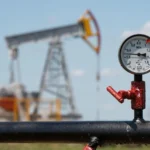
The root cause of India’s forex anxiety is the Middle East conflict that has sent Brent crude surging past $100 a barrel. The closure of the Strait of Hormuz in early March 2026, triggered by the US-Iran conflict, disrupted approximately 20% of the world’s oil supply and sent Brent from around $80 to over $120 a barrel in under a week, according to analysis from the Observer Research Foundation. While prices have moderated somewhat since the initial shock, they remain stubbornly above $100 — a level that fundamentally alters India’s external balance sheet.
India imports approximately 85% of its crude oil, roughly half of which transits through the Hormuz Strait. The country spent $174.9 billion on crude and petroleum products in FY2025–26, accounting for 22% of its total imports. Economists estimate that every $10 increase in crude prices widens India’s current account deficit by 40 to 50 basis points and adds 35 to 40 basis points to inflation, according to the ORF analysis. With Brent now more than $20 above the levels that prevailed through most of 2025, the cumulative impact on India’s import bill, fiscal deficit, and inflation trajectory is substantial.
The oil shock is compounding a second external headwind: US tariffs. In April 2025, the United States raised tariffs on Indian goods to as high as 50% as part of a broader reciprocal tariff regime. While India’s headline exports reached a record $825 billion in 2025, the pace of export growth to the US slowed sharply. The merchandise trade deficit widened to a record $310 billion in the April–February period of FY2025–26, driven by high oil costs. One shock hit the export side of India’s ledger; the other hit the import side. For an economy running a structural merchandise trade deficit, the import side is the greater vulnerability.
Context is everything. While you follow today’s updates, use the Serrari Group Market Index and Marketplace to spot emerging shifts. Need to sharpen your edge? Our Wealth Builder Platform turns these insights into a professional-grade strategy.
Forex Reserves: Comfortable but Eroding
India’s foreign exchange reserves stood at $691.11 billion at the end of March 2026, providing import cover of approximately 11 months — a level generally considered comfortable by international standards. However, the headline number masks a more concerning trajectory. After peaking at $728.5 billion in February 2026, reserves fell by more than $40 billion in roughly four weeks, an unusually rapid decline driven by the RBI’s aggressive intervention to defend the rupee and by valuation changes in gold holdings.
Analysts note that when the dollar deficit in the RBI’s forward book is considered, the effective import cover falls from 11 months to approximately 9 months. Foreign portfolio investors pulled out $16.6 billion from Indian equities during FY2025–26, the highest outflows since 1991, while the balance of payments is projected to remain in deficit in FY2026–27. Major agencies including Moody’s and Goldman Sachs have cut India’s growth forecasts to around 5.9% to 6%, down from earlier expectations of 6.5% or higher.
The RBI faces what analysts describe as a strategic dilemma: balancing the need to defend the rupee through dollar sales against the risk of depleting the foreign exchange buffers that are critical for macroeconomic stability. Aggressive intervention may stabilise the currency in the short term, but it erodes the reserves essential for managing future crises or servicing external debt.
The Paradox of India’s Gold Strategy
Modi’s appeal to stop buying gold sits in apparent tension with the RBI’s own behaviour. Even as the government asks citizens to conserve forex by avoiding private gold purchases, the central bank has been steadily accumulating bullion as a reserve diversification strategy. India’s sovereign gold holdings grew from 794.64 metric tonnes in September 2025 to 880.52 metric tonnes by March 2026. Gold’s share of India’s total forex reserves jumped from 13.92% to 16.7% over the same period. More than two-thirds of this gold — 680.05 metric tonnes — is now stored within India after years of quiet repatriation from overseas vaults.
However, the two types of gold buying are fundamentally different. The RBI typically purchases gold through mechanisms that bypass the commercial dollar-outflow channel used by private importers. Modi’s appeal targets private gold imports — the jewellery and investment demand that drains dollar reserves through commercial trade channels. The RBI’s sovereign purchases, by contrast, are a form of reserve asset management that reduces India’s exposure to US Treasury securities and dollar-denominated instruments.
Market Reaction: Stocks, Rupee, and Jewellery Shares
Indian markets reacted sharply on Monday. The benchmark Nifty 50 fell 1.5%, or 360 points, to close at 23,816, while the BSE Sensex dropped 1.7%, or 1,313 points, to end at 76,015. The decline was the steepest single-day fall since 30 March and wiped out approximately ₹6.2 trillion in investor wealth. The rupee ended at a record closing low of 95.31 against the dollar after declining 0.9% — its biggest single-day fall since 27 March. The India VIX, a measure of market volatility, rose 10% to 18.6.
Shares in the travel and jewellery sectors were among the hardest hit following Modi’s appeal. Titan Company, the Tata-owned jeweller, fell nearly 6%, while Indian jewellery companies broadly declined by as much as 10%. InterGlobe Aviation, the parent of IndiGo, was among the top laggards on the Sensex. Among heavyweight stocks, Reliance Industries fell 3.3% while HDFC Bank declined 2.1%. Foreign portfolio investors pulled out ₹8,438 crore from domestic equities on Monday alone — the most since 24 April.
Historical Echoes and Structural Vulnerabilities
India has faced external balance sheet pressure before, but the parallels to the current moment are concerning. The 1991 crisis was triggered by a combination of Gulf War oil shocks, political instability, and a collapsing balance of payments. Today, the trigger is different — the US-Iran war and Hormuz closure — but the structural vulnerability is familiar: India’s economy remains overwhelmingly dependent on imported energy, and every global oil shock exposes that dependence with brutal efficiency.
The ORF analysis frames the current challenge as part of a twin shock: US tariffs hitting the export side and the oil crisis hitting the import side. The current account deficit is expected to rise to between 1.7% and 2.5% of GDP, up from approximately 1% before the crisis. Higher energy prices will increase government spending on subsidies — particularly for fertiliser and LPG — while slowing economic activity may reduce tax revenues, making fiscal deficit targets harder to achieve.
India has begun diversifying its crude sourcing, increasing imports from the US, UAE, and West Africa while reducing reliance on Russia and traditional Middle East suppliers. Strategic petroleum reserves currently cover roughly 74 days of consumption. On the domestic front, India has accelerated alternative energy use — 580,000 new households received piped gas connections in March 2026 alone, sourced from domestic gas fields that are unaffected by the war. Nearly 75% of India’s electricity comes from coal, and the government has signalled plans to increase coal-fired power generation to meet summer energy demand amid the oil and gas shortage.
What Comes Next
The measures under discussion — import curbs, fuel price hikes, and forex conservation appeals — represent an escalating policy response. If implemented, curbs on gold and electronics imports would mark a significant shift from the liberalised trade regime India has maintained since the 1991 reforms. Fuel price hikes, meanwhile, would directly affect household budgets and potentially push inflation into the 5% to 6% range, complicating the RBI’s monetary policy calculations at a time when economic growth is already slowing.
The trajectory of oil prices and developments around the Middle East conflict will determine whether these discussions translate into formal policy action. Analysts say the near-term triggers include the path of Brent crude and any developments around diplomatic negotiations to reopen the Strait of Hormuz. For now, India’s $691 billion reserve buffer provides a cushion — but the speed of its erosion, and the scale of the external pressures it faces, suggest the government is preparing for a scenario where voluntary conservation is not enough.
Your financial future isn’t something you wait for—it’s something you build.
The real question is: when do you begin?
Move beyond simply staying informed.
Navigate the markets with clarity—track trends through the Serrari Group Market Index, uncover opportunities in the Serrari Marketplace, and build practical knowledge with our Curated Wealth Builder Platform.
Stay connected to what truly matters.
Get daily insights on macro trends and financial movements across Kenya, Africa, and global markets—delivered through the Serrari Newsletter.
Growth opens doors.
Advance your career through professional programs including ACCA, HESI A2, ATI TEAS 7 , HESI EXIT , NCLEX – RN and NCLEX – PN, Financial Literacy!🌟—designed to move you forward with confidence.
See where money is flowing—clearly and in real time.
Track Money Market Funds, Treasury Bills, Treasury Bonds, Green Bonds, and Fixed Deposits, alongside global and African indexes, key economic indicators, and the evolving Crypto and stablecoin landscape—all within Serrari’s Market Index.