

















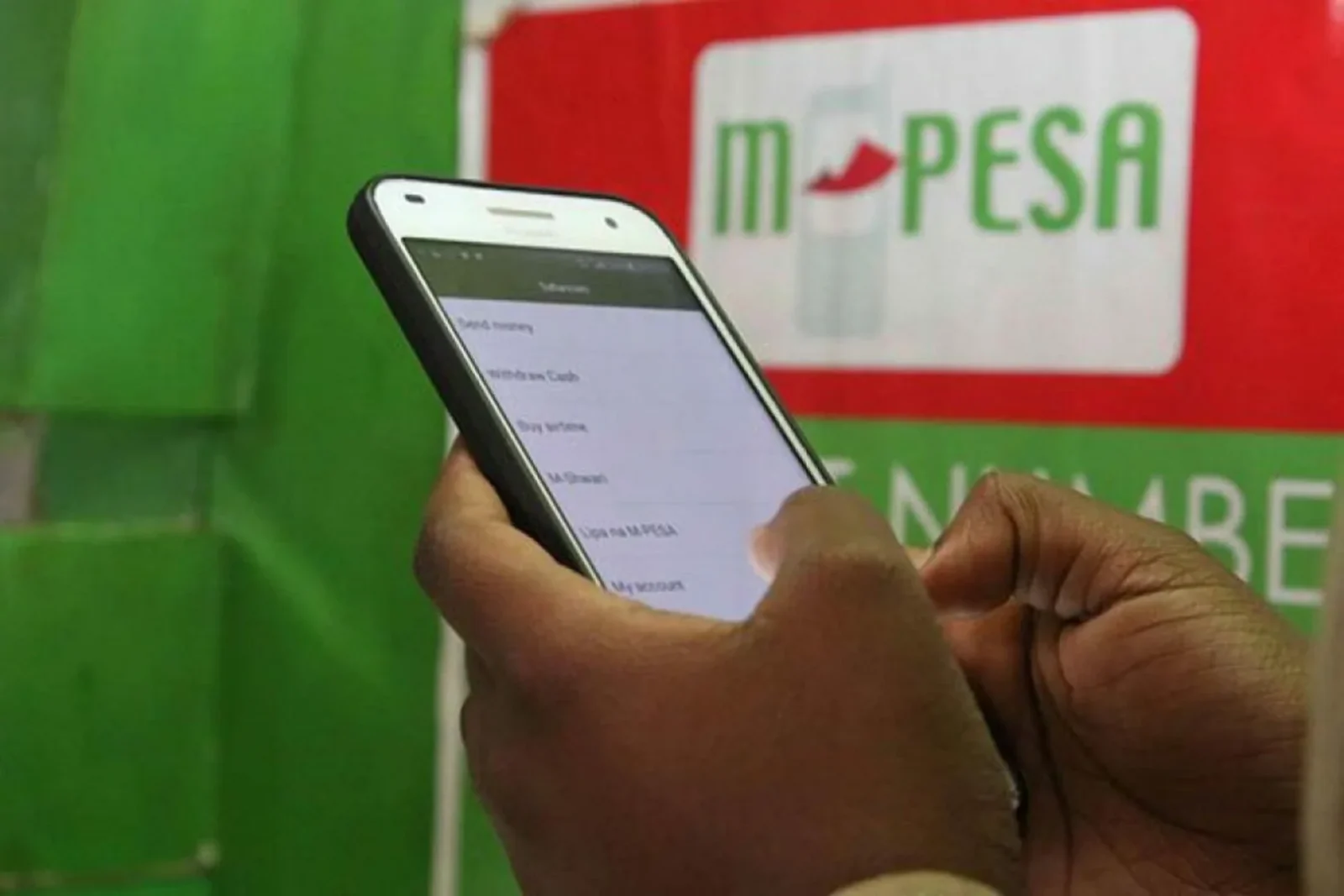
Kenya’s Finance Bill 2026 proposes a 25% excise duty on mobile phones used for cellular and wireless networks, with the levy applied at the point of activation rather than at importation or sale. The proposal has ignited fierce debate over its impact on smartphone affordability and digital inclusion in a country where mobile phones underpin everything from banking to government services. Treasury Cabinet Secretary John Mbadi has defended the measure, arguing it consolidates multiple existing taxes — including Import Declaration Fee, Railway Development Levy, VAT, and customs duty — that currently push the total tax burden on phones to about 55%, effectively reducing the cumulative load. Critics counter that the tax could still raise retail prices significantly and slow adoption among low-income households at a time when Kenya’s digital economy is accelerating rapidly. The country reached 48.7 million smartphones on its networks by December 2025, with mobile money penetration hitting 98% and over 51.4 million subscriptions. The bill is part of a broader revenue drive targeting an additional KSh 120 billion for the 2026/27 financial year, with total collections projected at KSh 2.985 trillion.
Markets move fast; don’t get left behind. We’ve paired the Serrari Group Market Index with a curated Marketplace and a comprehensive Wealth Builder Platform to ensure you have the data—and the skills—to act on it.
Key Overview
- Proposed tax: 25% excise duty on mobile phones for cellular/wireless networks
- Application point: At activation on a mobile network, not at import or sale
- Treasury’s argument: Replaces multiple levies totalling ~55%; net reduction to 25%
- Revenue target: KSh 120 billion in additional revenue for FY 2026/27; total collections projected at KSh 2.985 trillion
- Price impact (if additive): A KSh 10,000 smartphone could rise to over KSh 12,500 before other charges
- Kenya’s smartphones (Dec 2025): 48.7 million devices; 92.9% smartphone penetration
- Mobile money subscriptions (Dec 2025): 51.4 million; 98% penetration
- Mobile connections: 78.4 million; 149% SIM penetration
- Financial inclusion rate: 84.8% of adult population (2024)
- Bill status: Before National Assembly; public participation invited
What the Finance Bill Proposes
The Finance Bill 2026, published by Treasury CS John Mbadi and now before the National Assembly’s Departmental Committee on Finance and National Planning, introduces amendments to the Excise Duty Act that impose a 25% levy on telephones for cellular networks or other wireless networks. Unlike conventional import duties, the tax would be collected at the moment a device is first activated on a mobile network rather than when it crosses the border or changes hands in a shop.
The bill states: “The excise duty payable in respect of telephones for cellular networks and other wireless networks shall be paid to the commissioner by the time of the activation of the phone.” The activation-based model is designed to capture all devices in active use within the tax system, including those brought into the country informally or without paying border taxes. The Treasury argues this approach strengthens enforcement, improves fairness, and aligns with the bill’s broader shift toward a final presumptive taxation system where tax is settled upfront with no further filings required.
The phone tax is part of a wider package of revenue measures. The Finance Bill also includes new taxes on digital financial services, a 5% tax on imported second-hand clothing (mitumba), excise duties on fruit juices based on sugar content, broader definitions of royalties affecting digital platforms and fintech payment systems, and the removal of a withholding tax exemption for Kenya Airways on payments to foreign aviation service providers. The government projects these measures will generate an additional KSh 120 billion in revenue, bringing total KRA collections to KSh 2.985 trillion for the 2026/27 financial year — a 7.21% increase from KSh 2.784 trillion in the current fiscal year. The overall government budget for 2026/27 is projected at KSh 4.78 trillion.
The Treasury’s Defence: A Tax Cut, Not a Tax Hike
Treasury CS Mbadi has pushed back strongly against the public backlash. Speaking at a briefing at Treasury Buildings, he dismissed concerns that the bill would raise smartphone prices, arguing that the new structure is actually a simplification that reduces the total tax burden. “Phone prices will not go up because we have removed all the other taxes and replaced them with one single tax,” Mbadi said.
His argument centres on the cumulative weight of existing levies. Under the current system, imported phones attract several charges including Import Declaration Fee, Railway Development Levy, Value Added Tax, and customs duty. “When you combine all the taxes together, they total about 55%. We are now reducing that to 25% and calling it excise duty,” Mbadi explained.
He further clarified that under the proposed system, traders stocking phones in shops would not immediately pay the tax — the levy applies only once the phone is sold and activated for use. This is a significant departure from the current model where duties are assessed at the border, and in theory it should reduce upfront costs for importers and retailers.
Mbadi also addressed circulating rumours, insisting the bill does not permit the government to access personal mobile money data through M-Pesa transactions. “M-Pesa transactions are not income,” he said, and KRA will not target individuals sending money through mobile platforms. He urged the public to read the officially published Finance Bill rather than relying on information circulating online.
Context is everything. While you follow today’s updates, use the Serrari Group Market Index and Marketplace to spot emerging shifts. Need to sharpen your edge? Our Wealth Builder Platform turns these insights into a professional-grade strategy.
The Critics’ Case: Affordability and the Digital Divide
Despite the Treasury’s reassurances, consumer groups, analysts, and industry observers remain sceptical. The core concern is straightforward: if the 25% excise duty is applied on top of remaining charges rather than as a true replacement, the net effect could be a significant increase in retail prices. Under a worst-case scenario, a basic smartphone currently selling at around KSh 10,000 could rise to more than KSh 12,500 even before VAT, import duties, and retailer markups are factored in.
For a country where entry-level Android devices from manufacturers like Tecno, Itel, and Infinix are now available for under KSh 5,000, and where the price gap between a basic smartphone and a feature phone has narrowed to the point where the smartphone often wins on value, any upward price pressure could slow a transition that has been one of Kenya’s most remarkable economic stories. Smartphones are not luxury goods in Kenya’s context — they are the gateway to mobile money, online government services, education, freelance work, and digital commerce.
The alarm is amplified by the scale of Kenya’s mobile money ecosystem. By December 2025, the country recorded 51.4 million mobile money subscriptions, representing 98% population penetration — effectively universal coverage. The registered agent network expanded to over 501,399 points. More than 40 million Kenyans rely on mobile money services, and the country’s financial inclusion rate has risen to 84.8% of the adult population, up from 26.7% in 2006. Any policy that makes the primary device for accessing this ecosystem more expensive risks undermining financial inclusion gains built over nearly two decades.
A Digital Economy in Overdrive
The proposed tax arrives at a moment when Kenya’s digital economy is growing at an extraordinary pace. According to Communications Authority of Kenya data compiled by Tech-ish, the country’s smartphone base surged from 42.3 million devices in March 2025 to 48.7 million by December 2025, while feature phones declined from 32.6 million to 29.6 million. Smartphone penetration climbed from 80.8% to 92.9% over the year. The crossover is now irreversible — feature phone numbers declined in three of four quarters, losing more than 3 million units during 2025.
Mobile connections reached 78.4 million in 2025, representing a 149% SIM penetration rate, as many Kenyans hold multiple SIMs. The average mobile broadband user consumed 14.6 GB per quarter, with 5G users averaging 46.4 GB — more than three times higher — demonstrating how network capability directly shapes consumption behaviour.
The shift is being pulled forward by services that require smartphones to function. App-based mobile money features, WhatsApp messaging (which is rapidly replacing SMS), streaming, online government platforms like eCitizen, and digital tax filing all work poorly or not at all on feature phones. Boda boda riders use mobile apps for navigation and customer bookings, traders rely on mobile money for daily transactions, and young Kenyans depend on internet-enabled devices for freelance and gig economy work.
Kenya’s mobile money ecosystem processed $309 billion in transactions and has become what analysts describe as “financial plumbing” rather than a fintech category. Safaricom’s M-Pesa remains the dominant platform, with CEO Peter Ndegwa noting that mobile money is now “a profoundly political and social technology reshaping governance and inclusion”.
Policy Contradictions and Implementation Concerns
The Finance Bill’s phone tax has drawn attention to what critics see as contradictory signals from the government. On one hand, the Ruto administration is aggressively promoting digital transformation — digitising government services through eCitizen, investing KSh 99.4 billion in Konza Technopolis by 2025, signing the Technopolis Act into law, and positioning Kenya as Africa’s “Silicon Savannah.” On the other hand, the proposed phone tax threatens to make the primary tool for accessing this digital ecosystem more expensive for the very populations the government is trying to bring online.
The bill also includes incentives for green technologies such as electric bicycles and buses, creating a contrast that has raised questions about the overall direction of policy priorities. Some observers argue the government is promoting digital and green transformation while simultaneously taxing the tools needed to achieve it.
Practical implementation questions also remain unresolved. Since the tax would be collected at the point of activation, it is unclear whether telecom operators, distributors, or importers will be responsible for remitting the levy. Industry players warn this could create compliance challenges and increase administrative costs across the supply chain. Concerns have also been raised about the impact on second-hand and refurbished phones, which remain a critical source of affordable devices for millions of Kenyans, particularly in rural areas.
The Finance Bill 2024 Shadow
The debate over the Finance Bill 2026 carries particular political weight because of what happened with its predecessor. The Finance Bill 2024 triggered widespread protests that severely damaged investor confidence, with the Stanbic PMI declining sharply to 43.1 in July 2024. The government is navigating a difficult balance: it needs revenue to manage a heavy public debt burden and fund its development agenda, but tax measures perceived as regressive or punitive risk a political backlash in an increasingly digitally connected and vocal population. The KRA has received increased funding, including KSh 19 billion for digital transformation projects during the 2025/2026 fiscal year, to strengthen tax mobilisation. But whether the activation-based model is truly a simplification or an additional burden will depend entirely on the fine print of implementation — and on whether existing import levies are genuinely eliminated rather than layered alongside the new excise duty.
What Happens Next
The National Assembly has invited members of the public and stakeholders to submit views on the Finance Bill as it begins its review. The debate is expected to intensify in the coming weeks, with consumer groups, industry associations, and civil society organisations likely to challenge the phone tax provision during public participation hearings.
At stake is whether the proposed levy will achieve its stated goal of simplifying tax collection and closing enforcement gaps, or whether it will widen the digital divide at a time when connectivity has become central to everyday life and economic survival. With smartphone penetration at 92.9%, mobile money at 98%, and the informal economy deeply dependent on digital tools, the answer will have consequences that extend far beyond Treasury’s revenue projections.
Your financial future isn’t something you wait for—it’s something you build.
The real question is: when do you begin?
Move beyond simply staying informed.
Navigate the markets with clarity—track trends through the Serrari Group Market Index, uncover opportunities in the Serrari Marketplace, and build practical knowledge with our Curated Wealth Builder Platform.
Stay connected to what truly matters.
Get daily insights on macro trends and financial movements across Kenya, Africa, and global markets—delivered through the Serrari Newsletter.
Growth opens doors.
Advance your career through professional programs including ACCA, HESI A2, ATI TEAS 7 , HESI EXIT , NCLEX – RN and NCLEX – PN, Financial Literacy!🌟—designed to move you forward with confidence.
See where money is flowing—clearly and in real time.
Track Money Market Funds, Treasury Bills, Treasury Bonds, Green Bonds, and Fixed Deposits, alongside global and African indexes, key economic indicators, and the evolving Crypto and stablecoin landscape—all within Serrari’s Market Index.









Comments are closed.