















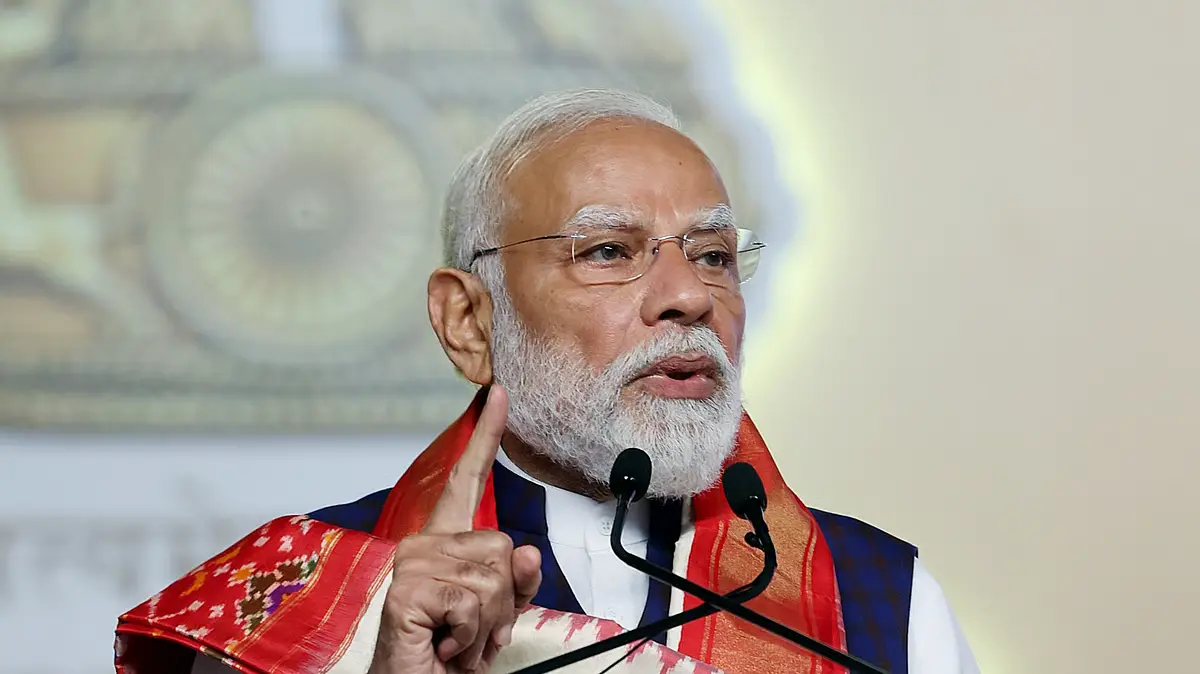
Prime Minister Narendra Modi on 10 May 2026 made a sweeping appeal to Indian citizens to change their daily habits in response to the global economic crisis triggered by the ongoing war in West Asia. Speaking at a BJP public meeting at Parade Grounds in Secunderabad, Modi urged Indians to conserve fuel by using public transport and carpooling, revive Covid-era work-from-home practices, avoid overseas vacations and non-essential gold purchases for one year, prioritise Made-in-India products, and reduce edible oil and chemical fertiliser consumption. The appeal comes as the conflict around the Strait of Hormuz has sent global crude oil prices surging from around $73 per barrel to as high as $126 per barrel within weeks, creating enormous pressure on India, which imports approximately 85–89 per cent of its crude oil. State-owned oil marketing companies are absorbing losses of around ₹30,000 crore per month, while India’s foreign exchange reserves have declined by more than $40 billion from their February 2026 peak. Modi framed the measures as a form of patriotism, telling the gathering that serving the nation is not only about sacrificing one’s life on the border but also about living responsibly during difficult times.
Markets move fast; don’t get left behind. We’ve paired the Serrari Group Market Index with a curated Marketplace and a comprehensive Wealth Builder Platform to ensure you have the data—and the skills—to act on it.
Key Overview
- Event: BJP public meeting at Parade Grounds, Secunderabad, on 10 May 2026
- Trigger: Global economic crisis driven by the war in West Asia and disruption of the Strait of Hormuz
- Oil price surge: Brent crude rose from ~$73/barrel to ~$126/barrel in early 2026
- India’s oil dependence: Imports approximately 85–89% of crude oil needs; ~40% transits the Strait of Hormuz
- OMC losses: State-owned oil companies losing ~₹30,000 crore per month; over ₹1 lakh crore in 10 weeks
- Excise cuts: Government cut special excise on petrol from ₹13 to ₹3/litre; diesel excise reduced to near zero
- Forex reserves: Declined from a peak of $728.5 billion (February 2026) to approximately $688 billion by late March
- Key appeals: Use public transport, carpool, revive WFH, avoid foreign travel and gold purchases, prioritise domestic products, reduce edible oil use, cut fertiliser use by 50%, adopt solar irrigation pumps
- Context: Neighbouring countries have imposed fuel rationing (Bangladesh, Sri Lanka) and steep price hikes (Pakistan raised prices 43%)
A Wartime Appeal for Peacetime Habits
Prime Minister Narendra Modi delivered one of his most direct economic appeals to Indian citizens on Sunday, calling on the nation to fundamentally alter consumption patterns in response to what has become the most severe global energy disruption since the Covid-19 pandemic. Addressing a large BJP gathering at the Parade Grounds in Secunderabad, Hyderabad, Modi outlined a slate of measures — from reviving work-from-home arrangements to avoiding gold purchases and overseas vacations — designed to reduce India’s foreign exchange outflows during a period of extreme global economic stress.
The speech, which comes as India grapples with the fallout from the ongoing war in West Asia, marked a notable shift in tone. Rather than focusing solely on government action, Modi placed the burden of economic resilience squarely on the shoulders of ordinary citizens, framing daily restraint as a form of national service. “Patriotism is not only about the willingness to sacrifice one’s life on the border,” he said. “In these times, it is about living responsibly and fulfilling our duties to the nation in our daily lives.”
The Oil Shock Behind the Appeal
The backdrop to Modi’s appeal is an energy crisis of historic proportions. The escalation of conflict in West Asia, centred on the strategically critical Strait of Hormuz — a maritime chokepoint through which roughly a fifth of global oil and a quarter of global liquefied natural gas supplies transit — has triggered the largest disruption to oil supply flows in modern history. According to the International Energy Agency, global oil supply plummeted by 10.1 million barrels per day in March 2026, and shipments through the Strait fell from more than 20 million barrels per day before the crisis to approximately 3.8 million barrels per day in early April.
The consequences for global energy markets have been swift and dramatic. Brent crude prices surged from around $73 per barrel to as high as $126 per barrel within weeks — a rise of more than 72 per cent. The Asian Development Bank now projects average crude prices of $96 per barrel for 2026, with prices expected to remain elevated at $80 per barrel through 2027. ADB Chief Economist Albert Park warned that oil prices are “likely to stay higher for longer” than previously anticipated, with rising fertiliser costs adding further pressure on food production.
For India, the vulnerability is structural. The country imports approximately 85 to 89 per cent of its crude oil requirements, with roughly 40 per cent of those imports transiting through the Strait of Hormuz. Each $10 increase in crude prices is estimated to widen India’s current account deficit by 40 to 50 basis points. India also imports around 50 per cent of its natural gas and 55 to 60 per cent of its LPG demand, making the West Asia disruption a multi-front challenge for the nation’s energy security.
Shielding Consumers at Enormous Cost
While Modi’s appeal focused on what citizens can do, the Indian government has already been absorbing enormous costs to prevent the crisis from reaching household budgets. India’s state-owned oil marketing companies — Indian Oil Corporation, Bharat Petroleum, and Hindustan Petroleum — have been incurring under-recoveries of approximately ₹1,600 to ₹1,700 crore per day, amounting to over ₹1 lakh crore in the ten weeks since the crisis began. Monthly losses have reached approximately ₹30,000 crore, with under-recoveries estimated at ₹18 per litre on petrol and ₹35 per litre on diesel.
The government has also cut excise duties to help absorb the blow. Special additional excise duty on petrol was slashed from ₹13 to ₹3 per litre, while excise on diesel was reduced to near zero — costing the exchequer approximately ₹14,000 crore per month in lost revenue. Despite a 50 per cent surge in input costs, retail petrol continues to be sold at ₹94.77 per litre and diesel at ₹87.67 — prices that have not been revised for two years.
The contrast with the rest of the world is stark. Pakistan raised fuel prices by 43 per cent. Sri Lanka shifted government offices to a four-day work week to cut fuel consumption. Bangladesh introduced rationing. South Korea imposed fuel price controls for the first time in nearly three decades. Petrol prices in Hong Kong have reached the equivalent of nearly ₹295 per litre, while prices in several European countries have crossed ₹200 per litre.
However, analysts are warning that India’s price insulation may not be sustainable. A Business Standard report indicated that a hike in retail fuel prices now appears likely, with the government’s stance shifting from denying any planned increase to acknowledging that the “endeavour so far” has been to keep prices stable — a subtle but significant change in language.
Context is everything. While you follow today’s updates, use the Serrari Group Market Index and Marketplace to spot emerging shifts. Need to sharpen your edge? Our Wealth Builder Platform turns these insights into a professional-grade strategy.
Reviving Covid-Era Efficiency
Perhaps the most attention-grabbing element of Modi’s speech was his call to revive work-from-home and virtual meeting practices that became commonplace during the pandemic. “During the Corona period, we adopted work from home, online meetings, video conferences, and developed many such systems,” he said. “Today, the need of the hour is that we restart those practices.”
The appeal marks what BusinessToday described as one of the strongest endorsements yet for hybrid and remote work practices since Indian offices resumed normal functioning after the pandemic. The logic is straightforward: by reducing daily commutes, India can materially lower its consumption of imported fuel. Modi specifically urged citizens in cities with metro rail connectivity to prioritise public transport, recommended carpooling where private vehicles remain necessary, encouraged greater use of electric vehicles, and called for shifting goods transport from road to rail.
The PM also addressed energy consumption in the agricultural sector, encouraging farmers to adopt solar-powered irrigation pumps instead of diesel-driven ones, reduce chemical fertiliser usage by 50 per cent, and move toward natural farming practices. India’s dependence on imported fertilisers — which Modi noted cost approximately ₹3,000 per bag on international markets but are sold to Indian farmers at less than ₹300 thanks to subsidies — adds another dimension to the forex pressure.
Gold, Travel and the Forex Drain
Beyond fuel, Modi targeted two other major categories of foreign exchange outflows: gold imports and overseas travel. He asked citizens to avoid non-essential gold purchases for a period of one year, noting that large-scale gold imports place significant pressure on India’s forex reserves. India is one of the world’s largest consumers of gold, and household demand — particularly during weddings and festivals — drives billions of dollars in annual imports.
Modi also called on Indians to avoid unnecessary foreign travel, overseas vacations, and foreign weddings, urging them to opt for domestic tourism and celebrations within India instead. He encouraged citizens to prioritise Made-in-India and locally manufactured products, including everyday items such as shoes, bags, and accessories, and to reduce edible oil consumption — framing it as both an economic and public health measure.
Forex Reserves Under Pressure
The urgency behind these appeals is reflected in the trajectory of India’s foreign exchange reserves. After reaching a record $728.49 billion in February 2026, reserves fell sharply as the Reserve Bank of India intervened to stabilise the rupee amid capital outflows and surging oil import costs. By late March, reserves had dropped to approximately $688 billion — a decline of more than $40 billion in just four weeks.
The rupee itself hit a record low of 94.82 against the US dollar in late March, driven by rising oil prices, foreign investor outflows, and a strengthening dollar. While the RBI’s reserve position — covering approximately 11 months of imports — remains comfortable by international standards, the speed of the decline has raised concerns. Adjusting for the RBI’s substantial forward book commitments, effective import cover is estimated at closer to nine months.
The gold component of India’s reserves has also been evolving. The RBI held 880.52 metric tonnes of gold at the end of March 2026, with gold now representing approximately 16.7 per cent of total reserves — up from 13.9 per cent just six months earlier. More than two-thirds of India’s gold reserves have now been repatriated to domestic vaults, reflecting a broader global trend of central banks reducing dependence on foreign custodians.
Industry Echoes the PM’s Call
Modi’s appeal to citizens was accompanied on the same day by a five-point action plan from the Confederation of Indian Industry, proposing measures to help India manage the crisis. CII recommended a phased rollback of the ₹10 per litre fuel excise duty cut over six to nine months as crude prices stabilise, urged member companies to commit to a 3 to 5 per cent reduction in fuel and power consumption through logistics optimisation and fleet electrification, proposed a 45-day MSME payment guarantee to ease working capital pressure on smaller businesses, and called for deeper import substitution in sectors such as speciality chemicals and industrial components.
CII Director General Chandrajit Banerjee described the 67 per cent surge in private capital expenditure to ₹7.7 lakh crore as the most decisive evidence yet of a broad-based revival in India’s investment cycle, but acknowledged that “spillover risks from the West Asia crisis” continued to pose near-term challenges.
India’s Crisis Management in Context
India’s response to the oil shock has drawn on preparedness built over years. The government has diversified crude oil sourcing from 27 countries to nearly 40, increased LPG terminal capacity from 11 to 22 since 2014, raised ethanol blending from 1.5 per cent to nearly 20 per cent, and maintained strategic petroleum reserves that cover approximately 74 days of consumption.
Yet experts have cautioned that these buffers are finite. Former Indian Oil Corporation chairman B. Ashok warned that while the government’s immediate priority was to shield consumers, the current level of price absorption may not remain financially sustainable if the conflict persists for several more months. The ORF’s analysis noted that India has begun increasing crude imports from the US, UAE, and West Africa while reducing reliance on Russian and traditional West Asian suppliers, but described strategic reserves as “buffers, not solutions.”
The Road Ahead
Modi’s Secunderabad address represents an acknowledgement that government policy alone cannot fully insulate India from a crisis of this magnitude. By appealing directly to citizens — to change how they commute, travel, shop, and farm — the Prime Minister is attempting to create a national consensus around austerity and restraint that echoes the wartime appeals of an earlier era.
Whether the call for voluntary restraint proves effective will depend on how long the West Asia conflict endures and how rapidly oil markets normalise. In the meantime, the government faces increasingly difficult decisions: how long to continue absorbing OMC losses that are eroding balance sheets, whether and when to raise retail fuel prices, and how to maintain consumer confidence while the nation’s fiscal buffers are being steadily drawn down.
The coming weeks will test whether India’s strategy of shielding consumers through a combination of excise cuts, OMC absorption, and now citizen-led conservation can hold — or whether the scale of the global energy shock will ultimately force more painful adjustments.
Sources: BusinessToday, IEA Oil Market Report, Free Press Journal, Outlook India, Business Standard, ORF, India.com, Organiser, Deccan Chronicle, Zee News, Business Vibes of India, VisaVerge, ChartForest.
Your financial future isn’t something you wait for—it’s something you build.
The real question is: when do you begin?
Move beyond simply staying informed.
Navigate the markets with clarity—track trends through the Serrari Group Market Index, uncover opportunities in the Serrari Marketplace, and build practical knowledge with our Curated Wealth Builder Platform.
Stay connected to what truly matters.
Get daily insights on macro trends and financial movements across Kenya, Africa, and global markets—delivered through the Serrari Newsletter.
Growth opens doors.
Advance your career through professional programs including ACCA, HESI A2, ATI TEAS 7 , HESI EXIT , NCLEX – RN and NCLEX – PN, Financial Literacy!🌟—designed to move you forward with confidence.
See where money is flowing—clearly and in real time.
Track Money Market Funds, Treasury Bills, Treasury Bonds, Green Bonds, and Fixed Deposits, alongside global and African indexes, key economic indicators, and the evolving Crypto and stablecoin landscape—all within Serrari’s Market Index.