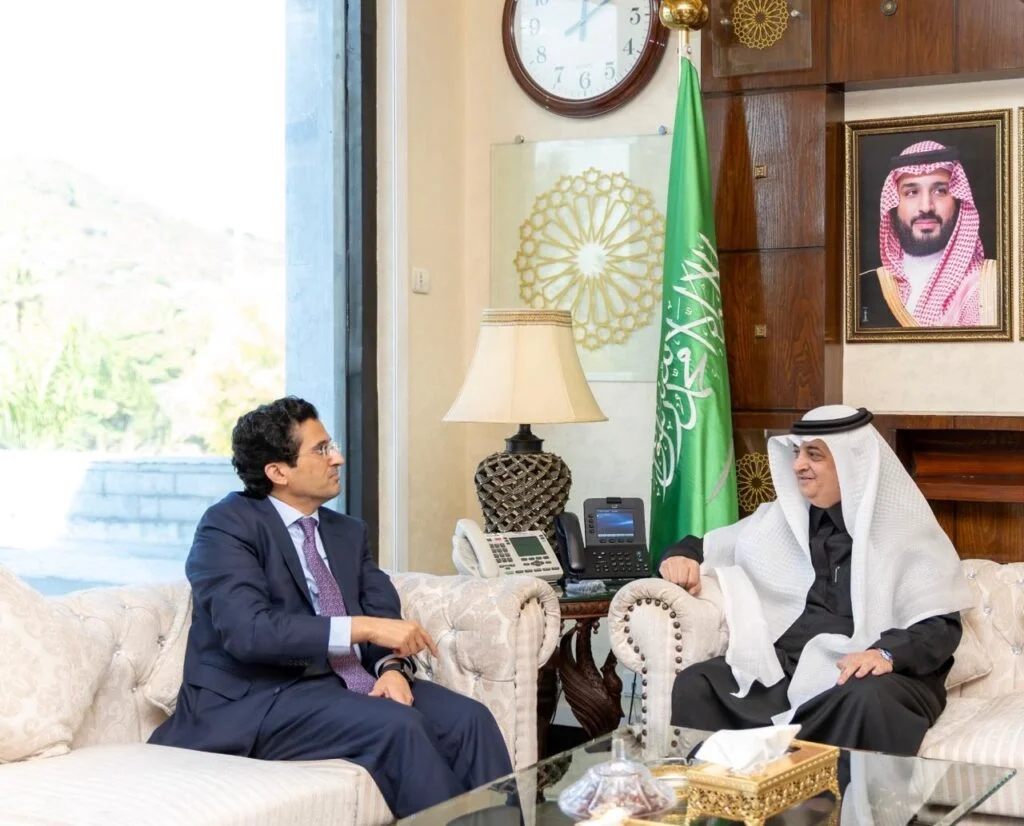
Pakistan and Saudi Arabia are deepening energy cooperation through refinery upgrade discussions, petroleum supply coordination, and potential long-term investments. The talks come as rising geopolitical tensions in the Middle East place pressure on global fuel markets and Pakistan’s foreign exchange reserves. The discussions also highlight Saudi Arabia’s continued role in supporting Pakistan’s energy security and broader economic stability.
Key Overview
- Pakistan and Saudi Arabia discuss refinery upgrades
- Talks focus on long-term energy cooperation
- Saudi Arabia reaffirms support for Pakistan’s energy security
- Discussions include potential investment projects
- Rising Middle East tensions increase fuel import pressures
- Pakistan seeks deeper cooperation with Saudi Aramco
Pakistan and Saudi Arabia Expand Energy Cooperation
Pakistan and Saudi Arabia have held fresh discussions aimed at strengthening long-term cooperation in the energy sector, with refinery upgrades and petroleum investments emerging as key areas of focus. The talks reflect growing efforts by both countries to deepen strategic and economic ties at a time of rising uncertainty in global energy markets and increasing volatility in fuel supply chains.
The discussions took place during a meeting in Islamabad between Pakistan’s Petroleum Minister Ali Pervaiz Malik and Saudi Ambassador Nawaf bin Saeed Al-Malki. According to Pakistan’s Petroleum Division, both sides reviewed ongoing cooperation in the petroleum sector and explored opportunities for broader long-term engagement across energy infrastructure, petroleum supplies, and investment projects.
Officials said the discussions included potential refinery upgrade projects and wider investment opportunities aimed at strengthening bilateral energy collaboration. Technical-level engagements between the two countries were also reported to be making positive progress toward longer-term cooperation frameworks, suggesting that discussions are moving beyond general policy coordination toward more concrete areas of implementation.
The latest engagement also reflects the importance both countries place on maintaining stable energy partnerships during periods of global market instability. For Pakistan, securing reliable fuel supplies and attracting investment into the energy sector remain critical priorities, while Saudi Arabia continues to strengthen its strategic partnerships across key regional markets.
Markets move fast; don’t get left behind. We’ve paired the Serrari Group Market Index with a curated Marketplace and a comprehensive Wealth Builder Course to ensure you have the data—and the skills—to act on it.
Refinery Upgrades and Investment Discussions
One of the central areas of discussion involved plans to modernize and upgrade Pakistan’s refinery infrastructure, an issue that has become increasingly important as the country seeks to strengthen domestic fuel production capacity and reduce long-term energy vulnerabilities. Many of Pakistan’s existing refineries require modernization to improve operational efficiency, produce cleaner fuels, and align with evolving international environmental and fuel quality standards.
Refinery upgrades are also viewed as important for reducing dependence on imported refined petroleum products, which can expose the country to higher costs during periods of global oil market volatility. Improving domestic refining capabilities could help Pakistan manage fuel supply risks more effectively while supporting broader energy security objectives.
The two countries are also continuing discussions around broader investment opportunities in the energy sector, including projects linked to refining, storage infrastructure, and petroleum supply chains. These conversations build on earlier discussions involving a multibillion-dollar refinery project at Gwadar that has been associated with Saudi Aramco over the years.
While no final agreements were announced following the latest meeting, officials indicated that ongoing consultations are advancing steadily, suggesting continued interest from both sides in expanding energy-sector cooperation. The discussions also highlight how long-term infrastructure investments are becoming increasingly important within the broader economic relationship between Islamabad and Riyadh.
Rising Regional Tensions Add Pressure
The talks come at a time when geopolitical tensions in the Middle East are placing additional pressure on global oil markets and energy-importing economies such as Pakistan. Joint US-Israel strikes against Iran earlier this year, along with subsequent tensions surrounding the Strait of Hormuz shipping route, have contributed to higher fuel costs, shipping disruptions, and increased uncertainty across global energy markets.
The Strait of Hormuz remains one of the world’s most strategically important energy transit routes, handling a substantial share of global oil shipments. Any disruption or escalation in the region can quickly affect fuel prices and transportation costs, creating ripple effects across energy-importing economies that rely heavily on overseas supplies.
For Pakistan, which depends significantly on imported petroleum products to meet domestic energy demand, rising oil prices and shipping costs can place considerable strain on foreign exchange reserves while increasing inflationary and fiscal pressures. Energy import costs remain a major factor affecting Pakistan’s economic stability, making secure and reliable fuel supply arrangements increasingly important.
In response to these challenges, Pakistan has been seeking stronger energy partnerships and more stable long-term supply arrangements to help manage energy security risks and reduce exposure to market volatility. Saudi Arabia has historically played an important role in supporting Pakistan during periods of economic stress, including through deferred oil payment facilities, favorable supply arrangements, and broader financial assistance packages.
Saudi Support for Pakistan’s Energy Security
During the meeting, Saudi Arabia reaffirmed its commitment to supporting Pakistan’s energy security and maintaining close cooperation across the petroleum value chain. The Saudi envoy reiterated Riyadh’s willingness to continue supporting Pakistan in addressing its energy challenges at a time when global fuel markets remain volatile and regional geopolitical tensions continue to affect energy trade flows.
Pakistan also expressed appreciation for what officials described as favorable petroleum supply arrangements provided by the Kingdom over the years. Petroleum Minister Ali Pervaiz Malik said Saudi support had helped Pakistan navigate current energy challenges and meet growing domestic energy requirements during periods of economic and market pressure.
Saudi Arabia has long played a critical role in supporting Pakistan’s energy sector through deferred oil payment facilities, financial assistance, and stable petroleum supply arrangements. Such support has become particularly important during periods when rising fuel import bills place pressure on Pakistan’s balance of payments and foreign exchange reserves.
The discussions also come shortly after Saudi Arabia committed additional financial support to Pakistan, including a reported $3 billion package and the extension of an existing $5 billion deposit aimed at strengthening Pakistan’s foreign exchange reserves. These measures reflect the broader strategic and economic relationship between the two countries, extending beyond energy cooperation alone.
Context is everything. While you follow today’s updates, use the Serrari Group Market Index and Marketplace to spot emerging shifts. Need to sharpen your edge? Our Wealth Builder Course turns these insights into a professional-grade strategy.
Strategic Partnership With Saudi Aramco
Pakistan also reiterated its intention to deepen its strategic energy partnership with Saudi Aramco, which remains central to long-term discussions around refining, fuel supply, petroleum infrastructure, and potential investment projects.
The relationship with Saudi Aramco is viewed as particularly important as Pakistan seeks to strengthen energy supply reliability while modernizing its domestic petroleum sector. Cooperation with one of the world’s largest energy companies could help Pakistan improve refining capabilities, attract long-term capital investment, and gain access to technical expertise required for large-scale energy infrastructure development.
Discussions involving refinery modernization and potential infrastructure investment projects have been ongoing for several years, including plans linked to Gwadar and broader petroleum-sector development. While major projects have yet to be finalized, both countries continue to signal strong interest in expanding cooperation across multiple areas of the energy value chain.
Officials from both countries indicated that discussions would continue as part of broader economic and strategic engagement between Islamabad and Riyadh. The continued dialogue highlights how energy cooperation remains a central pillar of the bilateral relationship between the two countries.
Energy Cooperation Amid Broader Regional Challenges
The discussions also took place against a backdrop of broader geopolitical instability in the Middle East. The Saudi envoy acknowledged Pakistan’s role in promoting regional peace and stability during a period of heightened tensions involving Iran, the United States, and Israel.
Energy security has increasingly become intertwined with geopolitical developments, particularly for countries heavily dependent on imported fuel supplies. Disruptions affecting major shipping routes, regional conflicts, or fluctuations in oil production can quickly influence fuel prices and transportation costs, creating economic pressures for importing nations.
As shipping routes and regional stability continue to influence global energy markets, long-term partnerships between suppliers and importing countries are becoming more strategically important. Stable bilateral relationships can help reduce supply risks, improve financing arrangements, and provide greater predictability during periods of market volatility.
For Pakistan, maintaining strong ties with Saudi Arabia offers both economic and energy security benefits, particularly during periods of elevated import costs and global market disruption. The relationship also reflects a broader effort by Pakistan to strengthen strategic partnerships capable of supporting long-term energy stability and infrastructure development.
Outlook
The latest discussions between Pakistan and Saudi Arabia highlight the growing importance of long-term energy partnerships amid rising uncertainty in global fuel markets and increasing geopolitical volatility across key oil-producing regions. By focusing on refinery upgrades, investment cooperation, and petroleum supply coordination, both countries are seeking to strengthen energy security while also expanding broader economic and strategic ties.
For Pakistan, deeper cooperation with Saudi Arabia could help support refinery modernization efforts, improve fuel supply reliability, and reduce some of the pressure created by volatile international energy prices and shipping disruptions. Enhanced investment in refining and petroleum infrastructure may also help strengthen the country’s long-term energy resilience as domestic energy demand continues to grow.
At the same time, Saudi Arabia continues to reinforce its position as one of Pakistan’s most important energy and financial partners. The Kingdom’s continued support through petroleum supply arrangements, financial assistance, and potential infrastructure investments reflects the strategic importance of the bilateral relationship beyond short-term market considerations.
Looking ahead, the pace of refinery investment decisions and broader cooperation with Saudi Aramco will likely shape the next phase of bilateral energy relations. Continued progress on long-term projects and infrastructure partnerships could play an important role in strengthening Pakistan’s energy security while deepening economic cooperation between the two countries.
Your financial future isn’t something you wait for—it’s something you build.
The real question is: when do you begin?
Move beyond simply staying informed.
Navigate the markets with clarity—track trends through the Serrari Group Market Index, uncover opportunities in the Serrari Marketplace, and build practical knowledge with our Curated Wealth Builder Course.
Stay connected to what truly matters.
Get daily insights on macro trends and financial movements across Kenya, Africa, and global markets—delivered through the Serrari Newsletter.
Growth opens doors.
Advance your career through professional programs including ACCA, HESI A2, ATI TEAS 7 , HESI EXIT , NCLEX – RN and NCLEX – PN, Financial Literacy!🌟—designed to move you forward with confidence.
See where money is flowing—clearly and in real time.
Track Money Market Funds, Treasury Bills, Treasury Bonds, Green Bonds, and Fixed Deposits, alongside global and African indexes, key economic indicators, and the evolving Crypto and stablecoin landscape—all within Serrari’s Market Index.