New York State’s finalized Fiscal Year 2027 budget includes major amendments to the Climate Leadership and Community Protection Act (CLCPA), weakening several enforcement measures and delaying key emissions regulations.
While the budget preserves some long-term climate goals, environmental groups say the changes reduce accountability and could slow New York’s transition away from fossil fuels.
The package also maintains significant funding for clean energy, energy efficiency, and climate adaptation programs.
Key Overview
- New York weakened key provisions of the CLCPA in its FY2027 budget
- The budget delays greenhouse gas regulations until 2028
- A new interim target of 60% emissions reductions by 2040 was introduced
- The state retained its binding 85% emissions reduction target by 2050
- The budget includes $1 billion for the Sustainable Future Fund
- Utility affordability reforms and rebate measures were approved
- Environmental groups criticized the rollback of climate accountability measures
New York Revises Landmark Climate Law
New York State’s finalized Fiscal Year 2027 budget includes significant changes to the Climate Leadership and Community Protection Act, one of the most ambitious climate laws in the United States.
The budget weakens several regulatory and accountability provisions tied to emissions reductions while delaying implementation timelines for major climate regulations.
Environmental organizations, including the Natural Resources Defense Council (NRDC), expressed disappointment at the changes, warning that the revisions could undermine New York’s climate ambitions.
Critics argue that weakening enforcement mechanisms may prolong fossil fuel dependence and delay progress toward cleaner energy systems.
However, the budget still preserves some of the state’s core long-term climate obligations.
Budget Delays Key Climate Regulations
One of the biggest changes in the budget is the delay of greenhouse gas regulations that were originally expected before 2025.
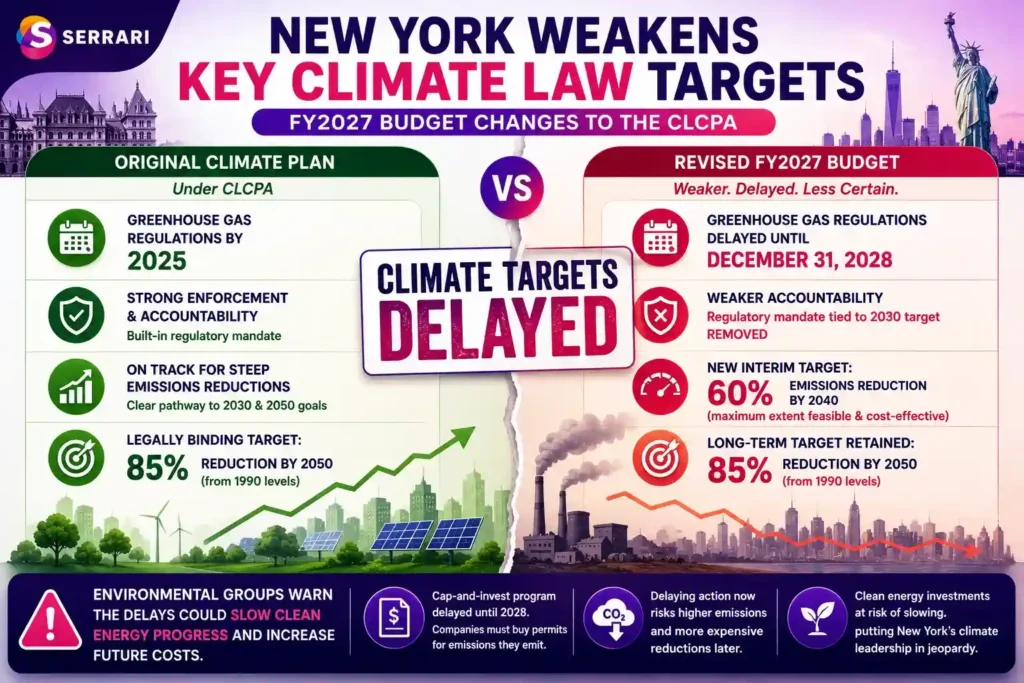
Under the revised legislation, New York’s Department of Environmental Conservation now has until December 31, 2028, to release regulations for greenhouse gas emissions, including a proposed cap-and-invest program.
Under such a system, companies would need to purchase permits tied to the amount of greenhouse gases they emit.
Environmental advocates said delaying these regulations risks slowing investment in clean energy infrastructure and emissions reductions.
The budget also removes the regulatory mandate tied to the state’s 2030 emissions target and weakens the state’s greenhouse gas accounting methodology.
New Interim Emissions Target Introduced
The budget establishes a new interim target of reducing economy-wide greenhouse gas emissions by 60 percent by 2040.
However, the target is tied to a “maximum extent feasible and cost-effective” standard, which critics say weakens enforceability.
At the same time, the state preserved the CLCPA’s legally binding target of reducing greenhouse gas emissions by 85 percent reductions from 1990 levels by 2050.
Environmental groups warned that delaying action now could make future emissions reductions more difficult and expensive.
Hochul Defends Climate Law Changes
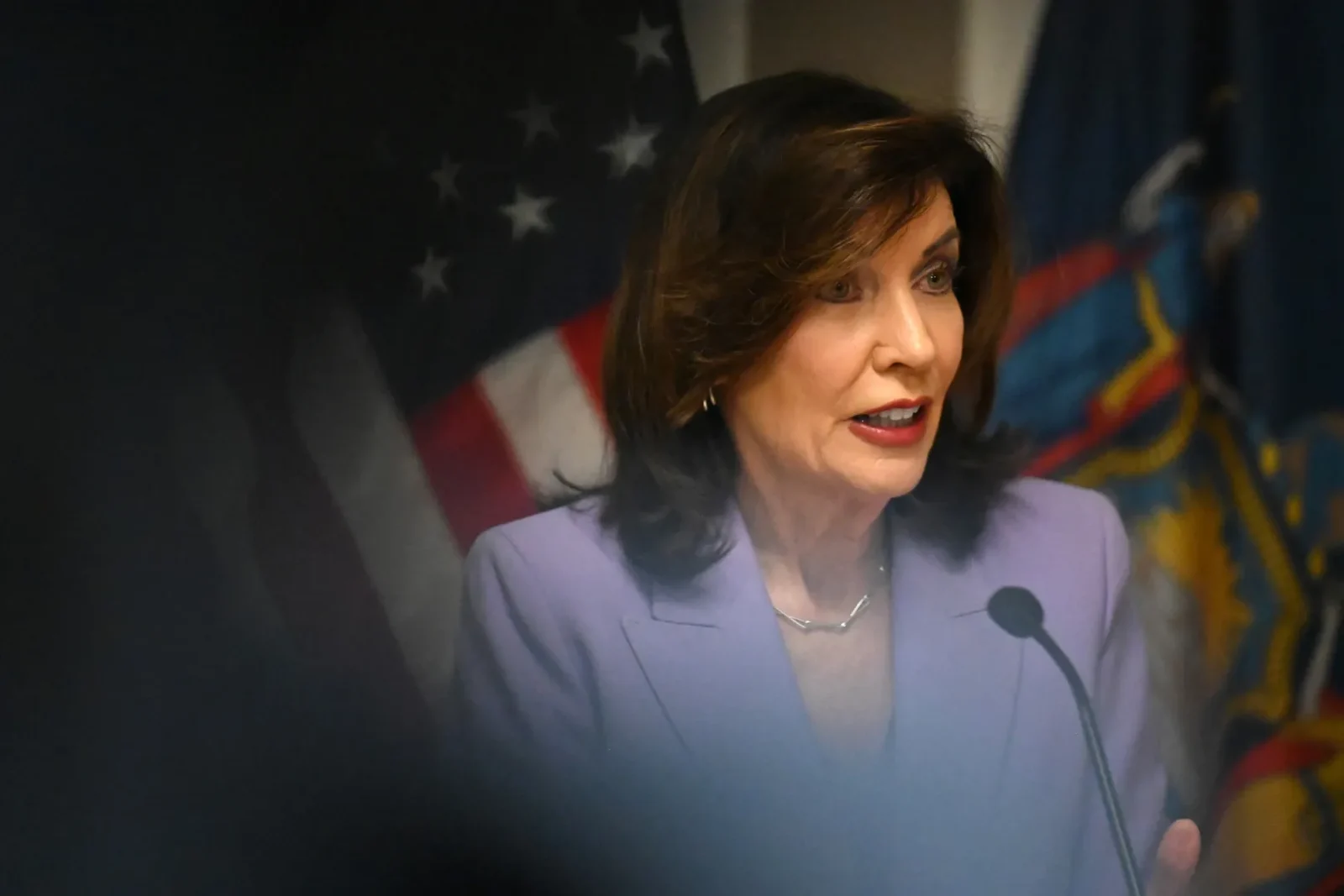
New York Governor Kathy Hochul argued that some original climate targets were unrealistic under current economic and political conditions.
Hochul said broader energy market pressures and federal policies toward renewable energy risked increasing energy prices if the original timelines remained unchanged.
Environmental advocates disputed those claims and argued that delaying clean energy investment could expose New Yorkers to even greater fossil fuel price volatility over time.
The debate comes as global energy prices remain unstable amid geopolitical tensions and supply disruptions.
Context is everything. Stay ahead of shifting trends with today’s market updates, and uncover emerging opportunities using the Serrari Group Market Index and Marketplace. Then, take control of your own financial future by exploring our Money & Life Reset Transformation Blueprint ™ to build stronger habits, create better systems, and design a path toward lasting wealth.
Budget Retains Climate and Energy Funding
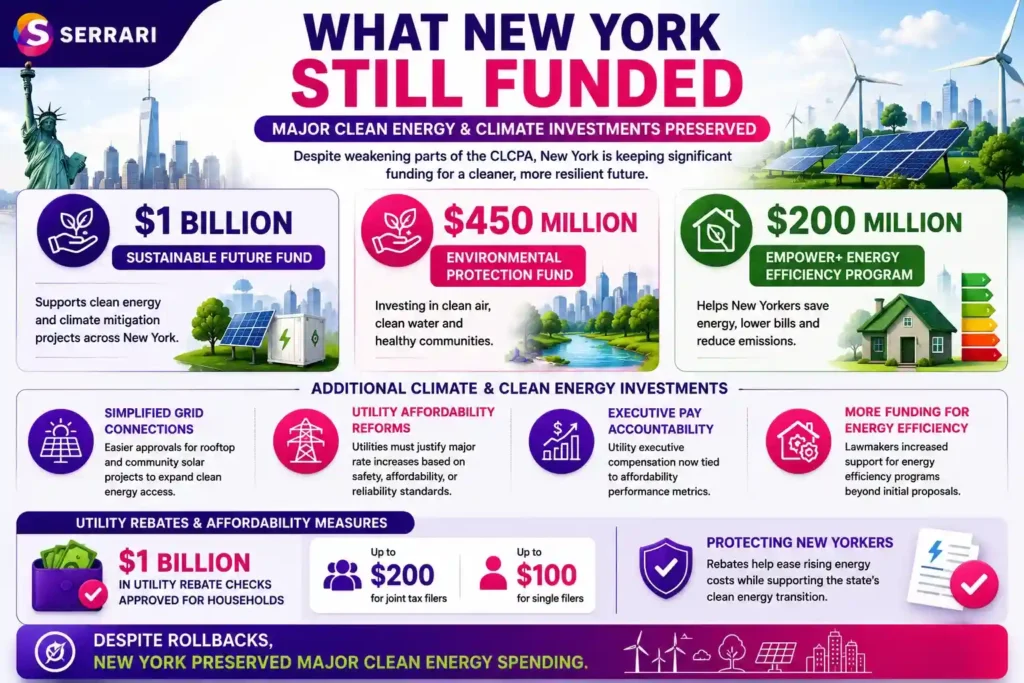
Despite weakening parts of the CLCPA, the budget still includes major climate and clean energy spending.
The package commits $1 billion to the Sustainable Future Fund, which supports clean energy and climate mitigation projects across the state.
The budget also includes:
- $200 million for the Empower+ energy efficiency program
- $450 million for the Environmental Protection Fund
- Measures to simplify grid connections for rooftop and community solar projects
- Utility affordability reforms and rebate programs
Officials said utility companies will now need to justify major rate increases based on safety, affordability, or reliability standards.
Executive compensation at utility companies will also be linked to affordability performance metrics.
Utility Rebates and Affordability Measures Added
The state also approved $1 billion in utility rebate checks for households.
Joint tax filers could receive rebates of up to $200 while single filers may receive up to $100.
The rebates reflect growing concern over rising household energy costs and affordability pressures.
Analysts say balancing climate transition goals with energy affordability remains one of the biggest political and economic challenges facing governments globally.
At the same time, lawmakers agreed to increase funding for energy efficiency programs beyond the amount originally proposed by Governor Hochul.
Outlook
New York’s FY2027 budget highlights the growing tension between climate ambition, economic pressures, and energy affordability concerns.
While the state preserved major long-term emissions targets and maintained significant clean energy funding, the weakening of enforcement mechanisms and delays to key regulations have raised concerns among environmental groups.
The success of New York’s climate strategy will now depend heavily on how aggressively the state implements future cap-and-invest regulations and expands clean energy infrastructure before the revised 2028 deadline.
Your financial future isn’t something you wait for—it’s something you build.
The real question is: when do you begin?
Move beyond simply staying informed.
Navigate the markets with clarity—track trends through the Serrari Group Market Index, uncover opportunities in the Serrari Marketplace, and build practical knowledge with our Curated Wealth Builder Platform.
Stay connected to what truly matters.
Get daily insights on macro trends and financial movements across Kenya, Africa, and global markets—delivered through the Serrari Newsletter.
Growth opens doors.
Advance your career through professional programs including ACCA, HESI A2, ATI TEAS 7 , HESI EXIT , NCLEX – RN and NCLEX – PN, Financial Literacy!🌟—designed to move you forward with confidence.
See where money is flowing—clearly and in real time.
Track Money Market Funds, Treasury Bills, Treasury Bonds, Green Bonds, and Fixed Deposits, alongside global and African indexes, key economic indicators, and the evolving Crypto and stablecoin landscape—all within Serrari’s Market Index.
Sources: NRDC, NEWS10 ABC, New York Focus