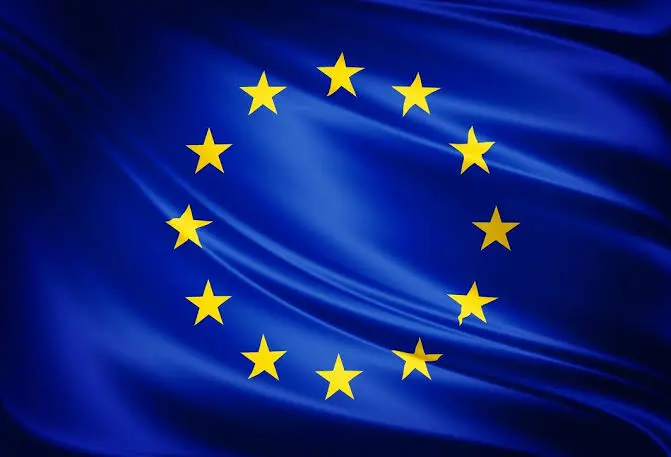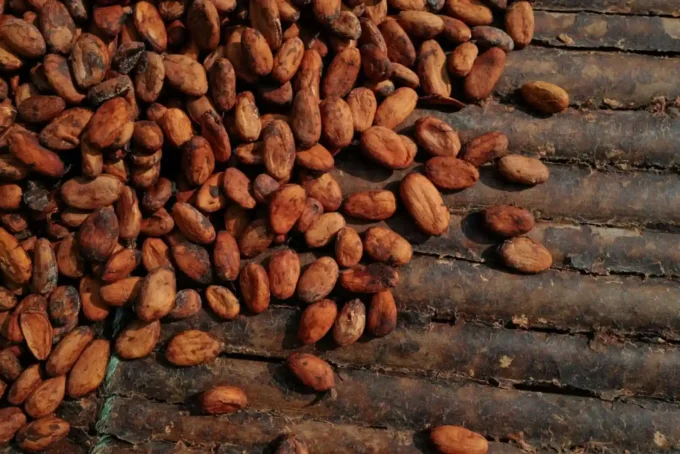
















The European Union and the South American Mercosur bloc have begun provisionally applying their contentious free trade agreement as of May 1, 2026, creating a trading zone of more than 700 million people in what the EU describes as its largest-ever deal in terms of tariff reductions. The agreement, which took 25 years to negotiate, immediately reduces duties on key EU exports including electric vehicles, pharmaceuticals, and agri-food products to Argentina, Brazil, Paraguay, and Uruguay. However, it enters into force under significant legal and political uncertainty: the European Parliament voted in January to refer the deal to the EU Court of Justice for a compatibility review, a process that could take up to two years. Despite this challenge, the European Commission pressed ahead with provisional application, hoping that visible economic benefits will build the political support needed for eventual parliamentary approval. Economists caution that the deal, alongside other recently concluded EU trade agreements with India, Indonesia, Australia, and Mexico, will deliver only modest GDP gains and cannot fully offset the blow from US tariffs or the intensifying competitive pressure from China across global markets.
Markets move fast; don’t get left behind. We’ve paired the Serrari Group Market Index with a curated Marketplace and a comprehensive Wealth Builder Platform to ensure you have the data—and the skills—to act on it.
Key Overview
- Agreement: EU-Mercosur Interim Trade Agreement (ITA)
- Provisional Application Date: May 1, 2026
- Coverage: Free trade zone of 700+ million people
- Negotiation Duration: 25 years
- EU Parliament Vote: 334-324 to refer to EU Court of Justice (January 21, 2026)
- EU Council Vote: 21-5 in favour (January 9, 2026); Austria, France, Hungary, Ireland, Poland opposed
- Signing: January 17, 2026, in Asunción, Paraguay
- Key EU Tariff Cuts: EV duties from 35% to 25%; ICE cars from 35% to 17.5%
- Projected EU GDP Boost (Mercosur): 0.05% by 2040
- Projected EU GDP Boost (India deal): ~0.1–0.13%
- Projected EU GDP Hit (US tariffs): ~0.3% in 2026
- China’s 2025 Trade Surplus: Record US$1.2 trillion
The EU’s Biggest Trade Deal Goes Live
On May 1, 2026, the European Union took a decisive step in its trade strategy by provisionally applying its long-negotiated free trade agreement with Mercosur — the South American bloc comprising Argentina, Brazil, Paraguay, and Uruguay. The deal, which the European Commission describes as the EU’s largest-ever agreement in terms of tariff reductions, creates a free trade area covering more than 700 million people and begins delivering immediate tariff relief to EU exporters across industrial goods, services, and agriculture.
From day one, duties on EU electric vehicles exported to Mercosur countries drop from 35% to 25%, while tariffs on internal combustion engine cars are halved from 35% to 17.5%. Machinery and appliances, which currently face duties of 14-20%, begin a ten-year phased elimination covering 93% of EU exports in those categories. Textiles face an eight-year transition from 35% to zero. EU companies can also now bid for government procurement contracts across Mercosur on equal footing with local firms, and 344 EU geographical indications receive immediate legal protection.
On the agricultural side, the Commission projects the deal could lead to a 50% increase in EU agri-food exports to the Mercosur region. Several products, including sparkling wines, fruit, vegetable oils, and some pet food, see tariff elimination from day one, while most other agri-food products receive an initial tariff cut that creates new export opportunities immediately.
A Quarter-Century of Negotiations — and a Legal Cloud
The agreement’s journey to implementation has been anything but smooth. Negotiations between the EU and Mercosur began in 1999, with an agreement in principle reached at the 2019 G20 summit in Osaka. Political opposition, environmental concerns, and the COVID-19 pandemic then delayed progress for years. A final agreement was announced in December 2025 and signed on January 17, 2026, in Asunción.
Just four days later, the European Parliament voted 334 to 324 to refer the deal to the EU Court of Justice for a legal opinion on whether it is compatible with EU treaties. The challenge centres on the Commission’s decision to split the deal into an interim trade agreement, which falls under exclusive EU competence, and a broader partnership agreement requiring ratification by all national parliaments. Critics, including MEPs from France, Poland, and Ireland, argue this splitting tactic bypasses national parliamentary scrutiny over provisions affecting agriculture, environmental regulation, and labour standards.
The court could take up to two years to deliver its opinion. In the meantime, the Commission proceeded with provisional application after receiving backing from the European Council. All four Mercosur countries completed their domestic ratification procedures by March 2026, clearing the way for the May 1 launch.
Supporters, including Germany and Spain, hope that once the deal’s benefits become visible to exporters, the political case for parliamentary approval will be self-evident. As analysts at the Centre for European Policy Studies noted, the provisional application serves both an economic and political function, providing evidence that may prove more persuasive than projections when MEPs eventually vote.
Context is everything. While you follow today’s updates, use the Serrari Group Market Index and Marketplace to spot emerging shifts. Need to sharpen your edge? Our Wealth Builder Platform turns these insights into a professional-grade strategy.
Trump’s Tariffs: The Catalyst Behind the EU’s Trade Rush
The urgency behind the Mercosur deal — and the broader wave of EU trade agreements concluded in recent months — is inseparable from the disruption caused by US trade policy under President Donald Trump. Since his return to office, Trump has imposed multiple rounds of tariffs affecting imports from virtually all major trading partners, sending shockwaves through global commerce.
While the US Supreme Court struck down IEEPA-based tariffs as unconstitutional in February 2026, the administration immediately replaced them with a 10% global tariff under Section 122 of the Trade Act of 1974. Further Section 301 investigations targeting 16 economies, including the EU, have been initiated, creating ongoing uncertainty for transatlantic trade.
Against this backdrop, the EU has pursued what amounts to a trade deal sprint. Alongside Mercosur, the bloc has concluded or advanced agreements with India, Indonesia, Australia, and Mexico since Trump’s re-election. The EU-India agreement, dubbed the “mother of all deals,” brings together approximately two billion consumers and a quarter of global GDP. According to the Kiel Institute for the World Economy, that deal could boost bilateral trade by 41 to 65 percent and raise real incomes by 0.12-0.13% of GDP on both sides.
The strategic rationale is clear: the EU wants to shore up its trading relationships and reduce dependence on any single market. But economists caution that the arithmetic is sobering. The European Commission has estimated the Mercosur deal will boost EU GDP by just 0.05% by 2040, while the Kiel Institute’s analysis of the India deal projects a GDP gain of approximately 0.13% for the EU. Allianz Research has separately estimated that the EU-India agreement could add roughly US$19.2 billion to annual EU exports and offset nearly a quarter of US-related export losses. These are meaningful figures, but they represent gains that will take years to materialise fully, while the pain from US tariffs has been immediate.
Carsten Brzeski, global head of macro at ING Research, has argued that it is difficult to see these new trade relationships replacing the United States, noting the significant gap in GDP per capita between the US and the EU’s new trading partners.
China: The Elephant in Every Room
Even as the EU secures preferential access to new markets, it faces a formidable competitor that has been building its commercial presence in those same markets for two decades: China.
China reported a record trade surplus of nearly US$1.2 trillion in 2025, driven by soaring exports to non-US markets even as shipments to America fell 20%. Chinese exports to Africa surged 26%, to Southeast Asia by 13%, to the EU by 8%, and to Latin America by 7%. The country’s manufacturers, particularly in electric vehicles, machinery, and electronics, have rapidly expanded their global footprint.
Global Trade Alert estimated that US tariffs led to approximately US$150 billion of Chinese exports being redirected globally, with ASEAN countries absorbing more than US$70 billion and sharp increases seen across Latin America, sub-Saharan Africa, and the Gulf region. This means that EU companies entering Mercosur and other markets through newly concluded trade agreements will immediately face entrenched Chinese competition, often at price points that European manufacturers struggle to match.
Lucrezia Reichlin, professor of economics at the London Business School, has pointed out that the challenge extends beyond tariffs. China’s engagement in Asia and Africa has encompassed investment and the energy transition, creating deep commercial relationships that will not be easily displaced.
Maximiliano Mendez-Parra, principal research fellow at ODI Global, has noted that conditions have changed substantially since he co-authored a 2020 European Commission report forecasting a 0.1% EU GDP increase from the Mercosur deal. Since then, China has dramatically ramped up sales of vehicles and machinery — precisely the categories the EU hopes to export.
What Mercosur’s Opponents Fear
Opposition to the deal remains fierce in several EU member states. France has been the most vocal critic, with President Emmanuel Macron long arguing that the agreement would flood European markets with cheap South American beef and sugar while undermining domestic farmers and environmental standards. Austria, Hungary, Ireland, and Poland also voted against the deal in the Council.
Environmental groups have warned that increased agricultural trade with Mercosur could accelerate rainforest destruction in Brazil and other countries, particularly through expanded cattle ranching and soy production. The deal includes provisions on sustainable development, but critics question whether they are enforceable.
The agricultural concerns are not without merit, but supporters argue they are often overstated. The agreement includes carefully calibrated tariff-rate quotas on sensitive products, robust safeguard mechanisms, and the ability to temporarily suspend preferential treatment if market disruption occurs. The CEPS analysis noted that previous EU trade agreements with Japan and Canada actually increased EU agricultural exports, and that fears of import surges did not materialise in those cases.
Mass protests preceded the January vote, with thousands of farmers driving tractors to the European Parliament in Strasbourg and clashing with police outside the building. The political intensity of the opposition ensures that even with provisional application underway, the deal’s long-term survival will depend on demonstrating tangible benefits before MEPs are asked to cast their definitive vote.
Can the EU’s Single Market Do What Trade Deals Cannot?
The most provocative argument in the current debate may be the one that looks inward rather than outward. Roughly 60% of EU exports are between EU member states, making the internal single market by far the largest economic relationship the bloc has. Several economists have argued that making the single market more efficient and competitive could easily compensate for lost US exports — and perhaps more effectively than any collection of external trade deals.
This perspective does not diminish the strategic importance of agreements with Mercosur, India, and others. But it does place them in proportion. The EU’s new trade accords, valuable as they are, represent incremental gains measured in fractions of a percentage point of GDP. A genuine deepening of the single market in services, digital commerce, and capital markets could deliver significantly larger benefits in a shorter timeframe.
The EU’s trade deal blitz reflects a pragmatic response to a rapidly changing global order. Mercosur, India, Indonesia, Australia, and Mexico collectively offer new markets, supply chain diversification, and geopolitical alignment. But they do not replace the US market, and they enter competitive landscapes where China has a significant head start. The provisional application of the Mercosur deal is both a statement of intent and a gamble: a bet that results on the ground will eventually overcome the political and legal obstacles that still stand in the way of full implementation.
Your financial future isn’t something you wait for—it’s something you build.
The real question is: when do you begin?
Move beyond simply staying informed.
Navigate the markets with clarity—track trends through the Serrari Group Market Index, uncover opportunities in the Serrari Marketplace, and build practical knowledge with our Curated Wealth Builder Platform.
Stay connected to what truly matters.
Get daily insights on macro trends and financial movements across Kenya, Africa, and global markets—delivered through the Serrari Newsletter.
Growth opens doors.
Advance your career through professional programs including ACCA,HESI A2,ATI TEAS 7,HESI EXIT ,NCLEX – RNandNCLEX – PN, Financial Literacy!🌟—designed to move you forward with confidence.
See where money is flowing—clearly and in real time.
Track Money Market Funds, Treasury Bills, Treasury Bonds, Green Bonds, and Fixed Deposits, alongside global and African indexes, key economic indicators, and the evolving Crypto and stablecoin landscape—all withinSerrari’s Market Index.