
















Kenya’s National Treasury has confirmed that the Finance Bill 2026 will not introduce new tax rates, opting instead for a compliance-driven revenue strategy built on digital enforcement, informal sector taxation, and alignment with global minimum tax standards. Cabinet Secretary John Mbadi told the National Assembly’s Budget and Appropriations Committee that the government has learned from the 2024 anti-Finance Bill protests, which forced a full withdrawal of that year’s tax proposals after nationwide unrest. Instead, the Treasury is placing pressure on the Kenya Revenue Authority to modernise its digital infrastructure, expand the tax base through automated tracking, and close loopholes in sectors such as rental income and informal trade. Key provisions include a 5% deemed profit tax on mitumba (second-hand clothing) imports payable at the point of entry, full implementation of the Domestic Minimum Top-Up Tax ensuring multinational corporations pay at least 15% effective tax, and the expansion of the e-TIMS electronic invoicing platform to all professional services. Meanwhile, NSSF Phase 4 adjustments effective from February 2026 have already raised the Tier II upper earnings limit to KSh 108,000, increasing payroll costs for formal sector employers and higher-earning employees.
Markets move fast; don’t get left behind. We’ve paired the Serrari Group Market Index with a curated Marketplace and a comprehensive Wealth Builder Platform to ensure you have the data—and the skills—to act on it.
Key Overview
- Finance Bill Approach: No new tax rates; focus on compliance and base expansion
- National Budget: Projected to exceed KSh 3.9 trillion
- KRA Revenue Target (FY 2025/26): KSh 3.32 trillion
- KRA Actual Collection (FY 2024/25): KSh 2.57 trillion (98.1% performance rate)
- Mitumba Tax: 5% deemed profit on customs value; final tax at point of importation
- DMTT: 15% minimum effective tax rate for multinationals with €750M+ consolidated revenue
- First DMTT Payment Due: April 30, 2026
- e-TIMS Expansion: All professional services including legal and medical consultancies
- NSSF Phase 4: Tier II upper limit raised from KSh 72,000 to KSh 108,000 (effective February 2026)
- Maximum Monthly NSSF Contribution: KSh 6,480 per employee (up from KSh 4,320)
- Political Context: 2024 anti-Finance Bill protests; 2027 general election approaching
- Infrastructure Targets: National Infrastructure Fund and Sovereign Wealth Fund seeking KSh 5 trillion
No New Taxes: A Political and Fiscal Calculation
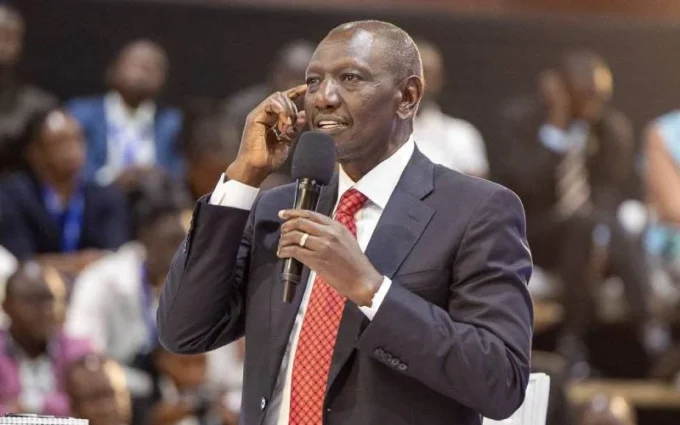
The decision to avoid introducing new tax rates in the Finance Bill 2026 is as much a political survival strategy as it is a fiscal policy choice. Cabinet Secretary John Mbadi made the government’s position unequivocal when he appeared before the National Assembly’s Budget and Appropriations Committee in March 2026, stating plainly that there is no possibility of increasing tax rates because the economic situation facing Kenyans has not changed enough to warrant new levies.
The assurance comes directly from the trauma of 2024, when proposed tax increases under the Finance Bill triggered nationwide protests that nearly destabilised the country, forced the withdrawal of the entire bill, and inflicted lasting political damage on President William Ruto’s administration. Mbadi acknowledged this explicitly, telling lawmakers that the government had tried to push for more taxes and saw the consequences. With the 2027 general election approaching, the political appetite for new levies has effectively evaporated.
Instead, the Treasury is betting on a different strategy: squeezing more revenue from existing tax structures through digital enforcement, automated compliance systems, and targeted measures aimed at sectors that have historically operated outside the formal tax net. Mbadi admitted that the tax base has not expanded as quickly as anticipated, but insisted that reforms at the KRA and the transition from manual to digital collection methods would close the gap.
The national budget for FY 2026/27 is projected to exceed KSh 3.9 trillion, with Parliament imposing a spending ceiling of roughly KSh 2.88 trillion for national government expenditure. KRA’s revenue target for FY 2025/26 stands at KSh 3.32 trillion, while the authority collected KSh 2.57 trillion in FY 2024/25, achieving a 98.1% performance rate with domestic revenue rising 4.8%.
The Mitumba Tax: Formalising the Informal
One of the most politically sensitive provisions in the 2026 bill targets the mitumba trade — the massive second-hand clothing import sector that provides affordable clothing to millions of Kenyans and livelihoods to thousands of small-scale traders in markets like Gikomba and Toi.
Under the new framework, the bill introduces Section 12H into the Income Tax Act, establishing a deemed profit approach where 5% of the customs value of imported mitumba goods will be treated as taxable income. The applicable income tax rate is then applied to this deemed profit, with the tax collected at the point of importation before goods are released into the market. Critically, this tax is structured as a final charge, meaning importers will not be required to make further income tax declarations or adjustments for the same consignments.
The measure applies to worn clothing, worn footwear, and other worn articles classified under tariff heading 6309. The government expects this single provision to generate an additional KSh 12 billion annually. However, analysts have warned that the tax could push up prices of second-hand clothing, which remains a key source of affordable wear for millions of Kenyans.
The broader policy intent behind the mitumba tax extends beyond revenue. By introducing a tax at the point of importation, the government aims to reduce the price advantage that second-hand imports enjoy over domestically produced clothing and footwear. Kenya’s textile and manufacturing sectors have long struggled to compete with low-cost mitumba imports, and this measure represents an attempt to level the playing field while simultaneously bringing informal traders into the formal tax system.
The Multinational Minimum Tax: Aligning With Global Standards
Perhaps the most structurally significant element of the 2026 fiscal framework is the full implementation of the Domestic Minimum Top-Up Tax. Introduced through the Tax Laws Amendment Act 2024 and given a payment timeline through the Finance Act 2025, the DMTT ensures that multinational corporations operating in Kenya with consolidated annual revenues of at least €750 million pay a minimum effective tax rate of 15%, regardless of any local incentives they may have previously negotiated.
The tax is derived from the OECD/G20 Inclusive Framework on Base Erosion and Profit Shifting (BEPS) Pillar Two, which seeks to establish a global minimum effective tax rate of 15% in every jurisdiction where an in-scope multinational group operates. By implementing the DMTT, Kenya retains the right to collect top-up taxes on low-taxed profits within its jurisdiction, preventing other countries from capturing that revenue under the global rules.
The first minimum top-up tax payments became due by April 30, 2026 for businesses with December year-ends. As tax firm Cliffe Dekker Hofmeyr noted in its 2026 outlook, the DMTT fundamentally alters the taxation of multinational groups by prioritising formula-driven compliance over discretionary incentives, requiring affected groups to focus on accurate effective tax rate computations and robust group reporting systems.
However, the implementation comes with a notable exemption. US-headquartered companies are excluded from the DMTT following an agreement reached in January 2026 with more than 145 countries, recognising US tax sovereignty over the worldwide operations of American companies.
Context is everything. While you follow today’s updates, use the Serrari Group Market Index and Marketplace to spot emerging shifts. Need to sharpen your edge? Our Wealth Builder Platform turns these insights into a professional-grade strategy.
Digital Enforcement: The e-TIMS Expansion
At the operational core of the compliance strategy is the continued expansion of the electronic Tax Invoice Management System, or e-TIMS. The platform, which requires businesses to generate electronic invoices that are transmitted in real-time to KRA, is being extended under the Finance Bill 2026 to cover all professional services, including legal and medical consultancies.
The e-TIMS expansion forms part of a broader shift toward what the Treasury describes as “income visibility.” Rather than raising VAT or corporate income tax rates, the KRA will implement a risk-based enforcement model that uses data from integrated systems to identify individuals and businesses whose lifestyles do not match their reported income. Rental income has been specifically flagged as a sector where the taxman has been chronically under-collecting.
Mbadi acknowledged that one of the biggest challenges facing KRA is that taxpayers have gone digital while collection methods remain partly manual. The reforms aim to close this gap by modernising KRA’s digital infrastructure, integrating databases, and reducing reliance on manual processes that are susceptible to errors and manipulation.
The approach has drawn cautious praise from the IMF and international lenders as a path toward fiscal sustainability. However, critics note that digital enforcement tends to squeeze already-compliant formal sector businesses rather than bringing genuinely new taxpayers into the system. Much of Kenya’s economy remains cash-based and operates outside formal reporting structures, making the transition from informal to formal taxation a persistent structural challenge.
NSSF Phase 4: The Payroll Squeeze
While the Finance Bill avoids new tax rates, formal sector employees are already feeling the effects of the fourth phase of National Social Security Fund adjustments, which took effect in February 2026. Under this phase, the Tier I lower earnings limit increased from KSh 8,000 to KSh 9,000, while the Tier II upper earnings limit jumped significantly from KSh 72,000 to KSh 108,000.
The contribution rate remains at 6% each for employee and employer, but the expanded earnings base means substantially higher deductions for middle and higher-income earners. The maximum monthly employee contribution has risen from KSh 4,320 to KSh 6,480, with employers required to match the same amount, pushing the total maximum monthly contribution to KSh 12,960 per employee.
Workers earning below KSh 50,000 per month will see no material change, as their earnings already fall within previous contribution thresholds. The pinch is concentrated on those earning above KSh 72,000, who will see noticeable reductions in take-home pay. NSSF contributions are tax-deductible, which partially softens the impact — for top earners, the effective monthly reduction in take-home pay is approximately KSh 1,512 rather than the full KSh 2,160.
These reforms represent the fourth year of a five-year phased rollout under the NSSF Act 2013, which replaced the outdated flat-rate contribution system. NSSF assets have risen to KSh 558 billion by June 2025, with annual inflows projected to exceed KSh 100 billion following the 2026 adjustments.
Mobilising Capital Without Taxing More
The Treasury’s restraint on taxation sits alongside ambitious capital mobilisation targets. The National Infrastructure Fund and the Sovereign Wealth Fund are seeking to mobilise KSh 5 trillion, a figure that cannot be achieved through tax revenue alone. Instead, the government is looking to monetise public assets and attract private capital through public-private partnerships and other blended finance mechanisms.
Mbadi signalled earlier in the year that the government’s priority is to reduce business taxes to the bare minimum to protect jobs and create employment opportunities, arguing that excessive taxation of businesses reduces their capacity to expand, invest, and hire workers. This philosophy — lower rates, broader base, tighter enforcement — represents a fundamental shift from the approach that characterised the politically disastrous 2024 Finance Bill.
The Trust Deficit
The success of the 2026 strategy depends entirely on whether the KRA can implement fair, transparent, and consistent enforcement. For a manufacturing firm in Industrial Area or a tech startup in Westlands, the removal of specific tax incentives could be as commercially damaging as a direct tax increase. The government is effectively trading one form of fiscal pressure for another, and the distinction matters mainly in perception rather than in the bottom-line impact on businesses.
The broader question is whether Kenya’s institutional infrastructure — its courts, its regulatory agencies, its digital systems — can support a compliance-driven model at scale. The tax-to-GDP ratio, which stood at approximately 13.5% in 2022/23, is targeted to reach 20% by 2026/27 under the government’s Medium-Term Revenue Strategy. Closing that gap through enforcement alone, without alienating the formal sector or triggering a new round of public backlash, requires a level of institutional capacity and public trust that remains fragile.
As the draft Finance Bill moves through parliamentary scrutiny, the conversation in Nairobi’s boardrooms has shifted from how much more businesses will pay to how much better they must report. That may be progress. But it is progress built on a delicate foundation — one that can only hold if enforcement is perceived as fair, consistent, and genuinely aimed at broadening the base rather than punishing those already within it.
Your financial future isn’t something you wait for—it’s something you build.
The real question is: when do you begin?
Move beyond simply staying informed.
Navigate the markets with clarity—track trends through the Serrari Group Market Index, uncover opportunities in the Serrari Marketplace, and build practical knowledge with our Curated Wealth Builder Platform.
Stay connected to what truly matters.
Get daily insights on macro trends and financial movements across Kenya, Africa, and global markets—delivered through the Serrari Newsletter.
Growth opens doors.
Advance your career through professional programs including ACCA,HESI A2,ATI TEAS 7,HESI EXIT ,NCLEX – RNandNCLEX – PN, Financial Literacy!🌟—designed to move you forward with confidence.
See where money is flowing—clearly and in real time.
Track Money Market Funds, Treasury Bills, Treasury Bonds, Green Bonds, and Fixed Deposits, alongside global and African indexes, key economic indicators, and the evolving Crypto and stablecoin landscape—all withinSerrari’s Market Index.