Angola has reclaimed its position as Africa’s sixth-largest economy, pushing Kenya down to seventh, according to the International Monetary Fund’s April 2026 World Economic Outlook data. Angola’s nominal GDP now stands at $152.35 billion compared to Kenya’s $147.26 billion, a reversal from December 2025 when Kenya had briefly surpassed both Angola and Ethiopia. The shift is driven largely by elevated global oil prices following the Strait of Hormuz crisis, which has generated extraordinary fiscal revenues for Angola — Africa’s second-largest crude producer — against a budget reference price of just $61 per barrel. Meanwhile, Kenya faces mounting economic pressures from soaring fuel import costs that have pushed pump prices to record highs, prompted the IMF to revise its growth forecast downward, and widened the projected budget deficit to 6.4% of GDP.
Key Overview
- Africa’s top 7 economies (IMF April 2026):
- 1st: South Africa — $479.96 billion
- 2nd: Egypt — $429.65 billion
- 3rd: Nigeria — $377.37 billion
- 4th: Algeria — $317.17 billion
- 5th: Morocco — $194.33 billion
- 6th: Angola — $152.35 billion
- 7th: Kenya — $147.26 billion
- Angola GDP growth forecast (2026): Revised upward to 2.3%
- Angola oil production: Sub-Saharan Africa’s second-largest producer
- Kenya GDP growth forecast (2026): Revised down to 4.5% from 4.9%
- Kenya diesel price: Record KSh 242.92 per litre (May cycle)
- Kenya inflation (April 2026): 5.6%
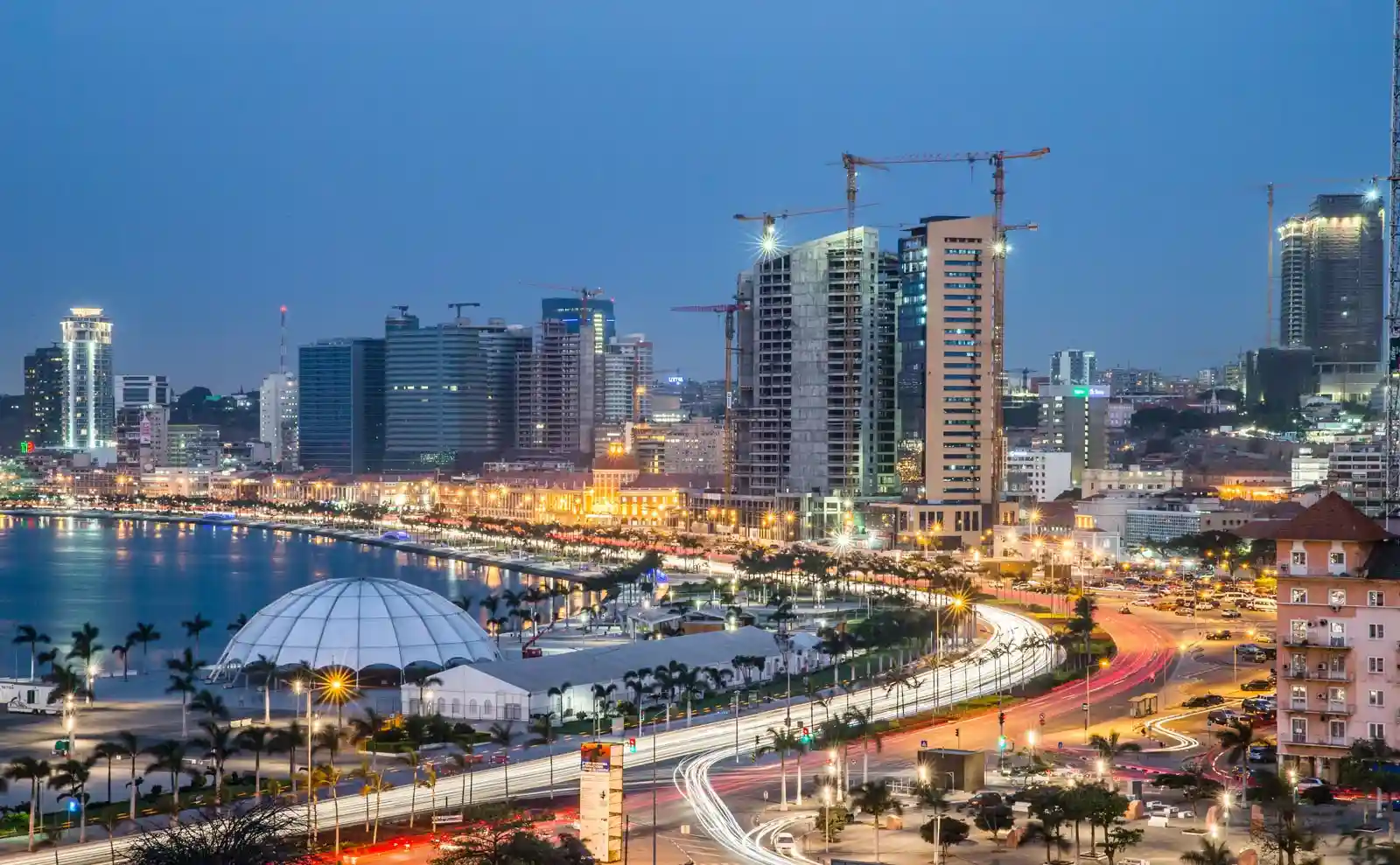
Angola has overtaken Kenya to become the sixth-largest economy in Africa, according to data from the IMF’s April 2026 World Economic Outlook, reversing a shift from just months earlier when Kenya had briefly claimed the higher ranking. Angola’s nominal GDP now stands at $152.35 billion, while Kenya’s reached $147.26 billion — a gap of roughly $5 billion that reflects the outsized role oil revenues continue to play in reshaping Africa’s economic hierarchy.
The repositioning follows an upward revision of Angola’s 2026 growth forecast to 2.3%, up from the 2.1% previously estimated by the IMF. In the sub-Saharan African context, Angola now ranks third behind South Africa ($479.96 billion) and Nigeria ($377.37 billion), pushing Kenya to fourth within the region.
Oil Prices: The Engine Behind Angola’s Rise
Angola’s GDP surge is inseparable from the global energy shock triggered by the Strait of Hormuz crisis. With Brent crude trading above $100 per barrel through much of 2026 following the US-Israel conflict with Iran, Angola — which exited OPEC in December 2023 after a dispute over production quotas — has been free to produce without cartel-imposed limits. The country’s budget was built on a reference price of just $61 per barrel, meaning the difference represents extraordinary fiscal revenue flowing into state coffers.
Angola remains sub-Saharan Africa’s second-largest crude producer after Nigeria. Average daily oil production hit 1.134 million barrels in the first three quarters of 2024, a 4% increase from 2023, though still well below the 2015 peak of 1.8 million barrels per day. Oil accounts for approximately 20% of GDP, 60% of government tax revenues, and 95% of exports, according to the World Bank, making the economy acutely sensitive to global commodity price swings.
Angola’s real GDP grew by 4.4% in 2024, up from 1.1% in 2023, driven by robust non-oil sector growth of 5.3%, particularly in agriculture, fisheries, diamond extraction, and energy, according to the African Development Bank. However, the IMF cautions that Angola’s pace of economic expansion remains below its population growth rate of around 3.5%, which means per capita income is actually declining. Inflation remained elevated at 28.2% in 2024, fuelled by currency depreciation and the gradual removal of fuel subsidies.
Context is everything. While you follow today’s updates, use the Serrari Group Market Index and Marketplace to spot emerging shifts. Need to sharpen your edge? Our Wealth Builder Platform turns these insights into a professional-grade strategy.
Why Kenya Slipped
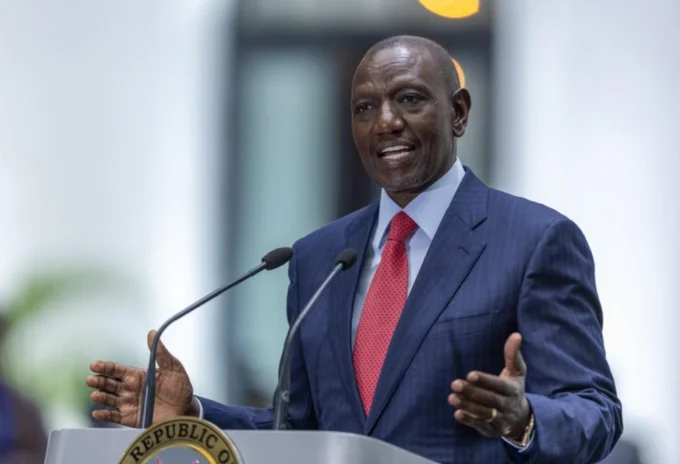
Kenya had surpassed both Angola and Ethiopia in the December 2025 data, a milestone that President William Ruto repeatedly cited as evidence that his Bottom-Up Economic Transformation Agenda (BETA) was delivering results. During his State of the Nation Address, Ruto noted that Kenya had risen from the eighth-largest African economy to the sixth, attributing the climb to strategic reforms and economic discipline.
However, Kenya’s economy is now under significant pressure from the same oil price shock that has boosted Angola. As a net oil importer, Kenya is on the wrong side of the energy equation. Diesel prices hit a record KSh 242.92 per litre in the May pricing cycle, a 17.4% jump in a single window, while super petrol surged to KSh 214.25 — the second consecutive record-breaking month as Strait of Hormuz disruptions fed through to landed cargo costs.
The IMF has revised Kenya’s 2026 growth forecast downward to 4.5% from the earlier projection of 4.9%, citing fuel import costs as a central risk. Inflation climbed to 5.6% in April 2026, the highest since March 2024, driven by food inflation of 8.8% and transport inflation of 10%. The budget deficit is projected to widen to 6.4% of GDP, up from earlier estimates of 5.6%, while public debt is expected to rise to about 72.4% of GDP.
The broader Sub-Saharan African growth outlook has also been trimmed. The IMF’s Regional Economic Outlook noted that regional growth, which hit an impressive 4.5% in 2025, is now projected to slow to 4.3% in 2026, with the Middle East conflict cited as the primary drag through higher energy and fertiliser costs, disrupted shipping routes, and weakened tourism arrivals.
The Wider Continental Picture
South Africa retains the top position on the continent at $479.96 billion, despite political unrest that has rocked the country for much of the past month. Egypt holds second with $429.65 billion, followed by Nigeria at $377.37 billion, Algeria at $317.17 billion, and Morocco at $194.33 billion.
In East Africa, Kenya still leads the region comfortably. The Democratic Republic of Congo follows with a GDP of $123.41 billion, Ethiopia at $121.53 billion, Tanzania at $94.89 billion, and Uganda at $73.37 billion. Despite its slip in the continental rankings, Kenya’s economy has still grown from roughly $100 billion to over $147 billion within a few years — a trajectory that remains strong by regional standards.
A Familiar Rivalry
The Angola-Kenya jostling is not new. The two economies have traded positions repeatedly over the past decade, with the balance swinging on oil prices, currency movements, and production trends. Kenya first overtook Angola in 2020, when the kwanza was devalued and oil production was declining, while the Kenyan shilling held relatively steady.
The IMF projects that Kenya will likely overtake Angola again in 2027, assuming oil prices moderate and Kenya sustains its growth momentum. Angola’s structural challenges — aging deepwater oil fields, declining production from mature wells, and inflation rates above 20% — suggest that its GDP gains may be volatile rather than sustained. The World Bank projects Angola’s real GDP growth to average just 2.8% over 2026–28, below the rates needed to reduce poverty in a country where an estimated 12.3 million people live on less than $3 per day.
For Kenya, the ranking demotion is politically uncomfortable but may prove temporary. The deeper concern is whether the fuel-driven inflationary pressures now squeezing households and businesses will derail the broader growth trajectory that had lifted the country up the table in the first place.
Sources: Kenyans.co.ke / allAfrica / KDRTV / Xinhua / OilPrice.com / African Development Bank / World Bank / IMF / The Kenyan Wallstreet / Dawan Africa / Business Daily Africa / Serrari Group
Your financial future isn’t something you wait for—it’s something you build.
The real question is: when do you begin?
Move beyond simply staying informed.
Navigate the markets with clarity—track trends through the Serrari Group Market Index, uncover opportunities in the Serrari Marketplace, and build practical knowledge with our Curated Wealth Builder Platform.
Stay connected to what truly matters.
Get daily insights on macro trends and financial movements across Kenya, Africa, and global markets—delivered through the Serrari Newsletter.
Growth opens doors.
Advance your career through professional programs including ACCA, HESI A2, ATI TEAS 7 , HESI EXIT , NCLEX – RN and NCLEX – PN, Financial Literacy!🌟—designed to move you forward with confidence.
See where money is flowing—clearly and in real time.
Track Money Market Funds, Treasury Bills, Treasury Bonds, Green Bonds, and Fixed Deposits, alongside global and African indexes, key economic indicators, and the evolving Crypto and stablecoin landscape—all within Serrari’s Market Index.