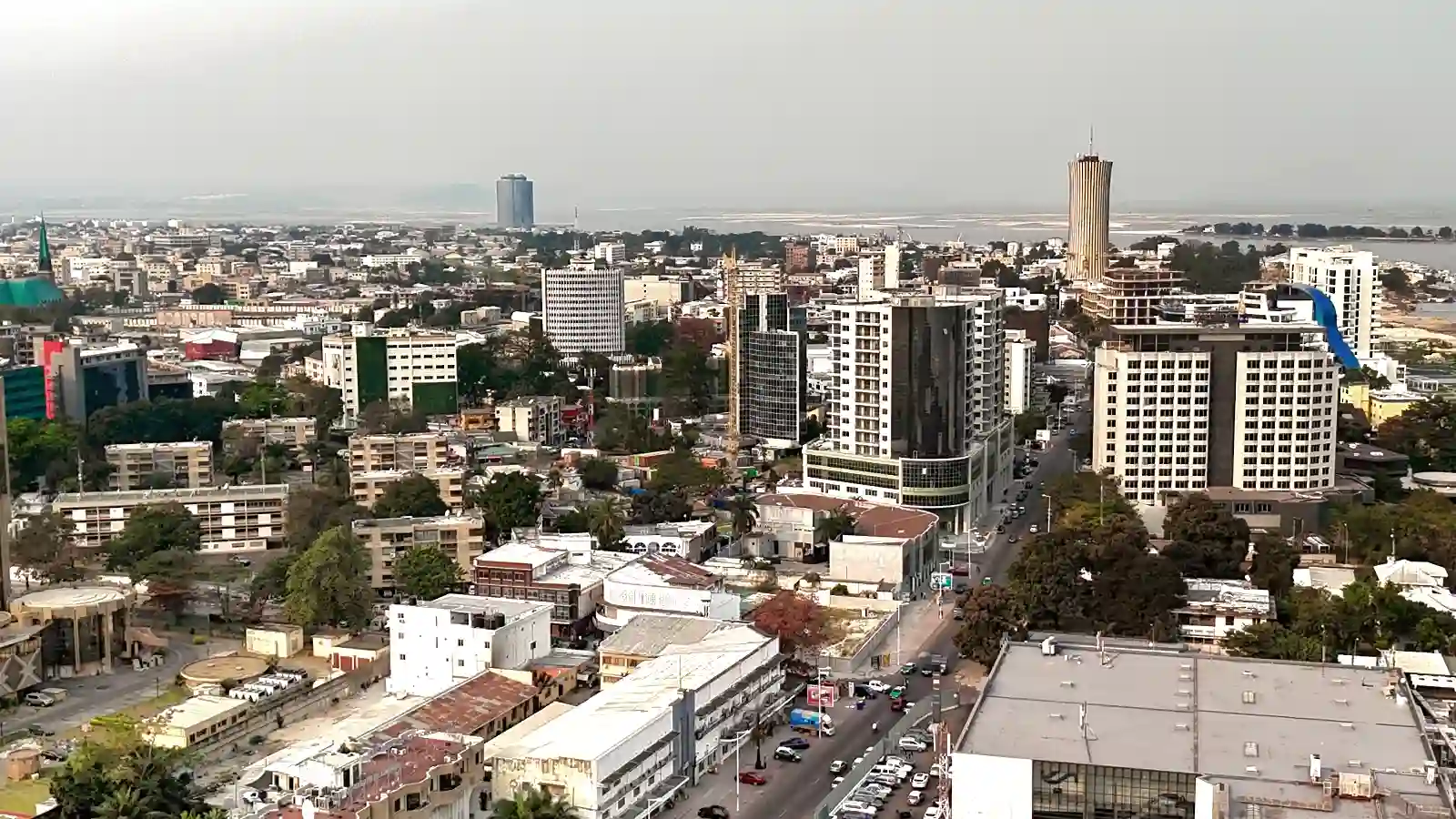
The Republic of Congo has raised $850 million through a new international bond maturing in 2036, its fourth transaction on international capital markets in just six months. The 9.5% coupon bond drew an order book exceeding $1.6 billion from nearly 80 investors, reflecting strong demand despite the country’s deep speculative credit ratings. The proceeds will be used to retire an existing 9.875% bond maturing in 2032 through a tender offer and to repay regional CEMAC market debt falling due in June and July 2026. The government says the operation will reduce refinancing needs by more than $230 million over five years without increasing overall public debt levels. The issuance arrives as Congo negotiates a new IMF support programme amid what the Fund describes as a “fragile” economic situation, with public debt hovering near 97% of GDP.
Key Overview
- Bond size: $850 million
- Coupon: 9.5%
- Maturity: 2036 (repaid in five equal annual instalments from 2032)
- Order book: Over $1.6 billion from nearly 80 investors
- Initial yield guidance: 10.5% area
- Bookrunner: Citigroup (sole)
- Credit ratings: CCC+ (Fitch and S&P), Caa2 (Moody’s)
- Tender offer: $563.99 million of the 2032 bond at $1,040 per $1,000 of principal
- Public debt-to-GDP: Approximately 97%
- Oil production: Approximately 310,000 barrels per day
The Republic of Congo priced an $850 million international bond on May 20, carrying a 9.5% coupon and maturing in 2036, as the Central African oil producer moved to clean up its near-term debt profile and extend maturities. The bond will be repaid in five equal annual instalments beginning in 2032, and Citigroup acted as sole bookrunner on the transaction.
Initial guidance to investors had indicated a yield in the 10.5% area, meaning the final pricing at 9.5% represented a tightening of more than 100 basis points — a sign of robust investor appetite. The order book exceeded $1.6 billion from nearly 80 investors, roughly double the final allocation. The operation marked Congo’s fourth foray into international capital markets in six months, helping reduce the country’s risk premium by more than 400 basis points since its return to the London market in November 2025.
What the Proceeds Will Fund
The deal is structured as a liability management exercise rather than new borrowing. Proceeds will be used to buy back Congo’s existing 9.875% international bond maturing in 2032 through a tender offer and to repay regional market debt on the CEMAC (Central African Economic and Monetary Community) markets falling due in June and July 2026.
The government said it would accept $563.99 million of the 2032 bond at a price of $1,040 per $1,000 of principal, plus accrued interest, with settlement expected on May 26. That tender would leave just $11.7 million outstanding — low enough for Congo to exercise a “clean-up” call and redeem the remainder in full. The finance ministry said the operation would reduce refinancing needs by more than $230 million over the next five years and would not increase overall public debt levels.
A Dramatic Return to International Markets
The May bond sale caps a remarkably active six-month window for a sovereign that had been effectively locked out of international debt markets for nearly two decades. Congo’s return to the London market in November 2025 with a $670 million Eurobond — its first since 2007 — was itself a watershed moment. Those seven-year bonds carried a 9.875% coupon and were arranged by Citigroup, with proceeds used to refinance short-term domestic obligations on the CEMAC capital markets.
A second issuance followed in February 2026, when Congo raised $750 million through a bond maturing in 2035 — the longest tenor ever achieved by the sovereign at the time. That deal also priced at 9.5%, with the yield representing a decrease of over 200 basis points compared to earlier transactions.
Finance Minister Christian Yoka, who took office in early 2025, described the initial November transaction as signalling “credibility and confidence” in Congo’s economic reforms. “We are building the foundations of a stable, transparent, and ambitious economy,” Yoka said at the time.
Altogether, the government has now issued three Eurobonds totalling $1.63 billion between November 2025 and February 2026, plus the latest $850 million deal — a combined $2.48 billion mobilised in half a year from a sovereign rated deep in speculative territory.
Context is everything. While you follow today’s updates, use the Serrari Group Market Index and Marketplace to spot emerging shifts. Need to sharpen your edge? Our Wealth Builder Platform turns these insights into a professional-grade strategy.
Debt Sustainability Concerns Persist
Despite the market’s willingness to lend, Congo’s fiscal position remains precarious. The country is rated CCC+ by both Fitch and S&P Global, and Caa2 by Moody’s — ratings that indicate substantial credit risk. The IMF has classified Congo’s debt as “in distress”, reflecting ongoing domestic and external arrears.
Public debt stood at approximately 97.2% of GDP at end-2025, according to the World Bank, and while the ratio has declined from a peak above 107% in 2020, it remains elevated by any standard. The World Bank noted that while the Eurobond issuances offered short-term financing relief, they “carry significant currency and liquidity risks.”
Congo’s three-year arrangement under the IMF’s Extended Credit Facility, approved in January 2022 with total disbursements of approximately $430 million, expired in March 2026. Brazzaville has since requested a new support programme. The Fund’s March 2026 post-financing assessment acknowledged that Congo’s capacity to repay the Fund is adequate but flagged “elevated risks, particularly from large rollover needs and tight regional credit markets, or in the event of a significant decline in oil prices.”
The IMF board also noted that fiscal discipline weakened in 2025, with spending overruns and lower oil prices exacerbating fiscal pressures. It called on authorities to strengthen domestic revenue mobilisation, broaden the tax base, and improve expenditure controls.
Oil Dependence and Economic Context
Congo remains the third-largest crude producer in Central Africa, pumping approximately 310,000 barrels per day. Oil exports account for more than 80% of the country’s total exports, making the economy acutely sensitive to global commodity price fluctuations. GDP growth was estimated at 2.6% in 2024, moderated by a slowdown in the oil sector, while inflation has remained below 4% — within the CEMAC regional convergence target.
President Denis Sassou N’Guesso was re-elected to a fifth consecutive term in March 2026 with 94.9% of the vote. The country’s human capital indicators remain challenging: only 30% of students are proficient in reading by the end of primary education, access to electricity reaches just 12.4% in rural areas, and the human capital index stands at 0.42, below the lower middle-income country average.
Part of a Broader African Bond Wave
Congo’s aggressive issuance strategy mirrors a wider trend across the continent. Sub-Saharan Africa raised nearly $6 billion in Eurobond markets in the opening weeks of 2026 — the strongest start to a year since 2013. Kenya led the charge with a $2.25 billion dual-tranche deal, while Côte d’Ivoire, Cameroon, and Benin also tapped markets for budget support and liability management.
The issuance wave has been fuelled by easier global financial conditions and investor appetite for higher-yielding emerging-market paper. However, analysts caution that the underlying question remains whether borrowing at elevated coupons to refinance existing debt constitutes genuine progress or merely defers the reckoning. For Congo — with nearly 97% debt-to-GDP and deep dependence on a single commodity — that question is especially pointed.
The timing of the latest bond also carries symbolic significance: it arrived five days before the 61st Annual Meetings of the African Development Bank, scheduled for May 25–29 in Brazzaville under the theme of mobilising resources to finance African development.
Sources: Zawya / Ecofin Agency / Financial Afrik / Allen & Dreyfus / Cleary Gottlieb / DMarket Forces / World Bank / IMF / CNBC Africa / Congo Morning / Cytonn
Your financial future isn’t something you wait for—it’s something you build.
The real question is: when do you begin?
Move beyond simply staying informed.
Navigate the markets with clarity—track trends through the Serrari Group Market Index, uncover opportunities in the Serrari Marketplace, and build practical knowledge with our Curated Wealth Builder Platform.
Stay connected to what truly matters.
Get daily insights on macro trends and financial movements across Kenya, Africa, and global markets—delivered through the Serrari Newsletter.
Growth opens doors.
Advance your career through professional programs including ACCA, HESI A2, ATI TEAS 7 , HESI EXIT , NCLEX – RN and NCLEX – PN, Financial Literacy!🌟—designed to move you forward with confidence.
See where money is flowing—clearly and in real time.
Track Money Market Funds, Treasury Bills, Treasury Bonds, Green Bonds, and Fixed Deposits, alongside global and African indexes, key economic indicators, and the evolving Crypto and stablecoin landscape—all within Serrari’s Market Index.