Ethiopia’s drive to become Africa’s clean energy leader has received major international backing, with the European Union committing a €559 million (approximately US$660 million) investment package and the United Kingdom channelling US$5 million through British International Investment into Dodai, an Addis Ababa-based electric mobility startup. The EU funding, announced at the Ethiopia Business Forum in April 2026, marks the resumption of budget support after a five-year hiatus and includes the €269 million RISED programme for grid modernisation, rural electrification, wind farm rehabilitation, and digital connectivity. The UK investment supports Dodai’s US$13 million Series A round, which will scale the deployment of electric motorbikes and battery-swapping stations across Addis Ababa and eventually other African cities. Ethiopia’s energy transition is anchored by the Grand Ethiopian Renaissance Dam, Africa’s largest hydropower project, which was inaugurated in September 2025 and is expected to produce over 5GW of electricity. The country banned fossil-fuel vehicle imports in 2024, triggering a rapid rise in EV adoption from less than 1% to nearly 6% of vehicles on the road — above the global average of 4%.
Markets move fast; don’t get left behind. We’ve paired the Serrari Group Market Index with a curated Marketplace and a comprehensive Wealth Builder Platform to ensure you have the data—and the skills—to act on it.
Key Overview
- EU Investment Package: €559 million (~US$660 million)
- EU Budget Support Resumed: Over €140 million (~US$164 million) after five-year suspension
- RISED Programme: €269 million for grid modernisation, electrification, digital connectivity
- RISED Outcomes: Electricity for 4 million people; 2,500km fibre optic cable; Ashegoda Wind Farm rehabilitation
- UK/BII Investment: US$5 million debt financing to Dodai
- Dodai Series A Total: US$13 million ($8M equity + $5M debt)
- Dodai Fleet: 2,000+ electric motorbikes deployed; targets 30,000 users in 3 years
- GERD Capacity: 5,150 MW (Africa’s largest hydropower project)
- EV Ban: Fossil-fuel vehicle imports banned since January 2024
- EV Penetration: Jumped from <1% to ~6% of vehicles since ban
- EV Assembly Plants: 17 operational; government targeting 60 by 2030
- COP32: Ethiopia expected to host UN climate summit
- Ethiopia Population: ~135 million; two-thirds under 30
International Capital Flows Into Ethiopia’s Green Transition
Ethiopia is rapidly emerging as one of Africa’s most ambitious countries in the clean energy transition, and international investors are taking notice. In a concentrated burst of announcements over April and May 2026, both the European Union and the United Kingdom have committed significant financial resources to support the country’s renewable energy infrastructure, electric mobility sector, and digital connectivity — investments that collectively position Ethiopia as a testing ground for how developing countries can leapfrog fossil-fuel dependence.
The EU announced a comprehensive investment package totalling €559 million at the EU-Ethiopia Business Forum held in Addis Ababa from April 20-22, 2026. The package, which spans energy infrastructure, digital economy development, agriculture, and healthcare, marks a significant re-engagement by Brussels after a five-year suspension of budget support linked to the conflict in Ethiopia’s Tigray region. According to Reuters, the EU restarted budgetary support with a package exceeding €140 million (approximately US$164 million), alongside an additional €150 million digital economy allocation focused on high-speed internet expansion, youth skills development, and governance reforms.
Jozef Síkela, the EU Commissioner for International Partnerships, framed the investment in generational terms, noting that two-thirds of Ethiopia’s 135 million population is under 30, and digital connectivity is essential to unlocking their potential.
Days later, British International Investment announced a US$5 million debt financing commitment to Dodai, an Ethiopia-based electric mobility company, as part of the firm’s US$13 million Series A round. The investment signals growing institutional confidence in Ethiopia’s electric mobility market and aligns with BII’s 2026-2031 strategy, which targets at least 25% of new investments in frontier markets and 40% in climate finance.
The RISED Programme: Powering Up Ethiopia’s Grid
At the heart of the EU’s engagement is the RISED programme — Resilience and Inclusive Sustainable Economic Development — a €269 million Team Europe investment operating as a flagship initiative under the EU’s Global Gateway strategy. The programme targets the modernisation and digitalisation of Ethiopia’s national electricity transmission system and is implemented by Ethiopian Electric Power with support from the EU, France through AFD, and the European Investment Bank.
RISED’s tangible outcomes to date include providing electricity access to 4 million people, laying 2,500 kilometres of fibre optic cable to improve digital connectivity, and rehabilitating the Ashegoda Wind Farm in the Tigray region, which is expected to reduce power outages by 50% and save 16 GWh of energy annually. The wind farm rehabilitation carries particular significance given the devastation Tigray experienced during the 2020-2022 conflict.
Ethiopia’s electricity sector faces significant structural challenges. The country has high transmission losses, inconsistent service quality, and limited grid access in rural and underserved areas. According to World Bank data, national electrification stands at approximately 55%, meaning that nearly half the population still lacks reliable electricity access. The RISED programme directly addresses these gaps through grid rehabilitation, substation automation, and the extension of optical fibre networks using Optical Ground Wire technology.
The EU’s support builds on a partnership of over five decades with Ethiopia. Nearly 300 European companies currently operate in the country, and approximately 30% of Ethiopia’s exports — primarily coffee, flowers, oilseeds, and pulses — go to European markets.
The GERD: Africa’s Largest Hydropower Project
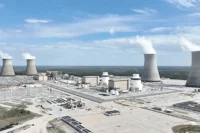
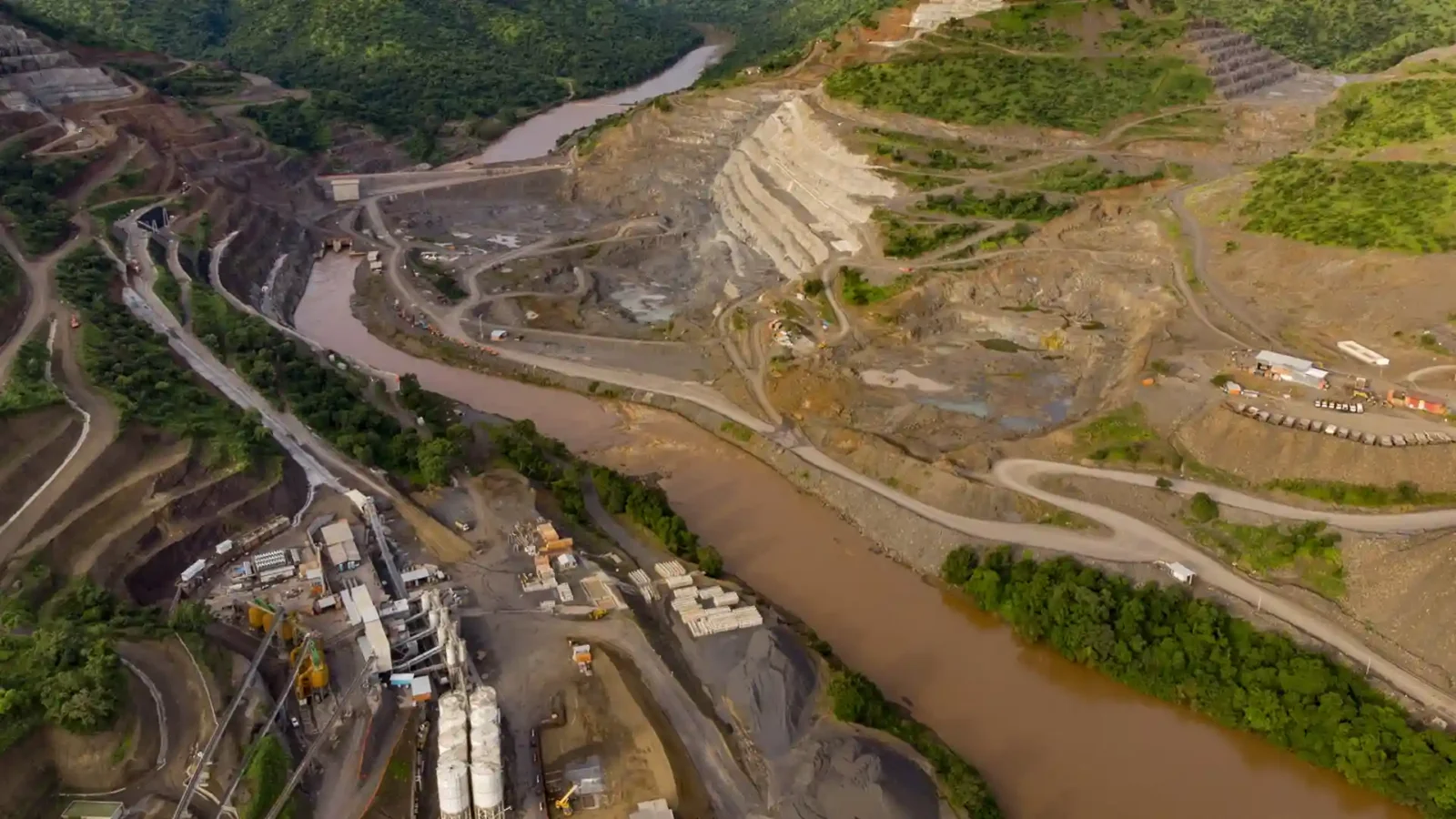
Ethiopia’s renewable energy ambitions are anchored by the Grand Ethiopian Renaissance Dam, the continent’s largest hydropower project. The dam, located on the Blue Nile in Ethiopia’s Benishangul-Gumuz region, was officially inaugurated on September 9, 2025, marking the culmination of a multi-phase construction effort that began in 2011.
With an installed capacity of 5,150 MW, the GERD is expected to more than double Ethiopia’s electricity production and provide power to approximately 60% of the population. The dam was named Industrial Energy Project of the Year by the Africa Trade Chamber in January 2026, reflecting its continental significance.
The US$5 billion project was primarily financed domestically through bond sales and salary contributions from Ethiopian civil servants, supplemented by Chinese loans for turbines and electrical equipment. Its reservoir, with a capacity of 74 billion cubic metres, positions Ethiopia not only as a regional energy hub but also as a potential electricity exporter to neighbouring countries including Kenya, Sudan, Djibouti, Tanzania, and South Sudan through the East Africa Power Pool.
However, the country faces a critical challenge: getting the power from the dam to homes and businesses. Despite the GERD’s massive generation capacity, Ethiopia’s transmission and distribution infrastructure remains inadequate. Power outages remain common even in Addis Ababa, and rural electrification lags far behind the country’s ambitions. This is precisely the gap that EU programmes like RISED are designed to address.
Context is everything. While you follow today’s updates, use the Serrari Group Market Index and Marketplace to spot emerging shifts. Need to sharpen your edge? Our Wealth Builder Platform turns these insights into a professional-grade strategy.
Ethiopia’s Bold Bet on Electric Vehicles
Ethiopia’s energy transition extends well beyond power generation. In 2024, the government effectively banned the import of fossil-fuel-powered vehicles by imposing import taxes of up to 500% on non-electric cars while slashing tariffs on EVs. The move was driven primarily by fiscal pressures — Ethiopia spent US$7.6 billion on fuel imports in 2023 — rather than purely environmental concerns, though it aligns neatly with the country’s climate commitments.
The results have been striking. EV adoption jumped from less than 1% to nearly 6% of all vehicles on the road within two years, a rate above the global average of 4%. There are now 17 EV assembly plants in Ethiopia, with the government targeting 60 by 2030. Ethiopia’s updated national climate plan targets 500,000 EVs by 2032, a dramatic increase from earlier policy documents that barely mentioned electric mobility.
However, the transition faces significant headwinds. As Rest of World documented, Ethiopia had only around 50 charging stations when the ban was introduced, creating severe range anxiety among early adopters. Some EV owners have already looked to sell their vehicles and revert to hybrid models. The cost of electric vehicles remains prohibitive for most Ethiopians, with even second-hand models priced above US$32,000 in a country with one of the world’s lowest motorisation rates — just 13 vehicles per 1,000 people compared to the African average of 73.
This infrastructure gap is what makes electric motorbikes, rather than electric cars, particularly relevant to Ethiopia’s mobility future — and why the BII investment in Dodai carries strategic importance.
Dodai: Building Electric Mobility From the Ground Up
Dodai was founded by Japanese entrepreneur Yuma Sasaki and chose to build in Addis Ababa at a time when most African startup investment was concentrated on Kenya, Nigeria, Egypt, and South Africa. The company locally assembles electric motorbikes and operates a battery-swapping network that allows riders to replace depleted batteries with fully charged ones in minutes — eliminating the need for lengthy charging sessions.
Since launching three years ago, Dodai has deployed over 2,000 electric motorbikes, enabling an equivalent number of riders to earn a living in delivery services and informal transport. The company employs approximately 100 people, the majority of them Ethiopian. With its US$13 million Series A funding, split between US$8 million in equity and US$5 million in BII debt, Dodai aims to reach 3,000 battery-swapping users across 30 stations in Addis Ababa within the next 12 months. Over a three-year horizon, the company targets 30,000 users and 1,000 stations before expanding into Abidjan, Kinshasa, Accra, and Dar es Salaam.
The Africa Resilience Investment Accelerator, a collaborative initiative launched by BII and co-funded with Dutch development bank FMO and French development finance institution Proparco, played a critical role in facilitating the deal by providing market insights and on-the-ground support.
UK Ambassador to Ethiopia Darren Welch framed the investment in the context of COP32, which Ethiopia is expected to host. The UK, he said, is supporting Ethiopia’s climate leadership through the expansion of clean, affordable transport in Addis Ababa and across the continent.
Challenges on the Road Ahead
Despite the momentum, Ethiopia’s green energy transition faces substantial obstacles. The country’s electricity grid remains fragile, with frequent outages even in the capital. While the GERD will eventually provide massive generation capacity, the transmission infrastructure needed to distribute that power remains under development. Grid losses are high, and the vast majority of rural communities remain unconnected.
On the EV front, the charging infrastructure deficit is severe. The rapid proliferation of electric vehicles following the import ban has outpaced the development of supporting infrastructure, creating frustration among early adopters. Battery-swapping models like Dodai’s may offer a practical workaround for the two-wheeler segment, but four-wheeled EVs still require a much denser network of charging points.
The country’s broader macroeconomic situation adds further complexity. Ethiopia defaulted on its sovereign bonds in 2023 and received a US$3.4 billion IMF bailout the following year. While IMF data projects economic growth of 9.2% in 2026, ongoing fiscal pressures, currency challenges, and political tensions — including disputes over the implementation of the Tigray peace deal — create an uncertain backdrop for large-scale investment.
A Model for Africa’s Energy Future?
What makes Ethiopia’s approach distinctive is its willingness to make bold, economy-wide policy bets — banning fossil-fuel imports, building Africa’s largest dam, and actively courting international investment into clean mobility — even before the supporting infrastructure is fully in place. The strategy is high-risk but potentially high-reward: if the pieces come together, Ethiopia could become a genuine model for how low-income countries can bypass the fossil-fuel stage of development entirely.
The convergence of EU budget support, UK development finance, GERD power generation, and private sector innovation through companies like Dodai creates a layered investment ecosystem that few other African countries can match. With COP32 on the horizon, Ethiopia has both the incentive and the platform to demonstrate that its green energy ambitions are more than aspirational — they are becoming infrastructural reality.
Leslie Maasdorp, CEO of BII, captured the strategic logic: Ethiopia is emerging as one of Africa’s most compelling frontier markets for the clean mobility transition, where the right capital can unlock outsized impact and long-term value. The coming years will determine whether that potential translates into results at scale.
Your financial future isn’t something you wait for—it’s something you build.
The real question is: when do you begin?
Move beyond simply staying informed.
Navigate the markets with clarity—track trends through the Serrari Group Market Index, uncover opportunities in the Serrari Marketplace, and build practical knowledge with our Curated Wealth Builder Platform.
Stay connected to what truly matters.
Get daily insights on macro trends and financial movements across Kenya, Africa, and global markets—delivered through the Serrari Newsletter.
Growth opens doors.
Advance your career through professional programs including ACCA,HESI A2,ATI TEAS 7,HESI EXIT ,NCLEX – RNandNCLEX – PN, Financial Literacy!🌟—designed to move you forward with confidence.
See where money is flowing—clearly and in real time.
Track Money Market Funds, Treasury Bills, Treasury Bonds, Green Bonds, and Fixed Deposits, alongside global and African indexes, key economic indicators, and the evolving Crypto and stablecoin landscape—all withinSerrari’s Market Index.