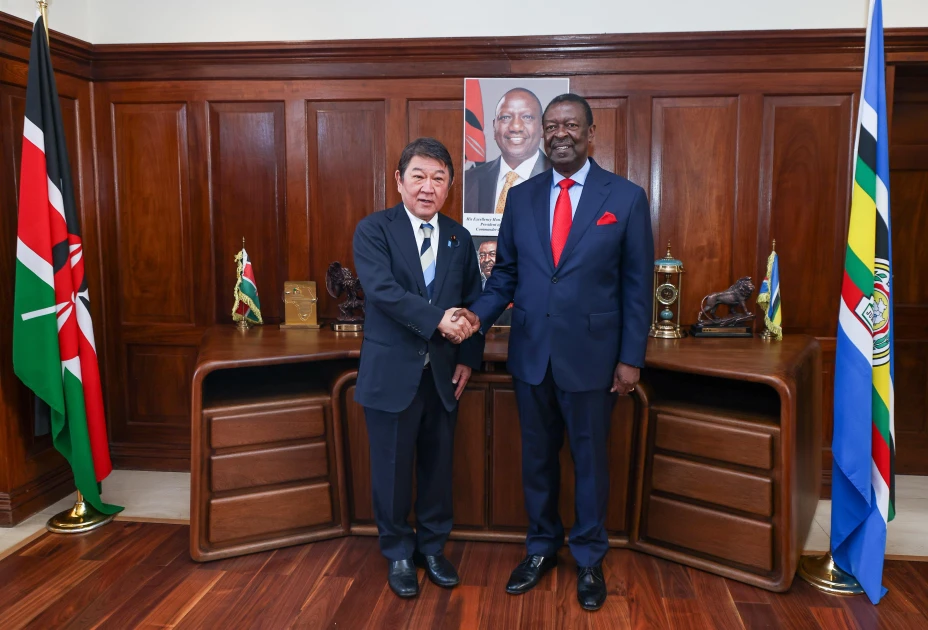
Kenya and Japan have signalled a major push to deepen their economic partnership, with Prime Cabinet Secretary and Foreign Affairs Cabinet Secretary Musalia Mudavadi hosting Japanese Foreign Minister Toshimitsu Motegi for high-level talks in Nairobi. The discussions, which form part of Motegi’s broader multi-nation African tour covering Angola, South Africa, Kenya, and Zambia, focused on expanding cooperation in trade, investment, development, and multilateral engagement. Key agenda items included addressing the persistent trade imbalance between the two countries, exploring innovative financing mechanisms such as a proposed Samurai loan structure, advancing infrastructure projects including Phase II of the Mombasa Special Economic Zone, and formalising grant support for Kenya’s Human Resource Development Scholarship Programme. The meeting follows TICAD 9, held in Yokohama in August 2025, which set a new direction for Japan-Africa relations under the theme of co-creation rather than traditional aid.
Markets move fast; don’t get left behind. We’ve paired the Serrari Group Market Index with a curated Marketplace and a comprehensive Wealth Builder Platform to ensure you have the data—and the skills—to act on it.
Key Overview
- Kenya Representative: Musalia Mudavadi, Prime Cabinet Secretary and CS for Foreign and Diaspora Affairs
- Japan Representative: Toshimitsu Motegi, Foreign Minister
- Context: Part of Motegi’s four-nation African tour (Angola, South Africa, Kenya, Zambia)
- Relationship Duration: Over 60 years of diplomatic ties
- Key Sectors: Agriculture, energy, health, ICT, infrastructure, education, tourism
- Trade Issue: Persistent trade imbalance favouring Japan
- Financing Discussions: Proposed Samurai loan structure; Mombasa SEZ Phase II
- Scholarship: Human Resource Development Scholarship Programme formalised
- Security: Maritime security and capacity building
- Governance: Both sides called for more inclusive international institutions
- Key Officials Present: Kenya’s Ambassador to Japan Moi Lemoshira; Japan’s Ambassador to Kenya Matsuura Hiroshi
Motegi’s Africa Tour Reaches Nairobi
Japan’s Foreign Minister Toshimitsu Motegi arrived in Nairobi as part of a multi-nation African tour that also includes Angola, South Africa, and Zambia, aimed at strengthening economic ties and securing strategic resources during a period of significant global geopolitical shifts. The visit to Kenya, which included formal bilateral talks with Prime Cabinet Secretary Musalia Mudavadi, represents the latest chapter in a diplomatic relationship that has spanned more than six decades.
Mudavadi described the partnership with Japan as critical to Kenya’s economic growth and development, calling Japan a dependable partner whose cooperation has delivered tangible results across critical sectors of the Kenyan economy. The meeting centred on reviewing the current state of bilateral relations and identifying practical pathways for deeper collaboration in trade, investment, manufacturing, and private sector partnerships.
The timing of the visit carries its own significance. Ahead of his departure, Motegi published an article on the Japanese Ministry of Foreign Affairs website describing the Free and Open Indo-Pacific vision as a vital compass for the partnership between Japan and Africa. He noted that Africa’s critical minerals, oil, and other natural resources are essential to the economic security of the international community, including Japan, and hold the key to Africa’s own sustainable growth. Kenya, which sits at the intersection of major maritime routes linking Asia, the Middle East, and Africa, is central to this strategic calculus.
Addressing the Trade Imbalance
One of the most consequential topics discussed during the Nairobi meeting was the persistent trade imbalance between the two countries. Kenya imports significantly more from Japan than it exports, and both leaders acknowledged that this gap needs to be addressed through expanded market access for Kenyan products and the promotion of value addition within Kenya’s economy.
Mudavadi highlighted the need for a more balanced and mutually beneficial trade relationship, and both countries agreed to accelerate efforts to boost Kenyan exports and enhance business linkages between Kenyan and Japanese enterprises. This emphasis on rebalancing trade marks a notable shift from the historically aid-dominated nature of the relationship toward one focused on commercial exchange and private sector engagement.
The push for trade balance aligns with broader trends in Japan’s engagement with Africa. At TICAD 9, held in Yokohama in August 2025, then-Prime Minister Ishiba Shigeru announced a new direction titled “From Aid to Investment”, signalling Japan’s intention to build relations with Africa that prioritise sustainable private sector-led growth. The conference, which was co-organised with the United Nations, UNDP, the World Bank, and the African Union Commission, produced a record 324 memorandums of understanding, vastly exceeding the 92 signed at the previous TICAD 8.
The investment promotion and business linkage agenda discussed in Nairobi reflects this evolving framework. Rather than simply channelling development assistance, both countries are now exploring how Japanese companies can establish deeper commercial presence in Kenya while Kenyan products gain wider access to Japanese and Asian markets.
Innovative Financing: Samurai Loans and the Mombasa SEZ
Among the most forward-looking elements of the discussions were proposals around innovative financing mechanisms. Mudavadi pointed to ongoing talks on a proposed Samurai loan structure and funding for the Mombasa Special Economic Zone Phase II, describing such financing arrangements as critical for supporting priority national projects and strengthening economic resilience.
Kenya has been actively exploring Samurai bond financing as part of a broader debt diversification strategy. In 2023, Kenya signed a memorandum of understanding with Nippon Export and Investment Insurance (NEXI) enabling the issuance of a Samurai Bond totalling US$500 million in two phases. These yen-denominated instruments offer developing countries access to Japanese capital markets at potentially lower interest rates than many dollar-denominated alternatives, and they represent a crucial tool for financing infrastructure and industrial development.
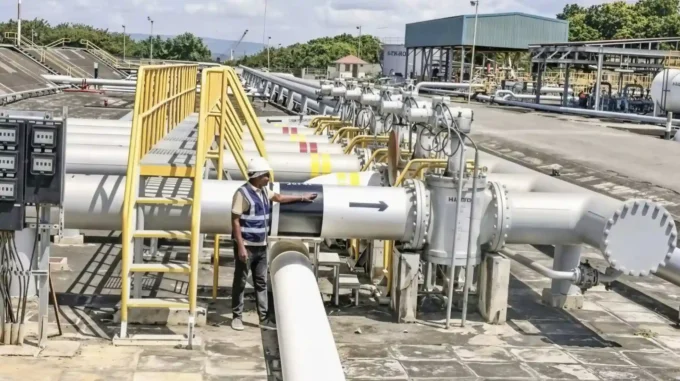
The Mombasa Special Economic Zone, located in the Dongo Kundu area on the southern coast of the Port of Mombasa, is one of the flagship projects of Japan-Kenya economic cooperation. The first phase of the project was funded through a JICA concessional loan of approximately 37.09 billion JPY (about US$350 million) alongside grant assistance. The SEZ is designed to include a free trade zone, a free port, a logistics hub, and a mega industrial zone where major freight companies and regional actors using Mombasa port will be allocated land to set up operations. Phase II financing discussions signal continued momentum behind a project that aims to transform Mombasa into a regional logistics and manufacturing hub serving all of East Africa.
Context is everything. While you follow today’s updates, use the Serrari Group Market Index and Marketplace to spot emerging shifts. Need to sharpen your edge? Our Wealth Builder Platform turns these insights into a professional-grade strategy.
Japan’s ODA Legacy in Kenya
Japan’s Official Development Assistance has played a foundational role in Kenya’s development across multiple sectors. The partnership has delivered results in geothermal energy, irrigation, infrastructure, health, information and communications technology, and education. During the Nairobi talks, the two countries formalised Japan’s grant support for the Human Resource Development Scholarship Programme, which aims to enhance skills and expertise among Kenyan professionals by providing opportunities for advanced study in Japan.
This scholarship programme is part of a broader Japanese strategy of investing in human capital across Africa. JICA, the primary agency responsible for implementing Japan’s ODA, operates in over 150 countries worldwide and has been expanding its engagement with the African private sector. In November 2025, JICA’s investment activities in Africa intensified, with the agency making investments in African-focused venture capital funds including a US$10 million commitment to Novastar Ventures’ third fund and a US$40 million investment in a global supply chain support fund targeting Indian Ocean economies.
The JICA-African Development Bank Enhanced Private Sector Assistance initiative has also scaled up. At TICAD 9, the two institutions signed a memorandum of understanding launching EPSA6, which sets a joint financing target of up to US$5.5 billion for the 2026-2028 period, a half-billion dollar increase from the previous phase. Since the EPSA initiative began in 2005, cumulative joint support to Africa has reached approximately US$12 billion.
Earlier in January 2026, Mudavadi held talks with a Japanese ODA research mission from the House of Councillors, during which he called for expanding cooperation beyond traditional aid into trade, investment, manufacturing, and private sector partnerships. He identified practical pathways to collaboration aimed at driving jobs, growth, and long-term economic value, signalling a clear intent to shift the relationship’s centre of gravity.
Maritime Security and Regional Stability
The Nairobi discussions also touched on security cooperation, with Kenya welcoming Japan’s continued support in maritime security and capacity building. This dimension of the partnership has grown in importance as the Indian Ocean region becomes a focal point for geopolitical competition and trade route security.
Kenya’s strategic location along the East African coast, with the Port of Mombasa serving as the primary gateway for trade to and from landlocked countries in the region, makes maritime security a shared priority for both nations. Japan’s Free and Open Indo-Pacific framework places particular emphasis on maintaining open sea lanes and rule-based maritime order, and Kenya sits squarely within this vision.
The security talks also touched on global governance reforms, with both sides calling for a more inclusive and responsive international system. Japan has long advocated for UN Security Council reform, including permanent African representation, a position that finds natural allies among African nations.
The Geopolitical Context: Japan’s Evolving Africa Strategy
Motegi’s African tour takes place against the backdrop of intensifying competition among major powers for influence and access on the continent. As an opinion piece in Kenya’s The Star newspaper noted, the visit should be understood not merely as a diplomatic formality but as part of a broader strategic competition unfolding across the Indian Ocean, maritime trade corridors, technology supply chains, and global governance structures.
Japan’s approach has historically been more understated than that of some other major economies engaging with Africa. But the shift signalled at TICAD 9, from donor-recipient relations toward what Japanese officials term “co-created partnerships,” represents a recalibration. The TICAD 9 Business Expo and Conference saw nearly 200 exhibitors, a record high, while the 324 signed documents at the commemorative ceremony reflected growing involvement from Japan’s Ministry of Economy, Trade and Industry alongside the traditional foreign affairs and development actors.
Japanese private sector interest in Africa has also been expanding. Companies such as Toyota Tsusho Corporation and SBI Holdings have invested in Kepple Africa Ventures, a venture capital firm with teams in both Kenya and Japan, while Japanese insurers and banks have committed capital to Africa-focused impact funds. This private sector momentum provides commercial substance to the diplomatic commitments being made at the highest levels.
Looking Ahead: A Results-Driven Partnership
Mudavadi was clear in setting expectations for the partnership’s trajectory, stating that the focus remains on building a stronger, results-driven Kenya-Japan partnership that delivers lasting impact. The emphasis on measurable outcomes reflects a practical approach that both sides appear to share.
For Kenya, the immediate priorities include securing the proposed Samurai loan financing, advancing the Mombasa SEZ Phase II, expanding the range of Kenyan products that can access the Japanese market, and attracting greater Japanese private sector investment. For Japan, Kenya represents a strategic foothold in East Africa and the broader Indo-Pacific framework, offering access to markets, resources, and a partner with significant regional influence.
Mudavadi also used the occasion to congratulate Japan on the election of Sanae Takaichi as the country’s first female Prime Minister, describing it as a significant milestone in inclusive leadership. The diplomatic courtesy underscored the personal and institutional dimensions of a relationship that both sides appear determined to move beyond ceremony and into tangible economic outcomes.
With discussions concluded and commitments made, the test will be whether the latest round of pledges translates into the kind of expanded trade, diversified financing, and private sector activity that both Kenya and Japan say they want. The infrastructure is there. The strategic rationale is clear. What remains is execution.
Your financial future isn’t something you wait for—it’s something you build.
The real question is: when do you begin?
Move beyond simply staying informed.
Navigate the markets with clarity—track trends through the Serrari Group Market Index, uncover opportunities in the Serrari Marketplace, and build practical knowledge with our Curated Wealth Builder Platform.
Stay connected to what truly matters.
Get daily insights on macro trends and financial movements across Kenya, Africa, and global markets—delivered through the Serrari Newsletter.
Growth opens doors.
Advance your career through professional programs including ACCA,HESI A2,ATI TEAS 7,HESI EXIT ,NCLEX – RNandNCLEX – PN, Financial Literacy!🌟—designed to move you forward with confidence.
See where money is flowing—clearly and in real time.
Track Money Market Funds, Treasury Bills, Treasury Bonds, Green Bonds, and Fixed Deposits, alongside global and African indexes, key economic indicators, and the evolving Crypto and stablecoin landscape—all withinSerrari’s Market Index.