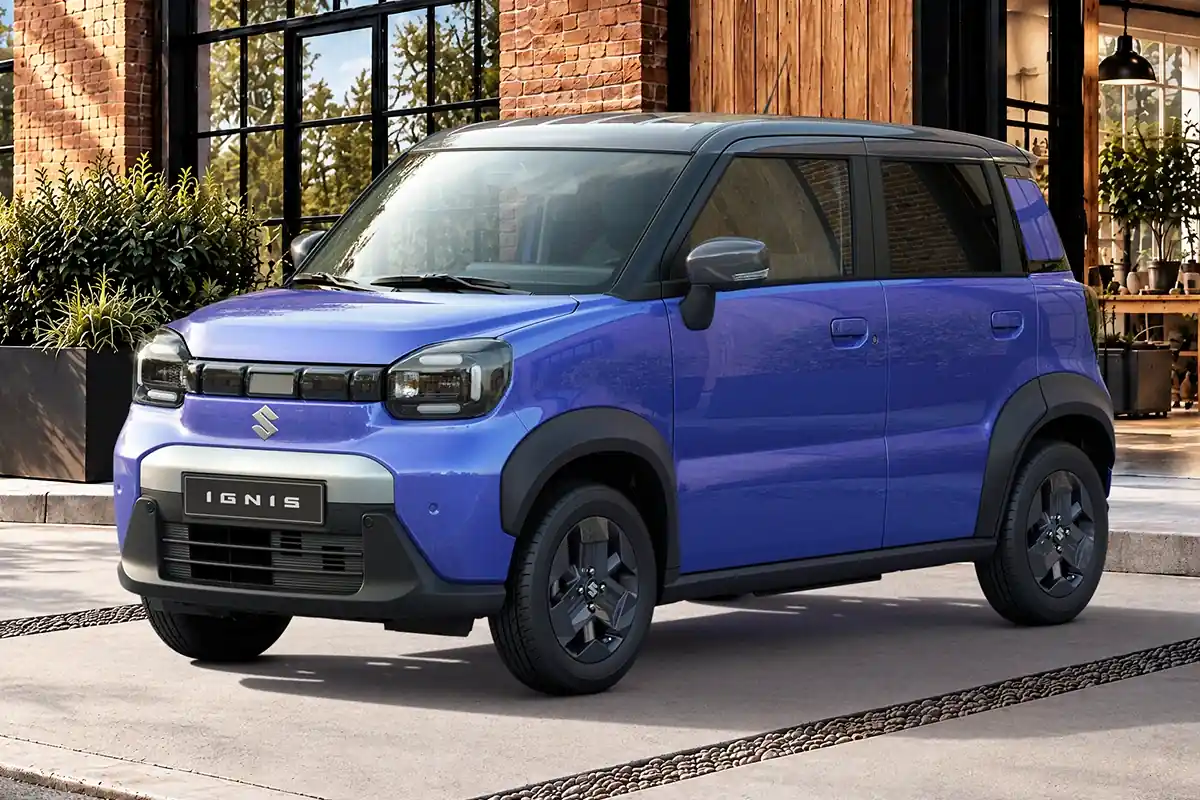
Suzuki Motor Corporation has unveiled the all-new Ignis, its first compact electric vehicle (EV) developed for global markets. Introduced on 25 November 2026, the model is designed to make the transition from petrol-powered vehicles to electric mobility easier while offering an alternative for drivers looking to downsize from larger cars. Developed under the concept “Easy to Switch – the best city car for your neighbourhood,” the Ignis features a newly developed integrated eAxle, a lithium iron phosphate (LFP) battery and Suzuki’s HEARTECT-e dedicated EV platform. It also has a minimum turning radius of 4.5 metres, regenerative braking technology and a cabin designed to balance comfort and practicality. Sales are scheduled to begin in Europe and other markets from summer 2027. However, battery capacity, driving range, charging speeds, motor output and pricing have not yet been disclosed in the supplied launch information.
Key Takeaways
- Suzuki unveiled the all-new Ignis on 25 November 2026, marking its entry into the global compact EV segment.
- The vehicle targets drivers transitioning from petrol-powered cars to EVs and those looking to downsize from larger vehicles.
- It features an integrated eAxle, an LFP battery and the HEARTECT-e dedicated EV platform.
- Its minimum turning radius of 4.5 metres is designed to improve manoeuvrability in urban environments.
- Suzuki has focused on familiar braking, handling and ride comfort to make the transition to electric driving easier.
- Sales are scheduled to begin in Europe and other markets from summer 2027.
- Pricing, battery capacity, driving range and charging specifications remain undisclosed.
Suzuki Introduces Its First Compact EV for Global Markets
Suzuki Motor Corporation has unveiled the all-new Ignis, its first compact electric vehicle developed specifically for global markets, as the automaker expands its electric mobility offering.
The vehicle made its debut during an online world premiere on 25 November 2026. Sales are scheduled to begin in Europe and other markets from summer 2027.
The Ignis has been developed around the concept of “Easy to Switch – the best city car for your neighbourhood.” The idea is to make electric mobility more accessible to two groups of drivers: those moving from conventional internal combustion engine (ICE) vehicles to electric cars, and those looking to replace larger vehicles with smaller alternatives.
Rather than focusing only on electric performance, Suzuki has placed emphasis on everyday practicality, manoeuvrability, ride comfort and ease of use.
The company says the compact EV combines quiet operation and smooth acceleration with driving characteristics intended to feel familiar to people who have never owned an electric vehicle.
This is central to the vehicle’s positioning. Switching to an EV involves more than choosing a different powertrain. Drivers must also become comfortable with how the vehicle accelerates, brakes and handles. Suzuki is attempting to address that adjustment through a compact design and technologies developed specifically for electric driving.
The Cause: Why Suzuki Is Developing a Compact EV
Suzuki’s stated motivation is to make the transition to electric mobility easier for everyday drivers.
The company identifies two potential customer groups: motorists moving from petrol-powered vehicles to EVs, and drivers who want to downsize from larger cars without sacrificing everyday comfort and practicality.
For first-time EV buyers, unfamiliar driving characteristics can make the transition feel less straightforward. Electric vehicles deliver power differently from conventional cars, while regenerative braking can also change how drivers experience deceleration.
Suzuki is therefore focusing on making the Ignis feel reassuring and predictable rather than requiring drivers to adapt to an entirely unfamiliar driving experience.
For customers downsizing, the challenge is different. They may want a smaller vehicle that is easier to manoeuvre but still offers sufficient interior space and comfort for everyday journeys.
The Ignis is designed to address both needs through its compact dimensions, dedicated electric platform and carefully tuned driving characteristics.
The vehicle underwent extensive real-world testing across different environments, including urban areas and winding roads across Europe and other countries. Data collected during these tests was used to optimise power delivery control and chassis tuning for local road conditions and customer needs in major global markets.
The testing is intended to help the vehicle deliver a consistent driving experience across different environments.
Importantly, Suzuki’s announcement does not identify a specific regulatory change, market disruption or sales target that triggered the development. Its stated rationale is centred on customer mobility needs and making electric driving easier to adopt.
The Design: Smart, Iconic and Cozy
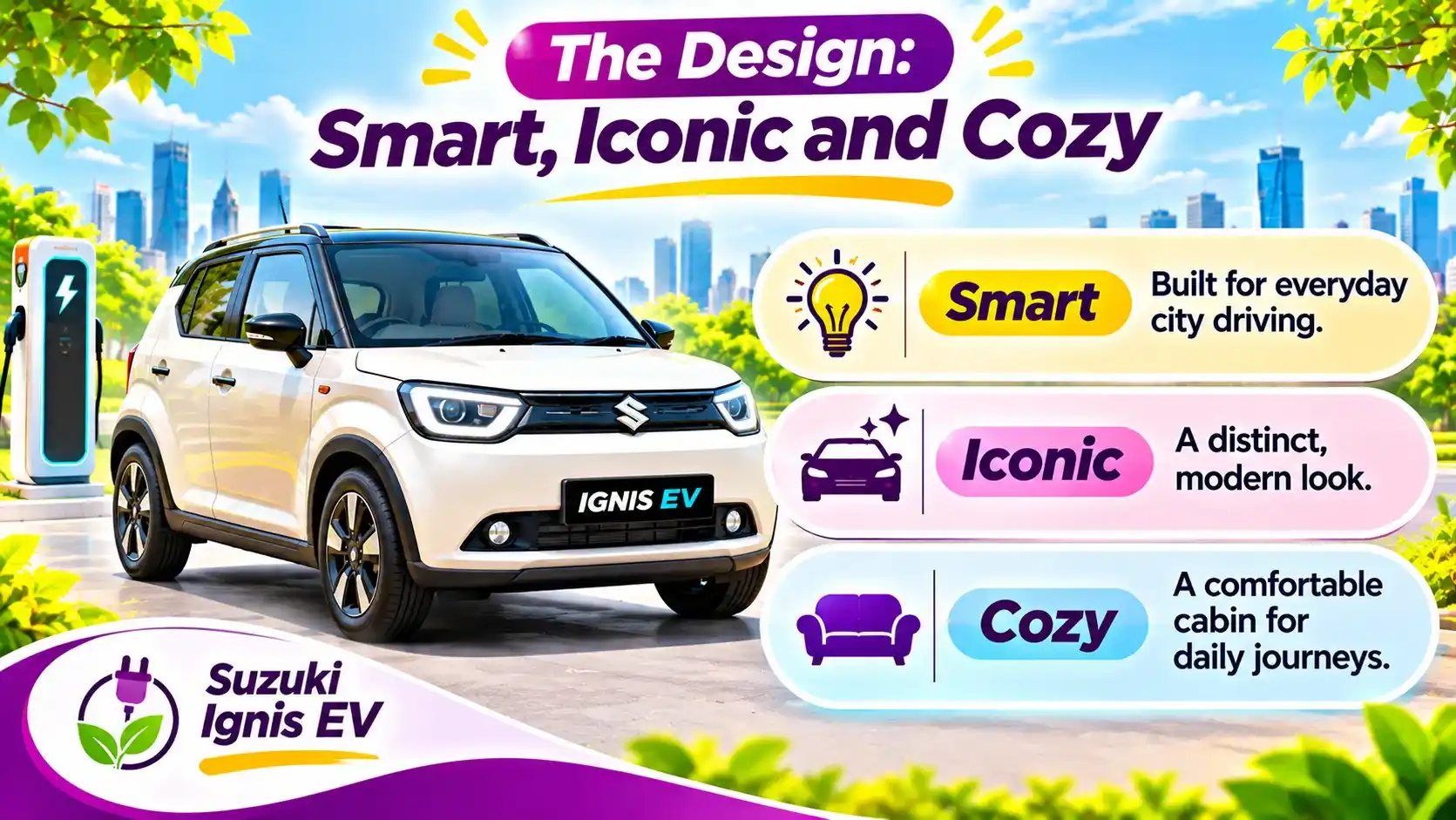
Suzuki has developed the Ignis around three design keywords: “Smart”, “Iconic”, and “Cozy”.
The exterior combines familiar compact-car styling with a more modern appearance. A flowing shoulder line and floating roof create a light profile, while the front and rear LED lamps feature signature graphics inspired by digital numerals.
These lighting details are intended to give the vehicle a distinctive identity and make it recognisable.
Inside, the cabin uses a rounded design line that extends from the dashboard into the door trim. This creates an enveloping interior intended to give passengers a sense of comfort and reassurance.
The instrument panel combines a wide display screen with a practical storage tray featuring a ceramic-inspired design.
Suzuki says the interior balances usability and comfort, with a warm cabin environment intended to support everyday driving.
The design approach reflects the vehicle’s wider positioning: a compact EV that is not only designed for city manoeuvrability but also intended to remain comfortable and practical for regular use.
Context is everything. Stay ahead of shifting trends with today’s market updates, and uncover emerging opportunities using the Serrari Group Market Index and Marketplace. Then, take control of your own financial future by exploring our Money & Life Reset Transformation Blueprint ™ to build stronger habits, create better systems, and design a path toward lasting wealth.
The Electric Powertrain: A Newly Developed eAxle and LFP Battery
The all-new Ignis features a compact and lightweight electric drive system built around a newly developed eAxle.
An eAxle is an integrated electric drive unit that brings together several components responsible for delivering power to the vehicle’s wheels.
In the Ignis, the unit combines three main components:
- Electric motor: Converts electrical energy into mechanical power to move the vehicle.
- Inverter: Manages the electrical power supplied to the motor.
- Reduction gears: Adjust the motor’s rotational speed and torque for driving the wheels.
Integrating these components into one unit helps reduce weight and improve packaging efficiency.
The vehicle also uses a lithium iron phosphate (LFP) battery. LFP is a type of lithium-ion battery chemistry associated with safety characteristics and long service life.
Suzuki says the battery is designed for high safety and durability. However, the supplied launch information does not disclose its capacity or the vehicle’s expected driving range.
Other specifications still awaiting confirmation include charging speeds, charging times and motor output.
These figures will be important in determining how the Ignis compares with other compact electric vehicles and how suitable it will be for different driving needs.
Without them, potential buyers cannot yet make a complete assessment of its driving range, charging convenience or overall performance.
HEARTECT-e Platform Supports Space and Manoeuvrability
The Ignis is built on Suzuki’s HEARTECT-e dedicated electric vehicle platform.
A dedicated EV platform is designed around the requirements of an electric powertrain rather than adapting an architecture originally developed for a conventional petrol-powered vehicle.
In the Ignis, the platform allows the battery to be positioned beneath the vehicle’s body. Suzuki says this arrangement contributes to a lightweight and highly rigid structure.
The packaging also aims to create more efficient use of interior space while maintaining stable driving performance.
One of the vehicle’s notable specifications is its minimum turning radius of 4.5m.
The turning radius describes the space a vehicle needs to complete a turn. A smaller turning radius generally makes it easier to manoeuvre through narrow streets, tight parking spaces and congested urban areas.
This is particularly relevant to the Ignis’s intended use as a city car.
For drivers navigating busy urban environments, manoeuvrability can be just as important as battery performance. Suzuki is therefore combining the compact body with a dedicated EV platform to balance interior practicality with the ease of movement associated with smaller vehicles.
Ride Comfort, Handling and Regenerative Braking
Suzuki has also focused on ensuring that the Ignis offers predictable handling and comfortable driving characteristics.
The vehicle uses suspension components specifically developed for the HEARTECT-e electric platform. These are intended to support handling stability and ride comfort.
The company has also incorporated several systems designed to improve energy regeneration and make braking feel natural.
Regenerative-hydraulic braking system: Regenerative braking allows an electric vehicle to recover some energy during deceleration and return it to the battery. The Ignis combines this system with hydraulic braking.
Electric brake booster: This component supports the braking system by assisting the force applied during braking.
Easy-operation pedal: The system is intended to make brake operation feel natural and familiar, particularly for drivers moving from petrol-powered vehicles to electric mobility.
Together, these features are designed to reduce the adjustment required when switching to an EV.
This focus on familiar braking behaviour is significant because the transition to electric driving is not only about vehicle range or charging. The everyday driving experience also influences whether customers feel comfortable adopting a different type of vehicle.
The Impact: What the Ignis Could Mean for Drivers
For consumers, the Ignis could provide another option in the compact EV segment, particularly for people who want a smaller vehicle for everyday journeys.
Its compact design and 4.5-metre minimum turning radius are intended to make urban driving and parking easier. The dedicated EV platform also aims to preserve cabin space despite the vehicle’s smaller exterior.
For drivers considering their first electric vehicle, Suzuki’s emphasis on familiar handling and braking could make the transition feel less intimidating.
However, the practical value of the Ignis will depend on information that has not yet been disclosed.
Battery capacity and driving range will determine how far the vehicle can travel between charges. Charging speeds will influence how convenient it is to recharge, while pricing will determine whether it offers an attractive alternative to other small cars.
The vehicle’s impact on buyers will therefore become clearer once Suzuki releases its complete specifications and commercial details.
The Bigger Picture: Automakers Are Expanding the Compact EV Segment
The Ignis unveiling adds another model to the global shift towards electric mobility, with Suzuki targeting the compact city-car segment.
Much of the attention surrounding electric vehicles has focused on battery capacity, driving range, charging infrastructure and larger vehicle categories. However, compact EVs offer a different approach by prioritising smaller dimensions, urban manoeuvrability and everyday practicality.
Suzuki’s strategy is built around making the transition to electric mobility feel more familiar, particularly for drivers who may be considering their first EV.
Its focus on a dedicated EV platform, lightweight construction and integrated powertrain also shows how automakers are adapting vehicle architecture to electric propulsion.
The development is not simply about replacing a petrol engine with an electric motor. It involves rethinking vehicle packaging, braking systems, interior space and driving characteristics around electric technology.
The Ignis is one example of how manufacturers are approaching this challenge through smaller vehicles designed for particular everyday mobility needs.
However, the vehicle’s eventual competitiveness will depend on its price, battery performance, charging capability and how it compares with other compact EVs entering the market.
Why Does This Matter Now?
Suzuki’s unveiling matters because it represents the company’s entry into the global compact EV market with a vehicle specifically designed around everyday urban mobility.
The development also addresses a practical challenge in EV adoption: making electric vehicles suitable and comfortable for drivers who are moving away from conventional cars.
By focusing on familiar handling, smooth acceleration, compact dimensions and easy manoeuvrability, Suzuki is attempting to reduce some of the adjustment associated with switching to electric driving.
For consumers, the Ignis could offer another option in the compact EV segment, particularly for those who do not need a larger vehicle.
For the automotive industry, its development illustrates how manufacturers are using dedicated EV platforms and integrated powertrains to rethink small-car design.
The timing is also relevant because Suzuki has announced a planned 2027 rollout, giving the company a period to provide further technical and commercial details before sales begin.
Nevertheless, the announcement is an unveiling rather than a full commercial launch. Without pricing, range and charging specifications, potential buyers cannot yet make a complete assessment of its value or practicality.
Outlook
Suzuki plans to begin sales of the all-new Ignis in Europe and other markets from summer 2027.
The next important development will be the release of its full technical specifications, particularly battery capacity, driving range, charging speeds, motor output and pricing.
These details will help establish where the Ignis sits within the global compact EV market and whether it can deliver the accessibility and practicality highlighted in its development concept.
The vehicle’s performance in different markets will also depend on customer preferences, local road conditions, charging access and the availability of suitable EV infrastructure.
For now, Suzuki has introduced a compact electric vehicle built around familiar driving characteristics, urban manoeuvrability and practical design. Its commercial appeal will become clearer as more information emerges ahead of the planned 2027 sales launch.
Frequently Asked Questions
1. What is the all-new Suzuki Ignis?
The all-new Ignis is Suzuki’s first compact electric vehicle developed for global markets. It was unveiled on 25 November 2026 and is designed for everyday mobility, particularly in urban environments.
2. When will the Suzuki Ignis EV go on sale?
Sales are scheduled to begin in Europe and other markets from summer 2027.
3. What battery does the Suzuki Ignis use?
The Ignis uses a lithium iron phosphate (LFP) battery. Suzuki describes it as designed for high safety and long service life but has not yet disclosed its capacity or driving range.
4. What is the turning radius of the Suzuki Ignis?
The vehicle has a minimum turning radius of 4.5 metres, a feature intended to make manoeuvring easier in narrow streets and tight parking spaces.
Your financial future isn’t something you wait for—it’s something you build.
The real question is: when do you begin?
Move beyond simply staying informed.
Navigate the markets with clarity—track trends through the Serrari Group Market Index, uncover opportunities in the Serrari Marketplace, and build practical knowledge with our Curated Wealth Builder Platform.
Stay connected to what truly matters.
Get daily insights on macro trends and financial movements across Kenya, Africa, and global markets—delivered through the Serrari Newsletter.
Growth opens doors.
Advance your career through professional programs including ACCA, HESI A2, ATI TEAS 7 , HESI EXIT , NCLEX – RN and NCLEX – PN, Financial Literacy!🌟—designed to move you forward with confidence.
See where money is flowing—clearly and in real time.
Track Money Market Funds, Treasury Bills, Treasury Bonds, Green Bonds, and Fixed Deposits, alongside global and African indexes, key economic indicators, and the evolving Crypto and stablecoin landscape—all within Serrari’s Market Index.