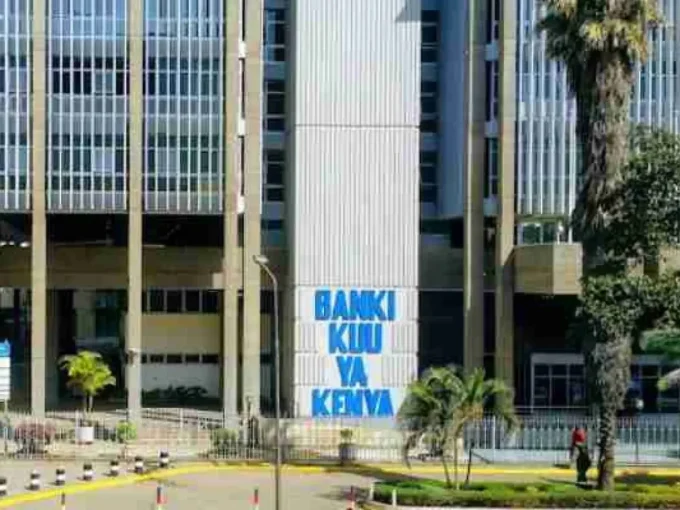
The Central Bank of Kenya (CBK) has reopened two Treasury bonds to raise KSh50 billion for government budgetary support. The bonds, which have approximately 7.3 and 14.3 years remaining to maturity, carry coupon rates of 12.857% and 12.5%, respectively, although reports differ on the second bond’s coupon. Individual investors can submit non-competitive bids starting at KSh50,000 through active DhowCSD accounts. The offer closes on November 18, 2026. Investors should consider the purchase price, withholding tax and risks of selling before maturity when assessing the potential returns.
LIVEKenya bond yields: Average yield 12.04% across 58 bonds · 10 NovSee yields →Key Takeaways
- CBK is seeking to raise KSh50 billion through two reopened Treasury bonds.
- The bonds have coupon rates of 12.857% and 12.5% in most of the supplied reports, although one account gives 12% for the second bond.
- Non-competitive bids start at KSh50,000, with a maximum of KSh50 million per investor account.
- Both bonds attract 10% withholding tax on interest payments.
- Investors need active DhowCSD accounts to participate.
- The reported auction and settlement dates are inconsistent, so investors should confirm the official timetable in the CBK prospectus.
Why Has the CBK Reopened KSh50 Billion in Treasury Bonds?
The Central Bank of Kenya (CBK) has invited investors to participate in a fresh KSh 50 billion Treasury bond offer as the government seeks additional domestic financing for its budgetary requirements.
The offer involves two previously issued fixed-coupon Treasury bonds: FXD1/2019/015 and SDB1/2011/030. Rather than introducing entirely new securities, the government is reopening existing bonds to raise additional funds through instruments that are already in the market.
The reopening allows the government to raise additional money through bonds that have already been issued, rather than introducing entirely new securities.
For investors, this means they can purchase additional units of existing government securities and receive the contractual interest payments attached to them, subject to the price they pay and the applicable terms.
The two bonds have different remaining investment periods:
- FXD1/2019/015: Approximately 7.3 years remaining, with maturity on January 9, 2034.
- SDB1/2011/030: Approximately 14.3 years remaining, with maturity on January 21, 2041.
The offer provides the government with another source of domestic borrowing while giving investors an opportunity to earn interest from government securities.
What Interest Rates Are the Two Treasury Bonds Offering?
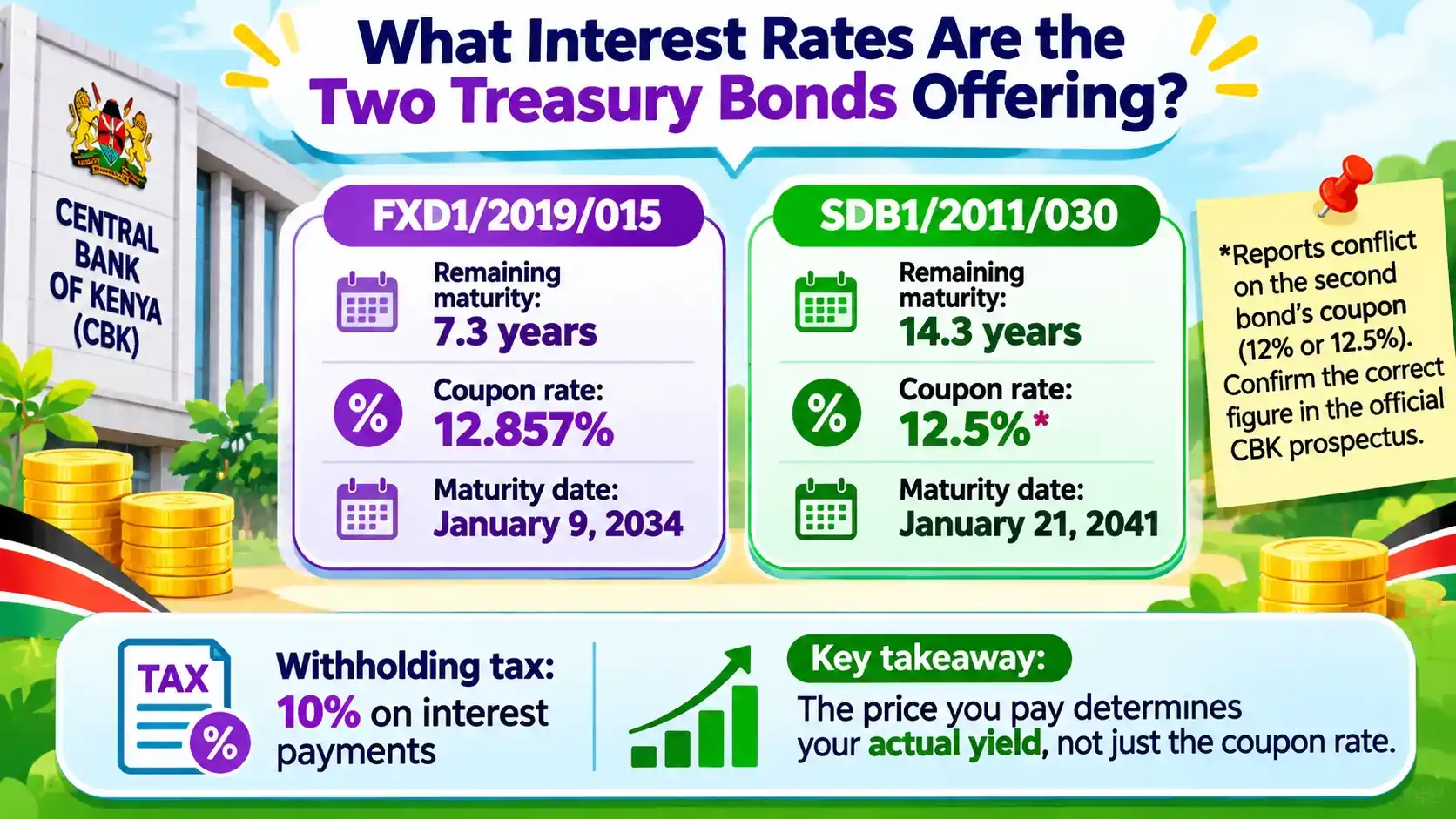
The two reopened bonds carry fixed coupon rates, which represent the annual interest payments calculated on their face value.
Bond
Remaining maturity
Coupon rate
Maturity date
FXD1/2019/015
7.3 years
12.857%
January 9, 2034
SDB1/2011/030
14.3 years
12.5%
January 21, 2041
Both securities attract a 10% withholding tax on interest payments.
It is important to distinguish between a bond’s coupon rate and the actual return an investor earns. The coupon is based on the bond’s face value, but the investor’s effective yield also depends on the price paid when purchasing it.
For instance, an investor who buys a bond above its face value receives the same contractual interest payments but pays more upfront, reducing the effective return. Buying below face value can increase the yield, assuming the bond is held to maturity.
The price an investor pays determines the actual yield earned from the investment.
This means the headline coupon rate should not be treated as a guaranteed investment return.
How Much Do Investors Need to Participate?
The CBK has set the minimum investment for non-competitive bids at KSh50,000, making the offer accessible to individual investors with relatively modest savings.
The bidding categories have different requirements:
Bid category
Minimum investment
Maximum investment
Non-competitive
KSh50,000
KSh50 million
Competitive
KSh2 million
Not specified in the supplied material
Competitive bids must meet the minimum investment requirement of KSh2 million per Central Securities Depository (CSD) account for each bond category.
Non-competitive investors submit bids without specifying the yield they are willing to accept. Competitive investors, on the other hand, indicate the yield they are prepared to earn.
The auction will use a multi-price bidding system, meaning successful competitive bidders receive allocations based on their submitted bids rather than one uniform price.
The CBK also reserves the right to accept applications in full or partially, allocate bonds on a pro-rata basis or reject applications altogether.
How Can Investors Apply for the Treasury Bonds?
Participation is restricted to investors with active DhowCSD accounts, the CBK’s digital platform for managing government securities.
Investors who do not have an account must first register through the DhowCSD Investor Portal or mobile application.
The registration process requires applicants to provide:
- A valid email address.
- An active mobile number registered with a Kenyan network.
- Kenya Revenue Authority (KRA) PIN.
- Settlement bank account details.
- A recent passport-size photograph.
- A valid identification document, such as a national identity card, passport or alien card.
Applicants are required to complete registration within seven days. Incomplete applications are automatically deleted after this period.
LIVEKenya bond yields: Average yield 12.04% across 58 bonds · 10 NovSee yields →Once approved, investors receive a username through email, which they can use alongside their registered email address to access the platform.
The CBK also permits joint DhowCSD accounts, although each account holder must first register individually.
The application period closes on November 18 at 10am. Investors should confirm the applicable auction timetable and submission procedures through the official prospectus before placing their bids.
Can Investors Sell the Bonds Before Maturity?
Yes. Treasury bonds can be traded in the secondary market, allowing investors to sell their holdings to other market participants before the maturity date.
The securities are expected to be listed on the Nairobi Securities Exchange (NSE), where investors can trade them subject to applicable market rules.
This provides an alternative for investors who need to exit their positions before the government repays the principal at maturity.
However, selling before maturity does not guarantee that an investor will recover the original amount invested. Bond prices can rise or fall depending on prevailing market interest rates and market demand.
When interest rates rise, existing bonds with lower coupon rates may become less attractive, putting downward pressure on their market prices. Investors who sell under these conditions may receive less than they initially paid.
The CBK also provides a rediscounting facility for investors who need access to their money before maturity. However, this is considered a last resort because the applicable rate is set three percentage points above the prevailing market yield or the bond’s coupon rate, whichever is higher.
Investors should therefore consider their liquidity needs before committing money to longer-term government securities.
Context is everything. Stay ahead of shifting trends with today’s market updates, and uncover emerging opportunities using the Serrari Group Market Index and Marketplace. Then, take control of your own financial future by exploring our Money & Life Reset Transformation Blueprint ™ to build stronger habits, create better systems, and design a path toward lasting wealth.
Can Treasury Bonds Be Used as Security for Loans?
Beyond earning interest, the reopened Treasury bonds can also serve as collateral when investors seek credit from regulated financial institutions.
The prospectus provides for investors to use their government securities as collateral when seeking credit from regulated financial institutions.
This arrangement allows bondholders to access financing without necessarily selling their investments.
However, investors should understand the conditions attached to pledging securities. The supplied material also indicates that a pledge remaining active at least five days before maturity can result in the securities being automatically transferred to the lender’s account.
Both bonds also qualify towards statutory liquidity ratio requirements for commercial banks and non-bank financial institutions under the Banking Act.
How Does the New Offer Compare With the Previous Auction?
The latest KSh50 billion offer follows strong investor demand during a September Treasury bond auction.
During that auction, investors submitted bids worth KSh68.19 billion against a KSh60 billion target. The CBK accepted KSh47.75 billion.
The bids represented demand of approximately 113.66% of the amount offered, showing that investor appetite exceeded the government’s target at the time.
The latest reopening provides another opportunity for the government to raise domestic financing while giving investors access to existing government securities.
However, the amount targeted does not mean the CBK will necessarily accept the full KSh50 billion. The central bank retains the discretion to accept bids in full or partially, allocate on a pro-rata basis or reject applications.
Important: Why Investors Should Confirm the Auction Dates and Coupon Rate
There are discrepancies in the supplied reports concerning the second bond’s coupon rate and the auction and settlement timetable.
For SDB1/2011/030, one report gives a coupon rate of 12%, while other reports state 12.5%. The bond’s maturity date of January 21, 2041, and remaining term of approximately 14.3 years are consistent across the supplied accounts.
The timetable is also inconsistent. Some reports indicate that the auction will take place on November 18, with settlement on November 23. Another gives November 23 as the auction date and November 25 as the settlement date, while also stating that secondary trading begins on November 23.
These dates cannot all describe the same sequence of events. Investors should therefore use the official CBK prospectus to establish the operative coupon rate and timetable before submitting applications.
The Bigger Picture
The KSh50 billion reopening highlights the government’s continued use of domestic borrowing to finance budgetary requirements while providing investment opportunities through the local debt market.
For individual investors, Treasury bonds offer a way to earn scheduled interest payments and potentially trade holdings before maturity. They can also be used as collateral when accessing credit from regulated financial institutions.
However, the investment decision requires more than comparing coupon rates. The purchase price, taxation, remaining maturity and potential changes in market interest rates all influence the return and liquidity of a bond investment.
Why Does This Matter Now?
With the application deadline set for November 18, investors have a limited period to review the offer and decide whether the securities fit their investment objectives.
The KSh50,000 minimum for non-competitive bids provides an entry point for individuals who want exposure to government securities without committing millions of shillings.
However, investors should not rush into the offer based only on the advertised coupon rates. Confirming the second bond’s coupon, checking the official auction timetable and understanding the risks of early disposal are important steps before committing funds.
The final allocation will also determine how much of the KSh50 billion target the government successfully raises.
Frequently Asked Questions
1. What is the minimum amount required to invest in the new CBK Treasury bond offer?
The minimum investment for non-competitive bids is KSh50,000, while competitive bids require at least KSh2 million per CSD account for each bond category.
2. What are the coupon rates of the two reopened Treasury bonds?
FXD1/2019/015 carries a coupon rate of 12.857%. The second bond, SDB1/2011/030, is reported at 12.5% in most supplied accounts, although one report gives 12%. Investors should confirm the correct rate in the official prospectus.
3. Can investors sell their Treasury bonds before maturity?
Yes. The bonds are expected to be listed on the Nairobi Securities Exchange, allowing investors to trade them before maturity, subject to market rules. However, the selling price may be higher or lower than the original purchase price.
4. How can investors apply for the KSh50 billion Treasury bond offer?
Investors need an active DhowCSD account to participate. They can register through the CBK’s DhowCSD Investor Portal or mobile application and submit their bids before the November 18, 2026, deadline at 10am.
Your financial future isn’t something you wait for—it’s something you build.
The real question is: when do you begin?
Move beyond simply staying informed.
Navigate the markets with clarity—track trends through the Serrari Group Market Index, uncover opportunities in the Serrari Marketplace, and build practical knowledge with our Curated Wealth Builder Platform.
Stay connected to what truly matters.
Get daily insights on macro trends and financial movements across Kenya, Africa, and global markets—delivered through the Serrari Newsletter.
Growth opens doors.
Advance your career through professional programs including ACCA, HESI A2, ATI TEAS 7 , HESI EXIT , NCLEX – RN and NCLEX – PN, Financial Literacy!🌟—designed to move you forward with confidence.
See where money is flowing—clearly and in real time.
Track Money Market Funds, Treasury Bills, Treasury Bonds, Green Bonds, and Fixed Deposits, alongside global and African indexes, key economic indicators, and the evolving Crypto and stablecoin landscape—all within Serrari’s Market Index.