Montenegro plans to launch an intraday electricity market in April 2027 as part of efforts to modernise its power sector and integrate with the European Union’s electricity market. The move is expected to improve electricity trading efficiency, increase power system flexibility and support better use of available generation capacity. The country is also advancing electricity market coupling with Italy, expanding cross-border transmission infrastructure and investing in renewable energy and battery storage.
Key Takeaways
- Montenegro plans to introduce intraday electricity trading in April 2027.
- The new market segment is expected to improve system flexibility and make electricity trading more efficient.
- Montenegro is working towards coupling its electricity market with Italy as part of its wider EU integration plans.
- A proposed second submarine electricity cable with Italy would double transmission capacity from 600 MW to 1,200 MW.
- Renewable energy, battery storage and electricity network upgrades remain important parts of Montenegro’s energy strategy.
Why Is Montenegro Introducing an Intraday Electricity Market?
Montenegro is preparing to launch an intraday electricity market in April 2027, marking another step in the modernisation of its energy sector and its integration into the European electricity market.
The planned market will allow electricity to be traded closer to the time of delivery, giving market participants greater flexibility to respond to changes in electricity supply and demand.
Its establishment will contribute to greater flexibility of the power system, more efficient electricity trading, and better utilization of available production capacities, according to the Ministry of Energy and Mining.
This matters because electricity systems must constantly balance supply and demand. Changes in renewable energy generation, electricity consumption and available production capacity can make that balance more difficult to maintain. Intraday trading provides an additional opportunity for market participants to adjust their electricity positions as delivery approaches.
Montenegro already operates a day-ahead electricity market through the Montenegrin Power Exchange, known as MEPX or BELEN. Established in 2017 by the country’s transmission system operator Crnogorski Elektroprenosni Sistem (CGES), state-controlled power producer EPCG and market operator COTEE, the exchange launched day-ahead trading in April 2023.
The planned intraday segment will build on this existing market structure by extending trading opportunities beyond the day-ahead stage.
How Will the New Market Support Montenegro’s EU Integration?
The intraday market is part of a broader effort to align Montenegro’s electricity sector with European Union rules and market practices.
Montenegro has made progress in adapting its regulatory and institutional framework to EU requirements, including the adoption of its National Energy and Climate Plan and the transposition of the Electricity Integration Package.
Minister of Energy and Mining Admir Šahmanović has emphasised that the country must now turn these reforms into practical improvements.
“In the previous period, we worked hard to regulate the regulatory and institutional framework and fulfill obligations that bring Montenegro closer to the European energy market. Now it is important to bring that work to an end and confirm the achieved results with concrete steps forward,” he said.
The country is also working towards closing its remaining EU negotiating chapters by the end of 2026, with the ambition of joining the bloc in 2028. Chapter 15, which covers energy, is expected to be an important milestone in this process.
However, aligning legislation is only part of the challenge. Montenegro must also develop the infrastructure and market arrangements that allow electricity to move and trade more easily across borders.
Why Is Electricity Market Coupling With Italy Important?
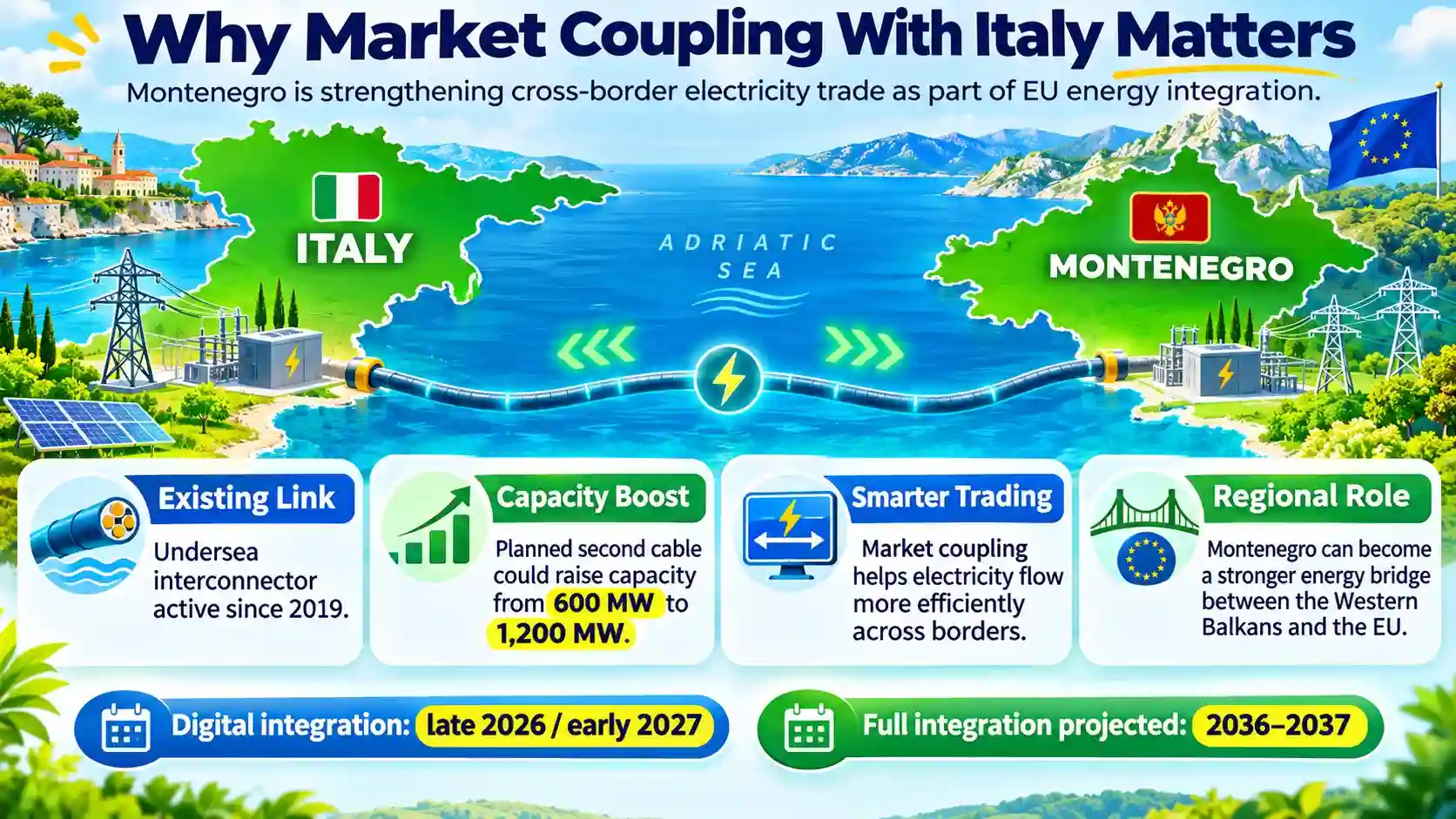
One of Montenegro’s major priorities is coupling its electricity market with Italy’s. Market coupling connects electricity markets so that cross-border trading can take place more efficiently, helping electricity flow towards areas where it is needed.
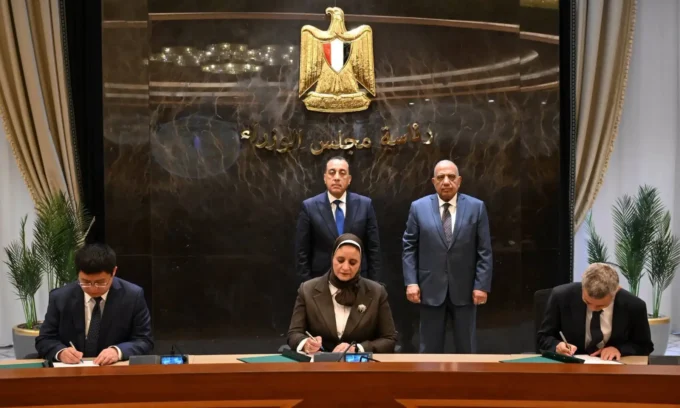
Montenegro and Italy signed a memorandum of understanding in October to advance electricity market coupling and accelerate plans for a second submarine power cable between their electricity grids.
The countries are already connected through an undersea electricity interconnector that became operational in late 2019. However, the proposed second cable would expand the available transmission capacity from 600 MW to 1,200 MW.
This would strengthen Montenegro’s position as a potential energy link between the Western Balkans and the European Union.
The planned expansion is particularly significant because stronger physical connections need to be supported by compatible electricity markets. The intraday market, market coupling and transmission infrastructure are therefore interconnected parts of Montenegro’s wider energy modernisation programme.
Digital integration is expected by late 2026 or early 2027, while full integration is projected for 2036–2037.
What Other Energy Investments Are Supporting This Transition?
Beyond electricity trading reforms, Montenegro is investing in renewable energy and the infrastructure needed to accommodate a changing electricity system.
At a ministerial meeting of the Central and South Eastern Europe Energy Connectivity (CESEC) initiative in Zagreb, Šahmanović highlighted progress on the Gvozd wind farm, the Trans-Balkan Electricity Corridor and improvements to transmission infrastructure towards Pljevlja.
The country is also preparing investments in battery energy storage systems and the modernisation of transmission and distribution networks.
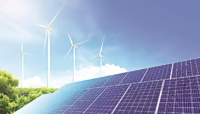
Battery storage will be particularly important as Montenegro develops additional renewable energy capacity. Wind and solar generation can vary depending on weather conditions, making flexibility and storage valuable for managing changes in electricity supply.
The proposed second submarine cable with Italy is another part of this infrastructure strategy. Together, stronger transmission networks, storage systems and more flexible electricity markets could help Montenegro accommodate additional renewable generation and participate more effectively in regional electricity trading.
Context is everything. Stay ahead of shifting trends with today’s market updates, and uncover emerging opportunities using the Serrari Group Market Index and Marketplace. Then, take control of your own financial future by exploring our Money & Life Reset Transformation Blueprint ™ to build stronger habits, create better systems, and design a path toward lasting wealth.
What Does This Mean for the Wider European Energy Market?
Montenegro’s plans reflect a wider regional effort to connect electricity markets, strengthen energy security and accelerate investment in cleaner energy infrastructure.
The country is pursuing these priorities through cooperation with neighbouring markets, European institutions and energy sector operators. Its engagement with the Energy Community and participation in regional initiatives such as CESEC provide platforms for advancing cross-border projects and regulatory alignment.
Montenegro has also been confirmed as the host of the next CESEC ministerial meeting in 2027, giving it an opportunity to continue discussions with European officials and regional partners on infrastructure development, investment and market integration.
The country’s progress will depend on whether regulatory reforms are matched by the timely development of infrastructure and effective electricity market arrangements.
The Bigger Picture
Montenegro’s planned April 2027 intraday market launch is more than a new trading arrangement. It forms part of a broader transition towards a more connected and flexible electricity system.
The country is pursuing three complementary priorities: aligning its energy regulations with EU requirements, strengthening cross-border electricity infrastructure and increasing investment in renewable energy and storage.
These developments are closely linked. New transmission cables can increase the ability to exchange electricity, but efficient trading mechanisms are needed to make use of that capacity. Similarly, additional renewable energy generation requires a flexible electricity system that can respond to changing supply conditions.
Why Does This Matter Now?
Montenegro is approaching an important stage in its European energy integration process. The planned intraday market, alongside electricity market coupling with Italy and the expansion of cross-border infrastructure, could help move the country from regulatory preparation towards deeper participation in the European electricity market.
The April 2027 target will therefore be an important milestone to watch. Its success will depend not only on launching the trading platform but also on effective coordination between market operators, power exchanges, regulators and energy institutions.
Frequently Asked Questions
1. When will Montenegro launch its intraday electricity market?
Montenegro plans to launch its intraday electricity market in April 2027.
2. What is an intraday electricity market?
It is a market where electricity can be traded closer to the time of delivery. It allows market participants to adjust their electricity trading positions as supply and demand conditions change.
3. Why is Montenegro coupling its electricity market with Italy?
Market coupling is intended to improve cross-border electricity trading and support Montenegro’s integration into the EU’s single electricity market. The countries are also advancing plans for a second submarine electricity cable to increase transmission capacity.
4. How will battery storage support Montenegro’s energy transition?
Battery storage can help improve electricity system flexibility by storing electricity and making it available when needed. This can support the integration of additional renewable energy capacity, particularly from variable sources such as wind and solar.
Your financial future isn’t something you wait for—it’s something you build.
The real question is: when do you begin?
Move beyond simply staying informed.
Navigate the markets with clarity—track trends through the Serrari Group Market Index, uncover opportunities in the Serrari Marketplace, and build practical knowledge with our Curated Wealth Builder Platform.
Stay connected to what truly matters.
Get daily insights on macro trends and financial movements across Kenya, Africa, and global markets—delivered through the Serrari Newsletter.
Growth opens doors.
Advance your career through professional programs including ACCA, HESI A2, ATI TEAS 7 , HESI EXIT , NCLEX – RN and NCLEX – PN, Financial Literacy!🌟—designed to move you forward with confidence.
See where money is flowing—clearly and in real time.
Track Money Market Funds, Treasury Bills, Treasury Bonds, Green Bonds, and Fixed Deposits, alongside global and African indexes, key economic indicators, and the evolving Crypto and stablecoin landscape—all within Serrari’s Market Index.