Vietnam has officially launched its pilot domestic carbon market at the Hanoi Stock Exchange (HNX), marking a significant milestone in the country’s transition toward a low-carbon economy. The new exchange enables businesses to trade greenhouse gas emission quotas and carbon credits while supporting Vietnam’s climate commitments, including achieving net-zero emissions by 2050.
Key Overview
- Vietnam has officially launched its pilot domestic carbon market at the Hanoi Stock Exchange.
- Trading began with more than 511 million tCO₂e of emission quotas allocated to over 100 facilities.
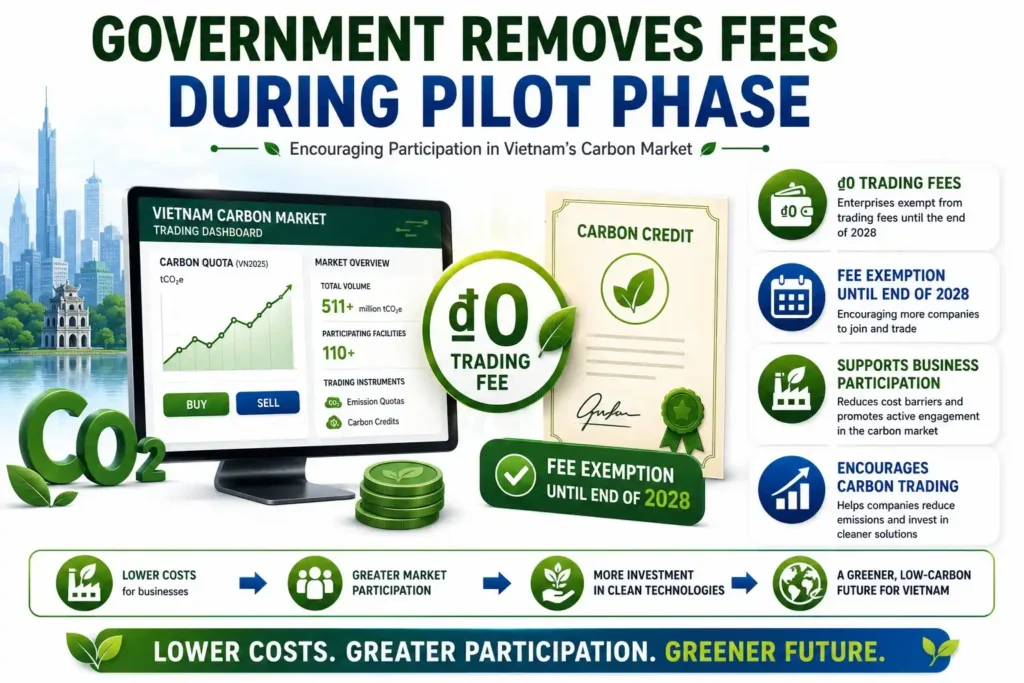
- Enterprises participating in the pilot phase will be exempt from trading fees until the end of 2028.
- The market supports Vietnam’s net-zero emissions target by 2050 and methane reduction goals.
- Authorities plan to further align the market with international carbon trading standards.
Carbon Trading Begins Under Vietnam’s Pilot Scheme
Vietnam has officially launched its pilot domestic carbon market at the Hanoi Stock Exchange (HNX), opening a new chapter in the country’s climate policy by allowing regulated companies to trade greenhouse gas emission quotas and carbon credits.
The market commenced trading with the VN2025 greenhouse gas emission quota for the 2025–2026 compliance period, following the implementation of the national carbon market development programme under Prime Ministerial Decision No. 232/QD-TTg.
The initiative represents one of Vietnam’s most significant climate policy developments to date, providing businesses with a market-based mechanism to manage emissions while supporting the country’s long-term decarbonisation objectives.
More Than 511 Million Tonnes of Emissions Enter Market
Trading opened with a total market volume of more than 511 million tCO₂e, representing the emission quotas allocated to 110 high-emitting facilities across the thermal power, steel, and cement industries during the 2025–2026 compliance period.
The first product listed on the exchange, VN2025, recorded opening prices ranging between VND 130,000 and VND136,000 per tCO₂e, equivalent to approximately $4.95 to $5.17 per tonne.
More than 1,200 tonnes of CO₂e were traded during the market’s opening session, while the allocated quotas will remain tradable until 24 December 2027.
The market currently supports two primary trading instruments:
- Greenhouse gas emission quotas.
- Carbon credits.
Government Removes Fees During Pilot Phase
To encourage participation, the Vietnamese government has introduced incentives aimed at reducing the cost of joining the new market.
Under Decree No. 29/2026/ND-CP, businesses participating in the domestic carbon exchange will not be required to pay trading fees throughout the pilot phase, which runs until the end of 2028.
Authorities said the temporary fee exemption is designed to encourage companies to actively engage in emissions trading, invest in cleaner technologies, and strengthen corporate sustainability efforts.
The measure also seeks to lower barriers to entry as companies gain experience operating within Vietnam’s emerging carbon market.
Exchange Supports Climate and Net-Zero Goals
The domestic carbon market forms an important component of Vietnam’s broader climate strategy.
The government expects the market to contribute to the country’s commitment to achieve a net-zero emissions target by 2050, while also supporting its target of reducing methane emissions by 30% by 2030.
Officials believe emissions trading will encourage businesses to improve production efficiency, adopt cleaner technologies, and reduce greenhouse gas emissions through market-based incentives.
Rather than relying solely on regulatory requirements, companies will now have greater flexibility to manage compliance by trading emission allowances and carbon credits.
Context is everything. Stay ahead of shifting trends with today’s market updates, and uncover emerging opportunities using the Serrari Group Market Index and Marketplace. Then, take control of your own financial future by exploring our Money & Life Reset Transformation Blueprint ™ to build stronger habits, create better systems, and design a path toward lasting wealth.
Financial Infrastructure Already in Place
The market has been developed through cooperation between several government agencies and financial institutions.
The Hanoi Stock Exchange (HNX) worked alongside the Department of Climate Change, the Vietnam Securities Depository and Clearing Corporation (VSDC), the Vietnam Exchange (VNX), the State Securities Commission (SSC), and the Joint Stock Commercial Bank for Investment and Development of Vietnam (BIDV) to establish the legal, operational, trading, and settlement framework.
According to organisers, the market’s IT infrastructure has already been successfully tested and is operating smoothly, connecting the exchange, registry systems, payment infrastructure, and regulatory authorities.
The initial market includes six securities companies as trading members together with more than 100 emission facilities.
Officials Highlight Benefits for Business
Officials described the exchange as an important economic tool that allows businesses to optimize emissions-reduction costs while supporting technological innovation.
Authorities said the market creates a transparent and fair mechanism for trading greenhouse gas emission quotas and carbon credits while encouraging companies to improve production efficiency without compromising environmental protection.
For Vietnam’s financial sector, the exchange also introduces a new component within the country’s growing green finance ecosystem by creating an additional channel for mobilising and allocating capital to sustainable development projects.
Experts Call for Stronger International Alignment
Although the pilot market has officially begun operating, experts believe further reforms will be needed as the market matures.
Industry specialists have called for greater alignment with international carbon market standards through clearer rules governing carbon credit ownership, trading procedures, and benefit-sharing arrangements involving government agencies, businesses, and local communities.
They also recommended expanding the generation of high-quality carbon credits through projects involving forest conservation, mangrove restoration, renewable energy, and sustainable agriculture.
At the same time, businesses are encouraged to accelerate investments in cleaner production technologies and more advanced emissions management systems while Vietnam strengthens international cooperation to attract green finance and broaden participation in global carbon markets.
Outlook
The launch of Vietnam’s pilot domestic carbon market represents a significant milestone in the country’s transition toward a low-carbon and more sustainable economy. As trading volumes increase and market infrastructure continues to develop, the exchange is expected to play an increasingly important role in helping businesses manage emissions while supporting green investment and technological innovation. With continued regulatory improvements and closer alignment with international carbon market standards, Vietnam’s carbon market could become a key driver of climate finance, emissions reduction, and sustainable economic growth as the country works toward its 2050 net-zero emissions target.
FAQs
1. What is Vietnam’s new carbon market?
It is a pilot emissions trading market launched at the Hanoi Stock Exchange that allows businesses to trade greenhouse gas emission quotas and carbon credits.
2. Who can participate in the pilot market?
The initial phase includes six securities companies and more than 100 facilities that have been allocated greenhouse gas emission quotas.
3. Are businesses charged trading fees?
No. Enterprises participating in the domestic carbon exchange are exempt from trading fees until the end of 2028.
4. What climate targets does the market support?
The market supports Vietnam’s goal of achieving net-zero emissions by 2050 and reducing methane emissions by 30% by 2030.
Sources: Enerdata, International Climate Initiative, Theinvestor, People’s Army Newspaper, Vietnam+ (VietnamPlus)
Your financial future isn’t something you wait for—it’s something you build.
The real question is: when do you begin?
Move beyond simply staying informed.
Navigate the markets with clarity—track trends through the Serrari Group Market Index, uncover opportunities in the Serrari Marketplace, and build practical knowledge with our Curated Wealth Builder Platform.
Stay connected to what truly matters.
Get daily insights on macro trends and financial movements across Kenya, Africa, and global markets—delivered through the Serrari Newsletter.
Growth opens doors.
Advance your career through professional programs including ACCA, HESI A2, ATI TEAS 7 , HESI EXIT , NCLEX – RN and NCLEX – PN, Financial Literacy!🌟—designed to move you forward with confidence.
See where money is flowing—clearly and in real time.
Track Money Market Funds, Treasury Bills, Treasury Bonds, Green Bonds, and Fixed Deposits, alongside global and African indexes, key economic indicators, and the evolving Crypto and stablecoin landscape—all within Serrari’s Market Index.