
The US pet insurance market continued to expand in 2025, with North America reaching 7.6 million insured animals. Despite steady growth, pet insurance coverage in the US remains low, with only 4.27% of pets insured. Rising veterinary costs, increasing premiums, and greater awareness are driving market expansion, while significant opportunities remain to improve pet insurance adoption across the country.
Key Overview
- North America reached 7.6 million insured pets in 2025.
- The US recorded 9% year-over-year growth in insured pets.
- Only 4.27% of US pets have insurance coverage.
- Dogs remain significantly more insured than cats.
- US gross written premiums rose 20.8% to $5.2 billion.
- Americans are expected to spend $165 billion on pet care in 2026.
- Rising veterinary costs continue to support demand for coverage.
- The market still has substantial room for future growth.
US Pet Insurance Market Continues to Grow Despite Low Coverage
The US pet insurance industry continued its upward trajectory in 2025, recording another year of steady expansion while highlighting the enormous gap that still exists between pet ownership and insurance protection. According to the latest North American market data, the region now has 7.6 million insured animals, supported by strong premium growth and increasing awareness of veterinary healthcare costs.
Although the market continues to expand, pet insurance coverage in the US remains surprisingly low. Millions of households continue to pay veterinary expenses out of pocket, leaving a significant opportunity for insurers as healthcare costs for pets continue to rise.
Pet Insurance Penetration Remains Extremely Low
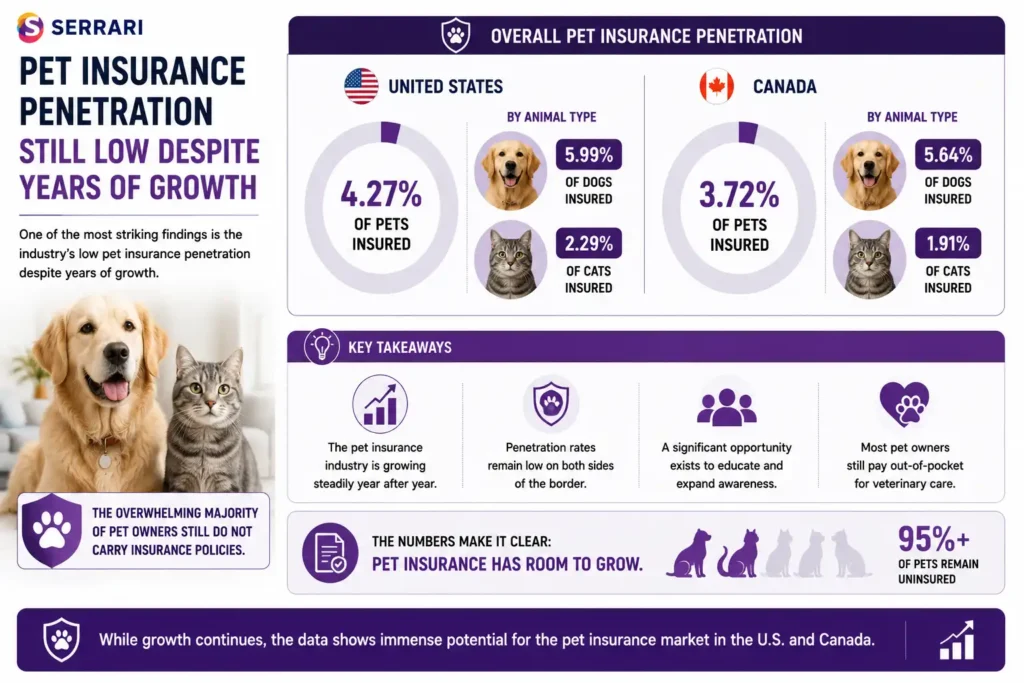
One of the most striking findings is the industry’s low pet insurance penetration despite years of growth.
Only 4.27% of pets in the United States currently have insurance coverage.
Coverage differs significantly between animal types:
- Dogs: 5.99% insured
- Cats: 2.29% insured
Canada reports even lower overall penetration at 3.72%, with 5.64% of dogs and 1.91% of cats insured.
These figures demonstrate that while the industry is growing steadily, the overwhelming majority of pet owners still do not carry insurance policies.
Premium Growth Outpaces Policy Growth
The US pet insurance market experienced stronger premium growth than policy growth during 2025.
Gross written premiums increased 20.8% year over year, reaching approximately $5.2 billion.
This significantly exceeded the 9% increase in insured pets, indicating that average premiums continued to rise across the market.
Higher veterinary treatment costs, medical inflation, and insurer pricing adjustments have all contributed to increasing premium levels.
For example, regulators in Florida approved multiple pet insurance rate increases during late 2025, averaging 9.25%, while one insurer received approval for an overall increase of 26%.
Context is everything. Stay ahead of shifting trends with today’s market updates, and uncover emerging opportunities using the Serrari Group Market Index and Marketplace. Then, take control of your own financial future by exploring our Money & Life Reset Transformation Blueprint ™ to build stronger habits, create better systems, and design a path toward lasting wealth.
Veterinary Costs Continue Driving Demand
Rising veterinary expenses remain one of the strongest drivers behind pet insurance growth.
According to the American Pet Products Association, Americans are expected to spend approximately $165 billion on pet care during 2026.
Routine healthcare, emergency treatments, surgeries, medications, and specialist care continue becoming more expensive, making insurance increasingly attractive for pet owners seeking financial protection.
The industry’s leadership notes that everyday illnesses and routine medical conditions account for the majority of insurance claims, reinforcing the value of coverage beyond emergency situations.
Huge Opportunity Remains for Insurers
The relatively low pet insurance adoption rate represents one of the largest untapped opportunities within the broader insurance industry.
Approximately 95 million US households owned pets during 2025, meaning the vast majority of animals remain uninsured.
The uninsured population exposes owners to potentially significant financial risks when unexpected medical expenses arise.
The Insurance Information Institute reported that insurers paid approximately $1.86 billion in dog-related injury claims during 2025, with the average claim costing around $65,450.
While liability claims differ from veterinary insurance, the figures highlight the substantial financial exposure associated with pet ownership.
Market Consolidation Continues
The industry’s expansion has not been without challenges.
Loss-cost inflation and rising veterinary expenses have pressured insurer profitability, prompting several companies to adjust their strategies.
Nationwide discontinued approximately 100,000 pet insurance policies during 2024, while ManyPets exited the US market entirely later that year.
Meanwhile, growth has become increasingly concentrated among larger providers.
JAB Holdings reported a 79.9% year-over-year increase in US direct premiums during 2025, suggesting that well-capitalized insurers continue capturing market share as competition evolves.
This consolidation may help strengthen long-term market stability while allowing insurers to invest more heavily in digital claims processing, customer service, and product innovation.
Rising Awareness Could Support Future Growth
Despite relatively low penetration today, industry fundamentals remain favorable.
Pet owners increasingly view animals as family members and are becoming more willing to invest in preventive care and comprehensive medical treatment.
At the same time, rising veterinary costs continue encouraging owners to consider insurance as a way to manage unexpected healthcare expenses.
Improved digital purchasing experiences, broader product offerings, and greater public awareness could further accelerate pet insurance adoption over the coming years.
With more than 95% of pets still uninsured, even modest increases in market penetration could generate significant premium growth for insurers.
Conclusion
The US pet insurance industry continues to deliver solid growth, but current pet insurance coverage US levels reveal how much untapped potential remains. With only 4.27% of pets insured, the market is still in the early stages of development despite rising premiums and growing consumer awareness. As veterinary costs continue increasing and pet ownership remains high, insurers have significant opportunities to expand coverage while helping more households manage the financial risks associated with pet healthcare.
FAQs
1. What percentage of pets are insured in the US?
Despite the continued growth of the US pet insurance industry, insurance coverage remains relatively uncommon. As of 2025, only 4.27% of pets in the United States are insured, meaning more than 95% of pets are still without financial protection for unexpected veterinary expenses. Dogs are insured at a much higher rate than cats, with nearly 6% of dogs covered compared to just over 2% of cats. This low pet insurance penetration highlights both the challenges facing the industry and the significant opportunity for future growth as awareness of pet health insurance continues to increase.
2. How large is the US pet insurance market?
The US pet insurance market has grown into a multi-billion-dollar industry. In 2025, insurers generated approximately $5.2 billion in gross written premiums, representing a 20.8% increase from the previous year. North America also reached 7.6 million insured animals, with the United States accounting for the majority of covered pets. Premium growth has outpaced policy growth, reflecting rising veterinary costs, higher average premiums, and increased demand for comprehensive pet healthcare coverage.
3. Why are more pet owners buying pet insurance?
More pet owners are purchasing pet health insurance because veterinary care has become increasingly expensive. Routine check-ups, emergency surgeries, diagnostic imaging, specialist treatments, and long-term medication can result in significant medical bills that many households are unprepared to pay. Pet insurance helps reduce the financial burden of these unexpected expenses by reimbursing eligible treatment costs, allowing owners to make healthcare decisions based on their pet’s medical needs rather than affordability. Growing awareness of these benefits continues to support pet insurance adoption across the United States.
4. What is driving future growth in the US pet insurance market?
Several long-term trends are expected to support continued pet insurance growth in the coming years. Pet ownership remains high across the United States, while veterinary inflation continues to push healthcare costs upward. At the same time, insurers are investing in improved digital services, faster claims processing, and more flexible policy options that make coverage easier to purchase and manage. Since more than 95% of American pets remain uninsured, even modest increases in pet insurance coverage in the US could translate into millions of new policies, creating substantial growth opportunities for insurers and expanding financial protection for pet owners.
Sources: Yahoo Finance, Insurance Business, MorningStar, Veterinary Practice News
Your financial future isn’t something you wait for—it’s something you build.
The real question is: when do you begin?
Move beyond simply staying informed.
Navigate the markets with clarity—track trends through the Serrari Group Market Index, uncover opportunities in the Serrari Marketplace, and build practical knowledge with our Curated Wealth Builder Platform.
Stay connected to what truly matters.
Get daily insights on macro trends and financial movements across Kenya, Africa, and global markets—delivered through the Serrari Newsletter.
Growth opens doors.
Advance your career through professional programs including ACCA, HESI A2, ATI TEAS 7 , HESI EXIT , NCLEX – RN and NCLEX – PN, Financial Literacy!🌟—designed to move you forward with confidence.
See where money is flowing—clearly and in real time.
Track Money Market Funds, Treasury Bills, Treasury Bonds, Green Bonds, and Fixed Deposits, alongside global and African indexes, key economic indicators, and the evolving Crypto and stablecoin landscape—all within Serrari’s Market Index.