Renewable energy supplied 30.3% of U.S. electricity during the first five months of 2026, according to a new analysis of U.S. Energy Information Administration (EIA) data by the SUN DAY Campaign. Rapid growth in solar, wind and battery storage helped clean energy generation rise more than 10% year-on-year, while coal and other fossil fuel sources continued to lose ground.
Key Overview
- Renewables generated 30.3% of U.S. electricity from January to May 2026.
- Renewable electricity output increased by more than 10% year-on-year.
- Utility-scale solar generation rose approximately 21%.
- Wind and solar produced 57% more electricity than coal.
- Battery storage expanded by more than 16 GW over the past year.
Renewables Continue to Gain Ground in the U.S. Power Mix
Renewable energy strengthened its role in the United States electricity system during the first five months of 2026, accounting for 30.3% of total electricity generation as clean energy capacity continued to expand across the country.
According to an analysis by the SUN DAY Campaign, based on data from the U.S. Energy Information Administration (EIA), electricity generated from renewable sources increased by more than 10% compared with the same period in 2025.
The latest figures highlight the growing contribution of solar, wind and other renewable technologies to the U.S. electricity mix, while conventional power sources continued to decline.
Solar Drives Renewable Energy Growth
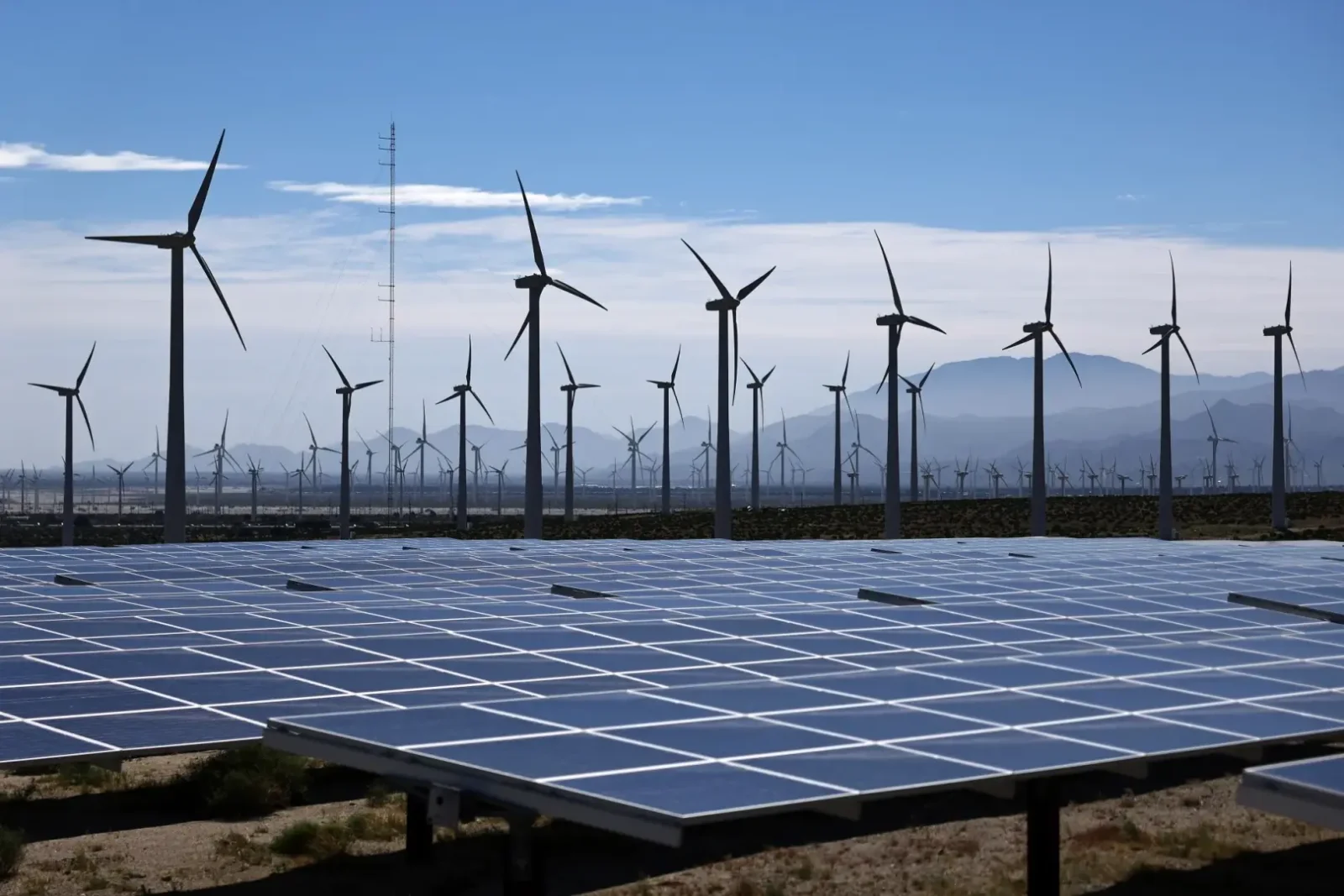
Solar energy remained one of the fastest-growing sources of electricity generation.
Utility-scale solar generation increased by approximately 21% compared with the first five months of 2025, making it one of the primary drivers behind the rise in renewable electricity production.
Over the 12 months ending in May 2026, the United States added nearly 28 gigawatts (GW) of utility-scale solar capacity, alongside another 6.6 gigawatts of small-scale solar installations.
The rapid expansion has positioned solar to potentially overtake natural gas as the country’s largest source of installed electricity generation capacity by spring 2027, according to SUN DAY Campaign projections.
Wind and Solar Surpass Coal
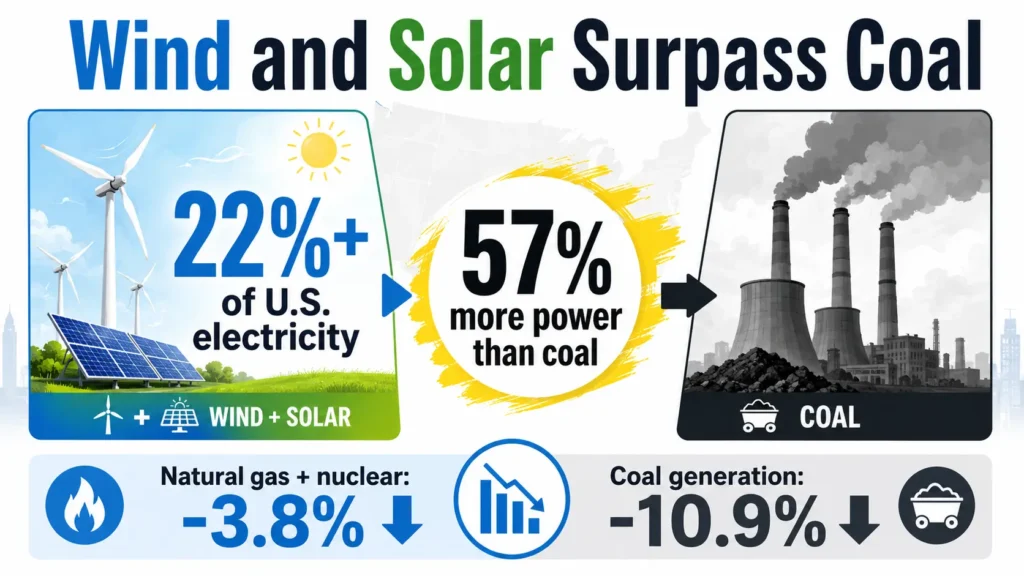
Combined wind and solar generation continued to outperform coal-fired electricity.
Together, the two renewable sources supplied more than 22% of US electricity and generated 57% more power than coal during the January-to-May period.
Meanwhile, electricity generation from coal declined by 10.9%, while combined output from natural gas and nuclear power declined 3.8% compared with the previous year.
The figures illustrate the ongoing shift in the U.S. energy landscape as renewable technologies steadily replace older fossil fuel generation.
Battery Storage Expands Rapidly
Battery energy storage also recorded significant growth, supporting greater integration of renewable energy into the power grid.
Utility-scale battery storage capacity increased by more than 16.5 gigawatts over the 12 months through May 2026.
Expanding storage capacity enables excess electricity generated by solar and wind facilities to be stored for later use, helping improve grid reliability during periods of high demand or lower renewable generation.
Greater storage deployment also reduces reliance on natural gas-powered peaking plants that are traditionally used to balance electricity supply.
Context is everything. Stay ahead of shifting trends with today’s market updates, and uncover emerging opportunities using the Serrari Group Market Index and Marketplace. Then, take control of your own financial future by exploring our Money & Life Reset Transformation Blueprint ™ to build stronger habits, create better systems, and design a path toward lasting wealth.
Investment Continues Despite Challenges
Renewable energy developers continued expanding clean energy infrastructure despite policy uncertainty.
According to the SUN DAY Campaign, total renewable generating capacity added from May 2025 to May 2026 was 41% above the previous 12-month period.
The organization projects that another 83 GW of new capacity will be added by May 2027, while nuclear and fossil fuel capacity is expected to decline by approximately 4.7 gigawatts.
The continued growth reflects strong investment in renewable technologies as utilities seek cleaner, more cost-effective electricity generation.
Benefits for Consumers and the Grid
Growing renewable generation offers benefits beyond emissions reductions.
Because solar and wind facilities do not require ongoing fuel purchases, they are less exposed to fluctuations in coal and natural gas prices, helping improve long-term electricity price stability.
Increasing renewable capacity also contributes to cleaner air, lower greenhouse gas emissions and improved public health while supporting grid resilience as electricity demand rises.
The continued expansion of battery storage further strengthens the grid by allowing renewable electricity to be delivered when demand is highest, improving reliability without increasing fossil fuel use.
Outlook
The latest figures suggest the U.S. energy transition continues to accelerate, with renewable energy becoming an increasingly dominant source of electricity generation. Rapid growth in solar power, wind energy and battery storage is reshaping the country’s electricity system while reducing dependence on coal and other fossil fuels. If current investment trends continue, renewable capacity is expected to expand significantly over the next two years, with solar potentially surpassing natural gas as the largest source of installed generating capacity. Continued deployment of energy storage and grid modernization will be critical to ensuring renewable electricity can reliably meet growing power demand while supporting long-term decarbonization goals.
FAQs
1. How much U.S. electricity came from renewables in early 2026?
Renewable energy generated 30.3% of U.S. electricity between January and May 2026.
2. Which renewable source is growing the fastest?
Utility-scale solar generation rose approximately 21% year-on-year, making it one of the fastest-growing energy sources.
3. How much battery storage was added?
The United States added more than 16.5 GW of utility-scale battery storage during the 12 months ending in May 2026.
4. Why is battery storage important?
Battery storage allows excess renewable electricity to be stored and used later, improving grid reliability and reducing reliance on fossil fuel-powered generation.
Sources: Yahoo News, The Cool Down, Energy Live News
Your financial future isn’t something you wait for—it’s something you build.
The real question is: when do you begin?
Move beyond simply staying informed.
Navigate the markets with clarity—track trends through the Serrari Group Market Index, uncover opportunities in the Serrari Marketplace, and build practical knowledge with our Curated Wealth Builder Platform.
Stay connected to what truly matters.
Get daily insights on macro trends and financial movements across Kenya, Africa, and global markets—delivered through the Serrari Newsletter.
Growth opens doors.
Advance your career through professional programs including ACCA, HESI A2, ATI TEAS 7 , HESI EXIT , NCLEX – RN and NCLEX – PN, Financial Literacy!🌟—designed to move you forward with confidence.
See where money is flowing—clearly and in real time.
Track Money Market Funds, Treasury Bills, Treasury Bonds, Green Bonds, and Fixed Deposits, alongside global and African indexes, key economic indicators, and the evolving Crypto and stablecoin landscape—all within Serrari’s Market Index.