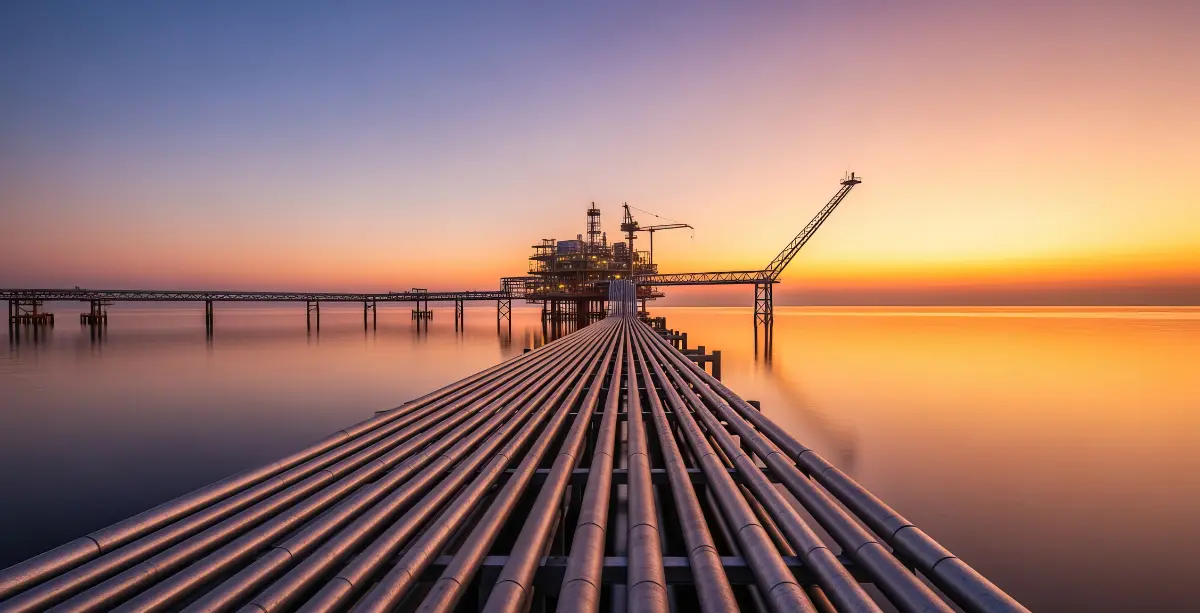
Uganda has set June 2027 as the latest target for first commercial oil and exports from its Albertine Graben developments, with the 1,443km East African Crude Oil Pipeline (EACOP) central to the project. The heated pipeline is designed to transport Uganda’s waxy crude from Hoima to Tanga port in Tanzania.
Key Overview
- Uganda’s latest target for first commercial oil and exports is June 2027.
- The East African Crude Oil Pipeline (EACOP) stretches 1,443km from Hoima to Tanga.
- The pipeline requires continuous heating at 50°C because of the waxy nature of Uganda’s crude.
- EACOP was reported at 92.7% overall completion, with 1,414km laid and buried and 29km remaining.
- TotalEnergies holds a 56.7% operating stake in Tilenga alongside CNOOC and UNOC.
- Tilenga and Kingfisher were reported at 67% and 77% completion respectively in March.
- The pipeline is expected to receive crude by mid-December 2026, while June 2027 refers to commercial oil and exports.
Uganda Sets June 2027 Target for First Oil Exports
Uganda has set June 2027 as the latest target for its first commercial oil and export volumes, as the country continues construction of infrastructure connecting its inland oil developments to international markets.
Finance Minister Henry Musasizi gave the new date to Parliament’s finance committee on 11 September. Officials from the Petroleum Authority, the national oil company, planning authority and revenue authority attended the hearing.
The latest target follows several previous revisions. A July 2026 target was set in March, replacing a June 2026 date announced in May 2025. Earlier targets included 2025, 2020 and the original 2018 projection.
The repeated changes have prompted questions from lawmakers, with MP Patrick Oshabe Nsamba asking when the country would actually achieve first oil.
Two Dates for the Oil Project
The latest parliamentary hearing produced two different dates relating to the project.
Michael Ochan, acting head of the Petroleum Authority, told MPs that the pipeline would receive crude by mid-December 2026.
The June 2027 date, however, refers to first commercial oil and export.
This distinction is important because crude entering the pipeline does not represent the same milestone as oil reaching the market through the export system.
EACOP Remains Central to Uganda’s Oil Exports
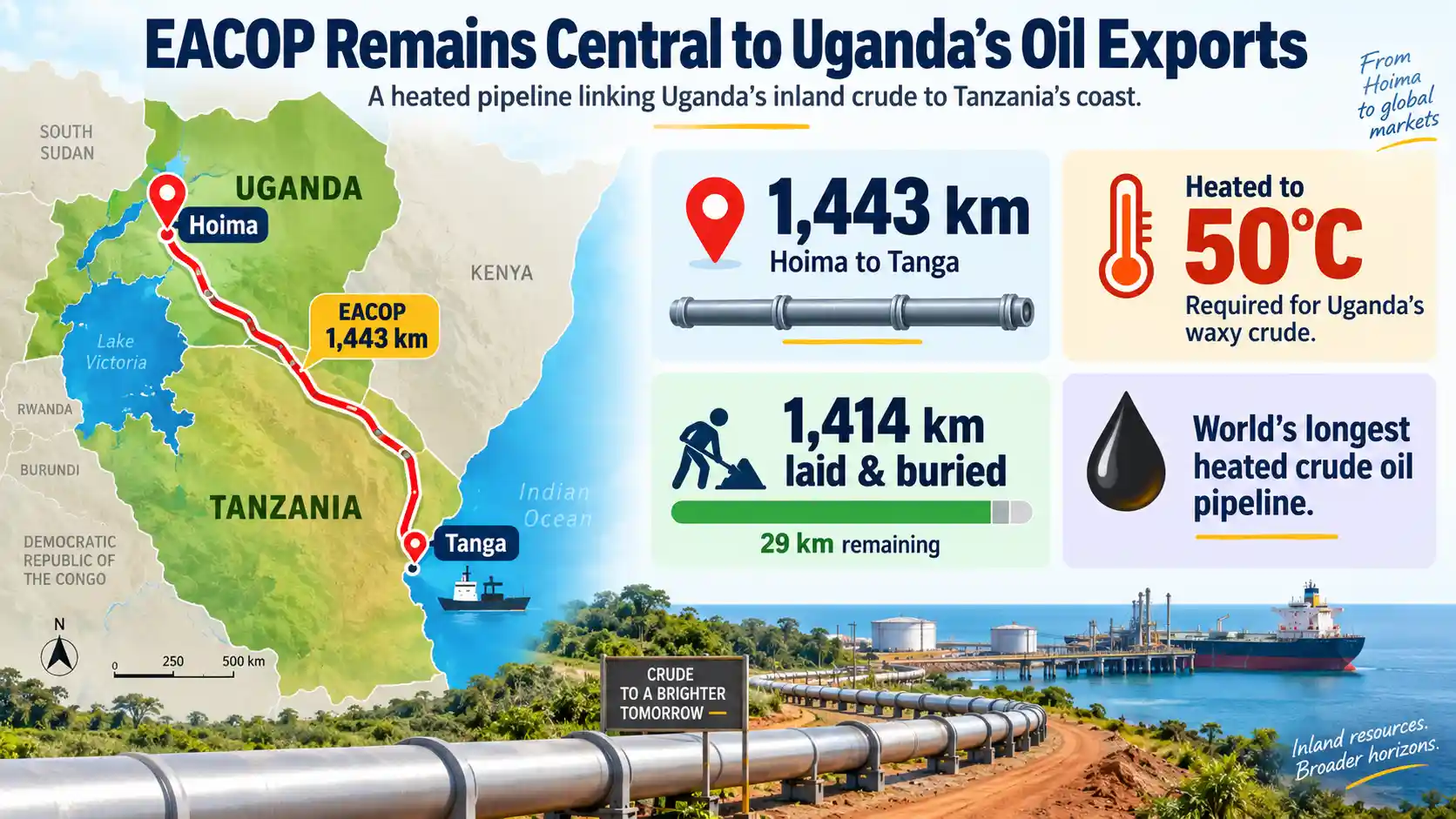
The East African Crude Oil Pipeline runs 1,443 kilometres from Hoima in western Uganda to the marine loading terminal at Tanga on Tanzania’s coast.
The pipeline is heated along its length because Ugandan crude is waxy and can solidify at ambient temperature. The project is described as the longest heated crude oil pipeline in the world.
Of the total pipeline length, 1,414 kilometres have been laid and buried, leaving 29 kilometres at the time of the figures provided.
The pipeline’s completion remains central to Uganda’s ability to move crude from its inland production fields to international markets.
The project is also carrying debt that is linked to future oil revenues. Principal repayments on $1.33 billion in loans are scheduled to begin in December 2026, increasing the importance of the project’s commercial timeline.
Tilenga and Kingfisher Developments
TotalEnergies holds a 56.7% operating stake in the Tilenga development, alongside CNOOC and the Uganda National Oil Company.
The Tilenga field was reported to be 67% complete in March, while the Kingfisher project, operated by CNOOC of China, was 77% complete.
The completion figures are from March and have not been publicly updated in the material provided.
Uganda expects peak production of about 230,000 barrels per day from its oil developments.
The development has faced challenges involving financing, land acquisition, litigation and the construction of the pipeline infrastructure required to connect the landlocked basin to the coast.
More than 20 international banks and insurers refused to finance the pipeline following campaigns focused on its route and climate impact, according to the material provided.
Land acquisition across Uganda and Tanzania also displaced thousands of households and resulted in litigation in Uganda, Tanzania and France.
Context is everything. Stay ahead of shifting trends with today’s market updates, and uncover emerging opportunities using the Serrari Group Market Index and Marketplace. Then, take control of your own financial future by exploring our Money & Life Reset Transformation Blueprint ™ to build stronger habits, create better systems, and design a path toward lasting wealth.
Financing and Delayed Revenues
The repeated changes to the production schedule have financial implications for Uganda.
The government borrowed against anticipated future oil revenues and has been servicing that debt before those revenues begin flowing.
Contractors, Tanga port capacity and refinery plans are also connected to the broader oil development timetable.
A further delay would therefore extend the period in which Uganda services financing linked to future oil revenue without receiving the anticipated production income.
The oil sector is expected to become particularly important for Uganda because oil could become the country’s largest single export.
Regional Importance of the Pipeline
The EACOP represents a major piece of infrastructure for Uganda’s landlocked oil resources.
By connecting the Albertine Graben to Tanga, the pipeline provides a route for crude to reach international shipping markets.
The project also places regional transit agreements and cross-border infrastructure at the centre of Uganda’s oil development.
The contrast with offshore projects such as the Sangomar field off Senegal highlights the different infrastructure requirements associated with inland and maritime oil developments. Sangomar uses a permanently moored Floating Production Storage and Offloading vessel, allowing production to connect directly with international shipping lanes.
Outlook
Uganda’s latest target places June 2027 as the expected date for first commercial oil and exports. The pipeline is expected to receive crude earlier, with the Petroleum Authority telling MPs that this could occur by mid-December 2026.
Substantial progress has been made on EACOP, with 1,414km of the 1,443km route reported as laid and buried. The Tilenga and Kingfisher developments were also reported to be progressing, although the completion figures provided date from March.
The June 2027 target follows several previous production dates that were revised over the years. The remaining pipeline works, field developments, financing obligations and associated infrastructure will therefore remain central to the timeline for Uganda’s first commercial oil exports.
FAQs
1. When is Uganda targeting its first commercial oil exports?
Uganda is targeting June 2027 for its first commercial oil and export volumes.
2. When is the East African Crude Oil Pipeline expected to receive crude?
Michael Ochan, acting head of the Petroleum Authority, told MPs that the pipeline could receive crude by mid-December 2026.
3. How long is the East African Crude Oil Pipeline?
The EACOP stretches 1,443 kilometres from Hoima in western Uganda to Tanga on Tanzania’s coast.
4. Why does the pipeline need to be heated?
Ugandan crude is waxy and can solidify at ambient temperature, so the pipeline requires heating along its length to transport the crude.
Sources: Energy News Network, The Rio Times, Business Insider Africa
Your financial future isn’t something you wait for—it’s something you build.
The real question is: when do you begin?
Move beyond simply staying informed.
Navigate the markets with clarity—track trends through the Serrari Group Market Index, uncover opportunities in the Serrari Marketplace, and build practical knowledge with our Curated Wealth Builder Platform.
Stay connected to what truly matters.
Get daily insights on macro trends and financial movements across Kenya, Africa, and global markets—delivered through the Serrari Newsletter.
Growth opens doors.
Advance your career through professional programs including ACCA, HESI A2, ATI TEAS 7 , HESI EXIT , NCLEX – RN and NCLEX – PN, Financial Literacy!🌟—designed to move you forward with confidence.
See where money is flowing—clearly and in real time.
Track Money Market Funds, Treasury Bills, Treasury Bonds, Green Bonds, and Fixed Deposits, alongside global and African indexes, key economic indicators, and the evolving Crypto and stablecoin landscape—all within Serrari’s Market Index.