













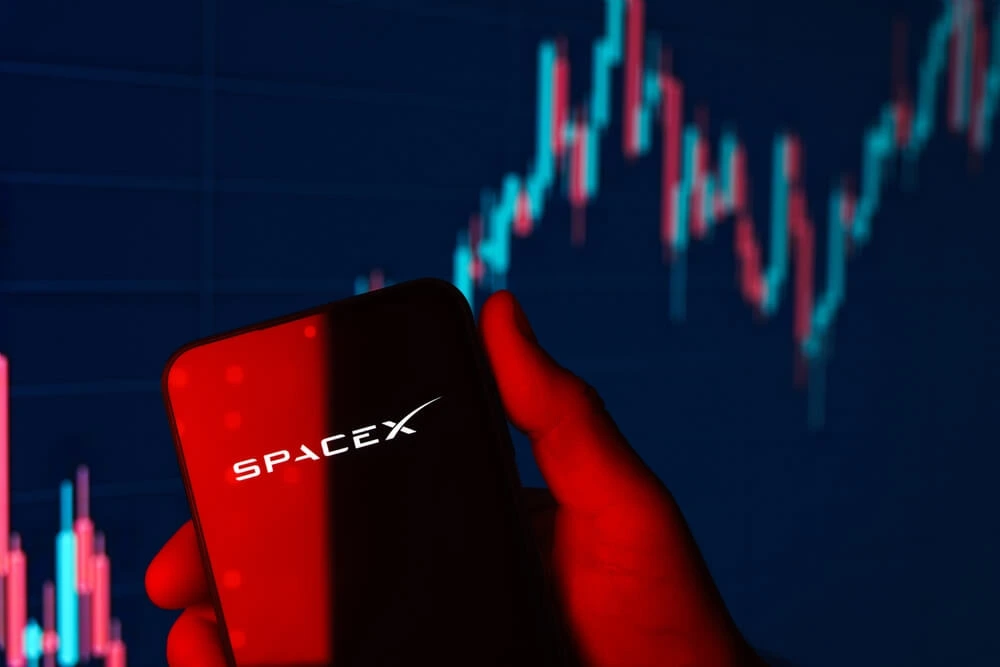
Post-IPO volatility is common when a newly listed company moves from private valuation rounds and IPO allocation into daily public-market price discovery. SpaceX Stock falling below its IPO price intraday is psychologically important because $135 was the original offer price paid by IPO investors. However, the shares closed slightly above that level, meaning this was an intraday breach, not a closing-price breach. Investors should separate SpaceX’s business quality from SpaceX valuation risk. A strong company can still be an expensive stock if the IPO price already reflected aggressive growth expectations.
Key Overview
- SpaceX priced its IPO at $135 per share on 11 June 2026.
- Shares began trading on 12 June under ticker SPCX.
- The IPO closed on 15 June after the full overallotment option was exercised.
- Gross IPO proceeds reached approximately $85.7 billion.
- SpaceX stock fell to $132.15 intraday on 15 July before closing at $135.27.
- The official post-listing high was $225.64, making the high-to-low decline about 41.4%.
SpaceX Stock Falls Below $135 IPO Price for First Time
The IPO Price Finally Got Tested
SpaceX confirmed on 11 June that it priced 555,555,555 Class A shares at $135 each, with trading expected to begin on 12 June on the Nasdaq Global Select Market and Nasdaq Texas under ticker SPCX. The company also granted underwriters an option to buy up to 83,333,333 additional shares at the IPO price. (SpaceX Investor Relations)
That $135 level became the market’s first psychological support line. On 15 July, the stock finally broke it intraday. StockAnalysis data show the shares opened at $137.51, traded as high as $139.34, fell to $132.15 and closed at $135.27, down 0.60% on volume of 57.55 million shares. (StockAnalysis)
It Was Not a Closing Breach
The closing price matters. SpaceX ended the session at $135.27, which is $0.27 above the IPO price. That means the stock tested and briefly broke the IPO threshold, but did not close below it.
For investors, this distinction is important. A brief intraday breach can trigger headlines, stop-loss activity and sentiment pressure. A sustained close below the IPO price would carry a stronger message because it would show sellers controlled the level into the end of the trading session.
The Drop From the High Is Larger
The more important move is the decline from the post-listing high. StockAnalysis and Investing.com both show the official high at $225.64 on 16 June. The fall from $225.64 to the 15 July intraday low of $132.15 is approximately 41.4%. (StockAnalysis)
That does not mean the IPO has failed. It means the public market is reassessing the price investors were willing to pay immediately after listing. The early excitement pushed the stock far above the IPO price; the recent decline has brought the valuation debate back to the original offer level.
The Listing Was Enormous
SpaceX’s IPO was not an ordinary listing. The company announced on 15 June that the offering closed with 638,888,888 Class A shares sold, including full exercise of the underwriters’ overallotment option, bringing gross proceeds to about $85.7 billion. (SpaceX Investor Relations)
Nasdaq described the public debut as a landmark event in capital markets history, noting that the first trade occurred at $150 and that the first trading session placed SpaceX’s market capitalisation around $2.1 trillion. (Nasdaq)
Why the IPO Price Matters
The IPO price matters because it anchors investor psychology. It is the level at which the company and underwriters sold shares to IPO investors. If the stock trades below that price, investors who bought in the offering are temporarily underwater.
MarketWatch described the $135 break as a significant psychological level, while noting that analysts did not view the move by itself as proof of real trouble. The same report said the first trade was $150, meaning public buyers initially paid well above the IPO price. (MarketWatch)
Context is everything. Stay ahead of shifting trends with today’s market updates, and uncover emerging opportunities using the Serrari Group Market Index and Marketplace. Then, take control of your own financial future by exploring our Money & Life Reset Transformation Blueprint ™ to build stronger habits, create better systems, and design a path toward lasting wealth.
Lock-Ups Add a Supply Question
Lock-up restrictions also matter. MarketWatch reported that investors who were able to buy before broader public access remain unable to sell because of lock-up restrictions, while Business Insider noted that the decline comes ahead of the first post-IPO lock-up expirations. (MarketWatch)
That does not guarantee new selling pressure. It simply means the future float may change as restrictions expire. Investors should confirm exact lock-up dates, eligible holders and release conditions from the prospectus before making firm conclusions.
Valuation Is the Core Debate
The central issue is valuation, not business survival. Business Insider reported that bulls see SpaceX deserving a premium for launch-services dominance and Starlink, while skeptics question governance, valuation and whether investors are paying today for years of future growth. (Business Insider)
That is the proper frame. A company can be strategically important and still trade poorly after listing if the IPO price already assumed too much future growth. The stock-price decline is therefore a valuation-normalisation story unless new evidence points to operating stress.
What Investors Should Watch
Investors should watch whether $135 becomes resistance or support. A rebound above the IPO price would suggest buyers still defend the original offer level. Repeated failures around $135 would suggest the market is repricing the IPO more severely.
They should also watch trading volume, analyst revisions, lock-up schedules, Starlink growth, launch cadence, free-cash-flow disclosures and any post-IPO financial updates. With only a short public-market history, the stock still lacks the longer trading record investors normally use to assess volatility.
Conclusion
SpaceX Stock has entered the first serious price-discovery test of its public-market life. The shares fell below the $135 IPO price intraday on 15 July, touching $132.15 before recovering to close at $135.27. That makes the event symbolically important, but not yet a confirmed closing breakdown.
For investors, the lesson is broader than one ticker. IPO price, first trade and market value are not the same thing. A celebrated company can still face valuation risk. The question now is whether SpaceX can convert its long-term growth narrative into public-market fundamentals strong enough to support the premium investors initially paid.
FAQs
1. What happened to SpaceX Stock?
SpaceX Stock briefly fell below its $135 IPO price on 15 July 2026, reaching an intraday low of $132.15 before recovering to close at $135.27. This was the first time the shares traded below the IPO price, but they did not close below that level.
2. What was the SpaceX IPO price?
SpaceX priced its IPO at $135 per share on 11 June 2026. The shares began trading on 12 June under ticker SPCX. The offering later closed with 638,888,888 shares sold, including full exercise of the underwriters’ overallotment option.
3. Does falling below the IPO price mean SpaceX is in trouble?
No. A brief decline below the IPO price does not prove financial distress. It may reflect ordinary post-IPO volatility, valuation normalisation, investor rotation or concerns about how much future growth was already priced into the stock.
4. Why is the $135 level important?
The $135 level matters because it is the price paid by IPO investors. When the stock trades below that threshold, IPO buyers are temporarily underwater. It also becomes a psychological support level watched by traders and long-term investors.
5. What should SpaceX investors watch next?
Investors should watch whether the stock can hold above $135, how it trades around lock-up expirations, whether analysts revise price targets, and whether SpaceX’s post-IPO financial disclosures support the valuation. They should also separate company quality from share-price risk.
Sources: SpaceX, Nasdaq, StockAnalysis, Investing.com, Business Insider, MarketWatch
Your financial future isn’t something you wait for—it’s something you build.
The real question is: when do you begin?
Move beyond simply staying informed.
Navigate the markets with clarity—track trends through the Serrari Group Market Index, uncover opportunities in the Serrari Marketplace, and build practical knowledge with our Curated Wealth Builder Platform.
Stay connected to what truly matters.
Get daily insights on macro trends and financial movements across Kenya, Africa, and global markets—delivered through the Serrari Newsletter.
Growth opens doors.
Advance your career through professional programs including ACCA, HESI A2, ATI TEAS 7 , HESI EXIT , NCLEX – RN and NCLEX – PN, Financial Literacy!🌟—designed to move you forward with confidence.
See where money is flowing—clearly and in real time.
Track Money Market Funds, Treasury Bills, Treasury Bonds, Green Bonds, and Fixed Deposits, alongside global and African indexes, key economic indicators, and the evolving Crypto and stablecoin landscape—all within Serrari’s Market Index.