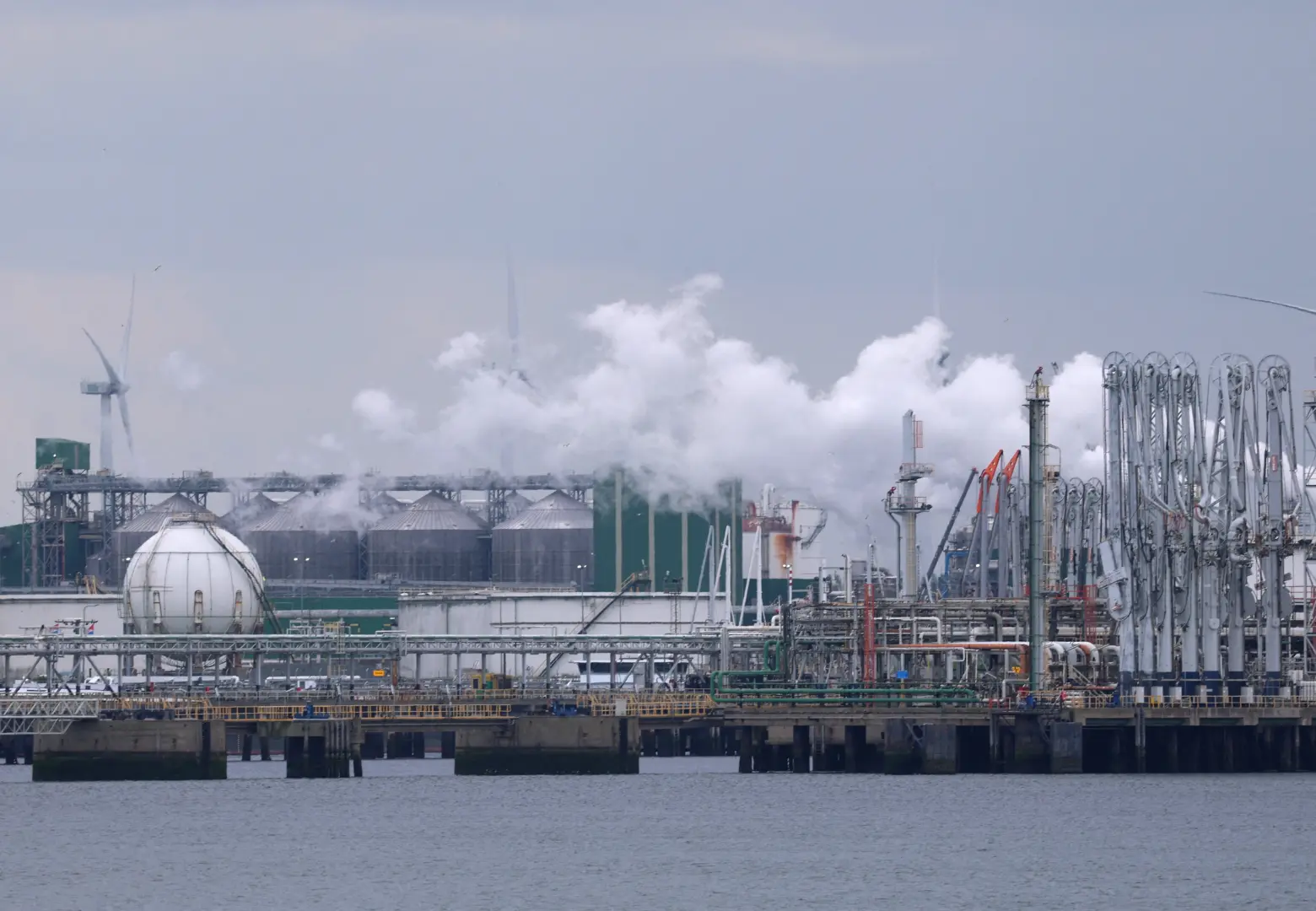
South Africa has failed to appoint preferred bidders for its first 2,000 MW gas-to-power procurement round after all four proposals fell short of mandatory gas-supply requirements. The bids, submitted in May 2026, offered a combined 2,830 MW of proposed capacity. However, declining gas supplies from Mozambique and the absence of a domestic liquefied natural gas (LNG) import terminal have complicated efforts to secure reliable fuel. The government says it remains committed to gas-to-power development, although the timing and requirements of a subsequent procurement round remain uncertain.
Key Takeaways
- South Africa’s first gas-to-power tender sought 2,000 MW of new generation capacity.
- Four bids submitted on 29 May 2026 offered a combined 2,830 MW.
- No preferred bidders were appointed because the proposals failed to meet mandatory gas-supply assurance requirements.
- Declining gas supplies from Mozambique threaten industrial users and complicate new power projects.
- The government is continuing stakeholder engagement, while future procurement timelines remain subject to approvals.
South Africa’s First Gas-to-Power Tender Fails
South Africa’s first gas tender for private producers to generate 2,000 megawatts of power has closed without a preferred bidder being selected due to gas-supply challenges, the country’s Department of Electricity and Energy said on 28 October 2026.
The outcome marks a setback for the country’s plans to diversify its electricity generation mix and reduce dependence on coal-fired power stations.
After several delays, the Independent Power Producers (IPP) Office received four bids on 29 May 2026, totalling 2,830 MW. The proposals exceeded the government’s procurement target, but none satisfied the tender’s mandatory requirements for gas supply.
The first bidding window formed part of the Gas Independent Power Producer Procurement Program (GASIPPPP), which seeks to procure new gas-fired electricity generation capacity in line with South Africa’s Integrated Resource Plans.
The request for proposals required bidders to provide assurances of gas supply. However, Electricity and Energy Minister Kgosientsho Ramokgopa said bidders were unable to provide assurances at the level required.
Consequently, no preferred bidders were appointed and no generation capacity was awarded under the first bidding window.
Gas-Supply Challenges Threaten New Power Projects
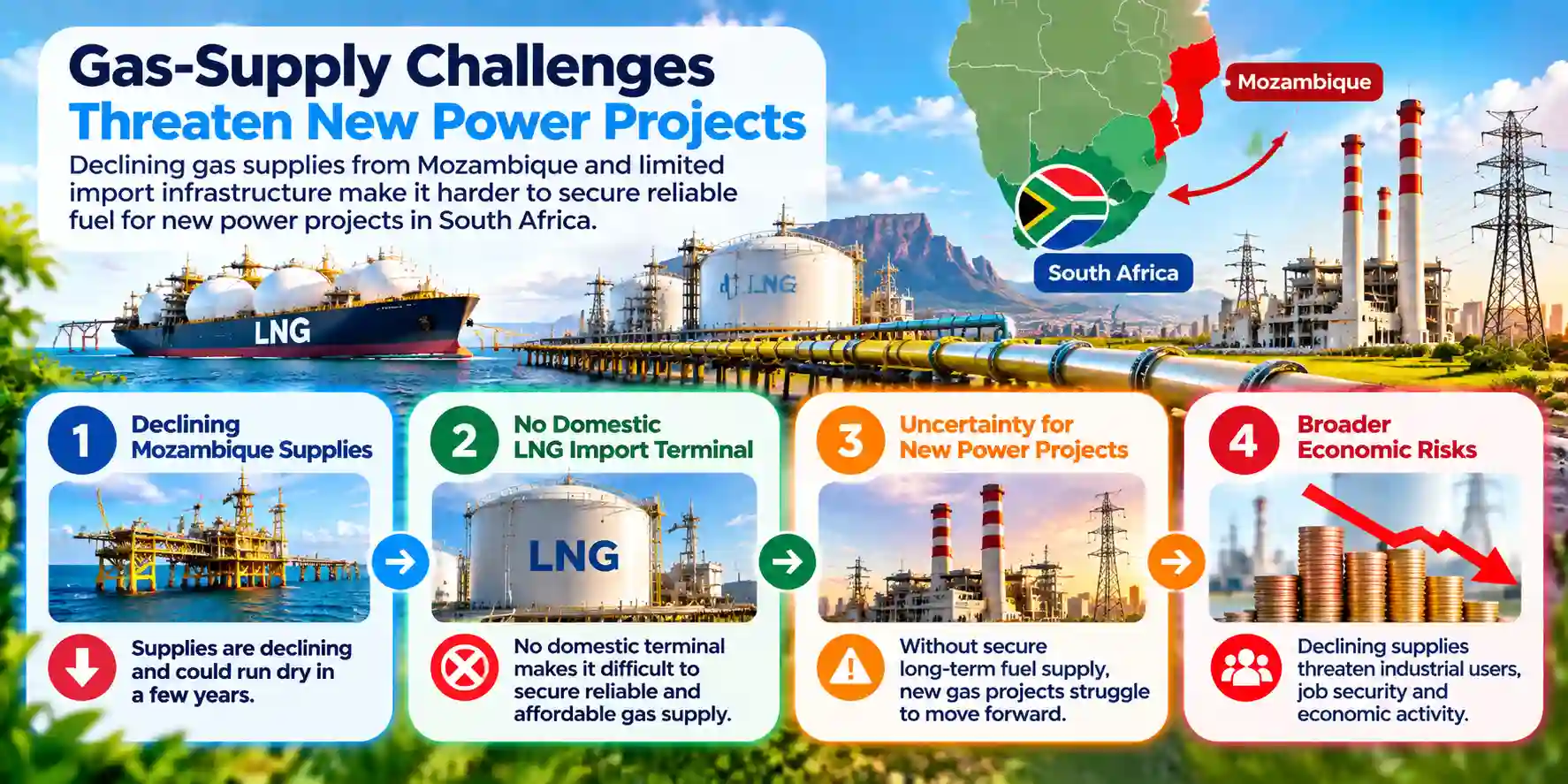
South Africa’s gas-to-power ambitions face growing uncertainty as existing supplies from neighbouring Mozambique decline. The country imports most of its natural gas from Mozambique, where declining volumes threaten to disrupt domestic industrial users as supplies are expected to run dry in a few years.
The shortage creates a significant challenge for developers seeking to establish new gas-fired power plants. Even where projects attract investment interest and offer sufficient generating capacity, the absence of secure long-term fuel-supply arrangements can prevent them from progressing through procurement and financing.
The failed tender highlights the importance of coordinating power-generation investments with fuel procurement, transportation networks, import infrastructure and long-term supply contracts.
The government’s official announcement also identifies the interdependencies between procurement requirements, technical feasibility, fuel-supply arrangements, enabling infrastructure, affordability, environmental obligations and project readiness.
Industrial Users Face Economic Risks
The tender’s failure has also raised concerns among industrial gas users, who are seeking alternative supplies ahead of looming deadlines in 2028 and 2030.
The Industrial Gas Users Association of Southern Africa (IGUA-SA) called the outcome a “disaster”. Jaco Human, the association’s executive officer, told Reuters: “This failure must now trigger urgent intervention at presidential level.”
Approximately 75,000 direct jobs and 700 billion rand ($42 billion) in annual economic activity are at stake as gas users scramble to secure alternative supplies.
The risks extend beyond electricity generation. Industrial consumers need dependable gas supplies to maintain operations, while developers of new power stations require commercially viable fuel arrangements to support investment decisions.
The tender outcome therefore underscores the connection between fuel security, industrial activity and the development of South Africa’s gas-to-power sector.
Context is everything. Stay ahead of shifting trends with today’s market updates, and uncover emerging opportunities using the Serrari Group Market Index and Marketplace. Then, take control of your own financial future by exploring our Money & Life Reset Transformation Blueprint ™ to build stronger habits, create better systems, and design a path toward lasting wealth.
South Africa Plans Its First LNG Import Terminal
To address the supply gap, South Africa is developing its first liquefied natural gas import terminal, with ExxonMobil and state-owned power utility Eskom identified as anchor clients.
The terminal could provide access to international gas markets and support the expansion of gas-fired electricity generation. However, import infrastructure alone will not resolve the challenge: projects will also need dependable supply agreements, transportation capacity and commercially workable arrangements.
South Africa is pursuing gas as part of efforts to diversify its electricity generation mix and reduce dependence on coal-fired power stations. The failed tender demonstrates that proposed generating capacity cannot advance without adequate assurances that fuel will be available when required.
Government Remains Committed to Gas-to-Power
The Department of Electricity and Energy said South Africa remains committed to its gas-to-power objectives and will continue engaging with market participants to address infrastructure, commercial and institutional barriers affecting project delivery.
Minister Ramokgopa said the first procurement process had provided practical lessons that would help the government strengthen the conditions needed to turn market interest into viable projects.
The department said any subsequent procurement process, including its requirements and timelines, would be subject to further consultation and the necessary statutory, governance and procurement approvals. It also said it would communicate further information through official channels before the end of the calendar year.
No confirmed date has been announced for the next gas procurement window.
Outlook
South Africa’s failed 2,000 MW gas tender exposes a central challenge in its energy transition: attracting developers is not enough without reliable and affordable fuel supplies. The four bids demonstrated market interest, but none met the mandatory gas-supply requirements.
The planned LNG import terminal could help diversify supply, while further engagement with industry may inform changes to future procurement rounds. However, the timing and structure of the next tender remain uncertain. South Africa’s ability to advance gas-fired generation will depend on aligning power projects with dependable fuel contracts, infrastructure development and commercially viable supply arrangements.
FAQs
1. Why did South Africa’s first gas-to-power tender fail?
The four bidders could not provide gas-supply assurances at the level required by the tender, so no preferred bidders were appointed.
2. How much capacity was the tender seeking?
The tender targeted 2,000 MW of new generation capacity. Four bids submitted on 29 May 2026 offered a combined 2,830 MW.
3. Why is South Africa facing gas-supply challenges?
South Africa imports most of its natural gas from Mozambique, where declining supplies threaten industrial users. The country also lacks an operational LNG receiving terminal.
4. When will South Africa launch its next gas tender?
No date has been confirmed. The government says the timing and requirements of a subsequent procurement round will depend on further consultation and the necessary approvals.
Your financial future isn’t something you wait for—it’s something you build.
The real question is: when do you begin?
Move beyond simply staying informed.
Navigate the markets with clarity—track trends through the Serrari Group Market Index, uncover opportunities in the Serrari Marketplace, and build practical knowledge with our Curated Wealth Builder Platform.
Stay connected to what truly matters.
Get daily insights on macro trends and financial movements across Kenya, Africa, and global markets—delivered through the Serrari Newsletter.
Growth opens doors.
Advance your career through professional programs including ACCA, HESI A2, ATI TEAS 7 , HESI EXIT , NCLEX – RN and NCLEX – PN, Financial Literacy!🌟—designed to move you forward with confidence.
See where money is flowing—clearly and in real time.
Track Money Market Funds, Treasury Bills, Treasury Bonds, Green Bonds, and Fixed Deposits, alongside global and African indexes, key economic indicators, and the evolving Crypto and stablecoin landscape—all within Serrari’s Market Index.