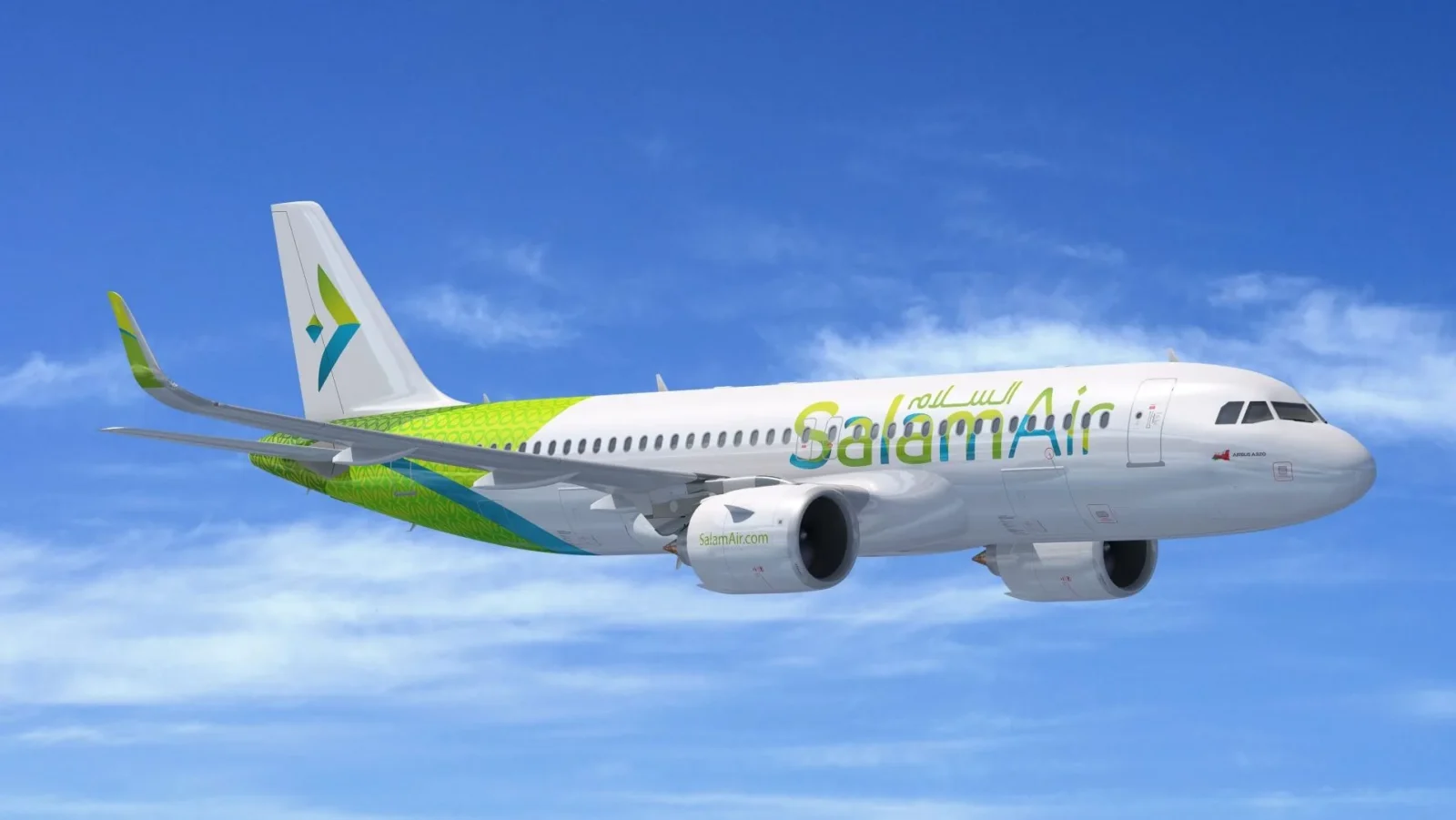
SalamAir, Oman’s leading low-cost carrier, has announced the launch of direct flights between Muscat and Kigali, Rwanda, with services set to begin on July 21, 2026. The twice-weekly route, operating on Tuesdays and Thursdays, will offer one-way Lite fares starting from OMR 69.99 (approximately $182). The new service represents the airline’s latest move in a deliberate strategy to connect the Gulf region with high-growth markets across East Africa. It builds on nearly three decades of diplomatic ties between Oman and Rwanda, and arrives at a time when Rwanda’s tourism sector is experiencing record growth, having generated $685 million in revenue in 2025 alone.
Markets move fast; don’t get left behind. We’ve paired the Serrari Group Market Index with a curated Marketplace and a comprehensive Wealth Builder Platform to ensure you have the data—and the skills—to act on it.
Key Takeaways
- Route: Muscat (MCT) to Kigali (KGL), twice weekly on Tuesdays and Thursdays
- Launch Date: July 21, 2026, subject to regulatory approvals
- Fares: One-way Lite fares from OMR 69.99
- Strategic Context: Part of SalamAir’s broader African expansion, which includes upcoming flights to Mogadishu, Somalia
- Rwanda Tourism: The country generated $685 million in tourism revenue in 2025, with 1.49 million visitor arrivals
- Fleet Growth: SalamAir is expanding from 15 to 25 aircraft by 2028 to support its growing network
- Oman Vision 2040: The route aligns with Oman’s national strategy to position Muscat as a regional aviation and transit hub
A New Corridor Between the Gulf and East Africa
SalamAir has opened ticket sales for its newest route linking Muscat to Kigali, with flights scheduled to commence on July 21, 2026, pending regulatory approvals. The Omani low-cost carrier will operate the service twice weekly, on Tuesdays and Thursdays, with one-way Lite fares starting from OMR 69.99. The route marks the airline’s continued push into underserved African markets and establishes a new direct air link between the Arabian Peninsula and one of East Africa’s most dynamic capital cities.
The addition of Kigali to SalamAir’s network represents more than a routine schedule expansion. It creates a travel corridor between two regions with growing commercial, tourism, and diplomatic ties, offering passengers from Rwanda access to onward connections through Muscat to destinations across the Gulf, the Indian subcontinent, and Europe. For Omani and Gulf-based travellers, the route opens a shorter path to East Africa’s inland heartland, bypassing the traditional routings through larger regional hubs like Dubai, Doha, or Addis Ababa.
Steven Allen, Chief Commercial Officer at SalamAir, described Kigali as a natural fit for the airline’s growing African network, citing strong fundamentals across both business and leisure travel. He pointed to Rwanda’s consistent growth in tourism and business activity, and positioned the route within the airline’s broader aim of linking Oman with high-growth markets through affordable and direct connectivity.
SalamAir’s Accelerating African Expansion
The Kigali launch is the latest chapter in what has become an increasingly assertive African strategy for SalamAir. The airline, which commenced operations in 2017, has been systematically building out its presence on the continent over the past year.
In February 2026, the carrier announced a twice-weekly service to Mogadishu, Somalia, launching from September 3, 2026. That route marks the first-ever non-stop link between Oman and the Somali capital. SalamAir CEO Adrian Hamilton-Manns described the Mogadishu service as a strategic milestone, noting that Somalia became the third East African country in the airline’s network, joining Kenya and Sudan. He indicated at the time that the carrier plans to add more currently unserved destinations in the near future.
According to aviation scheduling data from AeroRoutes, both the Kigali and Mogadishu routes are set to launch in September 2026, with the Kigali service operated on Airbus A321neo aircraft and Mogadishu on a mix of A320neo and A321neo planes. The airline has also highlighted Africa as a key growth market more broadly, with Hamilton-Manns citing routes to Mogadishu, Port Sudan, and Nairobi, and flagging plans to expand further along the East African coast, including to Mombasa.
This African push is part of a wider network expansion that has also seen SalamAir add European destinations. The airline launched direct flights to Vienna in 2026, becoming the first carrier to offer non-stop services between Oman and Austria, and has routes to destinations across Central Asia, the Indian subcontinent, and the Middle East.
Fleet Growth to Support Ambitions
Underpinning all of this expansion is a significant fleet growth programme. SalamAir currently operates a fleet of 15 Airbus A320 and A321 aircraft, running more than 80 daily flights to 38 destinations. But the airline is not standing still.
In February 2025, SalamAir announced plans to add 10 additional aircraft to its fleet over the following three years, with deliveries commencing in Q2 2026. The expansion will grow the fleet to 25 aircraft by 2028, nearly doubling its current capacity. The airline placed formal requests with multiple leasing companies for Airbus A320 aircraft to meet what Hamilton-Manns described as demand exceeding the carrier’s current ability to supply.
The fleet expansion comes on the back of strong passenger growth. In 2024, SalamAir carried over 3.2 million passengers, a 20% increase year-over-year, driven by the airline’s renewed focus on low fares, including year-round starting fares of 9.99 OMR to domestic destinations. In 2025, the carrier reported an EBITDA of $17.1 million and flew more than 3.4 million passengers across over 22,000 flights. The A321neo aircraft being added to the fleet offer extended range of up to 4,000 nautical miles and a seating capacity of 212, providing the operational flexibility needed for medium-haul routes like Muscat-Kigali.
Oman Vision 2040 and the Hub Strategy
SalamAir’s expansion does not exist in a vacuum. It is closely aligned with Oman Vision 2040, the Sultanate’s national strategy for economic diversification, which places aviation, tourism, and international connectivity among its priority sectors. Muscat has been actively seeking to build its position as a regional aviation and transit hub, competing with established players like Dubai and Doha.
The strategy involves a complementary dual-carrier model. While Oman Air, the national carrier, focuses on premium services and major international hubs, SalamAir targets underserved markets and price-sensitive travellers. This division of labour allows Oman to capture a wider range of passenger segments and develop air links to destinations that might not support a full-service carrier. In 2026 alone, Oman’s airlines have collectively announced new routes to Singapore, Vienna, Damascus, Medan, Sochi, Kigali, and Mogadishu, reflecting a concerted effort to extend Muscat’s global reach.
For routes like Muscat-Kigali, SalamAir’s low-cost model is particularly well suited. It enables affordable point-to-point travel while also offering connecting passengers competitive fares through Muscat to the broader Gulf, South Asian, and European networks. This positions the airline as a potential alternative for travellers who might otherwise route through more expensive hub airports.
Context is everything. While you follow today’s updates, use the Serrari Group Market Index and Marketplace to spot emerging shifts. Need to sharpen your edge? Our Wealth Builder Platform turns these insights into a professional-grade strategy.
Why Kigali, Why Now?
The timing of SalamAir’s entry into the Rwandan market is no coincidence. Rwanda’s tourism sector has been on a remarkable upward trajectory, posting record results in 2025. According to the Rwanda Development Board’s annual report, the country’s tourism revenues reached $685 million in 2025, a 6% increase from $647 million the previous year. The country welcomed 1.49 million visitors, up 9% from 2024, with air arrivals recording the fastest growth at 23%.
The meetings, incentives, conferences, and exhibitions (MICE) sector has been a particular standout. Rwanda generated $94.7 million in MICE revenue in 2025, up from $84.8 million the year before, hosting 165 international and regional events that attracted nearly 62,000 delegates. Major events hosted in 2025 included the Mobile World Congress Kigali, MOVE Afrika by Global Citizen, and the Basketball Africa League, underscoring the city’s growing status as a venue for high-profile global gatherings.
Beyond conferences, Rwanda’s appeal as a leisure destination continues to grow, anchored by its world-famous mountain gorilla trekking experiences in Volcanoes National Park, the biodiversity of Nyungwe Forest, and the wildlife safaris in Akagera National Park. The country’s hospitality sector has been expanding in tandem, with new high-end establishments including a Mövenpick Hotel, The Pinnacle Kigali, and a Tapestry Collection by Hilton property all opening to boost the capital’s capacity for international visitors.
Kigali itself has built a reputation as one of Africa’s most forward-looking capitals, recognised internationally for its cleanliness, safety, and progressive urban planning. The city serves as a hub for conferences, innovation, and investment, supported by world-class venues including the Kigali Convention Centre.
Rwanda’s Aviation Ambitions
Rwanda’s own aviation infrastructure is undergoing a transformation that could amplify the impact of new routes like SalamAir’s. The country is in the midst of constructing Bugesera International Airport, a massive infrastructure project being developed in partnership with Qatar Airways, which holds a 60% stake. The airport, located approximately 25 kilometres southeast of Kigali, is designed to replace the capacity-constrained Kigali International Airport.
The first phase of construction, which includes a 3,750-metre runway and a 120,000 square-metre passenger terminal, is expected to become operational by 2027 or 2028. The facility will initially handle up to seven million passengers annually, with a second phase expected to double that capacity to 14 million by 2032. The Rwandan government allocated $485.4 million in its 2025/26 budget to advance the project, underscoring its centrality to the country’s economic development plans.
While the new airport is still years from completion, its development signals Rwanda’s long-term commitment to positioning itself as a regional aviation hub. For airlines like SalamAir, establishing a presence in Kigali now — while the market is growing but before major infrastructure upgrades further increase competition — offers a potential first-mover advantage.
Diplomatic and Trade Foundations
The route is also built on substantive diplomatic and economic foundations. Oman and Rwanda share diplomatic ties spanning nearly three decades, underpinned by a steadily evolving trade relationship. The new air link is expected to facilitate increasing commercial exchange between the two nations, supporting business travel, trade opportunities, and stronger economic links.
For the travel trade, the Muscat-Kigali connection creates opportunities for multi-destination itineraries combining Oman’s desert landscapes, coastline, and heritage sites with Rwanda’s urban culture, wildlife, and eco-tourism attractions. Tour operators can now design packages that pair gorilla trekking in Rwanda with beach retreats in Oman, or combine Kigali conference attendance with a Gulf stopover — all on a single, affordable routing.
Looking Ahead
The Muscat-Kigali route is more than a single new flight. It reflects the convergence of several significant trends: the expansion of Gulf-based low-cost carriers into African markets, the rise of Kigali as a business and tourism destination, Oman’s strategic push to diversify its economy through aviation, and the growing demand for affordable direct connectivity between the Middle East and East Africa.
For SalamAir, the route is a building block in what is shaping up to be a transformative period. With a fleet set to nearly double by 2028, a growing list of African destinations, and the backing of Oman’s national economic strategy, the airline is positioning itself as a key connector between two regions with enormous untapped travel potential.
Whether the Kigali route ultimately proves commercially successful will depend on load factors, the pace of economic growth in both Oman and Rwanda, and the competitive landscape as other carriers inevitably eye the same opportunity. But with Rwanda’s tourism numbers trending firmly upward and Oman investing heavily in its aviation future, the fundamentals underpinning SalamAir’s bet on Kigali appear sound.
Your financial future isn’t something you wait for—it’s something you build.
The real question is: when do you begin?
Move beyond simply staying informed.
Navigate the markets with clarity—track trends through the Serrari Group Market Index, uncover opportunities in the Serrari Marketplace, and build practical knowledge with our Curated Wealth Builder Platform.
Stay connected to what truly matters.
Get daily insights on macro trends and financial movements across Kenya, Africa, and global markets—delivered through the Serrari Newsletter.
Growth opens doors.
Advance your career through professional programs including ACCA,HESI A2,ATI TEAS 7,HESI EXIT ,NCLEX – RNandNCLEX – PN, Financial Literacy!🌟—designed to move you forward with confidence.
See where money is flowing—clearly and in real time.
Track Money Market Funds, Treasury Bills, Treasury Bonds, Green Bonds, and Fixed Deposits, alongside global and African indexes, key economic indicators, and the evolving Crypto and stablecoin landscape—all withinSerrari’s Market Index.