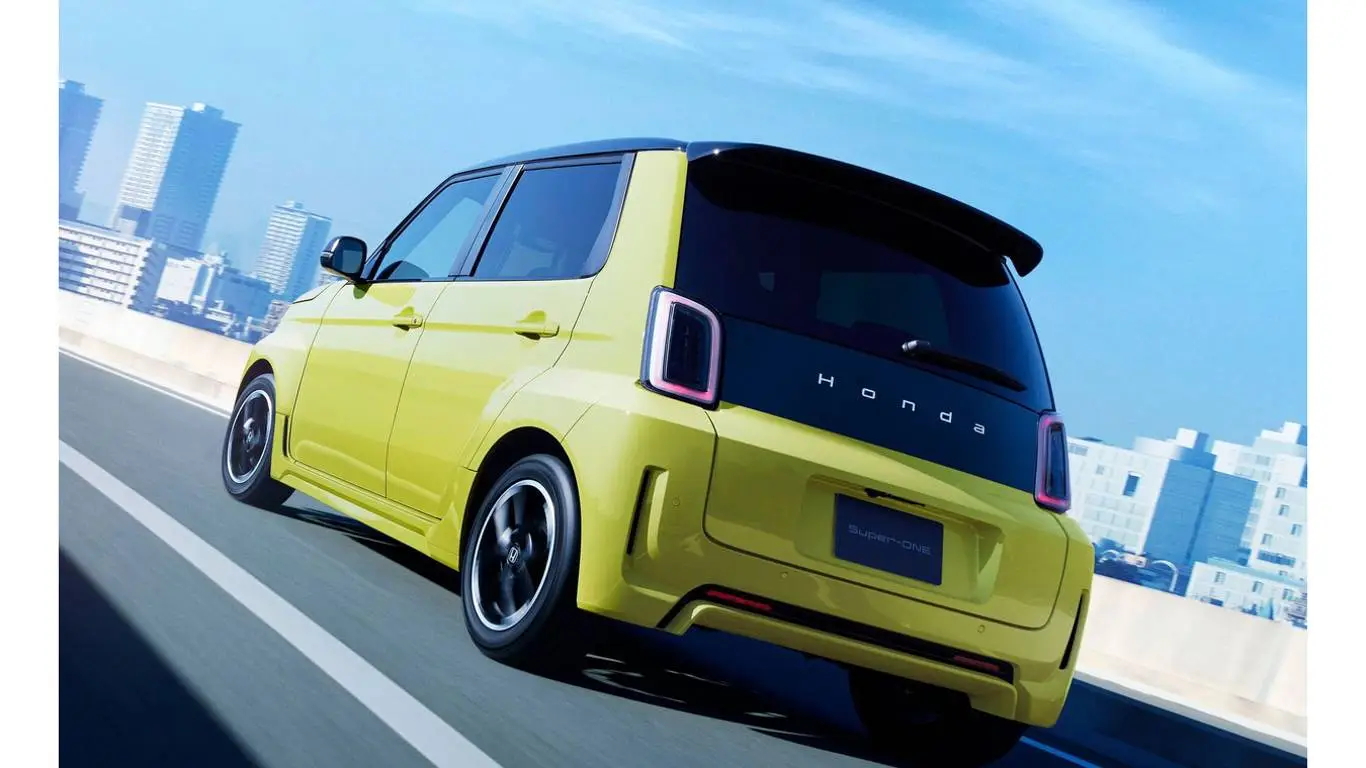
Honda has officially launched the new Super-ONE compact electric vehicle in Japan, positioning the model as a sporty and emotionally engaging city EV designed to combine practicality with driving excitement.
The Super-ONE introduces features such as a BOOST driving mode, simulated seven-speed transmission, artificial engine sound, and sporty handling dynamics as Honda attempts to differentiate the model from conventional low-cost urban EVs.
The launch also reflects a broader shift within the electric vehicle market as automakers increasingly focus on making compact EVs more appealing through performance-oriented features, technology integration, and enhanced in-car experiences.
Key Overview
- Honda launched the Super-ONE compact EV in Japan
- The model features a BOOST mode increasing power to 70kW
- Honda says the EV was designed around “fun” and driving excitement
- The Super-ONE offers a WLTC driving range of 274km
- Fast charging to 80% takes approximately 30 minutes
- The EV includes simulated gear shifts and artificial engine sound
- Standard features include Honda CONNECT and Honda SENSING
- Honda plans to expand its EV lineup further by 2028
Honda Introduces Sporty Compact Electric Vehicle
Honda has officially begun sales of the new Super-ONE compact electric vehicle in Japan as the company expands its growing domestic EV lineup with a model focused heavily on driving enjoyment and urban practicality.
The Super-ONE was developed under Honda’s “e: Dash BOOSTER” concept and is designed to transform everyday electric mobility into what the company describes as a more exciting and uplifting driving experience.
Honda said the model was built using a dedicated chassis wider than the existing N-ONE e:, allowing the company to create a lower and wider vehicle stance aimed at improving handling and visual appeal.
The automaker said the Super-ONE name reflects its ambition to create a compact EV that goes beyond conventional expectations for both mini vehicles and electric cars.
Unlike many urban EVs that focus primarily on efficiency and affordability, Honda is positioning the Super-ONE as a compact electric car that emphasizes driving emotion, performance, and sensory engagement.
Analysts say the strategy reflects growing competition within the compact EV segment as automakers attempt to differentiate products beyond range and pricing alone.
BOOST Mode Adds Performance Focus
One of the Super-ONE’s most notable features is its new BOOST driving mode, designed to provide stronger acceleration and a more performance-oriented driving experience.
Under standard operation, the electric motor delivers 47kW of output, equivalent to roughly 64hp.
When BOOST mode is activated, output increases to 70kW, or approximately 95 hp.
For a small urban electric vehicle, analysts say the higher output places the Super-ONE closer to performance-oriented compact hatchbacks rather than basic commuter EVs.
Honda also introduced a simulated seven-speed transmission system featuring artificial shift sensations and Active Sound Control technology designed to mimic the driving feel of traditional combustion-engine sports cars.
Analysts say automakers are increasingly experimenting with synthetic driving experiences in EVs as companies attempt to preserve emotional engagement for drivers transitioning away from internal combustion engines.
The Super-ONE also includes five drive modes:
- ECON
- CITY
- NORMAL
- SPORT
- BOOST
The CITY mode incorporates Honda’s Single Pedal Control system, allowing drivers to accelerate, decelerate, and stop the vehicle using only the accelerator pedal.
Lightweight Design Targets Urban Driving Fun
Honda said the Super-ONE was engineered to deliver agile handling and stability despite its compact dimensions.
The company claims the model features a class-leading lightweight design with a kerb weight of just 1,090 kg.
The EV also adopts a wider 1,345mm tread and large-diameter tires intended to improve cornering stability and high-speed handling.
Analysts say lightweight construction is becoming increasingly important for smaller EVs because battery systems typically add significant weight compared with traditional small gasoline-powered cars.
Honda appears to be targeting drivers who want a more engaging and dynamic urban EV experience rather than purely efficiency-focused transportation.
The exterior design reinforces that strategy through features such as blister fenders, aerodynamic air ducts, and a low, wide stance emphasizing sporty proportions.
Honda said the aerodynamic design combines functional beauty with practical performance improvements.
Context is everything. While you follow today’s updates, use the Serrari Group Market Index and Marketplace to spot emerging shifts. Need to sharpen your edge? Our Wealth Builder Platform turns these insights into a professional-grade strategy.
Interior Focuses on Technology and Driver Experience
Inside the cabin, Honda emphasized both technology integration and driver engagement.
The Super-ONE includes sports seats featuring asymmetric blue surface materials designed to create a more playful and distinctive interior atmosphere.
The dashboard adopts a horizontal orientation intended to improve forward visibility and allow drivers to focus more easily on driving.
Standard technology features include:
- Bose eight-speaker premium audio system
- 9-inch Honda CONNECT infotainment display
- Google integration
- Honda SENSING driver assistance suite
Honda SENSING includes adaptive cruise control, lane-keeping assistance, and collision mitigation systems.
Analysts say technology integration and premium infotainment systems are becoming increasingly important within the compact EV segment as consumers expect advanced connectivity features even in smaller urban vehicles.
Charging and Practicality Features
The Super-ONE offers a WLTC-rated driving range of 274 km(170 miles) per charge.
Honda said regular charging can fully recharge the vehicle in approximately 4.5 hours.
Fast charging can replenish the battery to 80% in roughly 30 minutes.
The model also supports external power supply functionality through Honda’s optional Power Supply Connector adapter.
The system can deliver up to 1,500 watts of AC output, allowing the vehicle to power household appliances or provide backup electricity during emergencies.
Analysts say vehicle-to-load and external power capabilities are becoming increasingly popular among EV buyers because they expand the practical utility of electric vehicles beyond transportation alone.
Honda Expands Japan EV Lineup
The Super-ONE becomes the latest addition to Honda’s expanding electric vehicle lineup in Japan.
The company’s domestic EV range currently includes:
- N-VAN e: commercial mini EV
- N-ONE e: mini EV
- Insight crossover EV
Honda also confirmed plans to launch an electric version of the popular N-BOX in 2028.
Analysts say Japanese automakers are increasingly accelerating compact EV development as urban mobility trends, emissions regulations, and consumer demand gradually shift toward electrification.
However, competition within Japan’s compact EV market is also intensifying as domestic manufacturers attempt to balance affordability, driving range, practicality, and performance.
Honda’s strategy with the Super-ONE appears aimed at carving out a more emotional and enthusiast-oriented niche within the broader compact EV category.
Compact EV Market Continues Evolving
The launch of the Super-ONE reflects broader changes occurring across the global compact EV market.
Many early urban EV models focused heavily on low-cost transportation, efficiency, and basic practicality.
However, automakers are increasingly attempting to make compact electric vehicles more desirable through improved performance, technology, design, and emotional appeal.
Analysts say this shift may become increasingly important as EV adoption expands beyond early adopters into more mainstream consumer segments.
The Super-ONE also demonstrates how automakers are experimenting with ways to recreate traditional driving sensations within electric vehicles through synthetic engine sounds, simulated transmissions, and performance-oriented driving modes.
As battery costs continue falling and compact EV technology improves, manufacturers may increasingly focus on differentiation through driving character and user experience rather than simply range and efficiency alone.
Outlook
Honda’s launch of the Super-ONE highlights how the compact EV segment is evolving beyond basic urban transportation toward more performance-focused and emotionally engaging electric vehicles.
The model also reflects growing competition among automakers seeking to make electric mobility more attractive to mainstream consumers through improved design, technology, and driving experiences.
For Honda, the Super-ONE may help strengthen its position within Japan’s rapidly developing compact EV market while expanding its broader electrification strategy.
At the same time, the vehicle demonstrates how automakers are increasingly redefining what small electric vehicles can offer as consumer expectations for EV performance and driving enjoyment continue rising.
Your financial future isn’t something you wait for—it’s something you build.
The real question is: when do you begin?
Move beyond simply staying informed.
Navigate the markets with clarity—track trends through the Serrari Group Market Index, uncover opportunities in the Serrari Marketplace, and build practical knowledge with our Curated Wealth Builder Platform.
Stay connected to what truly matters.
Get daily insights on macro trends and financial movements across Kenya, Africa, and global markets—delivered through the Serrari Newsletter.
Growth opens doors.
Advance your career through professional programs including ACCA, HESI A2, ATI TEAS 7 , HESI EXIT , NCLEX – RN and NCLEX – PN, Financial Literacy!🌟—designed to move you forward with confidence.
See where money is flowing—clearly and in real time.
Track Money Market Funds, Treasury Bills, Treasury Bonds, Green Bonds, and Fixed Deposits, alongside global and African indexes, key economic indicators, and the evolving Crypto and stablecoin landscape—all within Serrari’s Market Index.
Sources: Honda Global, 32CARS.ru, Automotive World, Market Screener