















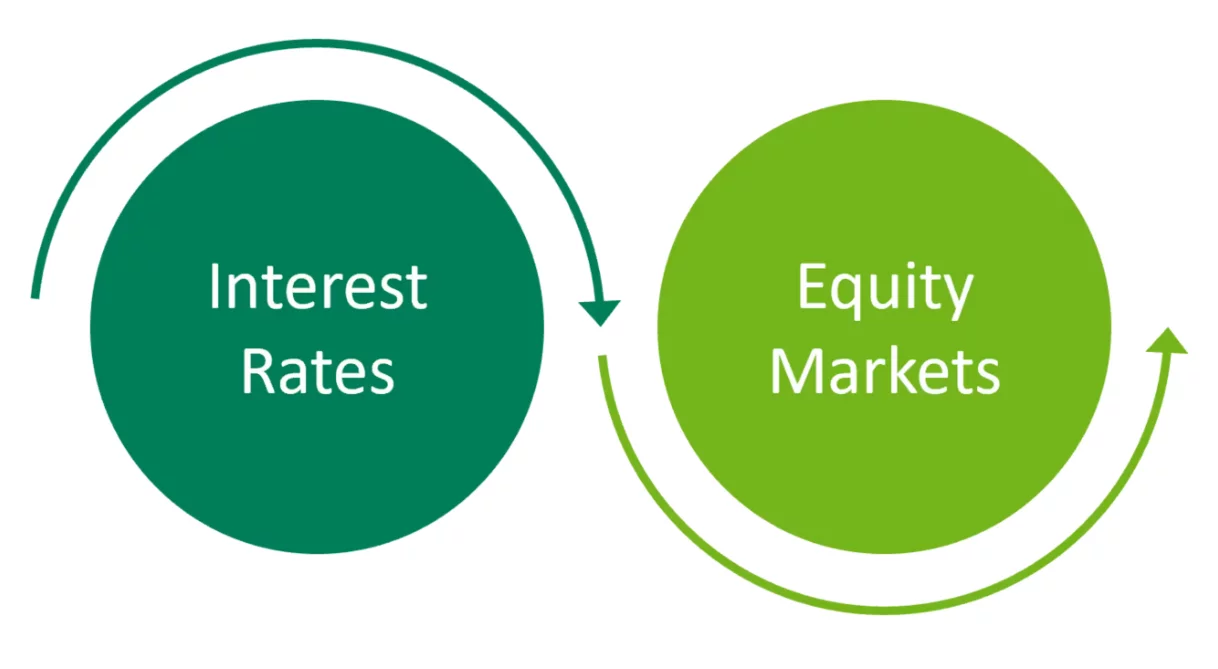
Kenya’s equity market is increasingly facing pressure as attractive fixed-income returns continue drawing capital away from stocks and toward government securities. Despite the Central Bank of Kenya gradually easing monetary policy over recent months, Treasury instruments remain highly attractive to institutional and retail investors seeking predictable returns in an uncertain global environment.
The shift in investor behavior comes as the Central Bank of Kenya (CBK) balances inflation management, exchange-rate stability and emerging global economic risks. Rising geopolitical tensions in the Middle East and concerns over energy prices have created uncertainty for growth expectations, leading many investors to prioritize safety over risk-taking.
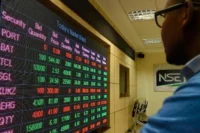
For the Nairobi Securities Exchange (NSE), the result has been reduced liquidity and weaker momentum in listed stocks as pension funds and institutional investors increasingly direct their portfolios toward Treasury bills and bonds offering high risk-adjusted returns.
Key Overview
The Central Bank of Kenya maintained its benchmark interest rate at 8.75%, while Treasury securities yielding above 15% continue attracting investors away from the Nairobi Securities Exchange.
High Fixed-Income Returns Continue Pressuring Kenya’s Stock Market
Kenya’s equity market is facing mounting pressure as attractive government debt yields increasingly divert investor funds away from stocks and toward fixed-income assets.
Although the Central Bank of Kenya has gradually eased monetary policy during recent months, yields available in government securities continue offering investors returns that many market participants consider difficult to ignore.
The result is an ongoing migration of capital from equities into Treasury bills and bonds, a trend increasingly affecting liquidity conditions at the Nairobi Securities Exchange and creating challenges for listed firms seeking stronger market support.
This shift reflects changing investor priorities in an environment where uncertainty surrounding global economic conditions and domestic growth risks continues influencing investment decisions.
CBK Holds Benchmark Rate Steady
On April 8, 2026, the Central Bank of Kenya decided to maintain its benchmark lending rate at 8.75%, pausing a long easing cycle that had previously delivered substantial reductions.
The decision followed ten consecutive interest-rate cuts beginning in August 2024, amounting to a cumulative reduction of 425 basis points.
The Monetary Policy Committee indicated that maintaining the current stance remained appropriate for supporting economic stability while keeping inflation expectations under control and preserving exchange-rate stability.
The committee also highlighted emerging risks that could affect future economic conditions.
Among these concerns were rising global oil prices and growing geopolitical tensions affecting international markets.
According to CBK Governor Kamau Thugge, conflict in the Middle East has disrupted global supply chains and contributed to higher energy prices.
The governor noted that these developments increase risks to the global economic outlook and could potentially create inflationary pressures.
Inflation Remains Controlled but Risks Persist
Recent inflation figures indicate that price growth in Kenya remains relatively stable despite broader global concerns.
Kenya’s annual inflation rate increased slightly to 4.4% in March 2026, compared with 4.3% in February, which had represented a seven-month low.
Although inflation edged higher, the figure remains below the 5% midpoint of the Central Bank of Kenya’s target range.
CBK expects inflation to remain within its target range in the short term.
However, policymakers continue monitoring external developments closely because changes in global energy prices and supply chains could quickly alter the outlook.
Persistent inflation risks often influence investment behavior because they shape expectations regarding future interest rates and asset performance.
Economic Growth Expectations Revised Lower
Alongside its monetary policy decision, the Central Bank of Kenya also revised its economic growth outlook.
The institution lowered projected economic growth for 2026 to 5.3%, down from an earlier estimate of 5.5%.
Although the reduction appears relatively small, it reflects concerns regarding emerging external risks.
Economic growth projections frequently influence investor sentiment because expectations surrounding business performance and corporate earnings often depend heavily on broader economic activity.
A lower growth outlook can increase investor caution and strengthen demand for lower-risk investment alternatives.
Treasury Securities Continue Offering Attractive Returns
Perhaps the most significant factor influencing current market behavior remains the strong returns available in government debt instruments.
Treasury bills and bonds continue offering yields that many investors view as highly attractive relative to equity market risks.
Institutional investors, including pension funds and asset managers overseeing large pools of capital, increasingly face difficult allocation decisions.
A 364-day Treasury bill currently offers risk-free returns exceeding 15%, creating an appealing alternative to stock investments.
When investors can obtain double-digit returns with relatively low risk exposure, equities often become less attractive, especially during periods of uncertainty.
Stocks generally offer potentially higher returns over long investment horizons, but they also involve significantly greater volatility and uncertainty.
In contrast, government securities provide predictable cash flows and lower risk.
Context is everything. While you follow today’s updates, use the Serrari Group Market Index and Marketplace to spot emerging shifts. Need to sharpen your edge? Our Wealth Builder Platform turns these insights into a professional-grade strategy.
Pension Funds Face Allocation Challenges
Large institutional investors play a critical role in maintaining liquidity within financial markets.
Pension funds, insurance firms and investment managers collectively oversee substantial pools of capital that significantly influence trading activity.
These institutions increasingly appear to be shifting allocations toward fixed-income assets.
For fund managers, allocating capital toward highly volatile equities becomes difficult to justify when government securities offer stable returns at attractive rates.
The challenge becomes particularly important for pension managers responsible for safeguarding retirement savings.
Such institutions frequently prioritize risk-adjusted returns rather than purely seeking the highest possible gains.
In an environment where Treasury bills provide returns exceeding 15%, maintaining larger equity positions becomes increasingly difficult from a portfolio management perspective.
Capital Migration Is Affecting the NSE
The migration of capital into government debt markets carries broader implications for Kenya’s stock exchange.
When large investors move funds away from equities, trading activity within the Nairobi Securities Exchange may weaken.
Reduced liquidity often creates additional challenges for listed companies.
Lower trading activity can contribute to weaker price movements and reduced investor participation.
As capital flows increasingly shift toward Treasury securities, listed firms may struggle to attract the market support necessary to sustain stronger valuations.
The effects extend beyond share prices alone.
Lower market activity can also influence companies’ ability to raise capital and support future expansion initiatives.
Global Uncertainty Continues Influencing Markets
Global developments continue adding further complexity to Kenya’s investment environment.
Geopolitical tensions in the Middle East have contributed to volatility in commodity markets, particularly energy prices.
Higher oil prices can increase inflationary pressures while simultaneously affecting economic growth expectations.
For emerging markets such as Kenya, external developments frequently influence domestic financial conditions through exchange rates, imported inflation and investor sentiment.
As uncertainty increases globally, investors often become more defensive in their asset allocation strategies.
Fixed-income instruments typically benefit during such periods because they offer greater stability.
Looking Ahead
Kenya’s financial markets currently appear caught between improving domestic conditions and growing external risks.
Inflation remains relatively controlled, while interest rates have declined significantly since 2024.
However, high Treasury yields continue drawing substantial investor interest.
For the Nairobi Securities Exchange, future performance may increasingly depend on whether economic growth strengthens sufficiently to improve corporate earnings and restore investor confidence in equities.
Until then, the strong appeal of government securities may continue limiting capital flows into the stock market and maintaining pressure on equity performance.
Sources: Streamline Feed, Trading Economics
Your financial future isn’t something you wait for—it’s something you build.
The real question is: when do you begin?
Move beyond simply staying informed.
Navigate the markets with clarity—track trends through the Serrari Group Market Index, uncover opportunities in the Serrari Marketplace, and build practical knowledge with our Curated Wealth Builder Platform.
Stay connected to what truly matters.
Get daily insights on macro trends and financial movements across Kenya, Africa, and global markets—delivered through the Serrari Newsletter.
Growth opens doors.
Advance your career through professional programs including ACCA, HESI A2, ATI TEAS 7 , HESI EXIT , NCLEX – RN and NCLEX – PN, Financial Literacy!🌟—designed to move you forward with confidence.
See where money is flowing—clearly and in real time.
Track Money Market Funds, Treasury Bills, Treasury Bonds, Green Bonds, and Fixed Deposits, alongside global and African indexes, key economic indicators, and the evolving Crypto and stablecoin landscape—all within Serrari’s Market Index.