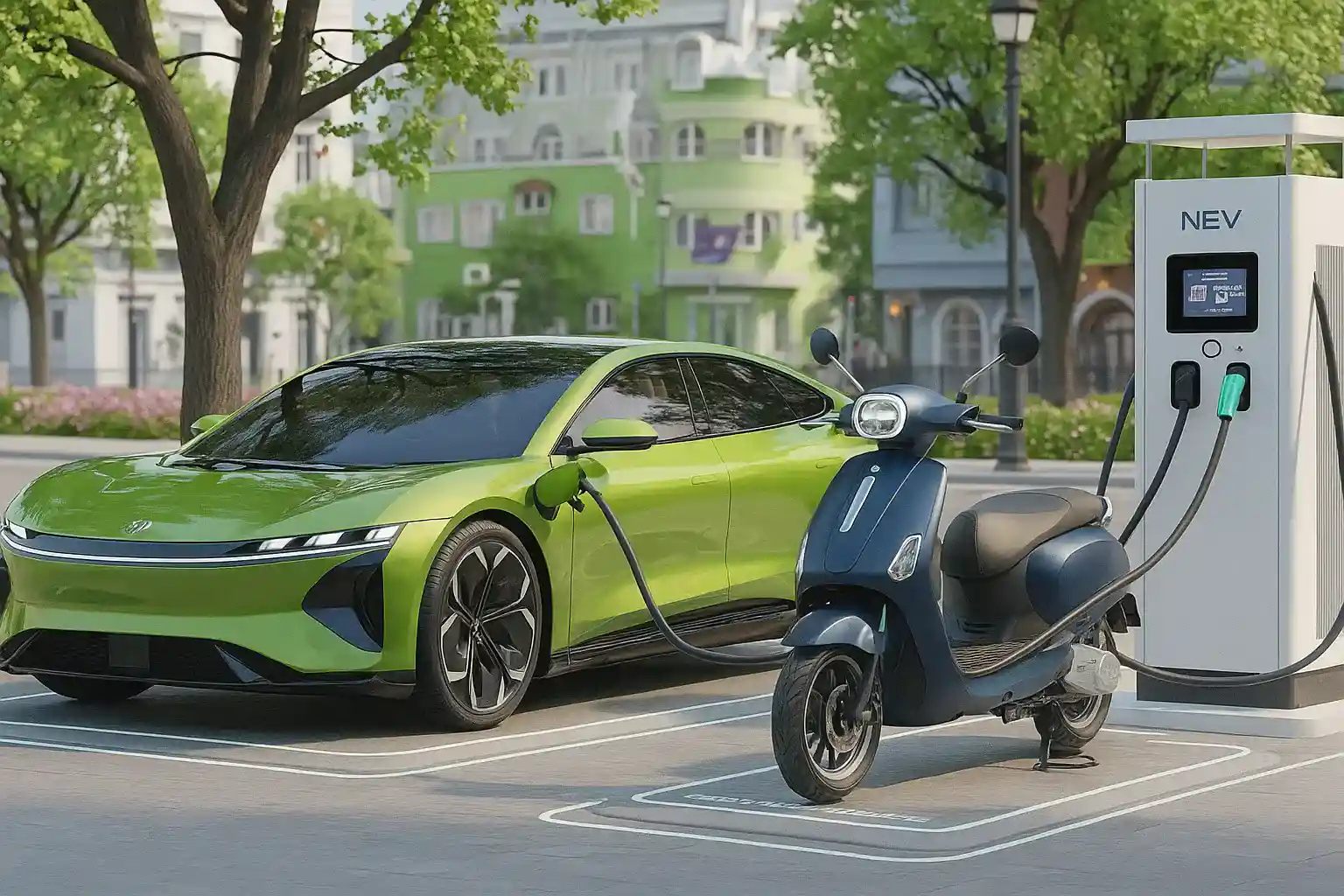
Pakistan is reviewing its automotive policy as part of efforts to accelerate the transition to cleaner transportation and strengthen domestic vehicle manufacturing. The review aligns with the country’s New Energy Vehicle Policy 2025–30, which aims to significantly increase the adoption of Electric Vehicles Pakistan and reduce dependence on imported fuels. Officials believe the shift toward electric mobility can support economic growth, create jobs, improve energy security, and contribute to climate change mitigation.
Key Overview
- Pakistan is reviewing its automotive policy framework
- Focus placed on accelerating electric vehicle adoption
- New Energy Vehicle Policy targets 30% EV sales by 2030
- Government seeks to reduce fuel imports and emissions
- More than 80,000 EVs are currently operating in Pakistan
- Over 60 manufacturers licensed to produce electric motorcycles and rickshaws
- New committee formed to draft the next automotive policy framework
Pakistan Reviews Automotive Policy for EV Transition
Pakistan has begun reviewing its automotive policy with a stronger focus on electric mobility as the government seeks to modernize the transport sector, strengthen local manufacturing, and reduce reliance on imported petroleum products.
The review comes as the Automotive Industry Development and Export Plan (AIDEP) 2021–26 approaches its expiration. Policymakers are now working to align the sector with the country’s recently launched New Energy Vehicle Policy 2025–30.
Deputy Prime Minister and Foreign Minister Ishaq Dar chaired a high-level meeting to assess the future direction of the automotive industry and identify measures that can accelerate the transition toward cleaner transportation technologies.
The discussions brought together senior government officials, ministers, industry experts, and policymakers responsible for shaping the next phase of Pakistan’s automotive development strategy.
Government Targets Greater EV Adoption
A major focus of the review is increasing the adoption of electric vehicles across the country.
Under the government’s New Energy Vehicle Policy, Pakistan aims to ensure that 30 percent of all new vehicle sales consist of electric and other new-energy vehicles by 2030.
Officials believe that expanding the Pakistan Electric Vehicle Market can help address several economic and environmental challenges simultaneously.
Pakistan’s transport sector remains heavily dependent on imported fuel, making it a significant contributor to the country’s import bill and carbon emissions.
By increasing EV adoption, the government hopes to improve energy security while reducing pressure on foreign exchange reserves.
According to government estimates, a successful transition to electric mobility could save more than 2 billion liters of fuel annually and generate nearly $1 billion in foreign exchange savings every year.
New Energy Vehicle Policy Shapes Future Strategy
The review is closely linked to the implementation of the New Energy Vehicle Policy 2025–30, which provides the framework for Pakistan’s long-term transition toward cleaner transport technologies.
The policy seeks to encourage investment in electric mobility through incentives, industry support measures, and regulatory reforms.
Previous efforts under the Automotive Industry Development and Export Plan included reduced duties on EV components and lower taxes on selected electric vehicle models.
While these measures helped establish the foundation for growth, policymakers acknowledge that EV adoption has progressed more slowly than originally expected.
The latest policy review is therefore intended to identify additional measures that can accelerate market development and improve adoption rates.
Context is everything. Stay ahead of shifting trends with today’s market updates, and uncover emerging opportunities using the Serrari Group Market Index and Marketplace. Then, take control of your own financial future by exploring our Money & Life Reset Transformation Blueprint ™ to build stronger habits, create better systems, and design a path toward lasting wealth.
Domestic Manufacturing Gains Momentum
The government is also prioritizing local manufacturing as part of its automotive transformation strategy.
Officials believe a strong domestic EV industry can generate employment, support industrial growth, and reduce dependence on imported vehicles and components.
Government data shows that Pakistan’s electric mobility sector has expanded significantly in recent years.
The number of registered electric vehicles increased from only a few hundred units in 2021 to more than 80,000 by mid-2025.
Much of this growth has been driven by electric motorcycles and three-wheelers, which are becoming increasingly popular due to their lower operating costs and environmental benefits.
More than 60 manufacturers have already received licenses to produce electric motorcycles and electric rickshaws within Pakistan.
The expansion of local production capacity is expected to play a crucial role in supporting future growth across the EV sector.
EV Adoption Pakistan Linked to Climate Goals
The government views electric mobility as an important tool for achieving both economic and environmental objectives.
During the meeting, officials highlighted the potential contribution of EV Adoption Pakistan toward reducing greenhouse gas emissions and supporting national climate commitments.
Transportation remains one of the largest contributors to urban air pollution and carbon emissions.
By replacing conventional fuel-powered vehicles with electric alternatives, policymakers hope to reduce pollution levels while supporting cleaner and more sustainable urban transportation systems.
Officials also emphasized that a future-ready automotive sector must balance industrial development with environmental sustainability.
Stakeholder Consultations to Shape Next Policy
To prepare the next phase of automotive policy, Dar announced the establishment of a subcommittee tasked with engaging all relevant stakeholders and finalising the draft policy. The committee will engage with manufacturers, investors, industry associations, experts, and other stakeholders before presenting a proposed framework for the future of Pakistan’s automotive sector.
Government officials say the process will help ensure that future policies support innovation, competitiveness, investment, and long-term sustainability.
Outlook
Pakistan’s review of its automotive policy signals a stronger commitment to electric mobility and sustainable transportation. With the New Energy Vehicle Policy targeting 30% EV sales by 2030, the government is seeking to create an automotive ecosystem capable of supporting economic growth, reducing fuel dependence, strengthening domestic manufacturing, and advancing climate goals.
As consultations continue and a new policy framework takes shape, the country’s growing EV sector is expected to play an increasingly important role in Pakistan’s industrial development and energy transition strategy.
Sources: Arab News, Business Recorder, Republic Policy
FAQs
Q1: Why is Pakistan reviewing its automotive policy?
Pakistan is reviewing its automotive policy to accelerate electric vehicle adoption, strengthen local manufacturing, reduce reliance on imported fuel, create jobs, and support the country’s climate and economic development goals.
Q2: What is Pakistan’s target for electric vehicle adoption?
Under the New Energy Vehicle (NEV) Policy 2025–30, Pakistan aims for electric and other new-energy vehicles to account for 30% of all new vehicle sales by 2030.
Q3: How could increased EV adoption benefit Pakistan’s economy?
The government estimates that wider EV adoption could save more than 2 billion liters of fuel annually and generate nearly $1 billion in foreign exchange savings each year by reducing fuel imports.
Q4: How is Pakistan supporting domestic EV manufacturing?
Pakistan has introduced incentives such as reduced duties on EV components and has licensed more than 60 manufacturers to produce electric motorcycles and rickshaws locally. The government is also consulting industry stakeholders to develop policies that encourage further investment and production in the EV sector.
Your financial future isn’t something you wait for—it’s something you build.
The real question is: when do you begin?
Move beyond simply staying informed.
Navigate the markets with clarity—track trends through the Serrari Group Market Index, uncover opportunities in the Serrari Marketplace, and build practical knowledge with our Curated Wealth Builder Platform.
Stay connected to what truly matters.
Get daily insights on macro trends and financial movements across Kenya, Africa, and global markets—delivered through the Serrari Newsletter.
Growth opens doors.
Advance your career through professional programs including ACCA, HESI A2, ATI TEAS 7 , HESI EXIT , NCLEX – RN and NCLEX – PN, Financial Literacy!🌟—designed to move you forward with confidence.
See where money is flowing—clearly and in real time.
Track Money Market Funds, Treasury Bills, Treasury Bonds, Green Bonds, and Fixed Deposits, alongside global and African indexes, key economic indicators, and the evolving Crypto and stablecoin landscape—all within Serrari’s Market Index.