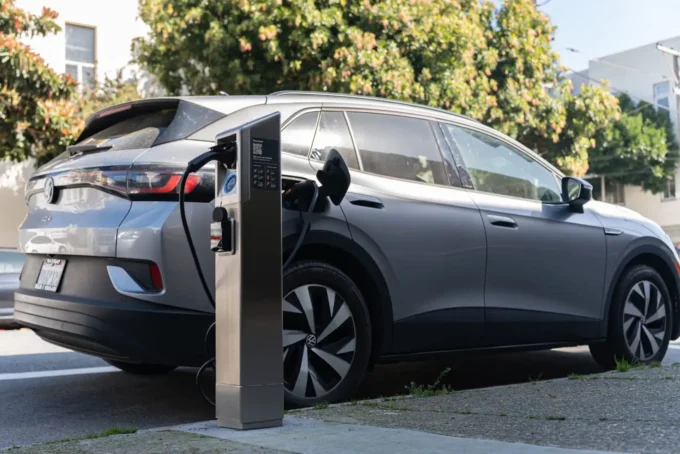
















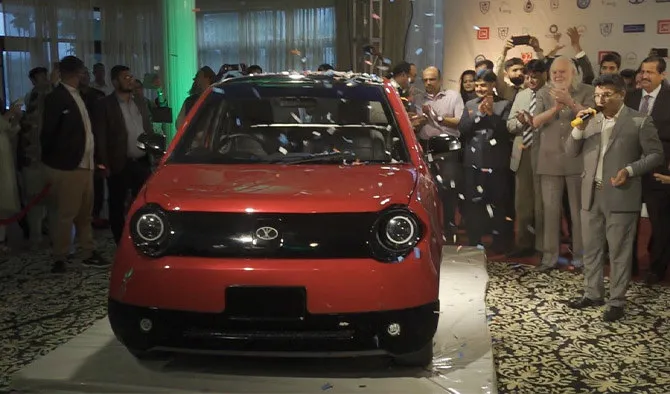
Pakistan is entering a new chapter in its automotive history. For the first time since the country gained independence 77 years ago, the production of a fully locally manufactured electric vehicle (EV) has officially begun.
The development marks a significant transformation for an industry that has long depended on imported parts, foreign technologies, and multinational automotive brands. Now, Pakistan is moving toward a future where vehicles can be designed, manufactured, and assembled entirely within the country.
The announcement was made by Engineering Development Board (EDB) Chief Executive Officer Hammad Mansoor during an iftar dinner hosted by the Small and Medium Enterprises Development Authority (SMEDA). According to Mansoor, the first fully local electric vehicle is expected to be introduced to the market between June and July this year.
The vehicle will be produced at a newly established manufacturing facility in Lahore, which will serve as the country’s first production hub dedicated to locally built electric cars.
For Pakistan, the project represents more than just a new vehicle model. It signals a broader industrial shift toward localisation, technological independence and sustainable mobility.
Build the future you deserve. Get started with our top-tier Online courses: ACCA, HESI A2, ATI TEAS 7, HESI EXIT, NCLEX-RN, NCLEX-PN, and Financial Literacy. Let Serrari Ed guide your path to success. Enroll today.
A Fully “Made in Pakistan” Electric Vehicle
What makes this project particularly notable is the government’s ambition to manufacture the vehicle using 100% locally produced components.
For decades, Pakistan’s automotive sector has relied heavily on imported parts and foreign partnerships. While vehicles were assembled locally, many essential components — including engines, electronics, and specialised materials — often came from abroad.
This dependence on imports has made the industry vulnerable to currency fluctuations, supply chain disruptions and rising production costs.
By developing an electric car built entirely with domestic components, policymakers hope to reduce this reliance and create a more resilient automotive ecosystem.
Officials believe that achieving full localisation will also strengthen Pakistan’s industrial capabilities by encouraging domestic manufacturers to produce components that were previously imported.
If successful, the initiative could pave the way for a new generation of locally engineered vehicles designed specifically for Pakistan’s roads, consumer needs and economic realities.
Affordable Electric Mobility for Millions
Another major highlight of the upcoming electric vehicle is its expected affordability.
According to officials involved in the project, the vehicle will cost less than Rs1 million, making it one of the most affordable cars in Pakistan’s market.
Affordability is central to the government’s strategy. In Pakistan, motorcycles are the most widely used form of transportation, mainly because they are significantly cheaper than cars.
Millions of families rely on two-wheelers for everyday commuting, despite the safety risks and limited passenger capacity they offer.
By introducing an electric car priced within reach of many motorcycle owners, the government hopes to encourage a gradual shift from two-wheelers to safer four-wheel vehicles.
Such a transition could improve road safety while also reducing urban pollution and fuel consumption.
For many households, an affordable electric car could offer the benefits of car ownership without the high fuel and maintenance costs typically associated with conventional vehicles.
Designed for Practical Urban Mobility
Beyond affordability, the upcoming vehicle has been designed with practical everyday usage in mind.
According to EDB chief Hammad Mansoor, the electric car will offer a driving range of between 180 and 200 kilometres on a single charge.
This range is sufficient for most urban commuting needs, including daily travel to work, school and local errands.
In major Pakistani cities such as Karachi, Lahore and Islamabad, most daily commutes fall well within this distance.
The relatively modest range also allows manufacturers to keep battery costs lower, helping maintain the vehicle’s affordable price point.
As global fuel prices continue to rise, electric vehicles are increasingly being viewed as a cost-effective alternative for consumers looking to reduce long-term transportation expenses.
Electric cars generally require less maintenance than traditional internal combustion vehicles, since they contain fewer moving parts and do not require oil changes or complex engine servicing.
Government Policy Aims to Strengthen Local Manufacturing
The launch of the fully local electric car also aligns with broader government efforts to strengthen Pakistan’s domestic manufacturing sector.
According to officials, the government plans to reduce taxes on locally assembled vehicles in the upcoming federal budget for the 2026–27 financial year.
Lower taxes could make locally produced cars more competitive and encourage greater investment in Pakistan’s automotive industry.
The government’s new automotive policy also aims to discourage the import of auto parts while providing incentives for local manufacturers.
By encouraging domestic production, policymakers hope to create a self-sustaining automotive ecosystem that supports both industrial growth and technological development.
Officials say the initiative is also intended to break the long-standing dominance of a few large automobile companies, which have traditionally controlled much of Pakistan’s vehicle market.
According to Mansoor, the market is already beginning to open up, with two to three Pakistani companies expressing interest in manufacturing locally developed electric vehicles.
One decision can change your entire career. Take that step with our Online courses in ACCA, HESI A2, ATI TEAS 7, HESI EXIT, NCLEX-RN, NCLEX-PN, and Financial Literacy. Join Serrari Ed and start building your brighter future today
SMEs Expected to Drive Automotive Innovation
A key pillar of the government’s strategy involves integrating small and medium enterprises (SMEs) into the automotive supply chain.
SMEs play a crucial role in Pakistan’s economy, contributing significantly to employment, innovation and industrial output.
According to SMEDA officials, SMEs currently employ around 25 million people across the country and represent a major driver of economic growth.
By producing auto parts locally, these businesses could help supply essential components for the new electric vehicle.
This would not only strengthen domestic manufacturing capabilities but also create new business opportunities for smaller companies.
Mashood Khan, a senior official at SMEDA, emphasised that Pakistan’s long-term economic stability depends heavily on the growth and competitiveness of SMEs.
“With policy consistency, access to finance and export facilitation, Pakistan’s SMEs can transform into global competitors,” Khan said.
Their participation in the electric vehicle ecosystem could help build a robust local supply chain capable of supporting future automotive production.
Massive Subsidy Programme for Electric Mobility
In addition to promoting electric cars, the government is also introducing large-scale incentives to accelerate the adoption of electric mobility across the country.
Under a programme announced by Prime Minister Shehbaz Sharif, the government plans to provide Rs100 billion in subsidies to support the production and adoption of electric two-wheelers and three-wheelers.
The subsidy programme will be implemented over the next four years and aims to support the purchase of approximately 2.2 million electric bikes and rickshaws.
In the first phase, subsidies are being provided for 40,000 electric vehicles.
Electric motorcycles will receive a subsidy of Rs80,000, while electric three-wheel rickshaws will receive subsidies of Rs400,000.
After Eid al-Fitr, an additional 77,000 vehicles will be added to the programme, followed by another 250,000 units after July.
Officials say the programme is designed to accelerate the transition toward cleaner transportation while making electric mobility accessible to a wider segment of the population.
Pakistan Moves Toward Local Battery Production
Another critical component of Pakistan’s electric vehicle strategy is the development of local battery manufacturing capacity.
Currently, the country relies heavily on imported lithium batteries for electric vehicles.
However, the government is now supporting the construction of four lithium battery manufacturing plants within Pakistan.
According to Mansoor, the first factory is expected to begin producing locally manufactured lithium batteries by May 2026.
Local battery production could significantly reduce EV manufacturing costs while strengthening Pakistan’s energy and technology industries.
Batteries represent one of the most expensive components of electric vehicles, meaning domestic production could make EVs more affordable for consumers.
It would also allow Pakistan to develop expertise in battery technology, which is becoming increasingly important as the global energy transition accelerates.
Future Export Opportunities for Pakistani EVs
While the immediate goal of the project is to strengthen Pakistan’s domestic automotive industry, policymakers are also looking toward international markets.
Officials believe that once full localisation is achieved, Pakistan could begin exporting locally manufactured vehicles to other countries at competitive prices.
Many developing economies face similar challenges related to transportation affordability and fuel costs.
A low-cost electric vehicle designed for emerging markets could therefore find strong demand beyond Pakistan’s borders.
Exporting locally manufactured EVs could help Pakistan generate new revenue streams while strengthening its position in the global automotive industry.
Outlook: A New Era for Pakistan’s Auto Industry
The launch of Pakistan’s first fully local electric car represents more than just a technological milestone.
It reflects a broader shift toward industrial self-reliance, clean energy innovation and sustainable transportation.
If successfully implemented, the initiative could transform Pakistan’s automotive sector by creating new jobs, strengthening domestic manufacturing and reducing dependence on imported technologies.
The government’s focus on localisation, subsidies and SME participation suggests a long-term strategy aimed at building a competitive and resilient automotive ecosystem.
At the same time, growing consumer interest in electric mobility could further accelerate the transition.
Rising fuel prices, increasing environmental awareness and improving EV technology are all factors likely to encourage adoption in the coming years.
While challenges remain — including charging infrastructure development and battery supply chains — the progress made so far suggests that Pakistan is moving steadily toward a more sustainable transportation future.
For policymakers, manufacturers and consumers alike, the country’s first fully local electric vehicle may be the beginning of a new era for Pakistan’s automotive industry.
Ready to take your career to the next level? Join our Online courses: ACCA, HESI A2, ATI TEAS 7 , HESI EXIT , NCLEX – RN and NCLEX – PN, Financial Literacy!🌟 Dive into a world of opportunities and empower yourself for success. Explore more at Serrari Ed and start your exciting journey today! ✨
Track GDP, Inflation and Central Bank rates for top African markets with Serrari’s comparator tool.
See today’s Treasury bonds and Money market funds movement across financial service providers in Kenya, using Serrari’s comparator tools.
Photo Source: Google
By: Rosemary Wambui
11th March 2026