
















Finance ministers from the Group of Seven (G7) have agreed to delay any immediate release of oil from strategic reserves, despite a sharp spike in global crude prices triggered by escalating tensions in the Middle East.
The ministers reached the decision during an emergency teleconference held on Monday, convened after oil prices surged to levels last seen during the 2022 global energy crisis following Russia’s invasion of Ukraine.
While discussions included the possibility of releasing hundreds of millions of barrels of crude oil from emergency stockpiles, officials concluded that more analysis is needed before taking such a step.
“There was broad consensus on this,” a G7 official told Reuters. “It was not that someone was against it; it’s just about timing. More analysis is needed.”
The final decision on whether to release oil reserves will ultimately be made by G7 leaders, according to officials familiar with the discussions.
Build the future you deserve. Get started with our top-tier Online courses: ACCA, HESI A2, ATI TEAS 7, HESI EXIT, NCLEX-RN, NCLEX-PN, and Financial Literacy. Let Serrari Ed guide your path to success. Enroll today.
Oil Prices Spike Amid Geopolitical Tensions
The emergency talks were triggered by a sudden surge in global oil prices, driven by fears that the escalating conflict in the Middle East could disrupt major supply routes.
At the start of trading on Monday, Brent crude briefly climbed to $116.23 per barrel, while West Texas Intermediate (WTI) reached $115.29 per barrel, levels not seen since the global energy crisis in 2022.
Later in the day, prices retreated slightly as markets reacted to reports that the G7 was considering a coordinated release of oil from strategic reserves.
By mid-day trading:
- Brent crude for April delivery fell to $99.63 per barrel
- WTI crude declined to $95.81 per barrel
The volatility highlighted how sensitive global energy markets remain to geopolitical developments, particularly those affecting oil flows through critical maritime chokepoints.
Strategic Oil Reserves as a Crisis Tool
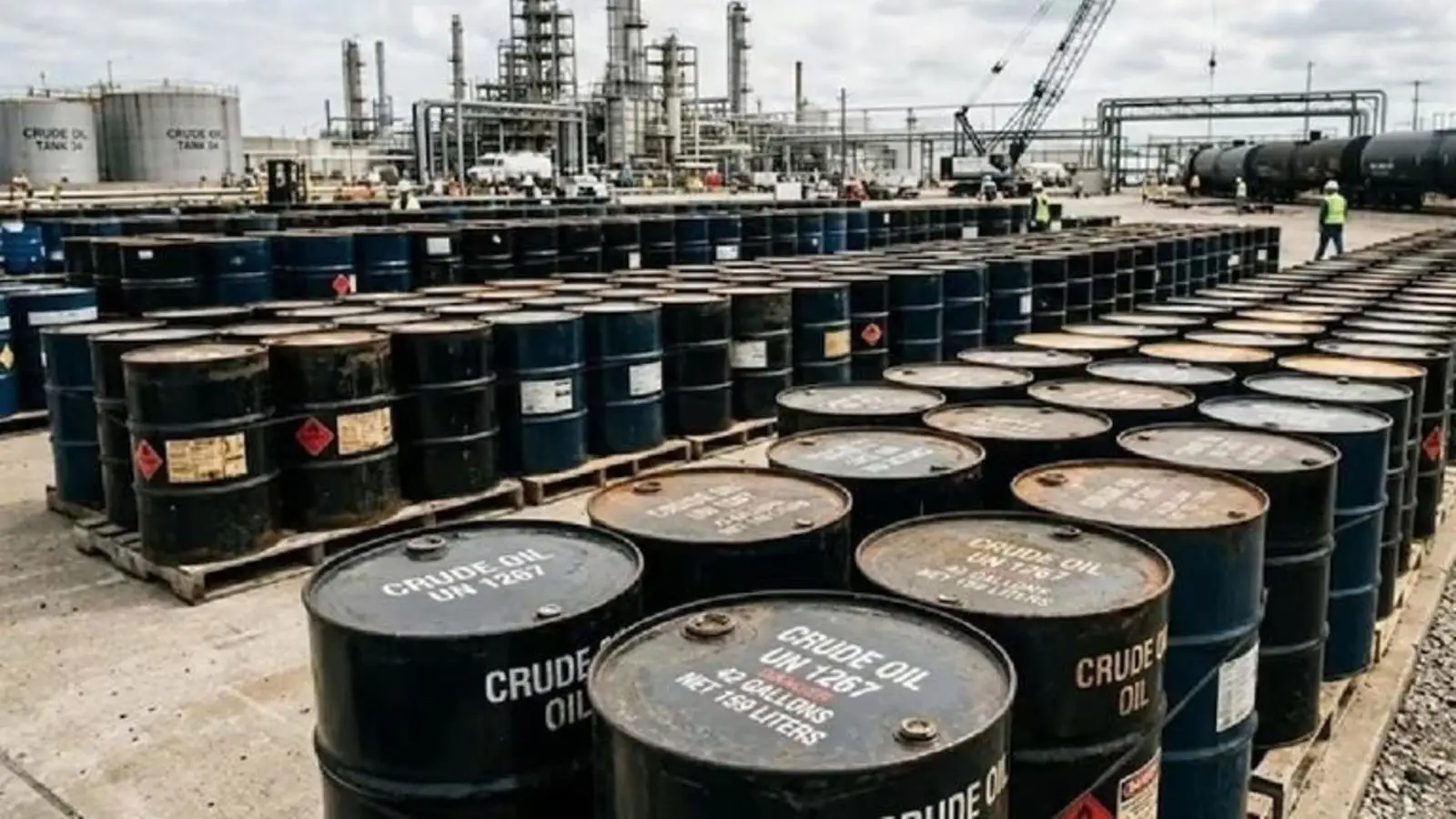
Strategic petroleum reserves are emergency stockpiles maintained by governments to cushion economies against sudden disruptions in global oil supply.
Many industrialized countries hold these reserves through arrangements coordinated by the International Energy Agency (IEA).
The system was created in the aftermath of the 1970s oil shocks, when supply disruptions exposed the vulnerability of advanced economies heavily dependent on imported energy.
Today, the IEA’s 32 member countries collectively maintain around 1.2 billion barrels of emergency oil reserves, intended to stabilize markets during supply crises.
Releasing oil from these reserves is typically considered a last-resort measure designed to prevent severe price spikes or supply shortages.
During the 2022 energy crisis, the United States led a coordinated international release of 240 million barrels from strategic reserves to stabilize global markets after Russia’s invasion of Ukraine disrupted oil flows.
Possible Release of Up to 400 Million Barrels
Reports circulating ahead of the G7 meeting suggested that leaders were considering releasing between 300 million and 400 million barrels of crude oil from global strategic reserves.
Such a release would be significantly larger than the coordinated emergency action taken in 2022.
Analysts noted that releasing such a large volume of oil could significantly influence global supply balances.
However, some experts warn that the global oil market may currently be facing more complex dynamics than during previous crises, with production levels, geopolitical risks and market expectations all contributing to price volatility.
For now, G7 officials appear reluctant to move forward without stronger evidence of an imminent supply disruption.
IEA Says No Immediate Supply Shortage
The International Energy Agency has also indicated that there is currently no immediate shortage of oil supply, despite the recent surge in prices.
IEA Executive Director Fatih Birol said there were no plans for emergency releases from international stockpiles at this stage.
“There is plenty of oil, we have no oil shortage,” Birol said following a meeting with European Commission President Ursula von der Leyen.
“There is a huge surplus in the market.”
Birol’s remarks suggest that current price increases are driven more by market expectations and geopolitical fears than by a physical shortage of oil.
Energy markets often react quickly to potential disruptions, particularly when conflicts threaten key transport routes or major production regions.
One decision can change your entire career. Take that step with our Online courses in ACCA, HESI A2, ATI TEAS 7, HESI EXIT, NCLEX-RN, NCLEX-PN, and Financial Literacy. Join Serrari Ed and start building your brighter future today
Strait of Hormuz Remains a Critical Risk
One of the biggest concerns for energy markets is the potential disruption of oil shipments through the Strait of Hormuz, a narrow maritime passage connecting the Persian Gulf to global shipping routes.
The strait is one of the world’s most important energy chokepoints, with roughly 20% of global oil supply passing through the corridor each day.
Any sustained disruption to shipping traffic in this area could have major implications for global energy markets.
Investment bank JPMorgan Chase recently warned that Brent crude prices could surge to $120 per barrel if a full-scale conflict in the Middle East significantly disrupts oil flows through the Strait of Hormuz.
According to the bank, Gulf oil producers could maintain normal export levels for only around 25 days if the strait were fully blocked.
Such a scenario would likely trigger a rapid release of strategic reserves and potentially lead to a severe global energy shock.
G7 and EU Monitoring Energy Markets Closely
In response to rising energy prices, G7 energy ministers are expected to hold further discussions on how to stabilize global markets.
European Union leaders are also preparing separate talks on energy prices and supply security.
European governments remain particularly sensitive to energy market volatility after the severe price shock experienced in 2022.
During that crisis, energy costs surged across Europe, forcing some industrial facilities to reduce production and increasing inflation across the region.
European Commission President Ursula von der Leyen recently warned that the latest geopolitical tensions highlight the EU’s structural energy vulnerabilities.
“For fossil fuels we are completely dependent on expensive and volatile imports, putting us at a structural disadvantage to other regions,” she said.
The EU currently imports more than 90% of its oil and approximately 80% of its natural gas, making it particularly vulnerable to disruptions in global energy markets.
Governments Consider Policy Responses
European policymakers are exploring several options to reduce energy costs and protect industries from price shocks.
Potential measures being discussed include:
- Adjustments to energy taxes
- Changes to carbon pricing rules
- Increased energy market coordination between EU countries
- Strategic use of oil reserves if necessary
The EU’s carbon pricing system currently accounts for roughly 11% of industrial electricity costs, and some officials have suggested that temporary adjustments could help reduce pressure on businesses.
At the same time, governments remain cautious about interfering too aggressively in energy markets without clear evidence of supply shortages.
Russia Benefits from Rising Energy Prices
The surge in oil prices has also created broader geopolitical implications that extend beyond the immediate tensions in the Middle East.
European Council President Antonio Costa recently suggested that Russia could indirectly benefit from higher global energy prices, particularly as international attention shifts away from the ongoing war in Ukraine. The rise in oil prices tends to increase revenues for major energy exporters, and Russia remains one of the world’s largest suppliers of crude oil and petroleum products.
Higher prices in global energy markets typically translate into stronger export earnings for oil-producing nations, providing additional fiscal resources that can support government spending and economic stability during periods of geopolitical tension. For Russia, elevated oil prices could help offset the economic pressure created by Western sanctions and the costs associated with the prolonged conflict in Ukraine.
This dynamic adds another layer of complexity to the global energy landscape. Policymakers must not only manage market volatility and energy security concerns but also consider how rising commodity prices may reshape geopolitical power balances and influence the economic resilience of major energy-exporting nations.
Outlook
For now, global energy markets remain highly sensitive to developments in the Middle East conflict.
Although oil prices have retreated slightly from their recent highs, they remain well above levels seen earlier this year.
The decision by G7 leaders to delay the release of strategic oil reserves suggests that governments are trying to avoid premature intervention while monitoring whether the conflict leads to actual supply disruptions.
If oil flows through the Strait of Hormuz or other key routes were significantly disrupted, policymakers would likely move quickly to release emergency reserves to stabilize markets.
However, releasing strategic reserves carries its own risks.
Large-scale releases can temporarily lower prices, but they also reduce emergency stockpiles that may be needed if a deeper crisis emerges later.
As a result, governments typically prefer to conserve these reserves unless supply disruptions become unavoidable.
The coming weeks will therefore be crucial for determining whether the current price spike remains a temporary geopolitical reaction or develops into a prolonged global energy crisis.
Much will depend on whether the conflict in the Middle East escalates further and whether shipping routes remain open.
For energy markets, investors and governments alike, the situation underscores a persistent reality: global oil prices remain deeply intertwined with geopolitical stability.
Even in an era of accelerating renewable energy investment, disruptions in traditional oil supply chains continue to have far-reaching economic consequences.
If tensions ease and supply routes remain secure, prices may stabilize without requiring emergency intervention.
But if the conflict deepens and threatens major oil transport corridors, the G7 may soon face the difficult decision it postponed this week — whether to release strategic reserves to prevent another global energy shock.
Ready to take your career to the next level? Join our Online courses: ACCA, HESI A2, ATI TEAS 7 , HESI EXIT , NCLEX – RN and NCLEX – PN, Financial Literacy!🌟 Dive into a world of opportunities and empower yourself for success. Explore more at Serrari Ed and start your exciting journey today! ✨
Track GDP, Inflation and Central Bank rates for top African markets with Serrari’s comparator tool.
See today’s Treasury bonds and Money market funds movement across financial service providers in Kenya, using Serrari’s comparator tools.
Photo Source: Google
By: Rosemary Wambui
11th March 2026