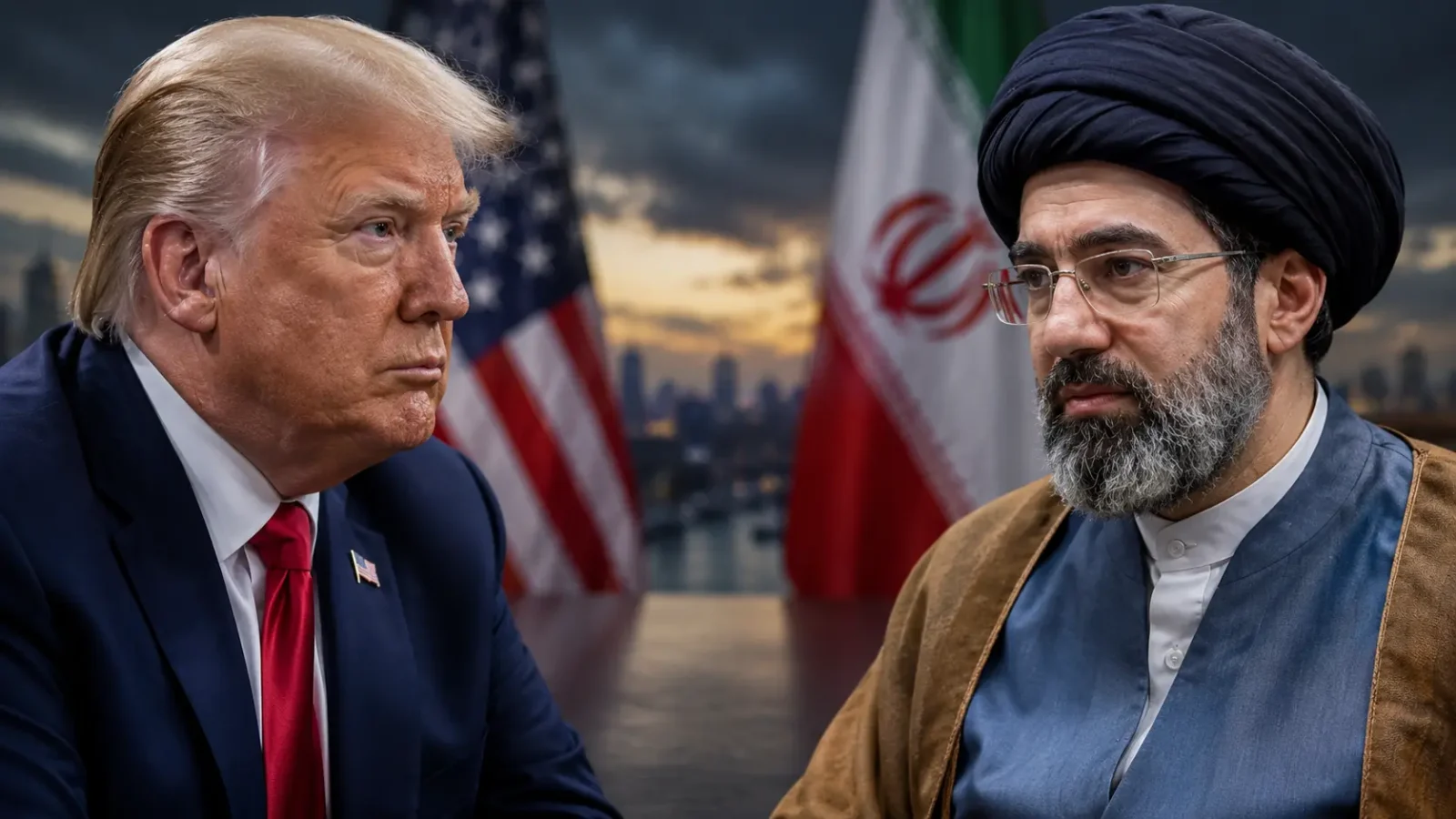
Oil prices fell sharply while global shares rallied after the United States and Iran signalled progress on a framework deal aimed at ending the conflict and reopening the Strait of Hormuz. Brent crude dropped by more than 5%, reflecting a rapid reduction in the geopolitical risk premium that had built up during months of disruption in the key energy shipping route.
The agreement, which is expected to be formally signed in Geneva, raised hopes that oil and liquefied natural gas flows through the Strait of Hormuz could gradually resume. However, analysts warned that the recovery may not be immediate, as security checks, shipping backlogs and possible mine-clearing operations could delay a return to normal energy flows.
Key Overview
- Brent crude fell more than 5% after the US and Iran moved toward a framework deal.
- The agreement is expected to support the reopening of the Strait of Hormuz, a critical global oil and LNG route.
- Global stock markets rose as investors reduced the geopolitical risk premium attached to energy prices.
- Energy shares fell as lower oil prices weighed on major producers.
- Analysts warned that full shipping normalisation through the strait could take weeks or longer.
Oil Slides as Deal Eases Supply Fears
Oil markets reacted quickly after the US and Iran agreed to halt the war and move toward reopening the Strait of Hormuz. Brent crude fell to its lowest level since March 10, according to market reporting on the agreement, as traders priced in lower risks of prolonged supply disruption.
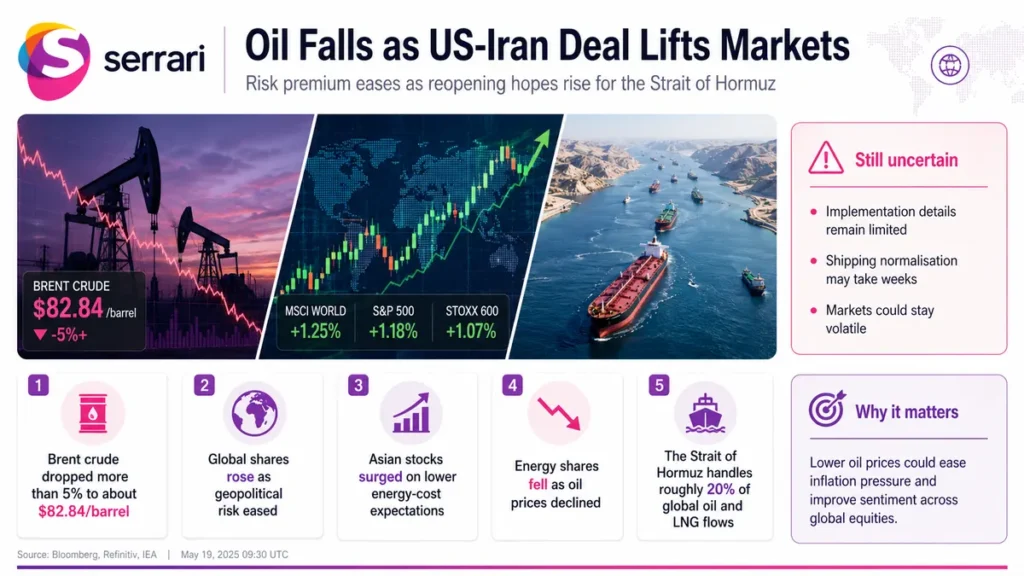
The Strait of Hormuz is one of the world’s most important energy chokepoints, with roughly one-fifth of global oil trade normally passing through the route. Its closure had pushed crude prices sharply higher, increasing costs for import-dependent economies and raising concerns over inflation.
President Donald Trump said the deal was complete and that oil shipments were moving through the strait, with additional reporting noting his comments that vessels carrying oil were beginning to move through a safer shipping route. His statement that ships were moving out of the Strait of Hormuz helped calm energy markets, although traders remained cautious about the details of implementation.
Context is everything. Stay ahead of shifting trends with today’s market updates, and uncover emerging opportunities using the Serrari Group Market Index and Marketplace. Then, take control of your own financial future by exploring our Money & Life Reset Transformation Blueprint ™ to build stronger habits, create better systems, and design a path toward lasting wealth.
Shares Rally as Risk Premium Falls
Global equities rose as investors welcomed the prospect of lower energy costs and reduced geopolitical risk. Asian markets led the rally, with Japan and South Korea posting strong gains as lower oil prices improved the outlook for economies heavily reliant on Middle Eastern energy imports.
European shares also moved higher, although London’s market was held back by weakness in major energy stocks. In the US, broader equity indices opened higher as investors priced in a lower probability of further inflation shocks from oil prices.
The strongest market reaction came from sectors that benefit from lower fuel and input costs. Airlines, manufacturers and consumer-facing companies gained from expectations that cheaper energy could ease operating pressures. By contrast, energy producers lost ground as crude prices fell, with a separate report showing US energy shares dropping after the deal reduced fears of disruption through Hormuz.
Inflation and Interest Rate Expectations Shift
The deal also changed expectations around inflation and monetary policy. Higher oil prices had raised fears that central banks could face renewed pressure to keep rates elevated or consider further tightening if energy shocks fed into consumer prices.
A drop in crude prices may ease that pressure, especially in economies where fuel costs strongly influence transport, food and industrial prices. Investors are now watching whether lower energy prices will strengthen the case for central banks to hold rates steady in the near term.
For the US Federal Reserve, the timing is significant. Markets are assessing whether the easing in oil prices could reduce inflation risk ahead of upcoming policy decisions. While one market move does not determine monetary policy, a sustained decline in energy prices would give policymakers more room to focus on growth and employment.
Reopening Hormuz May Still Take Time
Despite the positive market reaction, energy experts warned that reopening the Strait of Hormuz may be gradual rather than immediate. Tanker backlogs, port congestion, insurance concerns and security verification could slow the recovery in oil and LNG flows.
The formal signing process is also important. Reports indicate that the deal is expected to be signed in Geneva, with negotiators still needing to resolve more difficult issues, including future talks over Iran’s nuclear programme. This means markets may remain sensitive to political statements, implementation delays or signs that either side is hesitating.
For now, the deal has delivered a sharp improvement in investor sentiment. Oil prices have fallen, equities have gained and markets are pricing in a lower risk of a prolonged energy shock. But until shipping flows through Hormuz return to normal, volatility is likely to remain a feature of global energy and equity markets.
Sources used: Reuters / BBC / CBS News / The Guardian / Times of India
Your financial future isn’t something you wait for—it’s something you build.
The real question is: when do you begin?
Move beyond simply staying informed.
Navigate the markets with clarity—track trends through the Serrari Group Market Index, uncover opportunities in the Serrari Marketplace, and build practical knowledge with our Curated Wealth Builder Platform.
Stay connected to what truly matters.
Get daily insights on macro trends and financial movements across Kenya, Africa, and global markets—delivered through the Serrari Newsletter.
Growth opens doors.
Advance your career through professional programs including ACCA, HESI A2, ATI TEAS 7 , HESI EXIT , NCLEX – RN and NCLEX – PN, Financial Literacy!🌟—designed to move you forward with confidence.
See where money is flowing—clearly and in real time.
Track Money Market Funds, Treasury Bills, Treasury Bonds, Green Bonds, and Fixed Deposits, alongside global and African indexes, key economic indicators, and the evolving Crypto and stablecoin landscape—all within Serrari’s Market Index.