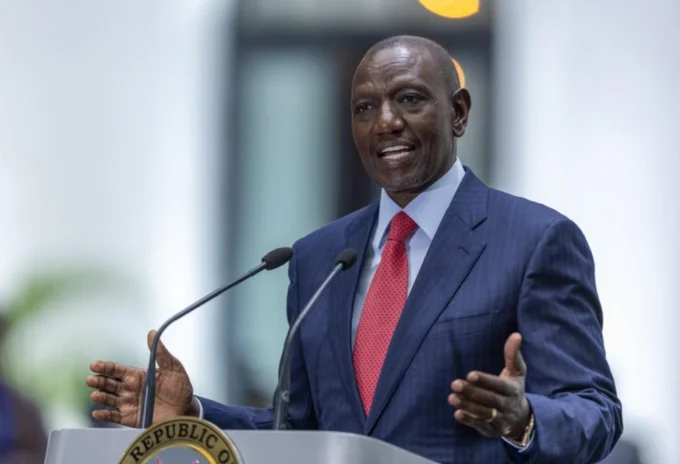
President William Ruto used the inaugural Kenya Mining Investment Conference and Expo (MICE) 2026 in Nairobi to declare that Kenya would no longer serve as a supplier of raw minerals to fuel industries abroad. He called on the African continent to collectively ensure that processing, refining and manufacturing of minerals takes place on African soil, arguing that six decades of exporting raw materials have generated prosperity for others while leaving citizens with limited benefit. The speech came as the government pursues an ambitious target of raising mining’s contribution to GDP from roughly one per cent to at least 10 per cent by 2030, and as the United States pitched Kenya on joining a preferential trade zone for critical minerals designed to counter Chinese dominance in global supply chains. With a recently completed national airborne geophysical survey identifying over 970 mineral deposits and flagship projects in iron ore, gold and gemstone processing moving toward completion, Kenya is positioning itself as a serious mining investment destination at a moment of surging global demand for the minerals that underpin the clean energy transition.
Markets move fast; don’t get left behind. We’ve paired the Serrari Group Market Index with a curated Marketplace and a comprehensive Wealth Builder Platform to ensure you have the data—and the skills—to act on it.
Key Overview
- Conference: Kenya Mining Investment Conference and Expo (MICE) 2026, Nairobi, April 28–29
- GDP target: Raise mining’s GDP contribution from ~1% to 10% by 2030 (valued at Sh1.6 trillion)
- Mineral deposits: 970 occurrences identified across 47 counties via the National Airborne Geophysical Survey
- Key minerals: Copper, coltan, rare earth elements, niobium, graphite, lithium, chromium, nickel, uranium, gold, titanium, gemstones
- Flagship projects: Sh11 billion Devki iron ore pelletisation plant (Taita Taveta); gold refinery; Voi Gemstone Value Addition Centre
- Royalty framework: National government 70%, county government 20%, local communities 10%
- Africa’s global position: Holds ~30% of the world’s critical mineral reserves but captures less than 1% of clean energy technology value
- US offer: Washington proposed a preferential trade zone with price floors for critical minerals at the conference
- IEA demand projections: Critical mineral demand projected to triple by 2030 and quadruple by 2040
Africa’s Mineral Paradox: Rich in Resources, Poor in Returns
President Ruto’s address at the MICE 2026 conference opened with a blunt diagnosis of Africa’s mineral economy. The continent holds approximately 30% of the world’s proven critical mineral reserves, including dominant shares of cobalt, manganese, platinum, chromium and graphite — minerals that are essential for batteries, electric vehicles, wind turbines and solar technologies. According to the International Monetary Fund, between 2022 and 2050, global demand for nickel is expected to double, cobalt to triple, and lithium to rise tenfold.
Yet despite this enormous endowment, African nations currently capture less than one per cent of the value generated by global clean energy technologies. The reason, Ruto argued, is structural. For decades, African countries have extracted and exported raw materials at the bottom of the value chain, while processing, refining and manufacturing — the stages where the bulk of economic value is created — have taken place elsewhere.
This imbalance is not unique to Kenya. The Africa Finance Corporation estimated this year that the continent hosts $29.5 trillion in mine-site mineral value, representing about 20% of global mineral wealth. Of that total, $8.6 trillion remains undeveloped, reflecting fragmented geological data, limited exploration and elevated risk perceptions that continue to constrain investment.
Ruto’s declaration that Kenya will process, refine and manufacture minerals on the continent — and that the full length of the value chain must generate value for Africa — echoed a growing consensus among African leaders that the era of exporting unprocessed raw materials must end. Namibia has already banned the export of unprocessed critical minerals including lithium, cobalt and graphite, while the Democratic Republic of Congo — the world’s largest cobalt producer — has taken steps to mandate local processing as a condition of future mining concessions.
Kenya’s Mineral Endowment: What Lies Beneath
Kenya’s mining ambitions are grounded in a sweeping geological assessment that has fundamentally changed the country’s understanding of what lies beneath its surface. The National Airborne Geophysical Survey, commissioned by the Ministry of Mining, Blue Economy and Maritime Affairs, covered 96.5% of Kenya’s landmass and identified over 970 mineral occurrences spread across all 47 counties. The survey, described by the Kenya Geological Survey as capturing over three million line-kilometres of magnetic, radiometric and high-density GPS data, ended a 30-year gap in the country’s geological mapping capabilities.
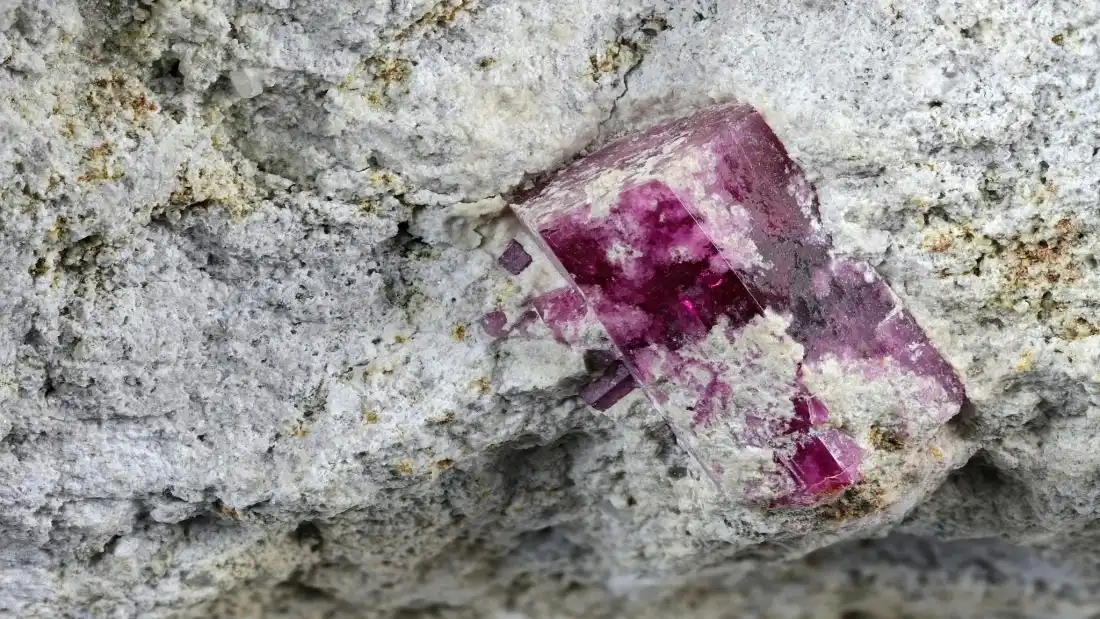
The minerals identified span a strategically valuable range. Copper, coltan, rare earth elements, niobium, graphite, lithium, chromium, nickel and uranium were found across 15 priority counties including Kitui, Tana River, Kilifi, Isiolo, Taita Taveta, Kwale, Turkana, Samburu and Kericho. Gold deposits stretch across Kenya’s western belt from Narok through Migori and Kakamega into Turkana and Marsabit. Niobium and rare earth elements are concentrated in Kwale, iron ore in Taita Taveta, and titanium along the coastal strip. Gemstones, for which Kenya is already internationally recognised — particularly tsavorite and ruby — span the central and coastal regions.
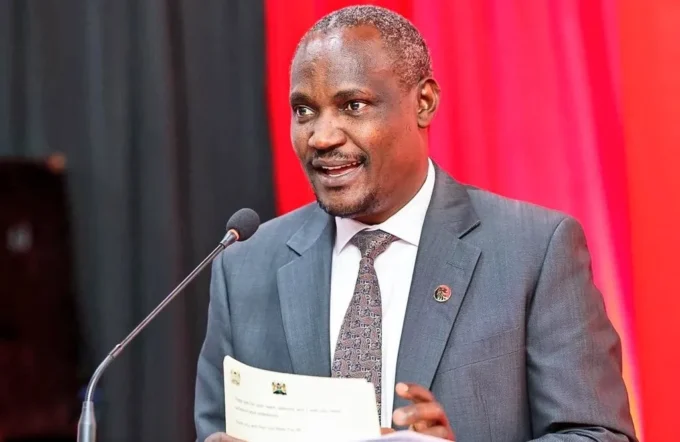
The Kenya Chamber of Mines had previously pushed for the survey’s findings to be made public to help large-scale investors assess viability. The government confirmed the data is available to prospective mining companies upon request, and Mining Minister Hassan Joho used the MICE 2026 conference to signal that the industry had been deliberately de-risked through the survey and subsequent ground-truthing exercises, providing investors with reliable, data-driven insights.
Context is everything. While you follow today’s updates, use the Serrari Group Market Index and Marketplace to spot emerging shifts. Need to sharpen your edge? Our Wealth Builder Platform turns these insights into a professional-grade strategy.
Flagship Projects: From Iron Ore to Gold and Gemstones
Ruto used the conference to highlight several value-addition projects that demonstrate the government’s approach in practice.
The most prominent is the Sh11 billion iron ore pelletisation plant in Taita Taveta, developed by Devki Group under billionaire industrialist Narendra Raval. The facility, which is in its final stages of construction, is designed to process locally mined iron ore into pellets rather than exporting raw ore. The first phase is expected to create approximately 3,000 direct jobs, with the workforce projected to grow to over 14,000 once the plant is fully operational. Devki Group plans to support local artisanal miners by providing equipment to boost production and supply the facility with raw materials — a model that directly links small-scale extraction to industrial value addition.
Kenya’s gold refinery project is also advancing toward completion, Ruto said, while the Voi Gemstone Value Addition Centre is already operational. The centre serves artisanal miners and small-scale operators with access to cutting, polishing, grading and international market linkages, addressing a long-standing problem in Kenya’s gemstone sector where the vast majority of production was historically exported before cutting and polishing — meaning the higher-value stages of the supply chain were captured entirely offshore.
Additionally, a Sh350 million rare earth elements project by Australia-based NGX Limited in Kericho was among the investment deals announced at Kenya’s investment conference earlier this year, signalling growing international interest in the country’s critical mineral potential.
Regulatory Reform: Building the Framework for Investment
Kenya’s push to attract mining investment rests on a legal and institutional architecture that the government has been building since the enactment of the Mining Act 2016. Described by officials as a progressive, transparent and investor-friendly framework, the law replaced colonial-era 1940 legislation and established modern provisions for licensing, royalty sharing and community benefit.
The royalty-sharing framework allocates 70% to the national government, 20% to the relevant county government and 10% to local communities — a structure designed to ensure that mineral wealth generates tangible returns at every level. The licensing process has been digitised through the Online Mining Cadastre, allowing applicants to apply for mineral rights from anywhere in the world.
The government has also established the National Mining Corporation (NAMICO) as its investment arm in the mineral sector, tasked with implementing a deliberate strategy to unlock the country’s critical mineral potential and integrate Kenya more competitively into the global mineral value chain.
However, the private sector has advocated for further amendments to the Mining Act to make it more competitive, predictable and fair to investors. Key stakeholders in the Kenya Chamber of Mines have argued that certain provisions need refinement to attract the scale of foreign direct investment necessary to develop the newly identified mineral resources. A moratorium on new mining licences, imposed in December 2019 to allow for the geophysical survey and a review of existing permits, was a particular point of contention, though it has since been eased.
The Geopolitical Prize: Washington Courts Nairobi
President Ruto’s address was delivered alongside a strikingly direct pitch from the United States. U.S. Ambassador Susan Burns told the conference that Washington was inviting Kenya to join a preferential trade zone for critical minerals — a mechanism proposed by Vice President JD Vance at the 2026 Critical Minerals Ministerial in Washington earlier this year. The trade zone would include enforceable price floors and adjustable tariffs designed to protect mining investments from the kind of market flooding and price collapse that has killed projects across Africa.
Burns described a global market that is “failing” — failing to create sustainable investment, dignified jobs and national security. She detailed unprecedented U.S. commitments: $100 billion in lending authority mobilised through the Office of Strategic Capital, a $12 billion domestic critical minerals stockpile under Project Vault, and over $10 billion in critical mineral agreements facilitated across five countries in a single month.
The pitch was explicitly framed as a counterweight to Chinese dominance. Beijing controls the processing of the majority of the world’s cobalt, graphite and rare earth elements, and the IEA has warned that supply chains remain dangerously concentrated. For Kenya, the U.S. offer presents both opportunity and complexity: Washington’s terms promise stable pricing and access to American financing tools, but they also come with an implicit expectation of alignment that could limit Kenya’s flexibility to engage with other partners, including China, which has been a significant investor across African mining jurisdictions.
The Center for Strategic and International Studies noted that the proposed trading bloc would establish reference prices for minerals at each stage of production, maintained through tariffs regardless of how much material enters the global market from Chinese production. For African producing nations, the question is whether such a framework genuinely advances their industrialisation goals — or whether it merely shifts the destination of raw material exports from East to West.
The Road to 10% of GDP
Kenya’s overarching objective is to raise the mining sector’s contribution to GDP from its current level of roughly one per cent to at least 10% by 2030, generating an estimated Sh1.6 trillion in annual value. Achieving this would require a transformation on multiple fronts: scaling up exploration and extraction, building processing and refining infrastructure, training a skilled workforce, and resolving long-standing issues around land rights and community consent that have historically slowed or blocked mining projects.
The challenge is considerable. While the geophysical survey has identified hundreds of mineral occurrences, moving from survey data to commercial production typically involves years of ground-truthing, feasibility studies, environmental impact assessments and capital mobilisation. The government’s own geological teams have been working through 15 priority counties to validate the survey findings, but the process is resource-intensive and ongoing.
Infrastructure remains another constraint. While Minister Joho emphasised that Kenya has invested in an expanded road network, the Standard Gauge Railway and efficient port systems to support mining logistics, many of the most mineral-rich counties in the north and east remain poorly connected to transport corridors.
Yet the timing is arguably as favourable as it has ever been. The global scramble for critical minerals — intensified by the energy transition, the US-China strategic competition, and the supply shock from the Strait of Hormuz closure — means that resource-rich African nations have leverage they have not enjoyed in decades. Investors from the United States, Europe, the Gulf and Asia are actively seeking new sources of supply, and the Africa Finance Corporation estimates that $8.6 trillion in mine-site mineral value across the continent remains undeveloped.
For Kenya, the question is whether its institutional reforms, geological data and policy ambitions can be translated into bankable projects at the pace the global market demands. President Ruto’s message at MICE 2026 was clear: Kenya is ready for investment, but it will be investment on Africa’s terms — with value addition at home, not abroad.
Your financial future isn’t something you wait for—it’s something you build.
The real question is: when do you begin?
Move beyond simply staying informed.
Navigate the markets with clarity—track trends through the Serrari Group Market Index, uncover opportunities in the Serrari Marketplace, and build practical knowledge with our Curated Wealth Builder Platform.
Stay connected to what truly matters.
Get daily insights on macro trends and financial movements across Kenya, Africa, and global markets—delivered through the Serrari Newsletter.
Growth opens doors.
Advance your career through professional programs including ACCA, HESI A2, ATI TEAS 7 , HESI EXIT , NCLEX – RN and NCLEX – PN, Financial Literacy!🌟—designed to move you forward with confidence.
See where money is flowing—clearly and in real time.
Track Money Market Funds, Treasury Bills, Treasury Bonds, Green Bonds, and Fixed Deposits, alongside global and African indexes, key economic indicators, and the evolving Crypto and stablecoin landscape—all within Serrari’s Market Index.