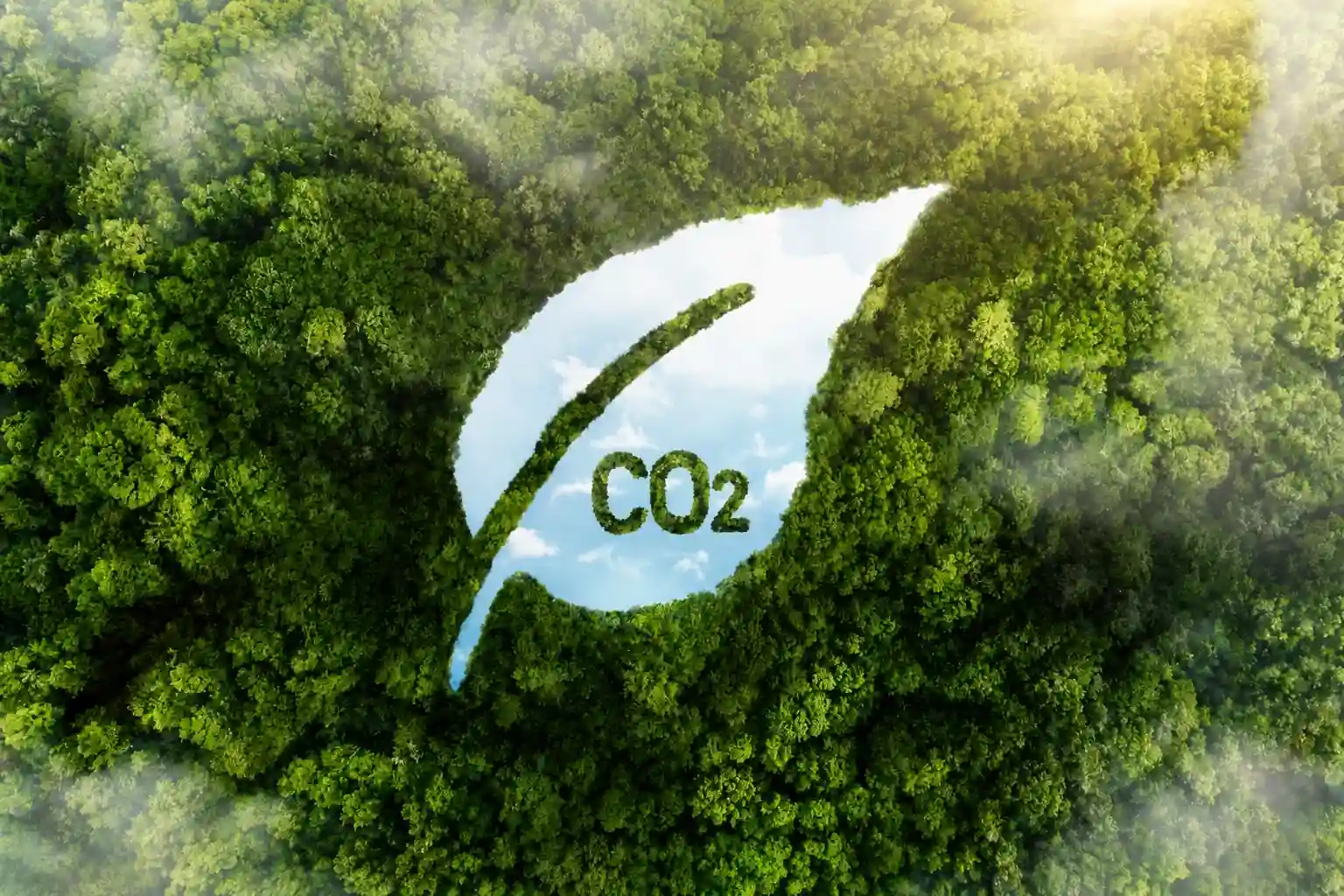
Indonesia will issue more than 30 million tonnes of forestry carbon credits on July 6, marking one of the country’s largest carbon credit issuances to date. Three days later, it will launch its Carbon Unit Registry System (SRUK), aimed at improving transparency and strengthening confidence in the country’s growing carbon market. The initiatives form part of Indonesia’s broader strategy to attract climate finance while protecting forests, peatlands, and mangroves.
Key Overview
- Indonesia will issue more than 30 million forestry carbon credits on July 6.
- The government will launch the Carbon Unit Registry System (SRUK) on July 9.
- The issuance follows the removal of a forestry carbon credit ban.
- New regulations aim to strengthen carbon market integrity and investor confidence.
- Indonesia is promoting three priorities ahead of COP31 to expand global carbon markets.
Indonesia Prepares Major Forestry Carbon Credit Issuance
Indonesia is preparing one of the largest forestry carbon credit issuances in its history, with the government set to release more than 30 million tonnes of CO₂ equivalent (CO₂e) in forestry carbon credits on July 6.
Speaking during the Net Zero Delivery Summit 2026 as part of London Climate Action Week, Forestry Minister Raja Juli Antoni announced that he will sign ministerial approval to facilitate the issuance.
“I will issue a ministerial approval and facilitate the issuance of forestry carbon credits exceeding 30 million tonnes of CO₂e,” the minister said, describing the move as one of the most significant milestones in the development of Indonesia’s forest carbon market.
The issuance marks a major step in expanding Indonesia’s carbon market while creating new opportunities for climate finance and forest conservation.
Issuance Follows Removal of Forestry Credit Restrictions
The announcement comes after Indonesia lifted restrictions that had effectively halted the issuance of forestry carbon credits.
Forestry projects in Indonesia stopped issuing new credits after a government ban in 2022. The restriction was removed late last year, allowing project developers to resume participation in carbon markets.
The long-awaited issuance is expected to significantly increase the supply of Indonesian forestry carbon credits.
Market participants have already anticipated the additional supply, with prices for credits generated under the Verra-listed Katingan REDD+ Project declining from the record highs reached earlier this year.
Officials have described the upcoming issuance as one of the largest ever completed within Indonesia’s forestry sector.
New Carbon Registry to Launch on July 9
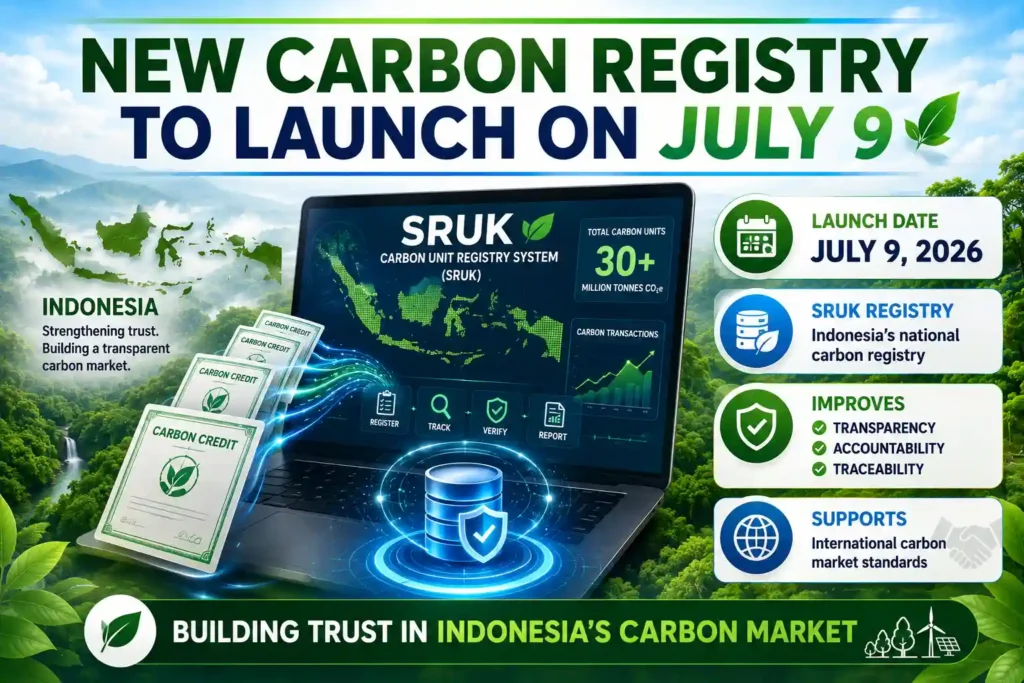
Three days after the carbon credit issuance, Indonesia will officially launch its new Carbon Unit Registry System (SRUK) on July 9.
The registry will serve as the country’s primary carbon market infrastructure by recording carbon transactions and improving transparency, accountability, and traceability.
Officials believe the new system will provide greater certainty for project developers, investors, and market participants while strengthening confidence in Indonesia’s carbon trading framework.
The launch will also include the registration of several forestry carbon projects under internationally recognised standards, demonstrating Indonesia’s intention to align its carbon market with global best practices.
Indonesia Sees Carbon Markets as Climate Finance Tool
Indonesia possesses one of the world’s largest tropical forest areas, making forest conservation a central component of its climate strategy.
The government views carbon markets as an important mechanism for mobilising investment into emissions reduction while supporting the protection of forests, peatlands, and mangrove ecosystems.
According to Forestry Minister Raja Juli Antoni, the biggest challenge facing climate finance today is not a shortage of capital or climate ambition but creating the conditions needed for investment to flow safely and efficiently into climate solutions.
Speaking during the session titled “From Fragile to Financeable – De-risking Carbon Credit Markets,” he stressed that carbon markets have significant potential to finance emissions reductions, ecosystem restoration, sustainable development, and forest protection.
However, he noted that this potential can only be realised if markets operate with integrity, transparency, regulatory certainty, and trust.
Context is everything. Stay ahead of shifting trends with today’s market updates, and uncover emerging opportunities using the Serrari Group Market Index and Marketplace. Then, take control of your own financial future by exploring our Money & Life Reset Transformation Blueprint ™ to build stronger habits, create better systems, and design a path toward lasting wealth.
Government Strengthens Carbon Market Regulations
Indonesia has recently introduced several regulatory measures designed to improve governance across its carbon market.
The government strengthened its regulatory framework through Presidential Regulation No. 110/2025, followed by Forestry Ministerial Regulations No. 6/2026 and No. 7/2026.
These regulations establish rules covering carbon governance, environmental integrity, and investment certainty for forestry-based carbon projects.
During meetings with members of The Coalition to Grow Carbon Markets, Raja Juli said Indonesia is moving beyond policy development and into practical implementation by creating investment-ready opportunities within the forestry sector.
He also called for stronger international cooperation to improve market infrastructure, strengthen liquidity mechanisms, and develop better risk-sharing instruments capable of attracting private and institutional investment.
Indonesia Outlines Priorities Ahead of COP31
Ahead of COP31, Indonesia has identified three key priorities for strengthening global carbon markets.
The first priority focuses on improving market integrity and transparency to increase confidence in carbon credits.
The second centres on strengthening market infrastructure, liquidity mechanisms, and risk-sharing tools that can attract larger volumes of private and institutional investment.
The third aims to ensure carbon finance delivers measurable benefits to local communities, Indigenous peoples, and forest guardians who play a direct role in protecting ecosystems.
According to Raja Juli, the future success of carbon markets will depend not only on the number of carbon credits traded but also on the level of trust they generate, the investment they mobilise, and the climate and development benefits they deliver.
He also noted that global financial centres have an important role to play in building credible market institutions, developing effective risk management tools, and mobilising capital for the transition to a low-carbon economy.
Outlook
The planned issuance of more than 30 million forestry carbon credits, together with the launch of Indonesia’s Carbon Unit Registry System (SRUK), marks a significant development in the country’s carbon market. By strengthening regulatory frameworks, improving market transparency, and expanding internationally recognised forestry carbon projects, Indonesia is positioning itself to attract greater climate investment while supporting forest conservation. As the country advances its carbon market ahead of COP31, these initiatives are expected to play an increasingly important role in financing emissions reductions and promoting sustainable management of its vast forest resources.
FAQs
1. How many forestry carbon credits will Indonesia issue?
Indonesia plans to issue more than 30 million tonnes of CO₂ equivalent (CO₂e) in forestry carbon credits on July 6.
2. What is Indonesia’s SRUK registry?
The Carbon Unit Registry System (SRUK) is Indonesia’s national carbon registry that will improve transparency, accountability, and traceability for carbon market transactions.
3. Why is this issuance important?
It represents one of the largest forestry carbon credit issuances in Indonesia and follows the removal of restrictions that had halted forestry credit issuance since 2022.
4. What are Indonesia’s carbon market priorities ahead of COP31?
Indonesia aims to strengthen market integrity and transparency, improve carbon market infrastructure, and ensure carbon finance benefits local communities, Indigenous peoples, and forest guardians.
Sources: tanahair.net, Argus Media, Ecobiz Asia
Your financial future isn’t something you wait for—it’s something you build.
The real question is: when do you begin?
Move beyond simply staying informed.
Navigate the markets with clarity—track trends through the Serrari Group Market Index, uncover opportunities in the Serrari Marketplace, and build practical knowledge with our Curated Wealth Builder Platform.
Stay connected to what truly matters.
Get daily insights on macro trends and financial movements across Kenya, Africa, and global markets—delivered through the Serrari Newsletter.
Growth opens doors.
Advance your career through professional programs including ACCA, HESI A2, ATI TEAS 7 , HESI EXIT , NCLEX – RN and NCLEX – PN, Financial Literacy!🌟—designed to move you forward with confidence.
See where money is flowing—clearly and in real time.
Track Money Market Funds, Treasury Bills, Treasury Bonds, Green Bonds, and Fixed Deposits, alongside global and African indexes, key economic indicators, and the evolving Crypto and stablecoin landscape—all within Serrari’s Market Index.