Nigerian industrialist Aliko Dangote has acquired an approximately 25% stake in Kenya Pipeline Company (KPC), strengthening his group’s presence in East Africa’s fuel transportation industry. He announced the acquisition at the Africa Summit in London on October 21, 2026, shortly after Kenyan public entities sold a substantial block of shares in the Nairobi-listed company.
The transaction comes weeks after Dangote began developing a planned 700,000-barrel-per-day refinery at Lamu. Together, the investments could give his businesses greater exposure to petroleum processing and distribution, although a minority equity stake does not confer sole control of KPC’s pipeline network.
Key Overview
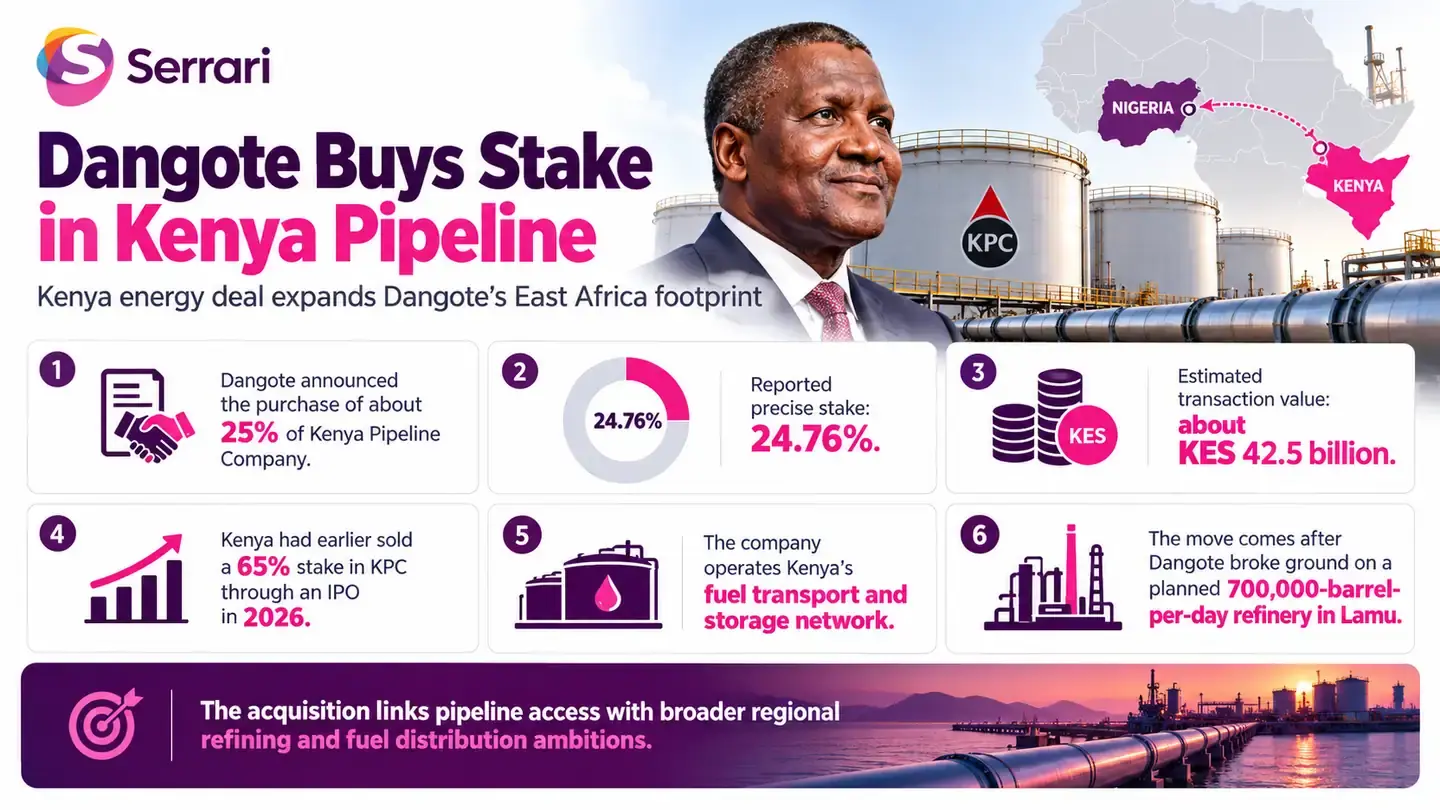
- Acquired stake: Dangote described the purchase as 25%; local transaction reporting puts it at 24.76% of KPC.
- Reported value: About KES 42.5 billion, involving approximately 4.5 billion shares.
- Business significance: KPC transports and stores refined petroleum products for Kenya and regional markets.
- Previous privatisation: Kenya sold 65% of KPC through an initial public offering earlier in 2026, retaining a direct 35% stake.
- Refinery investment: Dangote’s planned Lamu facility is designed to process 700,000 barrels of crude oil daily once operational.
How Dangote Acquired the Pipeline Stake
The reported share transaction involved 24.76% of KPC, rather than an exact 25%. Local reporting valued the block at approximately KES 42.5 billion and identified state-backed institutions among the sellers.
The sale followed KPC’s listing on the Nairobi Securities Exchange on March 9, 2026. It is important to distinguish the two transactions: the government originally offered shares through the IPO, while Dangote subsequently acquired an existing block from investors. His purchase therefore should not be described as a new 25% issue of KPC shares or as a direct sale of pipeline assets.
The investment potentially gives Dangote significant influence as a major shareholder. However, any board representation, operational agreements or preferential access to pipeline capacity would depend on applicable governance and commercial arrangements, rather than automatically following from the share purchase.
Why Kenya Pipeline Matters to Regional Fuel Trade
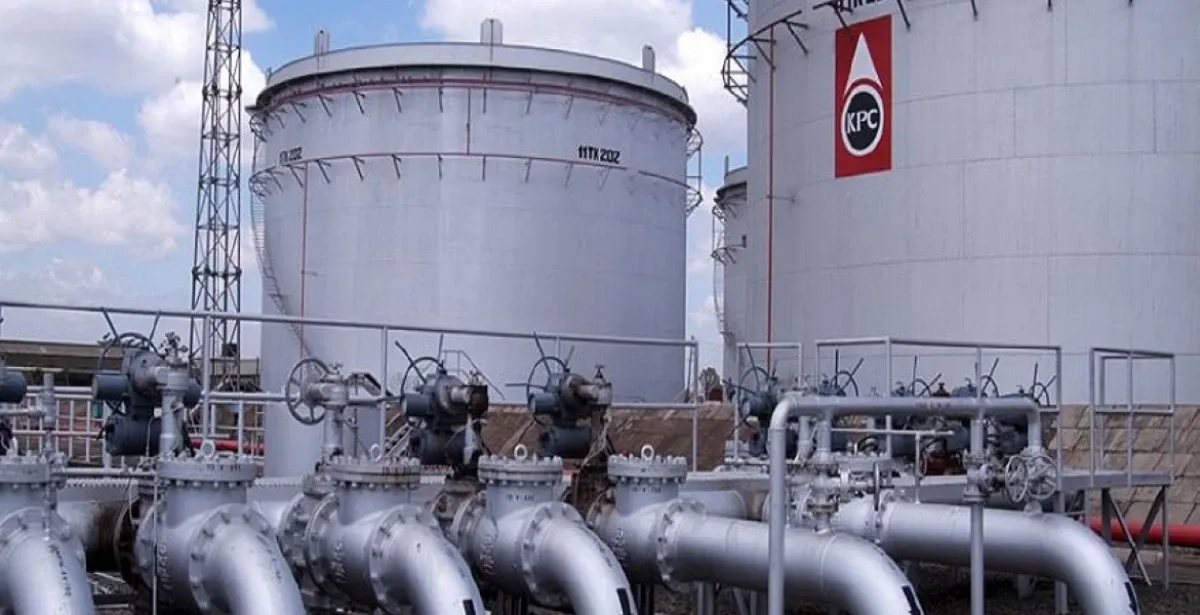
KPC operates the infrastructure used to move refined fuel from the coastal port of Mombasa to inland destinations. Its pipeline and storage network comprises about 1,342 kilometres of pipeline and has stated handling capacity of roughly 14 billion litres of petroleum products annually.
For Dangote, a position in this network could support a broader strategy involving refining, fuel storage and distribution across African markets. It may also create opportunities for commercial cooperation, although no specific pipeline-use rights or integration terms were disclosed in the initial announcement.
Context is everything. Stay ahead of shifting trends with today’s market updates, and uncover emerging opportunities using the Serrari Group Market Index and Marketplace. Then, take control of your own financial future by exploring our Money & Life Reset Transformation Blueprint ™ to build stronger habits, create better systems, and design a path toward lasting wealth.
Kenya’s IPO Opened the Door to New Investors
Kenya’s government offered 65% of KPC through a 2026 IPO priced at KES 9 per share, while retaining a 35% direct holding. The offering formed part of a wider effort to raise infrastructure funding and reduce reliance on additional taxes and borrowing.
The subsequent transfer of shares to Dangote illustrates how a public listing can change the ownership of strategic infrastructure beyond the initial offer. It also raises questions investors may monitor about board oversight, minority shareholder rights and the balance between commercial returns and national energy-security priorities.
Lamu Refinery Creates a Broader Energy Opportunity
On September 30, Dangote and Kenyan officials broke ground on a large refinery project in Lamu. The official project announcement confirms a planned processing capacity of 700,000 barrels per day, with the development intended to support industrial activity and regional energy supply.
The refinery is still a project under development, not an operating source of fuel. Construction, financing, regulatory requirements and eventual supply arrangements will determine how it complements KPC’s existing system. Dangote already operates a major refinery near Lagos, giving his group experience in large-scale petroleum processing.
What the Deal Means for Kenya
The acquisition reinforces international investor interest in Kenya’s energy infrastructure while connecting a listed pipeline operator with one of Africa’s largest industrial groups. Potential benefits include new investment, stronger regional logistics and increased commercial activity, but these outcomes are not guaranteed by the share transaction itself.
For investors and policymakers, the next developments to watch are KPC’s shareholder disclosures, governance arrangements and any concrete agreements linking the pipeline business to Dangote’s planned refinery and fuel distribution operations.
Sources: Reuters / Business Daily Africa / Kenya Pipeline Company / Kenya News Agency / Kenya Ministry of Roads and Transport
Your financial future isn’t something you wait for—it’s something you build.
The real question is: when do you begin?
Move beyond simply staying informed.
Navigate the markets with clarity—track trends through the Serrari Group Market Index, uncover opportunities in the Serrari Marketplace, and build practical knowledge with our Curated Wealth Builder Platform.
Stay connected to what truly matters.
Get daily insights on macro trends and financial movements across Kenya, Africa, and global markets—delivered through the Serrari Newsletter.
Growth opens doors.
Advance your career through professional programs including ACCA, HESI A2, ATI TEAS 7 , HESI EXIT , NCLEX – RN and NCLEX – PN, Financial Literacy!🌟—designed to move you forward with confidence.
See where money is flowing—clearly and in real time.
Track Money Market Funds, Treasury Bills, Treasury Bonds, Green Bonds, and Fixed Deposits, alongside global and African indexes, key economic indicators, and the evolving Crypto and stablecoin landscape—all within Serrari’s Market Index.