California has approved $95.2 million for EV infrastructure and zero-emission vehicle (ZEV) projects, supporting EV charging, hydrogen refueling, heavy-duty vehicle infrastructure and workforce development. At least half of the funding must benefit low-income and disadvantaged communities.
Key Overview
- $95.2 million: Total new investment.
- $48 million: Light-duty EV charging.
- $30.2 million: Medium- and heavy-duty ZEV infrastructure.
- $15 million: Hydrogen refueling.
- $2 million: ZEV workforce training.
- 216,445: Public and shared EV charging ports in California.
- $2.7 billion+: ZEV infrastructure investment since 2008.
California Approves $95.2 Million EV Infrastructure Investment
California is expanding its EV infrastructure network after approving $95.2 million through the California Energy Commission (CEC) Clean Transportation Program.
The funding will support EV charging and hydrogen refueling infrastructure for light-, medium- and heavy-duty zero-emission vehicles. Allocations are expected during the current fiscal year and through 2028-2029.
The investment comes as California seeks to expand electric vehicle adoption while ensuring sufficient infrastructure to meet growing demand.
Governor Gavin Newsom said the investment would expand zero-emission infrastructure, reduce pollution and support jobs.
How the Funding Will Be Used
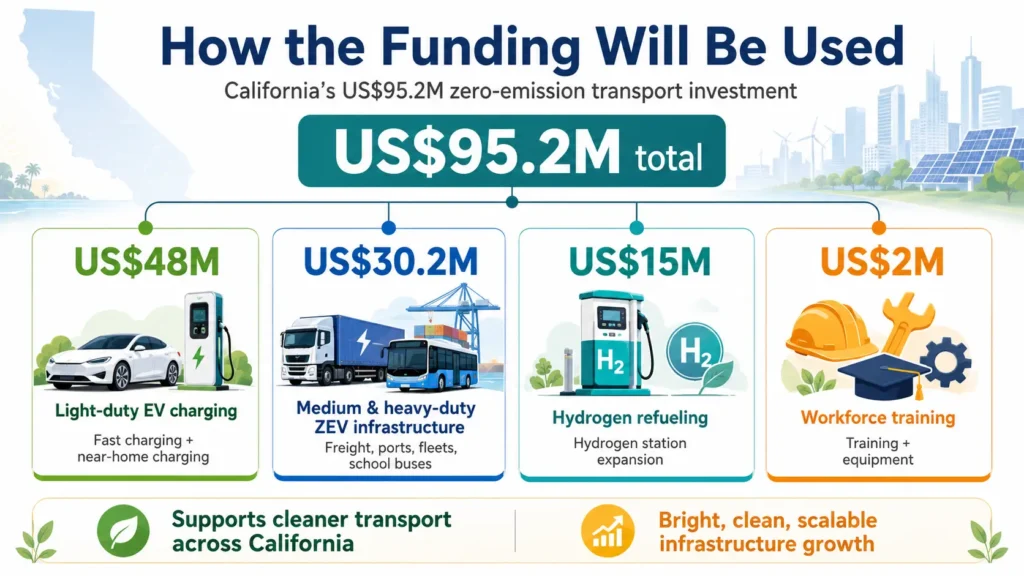
The $95.2 million investment is divided into four areas:
| Allocation | Purpose |
| $48 million | Light-duty EV charging infrastructure |
| $30.2 million | Medium- and heavy-duty ZEV infrastructure |
| $15 million | Hydrogen refueling |
| $2 million | ZEV workforce training |
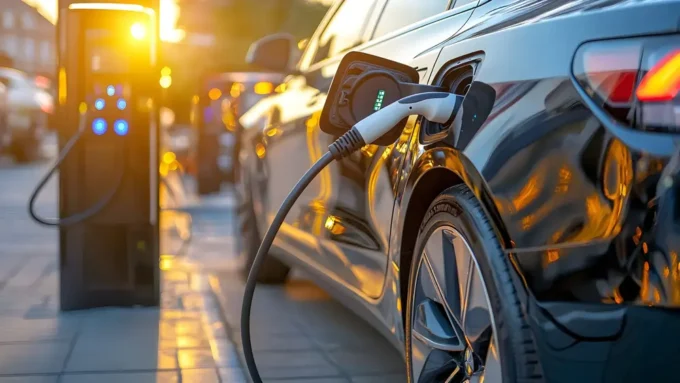
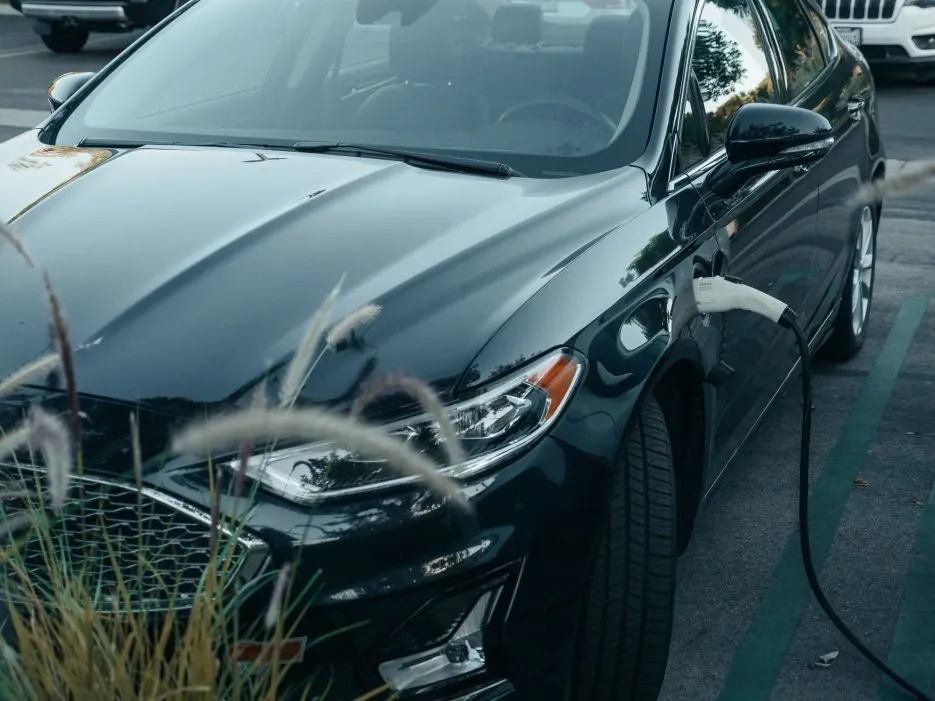
The $48 million allocation will support light-duty charging, including DC fast charging and at-home or near-home charging.
The $30.2 million for medium- and heavy-duty vehicles will support freight, ports, public fleets and school buses. Another $15 million will expand hydrogen refueling, while $2 million will support workforce training and equipment.
California Expands Its EV Charging Network
California already has one of the largest EV charging networks in the United States.
The state now has 216,445 publicly available and shared EV charging ports. It has also surpassed 20,000 DC fast chargers, helping drivers charge more quickly for longer journeys.
Since the Clean Transportation Program’s first investment plan in 2009, the programme has installed or planned more than 52,000 charging ports, including approximately 41,000 lower-power ports and more than 11,000 DC fast chargers.
California also has more than 800,000 estimated residential EV chargers, adding significant private charging capacity.
Heavy-Duty Vehicles and Hydrogen Receive Support
California’s zero-emission vehicles strategy extends beyond passenger cars.
The $30.2 million allocation for medium- and heavy-duty infrastructure will support freight vehicles, port operations, public fleets and school buses. These applications can require significantly more charging capacity because of higher energy consumption and intensive vehicle use.
The investment also includes $15 million for hydrogen refueling infrastructure. California has already supported more than 100 hydrogen stations for light-, medium- and heavy-duty fuel-cell electric vehicles.
Together, battery-electric and hydrogen infrastructure can help address different transportation requirements as the state reduces reliance on conventional fuels.
Context is everything. Stay ahead of shifting trends with today’s market updates, and uncover emerging opportunities using the Serrari Group Market Index and Marketplace. Then, take control of your own financial future by exploring our Money & Life Reset Transformation Blueprint ™ to build stronger habits, create better systems, and design a path toward lasting wealth.
Focus on Low-Income Communities
A significant portion of the EV infrastructure investment is directed toward disadvantaged communities.
At least 50% of Clean Transportation Program funds must support projects benefiting low-income Californians and residents of low-income or disadvantaged communities.
As of March 2026, more than 62% of Clean Transportation Program and supplemental funds had gone toward projects in disadvantaged or low-income communities.
The approach is designed to ensure that the benefits of cleaner transportation and improved charging access reach communities that may otherwise face greater barriers to EV adoption.
More Than $2.7 Billion Invested Since 2008
The latest funding builds on California’s long-term clean transportation strategy.
Since 2008, the Clean Transportation Program and supplemental state funding have provided more than $2.7 billion for ZEV infrastructure.
The programme has also funded more than 40 manufacturing projects supporting ZEVs, components and infrastructure, as well as more than 30 workforce training projects.
This means California’s strategy extends beyond charging stations. It also aims to strengthen manufacturing and develop workers for the growing clean transportation economy.
EV Rebates Complement Infrastructure Investment
The announcement follows California’s MyFirstEV programme, which provides rebates to eligible residents purchasing their first zero-emission vehicle.
The two initiatives address separate barriers to EV adoption. Rebates can reduce the upfront cost of purchasing an EV, while infrastructure investment improves access to charging and refueling.
By combining consumer incentives with infrastructure development, California is seeking to support both EV demand and the systems needed to serve a growing electric vehicle fleet.
Outlook
California’s $95.2 million EV infrastructure investment strengthens the state’s efforts to accelerate zero-emission transportation.
The funding will expand passenger-vehicle charging, support heavy-duty electrification, develop hydrogen refueling and strengthen the clean transportation workforce.
With 216,445 public and shared charging ports and more than $2.7 billion invested in ZEV infrastructure since 2008, California has already established a substantial foundation.
The next challenge will be ensuring infrastructure keeps pace with EV adoption and remains accessible across communities. Continued public and private investment could further strengthen California’s position as a leading market for electric and zero-emission mobility.
FAQs
1. How much is California investing in EV infrastructure?
California has approved $95.2 million for EV charging, hydrogen refueling, heavy-duty ZEV infrastructure and workforce development.
2. How will the $95.2 million be allocated?
It includes $48 million for light-duty EV charging, $30.2 million for heavy-duty ZEV infrastructure, $15 million for hydrogen refueling and $2 million for workforce training.
3. How many EV charging ports does California have?
California has 216,445 publicly available and shared EV charging ports, plus more than 800,000 estimated residential chargers.
4. Will disadvantaged communities benefit?
Yes. At least 50% of programme funds must benefit low-income and disadvantaged communities.
Sources: EV Infrastructure News, Governor Gavin Newsom, California Energy Commission
Your financial future isn’t something you wait for—it’s something you build.
The real question is: when do you begin?
Move beyond simply staying informed.
Navigate the markets with clarity—track trends through the Serrari Group Market Index, uncover opportunities in the Serrari Marketplace, and build practical knowledge with our Curated Wealth Builder Platform.
Stay connected to what truly matters.
Get daily insights on macro trends and financial movements across Kenya, Africa, and global markets—delivered through the Serrari Newsletter.
Growth opens doors.
Advance your career through professional programs including ACCA, HESI A2, ATI TEAS 7 , HESI EXIT , NCLEX – RN and NCLEX – PN, Financial Literacy!🌟—designed to move you forward with confidence.
See where money is flowing—clearly and in real time.
Track Money Market Funds, Treasury Bills, Treasury Bonds, Green Bonds, and Fixed Deposits, alongside global and African indexes, key economic indicators, and the evolving Crypto and stablecoin landscape—all within Serrari’s Market Index.