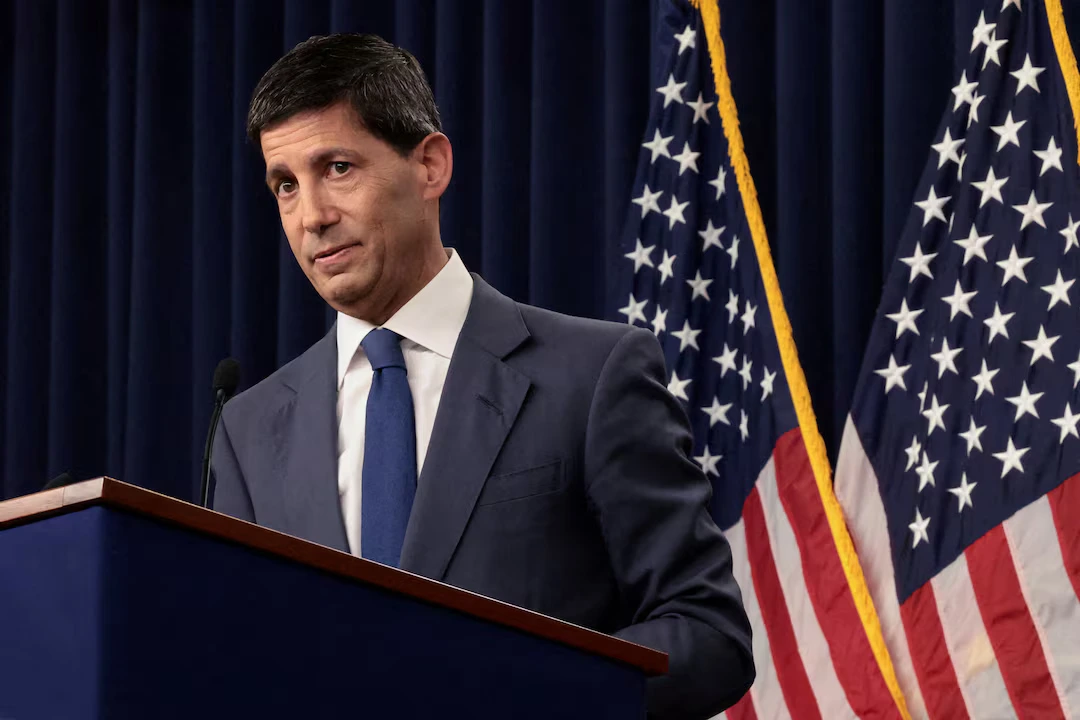
Bond market anxiety is raising the stakes for Federal Reserve Chairman Kevin Warsh’s first major speech at the annual Jackson Hole conference, with investors looking for clues about interest rates, persistent inflation and the recent rise in U.S. Treasury yields. Markets have increasingly questioned whether monetary policy is restrictive enough to return inflation sustainably to the Federal Reserve’s 2% target. Warsh’s remarks will also be closely examined for evidence of how he intends to protect the central bank’s policy independence while confronting changing structural forces across global capital markets.
Key Overview
Kevin Warsh enters his first Jackson Hole appearance as Fed chair with bond investors already demanding higher yields on U.S. government debt. Inflation has remained above the Fed’s 2% target for more than five years, strengthening arguments for tighter monetary policy. At the same time, rising government borrowing, artificial intelligence investment, ageing populations and changing global trade patterns are increasing competition for capital and potentially putting structural upward pressure on long-term interest rates.
Bond Market Anxiety Puts Warsh in the Spotlight
Federal Reserve Chairman Kevin Warsh faces one of his most closely watched speeches since taking charge of the U.S. central bank as he prepares to address the Jackson Hole economic policy conference.
The annual gathering has historically provided Fed leaders with an opportunity to signal significant changes in their thinking about the economy and monetary policy.
This year’s speech comes against a particularly sensitive backdrop.
Rising bond yields have indicated growing investor concern about inflation, government borrowing and the appropriate level of U.S. interest rates.
Warsh has suggested that his address could focus either on immediate policy questions or the broader principles shaping central-bank decision-making.
Markets will be paying attention to both.
Context is everything. Stay ahead of shifting trends with today’s market updates, and uncover emerging opportunities using the Serrari Group Market Index and Marketplace. Then, take control of your own financial future by exploring our Money & Life Reset Transformation Blueprint ™ to build stronger habits, create better systems, and design a path toward lasting wealth.
Inflation Keeps Pressure on the Federal Reserve
A central source of bond market anxiety is inflation.
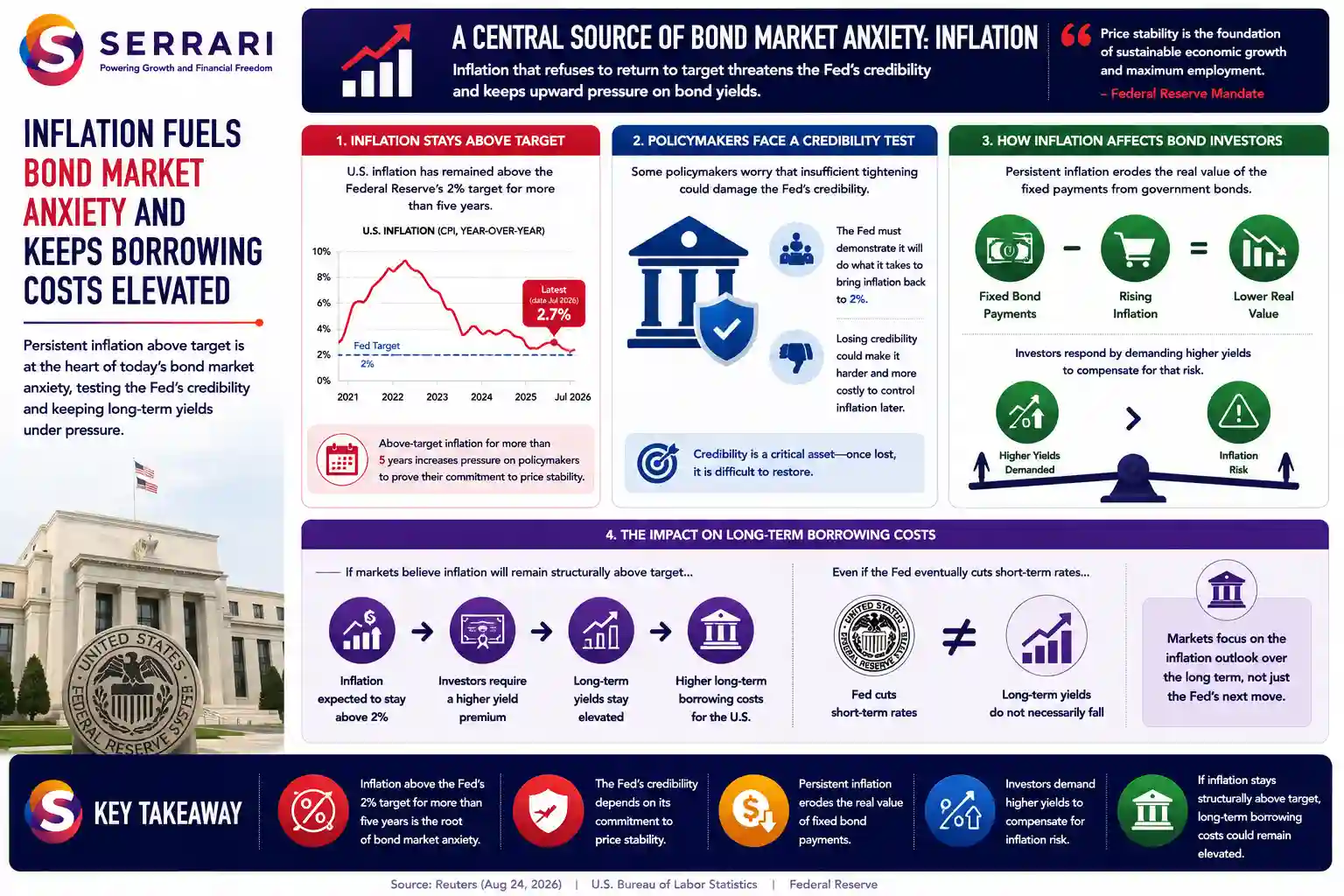
U.S. inflation has remained above the Federal Reserve’s 2% target for more than five years, increasing pressure on policymakers to demonstrate that they remain committed to price stability.
Some policymakers are concerned that failing to tighten monetary policy sufficiently could damage the Fed’s credibility.
That concern matters to the bond market because persistent inflation reduces the real value of the fixed payments investors receive from government securities.
Investors can respond by demanding higher yields to compensate for that risk.
If markets become convinced that inflation will remain structurally above target, long-term borrowing costs could remain elevated even if the Fed eventually reduces short-term rates.
U.S. Treasuries Reflect Changing Rate Expectations
The recent movement in U.S. Treasuries suggests investors are reassessing how restrictive monetary policy may need to become.
Normally, weaker economic conditions can increase demand for government bonds and push yields lower.
However, today’s market is balancing economic growth concerns against persistent inflation, substantial government borrowing and changing global demand for capital.
That makes Warsh’s communication particularly important.
A strongly inflation-focused speech could reinforce expectations that interest rates will remain elevated or potentially rise further.
A more cautious message could instead encourage investors to believe the Fed is increasingly concerned about economic growth.
Either outcome could generate significant moves across fixed-income markets.
Global Savings Dynamics Are Changing
The pressure on bonds extends beyond Federal Reserve policy.
Former Fed Chairman Ben Bernanke once described a “global savings glut” in which abundant global capital helped suppress market interest rates.
The environment confronting Warsh looks considerably different.
Government debt has expanded across many major economies, while ageing populations are increasing fiscal demands. Global trade and supply chains have also become more fragmented.
At the same time, companies are committing enormous amounts of capital to data centres, semiconductors, energy infrastructure and artificial intelligence.
Governments and companies are therefore competing for a finite pool of investment capital.
If demand for borrowing consistently grows faster than available savings, investors may require higher yields to provide that capital.
This could keep longer-term borrowing costs elevated independently of near-term Federal Reserve decisions.
Government Debt Adds Pressure to Fixed Income
Rising sovereign borrowing is another important factor for fixed income investors.
Governments issuing greater quantities of bonds increase the supply of securities that investors must absorb.
Higher supply does not automatically produce higher yields because demand matters as well. But persistent fiscal deficits combined with other large capital requirements can make investors more selective about the yields they are willing to accept.
That dynamic complicates the Federal Reserve’s position.
The central bank controls its short-term policy rate but does not directly determine long-term Treasury yields.
Long-term rates incorporate expectations for future inflation, economic growth, government borrowing and risk premiums.
Warsh must therefore communicate policy in a market increasingly influenced by forces outside the Fed’s immediate control.
Fed Independence Will Also Be Scrutinised
Warsh’s relationship with the Trump administration adds another dimension to his Jackson Hole appearance.
Investors generally value central-bank independence because monetary policy decisions made primarily to achieve political objectives can undermine confidence in inflation control.
Bond investors will consequently scrutinise Warsh’s language for signs that Federal Reserve decisions remain centred on economic conditions and the central bank’s mandate.
The issue is particularly sensitive when inflation remains above target.
Any perception that political considerations could prevent necessary monetary tightening could potentially increase inflation risk premiums and place additional upward pressure on long-term yields.
Jackson Hole Has a History of Moving Markets
The significance of Jackson Hole extends beyond the conference itself.
Federal Reserve chairs have previously used the gathering to communicate major policy shifts.
Former Chair Jerome Powell used Jackson Hole both to introduce changes to the Fed’s monetary policy framework and, in another appearance, to deliver a forceful commitment to fighting inflation.
Those speeches helped reshape market expectations.
Warsh now has an opportunity to establish his own communication style and explain how the Federal Reserve views today’s combination of inflation, fiscal pressures and changing global capital requirements.
Bond Investors Await Warsh’s Policy Signal
For bond investors, Warsh’s speech may help answer whether the Federal Reserve views higher long-term yields primarily as a temporary market adjustment or evidence of a deeper structural change.
The distinction matters.
If today’s elevated yields largely reflect persistent inflation, tighter monetary policy could eventually restore confidence and bring borrowing costs down.
But if they increasingly reflect structural forces—including government debt, ageing populations, fragmented trade and massive private investment requirements—long-term yields could remain higher even after inflation moderates.
That is why the current bond market anxiety extends beyond the next Fed meeting.
Warsh’s Jackson Hole debut represents an early opportunity to explain how the new Federal Reserve leadership intends to navigate a financial environment where inflation risks, fiscal pressures and global demand for capital are increasingly interconnected.
FAQs
Why is Kevin Warsh’s Jackson Hole speech important for bond markets?
Kevin Warsh’s speech is important because investors are seeking guidance on how the Federal Reserve intends to respond to persistent inflation and rising Treasury yields. His comments could influence expectations for future interest rates and therefore affect bond prices and yields.
What is causing bond market anxiety?
Bond market anxiety reflects several overlapping concerns, including inflation remaining above the Fed’s 2% target, rising government borrowing, increased competition for global capital and uncertainty about future monetary policy. Investors may demand higher yields when these risks increase.
How does inflation affect U.S. Treasury yields?
Persistent inflation can push Treasury yields higher because inflation reduces the purchasing power of future fixed-interest payments. Investors may therefore demand higher yields as compensation when they expect inflation to remain elevated.
Could U.S. bond yields remain high even if the Federal Reserve cuts rates?
Yes. Long-term Treasury yields are influenced by more than the Federal Reserve’s short-term policy rate. Inflation expectations, government debt issuance, economic growth, global capital demand and term premiums can keep long-term yields elevated even if the Fed eventually reduces short-term interest rates.
Your financial future isn’t something you wait for—it’s something you build.
The real question is: when do you begin?
Move beyond simply staying informed.
Navigate the markets with clarity—track trends through the Serrari Group Market Index, uncover opportunities in the Serrari Marketplace, and build practical knowledge with our Curated Wealth Builder Platform.
Stay connected to what truly matters.
Get daily insights on macro trends and financial movements across Kenya, Africa, and global markets—delivered through the Serrari Newsletter.
Growth opens doors.
Advance your career through professional programs including ACCA, HESI A2, ATI TEAS 7 , HESI EXIT , NCLEX – RN and NCLEX – PN, Financial Literacy!🌟—designed to move you forward with confidence.
See where money is flowing—clearly and in real time.
Track Money Market Funds, Treasury Bills, Treasury Bonds, Green Bonds, and Fixed Deposits, alongside global and African indexes, key economic indicators, and the evolving Crypto and stablecoin landscape—all within Serrari’s Market Index.