Malaysia is accelerating its transition toward a low-carbon energy system through increased investment in utility-scale solar infrastructure. Backed by institutional financing, projects like the Kampung Gajah solar plant highlight how capital deployment, policy frameworks, and regional partnerships are converging to reshape the country’s energy mix and reduce reliance on fossil fuels.
Key Overview
- AmBank Group provides RM102.4 million financing
- Supports 29.99 MWac large-scale solar (LSS5) project in Perak
- Total project value estimated at RM128 million
- Project expected to be operational by July 2027
- Aims to reduce fossil fuel dependence and strengthen energy security
- Part of Malaysia’s broader renewable energy expansion strategy
Financing a New Phase of Solar Expansion
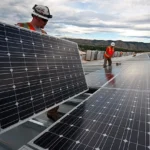
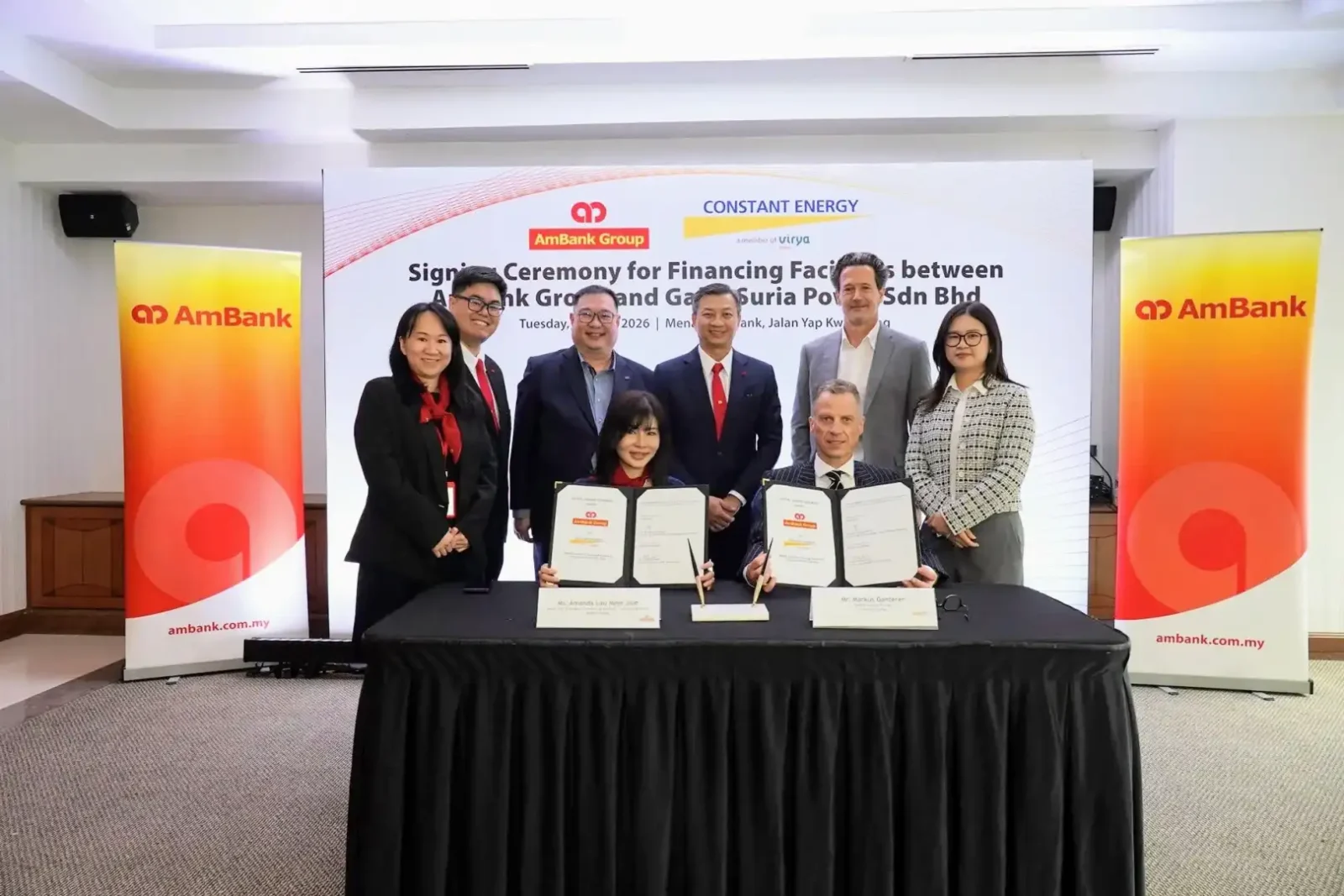
AmBank Group has extended RM102.40 million in financing facilities to Gajahsuria Power Sdn Bhd (GSP), supporting the development of a 29.99 MWac large-scale solar photovoltaic project in Kampung Gajah, Perak. The project forms part of Malaysia’s Large Scale Solar 5 (LSS5) programme, a flagship initiative aimed at accelerating renewable energy deployment and strengthening the country’s transition toward a more sustainable and diversified energy system.
This financing represents more than just capital provision—it is a critical enabler of infrastructure development in a sector that requires significant upfront investment and long development timelines. By supporting GSP at this stage, AmBank is helping to bridge the gap between project conception and execution, ensuring that key milestones such as procurement, construction, and commissioning can proceed without delay.
The financing will primarily cover working capital requirements as well as costs associated with engineering, procurement, construction, and long-term operations of the solar facility. This comprehensive funding structure ensures that the project is adequately resourced across all phases, reducing execution risk and enhancing overall project bankability.
With an estimated total project value of RM128 million, the initiative represents a substantial investment in Malaysia’s renewable energy infrastructure. It also reflects a broader shift in financial markets, where banks and institutional investors are increasingly prioritizing climate-aligned assets as part of their long-term portfolio strategies.
Importantly, the transaction signals growing confidence in the scalability and financial viability of solar energy projects in Malaysia. As regulatory frameworks become more robust and technology costs continue to decline, solar projects are increasingly viewed as stable, long-term assets capable of generating predictable returns.
This trend is indicative of a maturing renewable energy market, where projects are no longer seen as high-risk ventures but as essential components of national energy systems—attracting capital from both domestic and international investors.
Markets move fast; don’t get left behind. We’ve paired the Serrari Group Market Index with a curated Marketplace and a comprehensive Wealth Builder Platform to ensure you have the data—and the skills—to act on it.
Project Structure and Development Ecosystem
The solar plant is being developed through Gajahsuria Power Sdn Bhd, a special purpose vehicle (SPV) established specifically to manage the full lifecycle of the project. This includes development, financing, engineering, procurement, construction, commissioning, and ongoing operations and maintenance.
The use of an SPV structure is common in large-scale infrastructure projects, as it allows for clear allocation of responsibilities, risk management, and financial transparency. It also enables multiple stakeholders to collaborate effectively within a defined legal and operational framework.
The ownership structure reflects a strategic partnership among several experienced industry players, including Sun Energy Ventures Sdn Bhd, BayWa r.e. Energy Solutions Sdn Bhd, and Constant Energy Malaysia Holding Sdn Bhd (CEMH). Each partner brings distinct capabilities, ranging from project development and financing to technical expertise and operational management.
CEMH, part of Thailand-based Constant Energy, serves as the lead developer, overseeing project execution as well as long-term operations and maintenance. The company’s regional footprint—spanning over 260 MW of contracted capacity and more than 120 MWp of operational solar assets across Southeast Asia—positions it as a key player in the region’s renewable energy landscape.
This collaborative structure highlights a broader trend in renewable energy development, where partnerships between local and international players are becoming increasingly important. By combining local market knowledge with global expertise, such collaborations help mitigate risks, improve efficiency, and accelerate project delivery.
It also reflects the growing role of cross-border investment and knowledge transfer in Southeast Asia’s energy transition. As demand for clean energy continues to rise, regional cooperation is expected to play a critical role in scaling renewable energy deployment and building integrated energy systems.
LSS5 Programme and Policy-Driven Growth
The Kampung Gajah solar project was awarded under Malaysia’s LSS5 programme, administered by the national energy regulator. This programme is part of a broader series of competitive bidding initiatives designed to expand utility-scale solar capacity while ensuring cost efficiency, transparency, and high technical standards.
Malaysia’s LSS programmes have been instrumental in driving renewable energy growth over the past decade. By providing a structured and predictable framework for project development, these programmes have successfully attracted private sector participation and facilitated the scaling of solar infrastructure across the country.
Under LSS5, projects are awarded based on competitive pricing and technical capability, ensuring that only the most efficient and financially viable proposals are selected. This competitive approach has contributed to a steady decline in solar generation costs, making renewable energy increasingly competitive with conventional power sources.
In addition to cost reductions, the programme has also improved overall project quality by setting clear standards for design, construction, and operation. This has helped build investor confidence and strengthen the overall credibility of Malaysia’s renewable energy sector.
The Kampung Gajah project, with a capacity of 29.99 MWac, represents a continuation of this policy-driven growth. While modest in scale compared to some global solar projects, it plays an important role within the broader national strategy to increase the share of renewable energy in Malaysia’s power mix.
Looking ahead, initiatives such as LSS5 are expected to remain central to Malaysia’s energy transition, providing a scalable and replicable model for expanding renewable energy capacity while maintaining cost efficiency and system reliability.
Expanding Renewable Capacity and Grid Integration
Once operational—targeted for July 2027—the solar plant will generate clean electricity for Malaysia’s national grid, supporting Peninsular Malaysia’s transition toward a more diversified, resilient, and low-carbon energy system. As part of the Large Scale Solar 5 (LSS5) programme, the project contributes to a broader pipeline of renewable energy developments that are gradually reshaping the country’s power generation mix.
Large-scale solar projects such as this are playing an increasingly critical role in meeting rising electricity demand, particularly as economic growth, industrial activity, and urbanization continue to drive higher energy consumption. At the same time, they provide a pathway to reduce carbon emissions, supporting Malaysia’s climate commitments and long-term decarbonization strategy.
Beyond generation capacity, solar projects also have important implications for grid stability and system efficiency. When integrated with modern energy management systems, they can enhance the flexibility of the power system, enabling better balancing of supply and demand. This is particularly relevant as renewable energy sources, which are inherently variable, make up a growing share of total generation.
While the addition of nearly 30 MWac of solar capacity may appear modest on its own, its cumulative impact—alongside other LSS projects—becomes significant at the national level. Each new installation contributes incrementally to reducing reliance on fossil fuels and increasing the share of clean energy in the grid.
As solar penetration rises, grid operators will need to adapt to new operational dynamics, including variability in generation, peak load management, and the need for real-time system balancing. This transition is expected to drive further investment in grid modernization, including advanced transmission infrastructure, digital monitoring systems, and smart grid technologies.
In addition, the growing share of renewable energy is likely to accelerate the deployment of complementary solutions such as battery energy storage systems (BESS), which can store excess generation and release it during periods of high demand. Together, these developments are laying the foundation for a more flexible, efficient, and future-ready energy system.
Context is everything. While you follow today’s updates, use the Serrari Group Market Index and Marketplace to spot emerging shifts. Need to sharpen your edge? Our Wealth Builder Platform turns these insights into a professional-grade strategy.
Energy Security and Fossil Fuel Displacement
One of the most significant implications of the Kampung Gajah project lies in its contribution to strengthening Malaysia’s energy security. Historically, the country’s energy system has relied heavily on fossil fuels, particularly natural gas and coal, which are subject to global price volatility and supply chain risks.
In an increasingly uncertain global energy environment—characterized by geopolitical tensions, fluctuating fuel prices, and shifting trade dynamics—this reliance exposes the country to external shocks that can impact both energy costs and supply stability.
By expanding solar capacity, Malaysia can reduce its dependence on imported fuels and diversify its energy mix, thereby enhancing resilience against global market disruptions. Solar energy, unlike fossil fuels, is domestically available and not subject to international price fluctuations, providing a more stable and predictable source of power.
This transition is particularly important in the context of long-term energy planning. As demand for electricity continues to grow, ensuring a secure and reliable energy supply becomes a critical priority. Renewable energy sources such as solar can play a key role in meeting this demand while reducing exposure to external risks.
At the same time, the shift toward solar energy supports Malaysia’s broader decarbonization goals. By replacing fossil fuel-based generation with clean energy, the country can reduce greenhouse gas emissions and align with global climate targets.
In this context, projects like Kampung Gajah are not merely infrastructure developments—they represent strategic investments in national energy resilience. They contribute to building a more self-sufficient energy system, capable of withstanding external shocks while supporting sustainable economic growth.
Economic and Social Impact
Beyond its direct energy benefits, the Kampung Gajah solar project is expected to deliver meaningful economic and social value, particularly at the local level. During the construction phase, the project will create employment opportunities, supporting job creation and contributing to economic activity in the surrounding region of Perak.
These opportunities extend beyond construction, as the project will also require skilled labor for engineering, installation, and technical services. This can help build local expertise in renewable energy, contributing to workforce development and capacity building within the sector.
In the long term, the solar plant will generate stable revenue streams while supporting ongoing economic activity through operations and maintenance. This includes roles in plant management, system monitoring, and maintenance services, which provide sustained employment and economic contributions over the project’s lifecycle.
Additionally, the project supports the growth of a domestic renewable energy ecosystem. By driving demand for components, services, and technical expertise, it contributes to the development of local supply chains and encourages investment in related industries.
The involvement of international partners also facilitates knowledge transfer, enabling local stakeholders to benefit from global best practices and technological advancements. This can enhance the overall competitiveness of Malaysia’s renewable energy sector and position it for future growth.
More broadly, the project aligns with national economic objectives that emphasize sustainable development and industrial transformation. Clean energy investments are increasingly recognized as key drivers of long-term growth, offering opportunities to create jobs, attract investment, and build resilient economic systems.
In this way, the Kampung Gajah solar project exemplifies how energy infrastructure can deliver not only environmental benefits but also tangible economic and social outcomes—supporting a more inclusive and sustainable development pathway.
Financing the Energy Transition
The involvement of AmBank Group underscores the critical role of financial institutions in enabling the energy transition. As renewable energy projects require significant upfront capital, access to financing is often a key determinant of project viability.
By providing RM102.40 million in funding, AmBank is helping bridge this gap, enabling the deployment of infrastructure that might otherwise face delays or constraints.
This reflects a broader trend in the financial sector, where banks and investors are increasingly aligning their portfolios with sustainability objectives. Green financing, climate-linked investments, and ESG-driven strategies are becoming central to capital allocation decisions.
AmBank’s participation also signals confidence in the long-term viability of solar energy projects in Malaysia, reinforcing the role of private capital in scaling renewable energy deployment.
Regional Context: Southeast Asia’s Energy Transition
The project also fits within a broader regional context, as Southeast Asia accelerates its transition toward cleaner energy. Countries across the region are investing heavily in renewables to meet rising demand, reduce emissions, and enhance energy security.
Constant Energy’s growing presence in Southeast Asia highlights the increasing importance of regional developers in driving this transition. With operations spanning multiple countries, the company is well-positioned to scale renewable energy solutions across diverse markets.
Malaysia, in particular, is emerging as a key market for solar energy, supported by strong policy frameworks, favorable conditions, and increasing investor interest.
Outlook: Scaling Solar and Clean Energy Investment
The Kampung Gajah solar project represents a significant step forward in Malaysia’s renewable energy journey, but it is also part of a much larger transformation underway in the country’s energy sector.
In the near term, the focus will be on successful project execution, including securing supply chains, completing construction, and integrating the plant into the grid. Continued access to financing will be essential to ensure that similar projects can be developed at scale.
Over the longer term, Malaysia is expected to continue expanding its renewable energy capacity, driven by policy support, technological advancements, and growing demand for clean electricity.
Large-scale solar projects will remain a central pillar of this strategy, complemented by investments in energy storage, grid infrastructure, and digital systems.
Ultimately, initiatives like the Kampung Gajah project demonstrate how coordinated efforts between governments, financial institutions, and private developers can accelerate the energy transition.
As the global energy landscape evolves, Malaysia’s ability to scale renewable energy infrastructure will play a key role in shaping a more sustainable, resilient, and low-carbon future.
Your financial future isn’t something you wait for—it’s something you build.
The real question is: when do you begin?
Move beyond simply staying informed.
Navigate the markets with clarity—track trends through the Serrari Group Market Index, uncover opportunities in the Serrari Marketplace, and build practical knowledge with our Curated Wealth Builder Platform.
Stay connected to what truly matters.
Get daily insights on macro trends and financial movements across Kenya, Africa, and global markets—delivered through the Serrari Newsletter.
Growth opens doors.
Advance your career through professional programs including ACCA,HESI A2,ATI TEAS 7,HESI EXIT ,NCLEX – RNandNCLEX – PN, Financial Literacy!🌟—designed to move you forward with confidence.
See where money is flowing—clearly and in real time.
Track Money Market Funds, Treasury Bills, Treasury Bonds, Green Bonds, and Fixed Deposits, alongside global and African indexes, key economic indicators, and the evolving Crypto and stablecoin landscape—all withinSerrari’s Market Index.