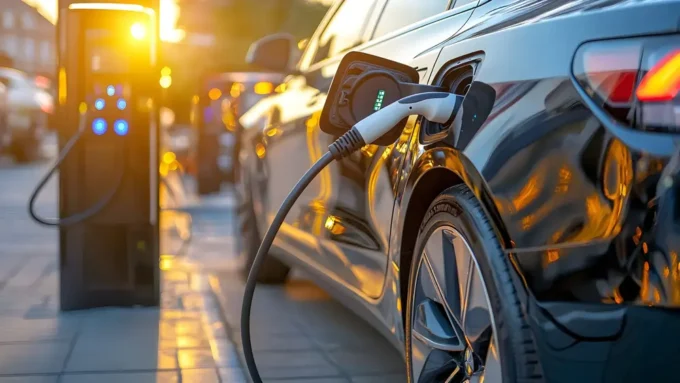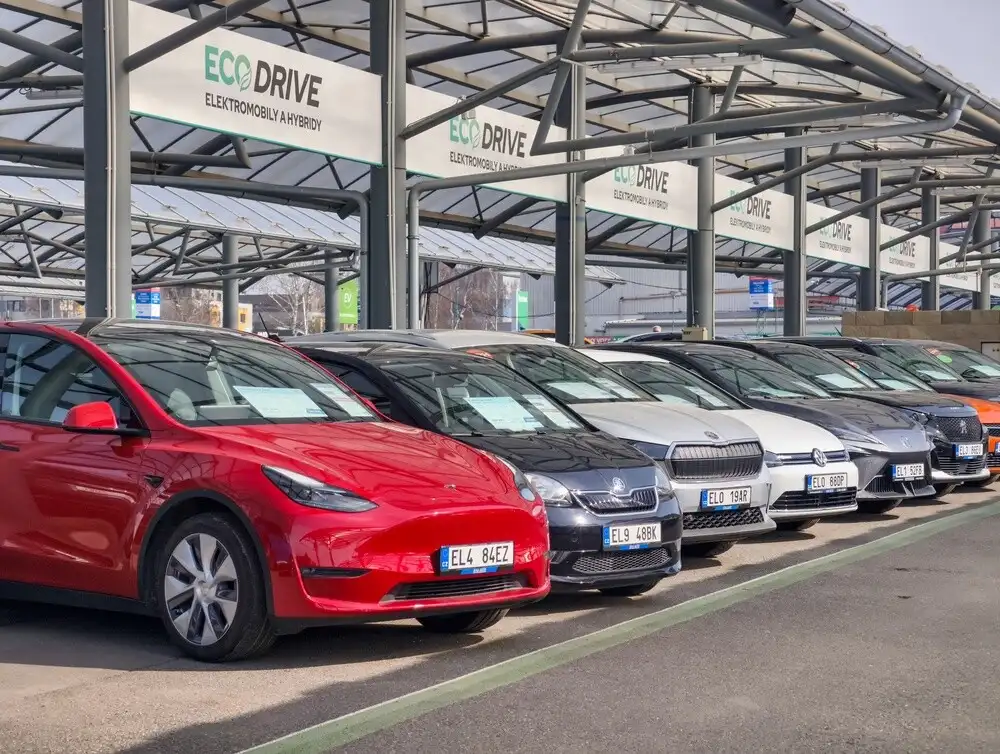
Electric vehicle demand across Europe is accelerating sharply, with EV sales jumping to 51% as rising fuel prices push consumers away from petrol-powered cars. The surge reflects a growing sensitivity among consumers to energy costs, as higher petrol and diesel prices make the long-term economics of electric vehicles increasingly attractive.
Beyond short-term cost considerations, the trend also signals a broader shift in market behavior, where buyers are factoring in energy security, price stability, and sustainability when making purchasing decisions. As a result, electric vehicles are no longer seen as niche alternatives but as practical, cost-efficient options for mainstream consumers.
The rapid increase in demand highlights how external shocks—particularly those linked to global energy markets—can accelerate structural transitions already underway, effectively fast-tracking Europe’s shift toward electrified mobility and reducing reliance on fossil fuels.
Key Overview
- EV sales in Europe jump 51% in March
- Over 224,000 EVs registered in a single month
- 500,000+ EVs sold in Q1 2026 (+33.5% YoY)
- EVs account for ~22% of new car sales
- Fuel price spike linked to Middle East tensions drives shift
- Major markets post 40%+ growth, led by Germany, France, and Italy
EV Boom Driven by Fuel Price Shock
Electric vehicle (EV) sales across Europe surged dramatically in March, rising by more than 51% year-on-year as soaring fuel prices reshaped consumer behavior across the region. The sharp increase in demand coincides with heightened geopolitical tensions in the Middle East, which disrupted global oil supply chains and pushed petrol and diesel prices to multi-year highs, directly impacting household transportation costs.
As fuel prices climbed, consumers began to reassess the economics of vehicle ownership, with many shifting toward electric alternatives that offer greater cost stability and lower running expenses. This change in purchasing behavior reflects a growing awareness of total cost of ownership, rather than just upfront vehicle price, as a key decision factor.
More than 224,000 new battery electric vehicles were registered during the month across key European markets, accounting for roughly 22% of all new car sales. This means that nearly one in every four cars sold in March was electric—an important milestone that underscores how quickly electrification is moving into the mainstream.
The surge highlights the powerful role that external economic shocks can play in accelerating existing trends. While the shift toward electric mobility has been underway for years, driven by policy and technological advancements, the recent spike in fuel prices has significantly intensified the pace of adoption.
More broadly, the situation illustrates how energy market volatility can act as a catalyst for long-term structural change. As consumers seek to reduce exposure to fluctuating fuel costs, electric vehicles are increasingly seen as a stable, forward-looking alternative that aligns with both economic and environmental priorities.
Markets move fast; don’t get left behind. We’ve paired the Serrari Group Market Index with a curated Marketplace and a comprehensive Wealth Builder Platform to ensure you have the data—and the skills—to act on it.
Strong Quarterly Growth Signals Structural Shift
The momentum seen in March extended across the entire first quarter, with total EV registrations surpassing 500,000 units in the first three months of 2026. This represents a 33.5% increase compared to the same period last year, pointing to a sustained and broad-based acceleration in demand rather than a short-term spike.
Across key European Union and European Free Trade Association (EFTA) markets, battery electric vehicles accounted for more than 21% of all new registrations, reflecting a significant shift in the composition of the automotive market. This level of penetration indicates that EVs are moving beyond early adopters and becoming a mainstream choice for a growing share of consumers.
Importantly, analysts suggest that this growth is not merely cyclical but structural in nature. A combination of rising fuel costs, supportive government policies, and improving EV economics is reshaping long-term consumer preferences. Advances in battery technology, increased driving range, and the expansion of charging infrastructure are further reinforcing this shift.
In addition, the transition is being supported by broader policy frameworks across Europe, including emissions regulations and climate targets that encourage the adoption of low-emission vehicles. Together, these factors are creating a reinforcing cycle that continues to drive EV uptake.
As a result, the data points to a fundamental transformation of the automotive market—one in which electric vehicles are steadily replacing internal combustion engine vehicles as the dominant form of mobility.
Major Markets Drive Growth
Europe’s largest automotive markets played a central role in driving EV adoption, with countries such as Germany, France, Spain, Italy, and Poland all recording EV growth exceeding 40% in the first quarter.
These markets collectively account for a significant share of Europe’s total vehicle sales, making their performance particularly influential in shaping overall trends. The strong growth across all five countries indicates that the shift toward electrification is not limited to niche markets but is occurring at scale across the continent’s largest economies.
Germany, Europe’s largest car market, saw EV sales rise by around 42%, supported by renewed government incentives, increased domestic production, and a growing portfolio of locally manufactured electric models. France also continued its strong performance, driven by policy support and innovative programs aimed at improving affordability, such as leasing initiatives.
Italy, long considered a slower adopter of electric vehicles, posted one of the fastest growth rates at approximately 65% year-on-year. This sharp increase highlights how quickly adoption can accelerate when economic incentives align with rising fuel costs and improving infrastructure.
Spain and Poland also contributed to the overall growth trend, demonstrating that EV adoption is expanding across a diverse range of markets with varying levels of maturity.
Nordic Countries Lead Electrification
Northern European countries continue to set the global benchmark for EV adoption, demonstrating what is possible when strong policy support is combined with favorable economic conditions and advanced infrastructure.
Norway remains the clear leader, with approximately 98% of new car sales in March being fully electric—a level of adoption unmatched anywhere else in the world. This reflects years of consistent policy support, including tax incentives, subsidies, and investments in charging infrastructure.
Denmark followed with around 76% EV penetration, while Finland approached the 50% mark, highlighting strong adoption across the Nordic region.
These markets benefit from a combination of high income levels, strong government backing, and widespread availability of charging infrastructure, which together create ideal conditions for rapid electrification. In addition, high levels of environmental awareness and supportive regulatory frameworks have further accelerated adoption.
The Nordic experience provides a clear roadmap for other countries seeking to scale EV adoption. It demonstrates that with the right mix of policy, infrastructure, and market conditions, electric vehicles can quickly become the dominant choice for consumers.
Context is everything. While you follow today’s updates, use the Serrari Group Market Index and Marketplace to spot emerging shifts. Need to sharpen your edge? Our Wealth Builder Platform turns these insights into a professional-grade strategy.
Energy Security Becomes a Key Driver
Beyond environmental considerations, the surge in EV demand is increasingly being driven by energy security concerns. Europe’s long-standing dependence on imported fossil fuels has been sharply exposed amid recent geopolitical instability, particularly disruptions affecting global oil supply chains. This has prompted both consumers and policymakers to reassess the risks associated with reliance on petrol and diesel.
As fuel prices rise and volatility persists, electric vehicles are emerging not only as a cleaner alternative but also as a more stable and predictable energy solution. Unlike petrol-powered vehicles, EVs can be powered by domestically generated electricity, including renewable sources such as wind and solar, reducing exposure to global commodity price fluctuations.
Industry estimates suggest that the more than half a million EVs registered in the first quarter alone could reduce oil consumption by approximately two million barrels annually. This highlights the broader macroeconomic implications of the transition, particularly in terms of reducing import dependence and improving trade balances.
The shift also reflects a growing recognition that transport electrification plays a critical role in strengthening national energy resilience. By diversifying energy sources and integrating transport with the electricity system, countries can better manage external shocks and build more secure, self-sufficient energy systems.
As a result, EV adoption is increasingly being framed not just as a climate solution, but as a strategic priority for energy security—aligning environmental goals with economic and geopolitical considerations.
Shifting Market Dynamics and Automaker Response
The rapid acceleration in EV demand is fundamentally reshaping competitive dynamics across the automotive industry. Established manufacturers are facing increasing pressure to accelerate their electrification strategies, even as they navigate cost challenges, supply chain constraints, and evolving regulatory environments.
While some traditional automakers had previously slowed or reassessed their EV investment plans due to concerns over profitability and demand uncertainty, the recent surge in consumer interest is prompting a strategic recalibration. Companies are now under renewed pressure to expand their electric portfolios, scale production, and invest in next-generation technologies.
At the same time, competition is intensifying from both new entrants and international players, particularly from manufacturers that have built their strategies around electric mobility from the outset. This growing competition is driving innovation across the sector, leading to improvements in battery technology, vehicle performance, and cost efficiency.
Production trends are also evolving rapidly. A growing share of EVs sold in Europe is now being manufactured locally, particularly in Germany, reflecting increased investment in domestic production capacity. This shift is strengthening regional supply chains, reducing dependence on imports, and supporting job creation within the European automotive industry.
In parallel, automakers are investing heavily in battery manufacturing, software development, and digital ecosystems, recognizing that the future of mobility will be defined not only by electrification but also by connectivity and technological integration.
Outlook: EV Transition Gains Momentum
The latest data confirms that Europe’s transition toward electric mobility is accelerating at a decisive pace, driven by a convergence of economic, technological, and geopolitical factors. What was once a gradual shift is now becoming a rapid transformation of the automotive landscape.
In the near term, fuel price volatility is expected to remain a key driver of consumer behavior. As petrol and diesel costs fluctuate, the economic advantages of electric vehicles—particularly in terms of operating costs—are likely to sustain strong demand. Continued expansion of charging infrastructure, along with improvements in battery performance and vehicle affordability, will further support adoption across a broader consumer base.
At the same time, policy support across Europe is expected to remain strong, with governments continuing to implement measures aimed at reducing emissions and accelerating the transition to low-carbon transport. These policies, combined with private sector investment, will help create a more supportive ecosystem for EV growth.
Over the longer term, the ongoing decline of internal combustion engine vehicles and the rapid rise of electrified alternatives point to a fundamental restructuring of the automotive industry. This transformation extends beyond vehicle sales, impacting supply chains, manufacturing processes, and the broader energy system.
As Europe moves closer to its climate and energy targets, electric vehicles are set to become the dominant force shaping the future of mobility. The transition represents not only a shift toward cleaner transport but also a move toward more resilient, efficient, and sustainable energy systems—marking a defining moment in the evolution of the global automotive sector.
Your financial future isn’t something you wait for—it’s something you build.
The real question is: when do you begin?
Move beyond simply staying informed.
Navigate the markets with clarity—track trends through the Serrari Group Market Index, uncover opportunities in the Serrari Marketplace, and build practical knowledge with our Curated Wealth Builder Platform.
Stay connected to what truly matters.
Get daily insights on macro trends and financial movements across Kenya, Africa, and global markets—delivered through the Serrari Newsletter.
Growth opens doors.
Advance your career through professional programs including ACCA, HESI A2, ATI TEAS 7 , HESI EXIT , NCLEX – RN and NCLEX – PN, Financial Literacy!🌟—designed to move you forward with confidence.
See where money is flowing—clearly and in real time.
Track Money Market Funds, Treasury Bills, Treasury Bonds, Green Bonds, and Fixed Deposits, alongside global and African indexes, key economic indicators, and the evolving Crypto and stablecoin landscape—all within Serrari’s Market Index.