Syria’s Ministry of Energy has launched a Renewable Energy Master Plan in partnership with the Norwegian government and the United Nations Development Programme (UNDP), establishing a framework for developing the country’s renewable energy sector and guiding future investment. Unveiled in Damascus on 23 November 2026, the plan assesses Syria’s potential for solar, wind and biomass energy while identifying priorities for expanding renewable electricity projects. Its implementation will require a unified national energy database, stronger technical expertise within national institutions and improved planning tools. The initiative comes as Syria seeks to develop its energy sector during reconstruction, strengthen energy security, reduce dependence on energy imports and attract investment in cleaner electricity generation.
Key Takeaways
- Syria’s Ministry of Energy launched its Renewable Energy Master Plan on 23 November 2026 in partnership with Norway and UNDP.
- The plan identifies solar, wind and biomass as key renewable energy sources for development.
- A unified national energy database and stronger technical capacity are among the main implementation priorities.
- The plan is intended to guide future investment and be integrated into Syria’s wider Electricity Master Plan.
- Its objectives include improving energy security, reducing dependence on energy imports and strengthening the reliability and accessibility of energy supplies.
- Syria’s renewed engagement with the International Renewable Energy Agency (IRENA) forms part of its wider international cooperation on energy development.
- No specific renewable generation capacity targets, project budgets or implementation timetable were announced at the launch.
Syria Launches Renewable Energy Master Plan with Norway and UNDP
Syria’s Ministry of Energy has launched a national Renewable Energy Master Plan in partnership with the Government of Norway and the United Nations Development Programme (UNDP), setting out priorities for developing the country’s renewable energy sector and guiding future investment.
The plan was unveiled at an event in Damascus on 23 November 2026, attended by Deputy Minister of Energy for Planning and Institutional Excellence Ibrahim al-Adhan, Norwegian Ambassador to Syria Hilde Haraldstad and UNDP Resident Representative Melanie Hauenstein.
Also present were Talal Kanaan, adviser on energy and environmental affairs at the Ministry of Foreign Affairs and Expatriates, and Firas Kardoush, director of international cooperation at the Ministry of Energy.
The event featured a joint presentation by the Ministry of Energy and consulting firm MRC, covering the current state of the energy sector, the challenges facing its development, the plan’s key findings and recommendations, and priorities for expanding renewable energy projects.
The master plan is intended to provide a framework for identifying renewable energy opportunities, assessing investment priorities and determining the technical and institutional requirements needed to expand clean electricity generation.
It also forms part of a wider effort to integrate renewable energy development into Syria’s national electricity planning.
Why Syria Needs a Renewable Energy Master Plan
The launch comes as Syria seeks to develop its energy sector during the country’s reconstruction phase.
Developing renewable energy requires more than identifying locations with strong solar or wind resources. Governments also need reliable information on electricity demand, generation capacity, grid infrastructure, financing requirements and the technical capabilities needed to deliver projects.
The new master plan seeks to address these planning requirements by assessing Syria’s renewable energy potential and identifying the steps needed to expand its use.
According to UNDP, the plan is intended to examine projections for Syria’s future energy demand, determine the share that renewable energy sources could meet, and review relevant regulatory and legislative frameworks in line with international best practices.
This is important because investment decisions need to reflect both the country’s future electricity requirements and the ability of its infrastructure to support additional generation.
Without coordinated planning, renewable energy projects could be developed without sufficient consideration of transmission and distribution capacity, financing requirements or the needs of electricity consumers.
The plan therefore seeks to establish a more structured basis for deciding which projects should be prioritised and how they can be incorporated into the wider energy system.
Solar, Wind and Biomass Identified as Renewable Energy Priorities
The master plan assesses Syria’s renewable energy potential, particularly in three areas: solar, wind and biomass.
These sources form the basis of the plan’s strategic framework for expanding renewable energy use and identifying priority programmes.
The document also considers the requirements for integrating renewable energy projects into electricity transmission and distribution networks, ensuring that additional electricity generation is consistent with the grid’s ability to absorb and deliver power to consumers.
This is a critical part of renewable energy development. Building generation capacity alone does not guarantee that electricity can be reliably delivered. Transmission networks, distribution infrastructure and system planning must also support the additional supply.
The plan therefore identifies technical and institutional requirements for developing long-term policies and establishing indicators and benchmarks to monitor progress towards renewable energy targets.
It also highlights the importance of partnerships with academic institutions to train specialists and strengthen technical expertise in the sector.
According to UNDP, the broader objectives include improving the reliability and accessibility of energy supplies across different regions, reducing dependence on energy imports, strengthening energy security and promoting the sustainable and efficient use of resources over the long term.
The plan also aims to support employment opportunities and local institutional development, improve environmental sustainability and reduce greenhouse gas emissions.
A Unified National Energy Database Is Central to Implementation
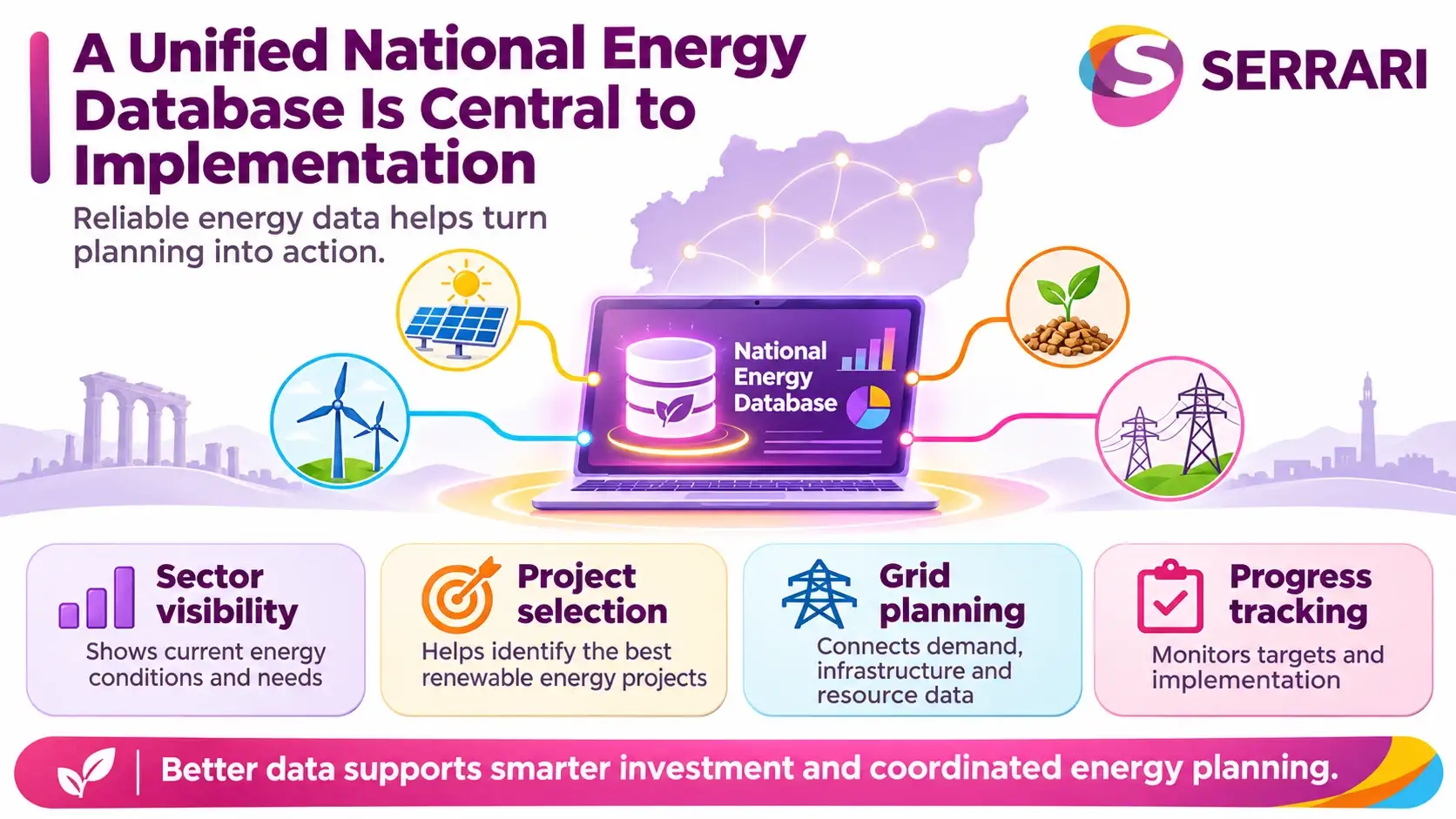
One of the most important priorities identified in the plan is the establishment of a unified national energy database.
The Ministry of Energy has identified launching a national programme to establish a unified energy data platform as a key requirement for moving from planning to implementation.
The database is intended to provide reliable information on the sector’s current conditions and needs, helping institutions assess renewable energy potential, select suitable projects and monitor progress towards established targets.
This matters because energy investment decisions depend on accurate and regularly updated information.
For example, assessing where renewable energy projects should be developed requires information about electricity demand, existing infrastructure, available resources and the capacity of the grid to accommodate new generation.
A unified platform could help bring this information together and support more coordinated decision-making across national institutions.
The plan also assigns national institutions responsibility for periodically updating its recommendations and translating them into actionable programmes and projects.
This means implementation will depend not only on the initial document but also on whether institutions can maintain the database, analyse new information and adjust priorities as conditions change.
Building Local Technical Expertise to Support Renewable Energy Projects
Alongside data development, the plan identifies strengthening national technical capacity as another major implementation priority.
This includes developing the skills of national personnel in planning, technical analysis and renewable energy project development.
The initiative also seeks to strengthen planning tools and technical cooperation to facilitate regular updates to the master plan and guide future investment.
These capabilities will be important as Syria moves from identifying renewable energy opportunities to assessing, preparing and managing actual projects.
The agreement with Norway and UNDP also includes support for building technical capacity in renewable energy technologies and project management, alongside partnerships with academic institutions to train personnel capable of working in the sector.
Strengthening local expertise could help national institutions take greater responsibility for energy planning and project implementation over time.
It also supports the plan’s objective of developing local institutions and employment opportunities rather than relying exclusively on external technical support.
Context is everything. Stay ahead of shifting trends with today’s market updates, and uncover emerging opportunities using the Serrari Group Market Index and Marketplace. Then, take control of your own financial future by exploring our Money & Life Reset Transformation Blueprint ™ to build stronger habits, create better systems, and design a path toward lasting wealth.
Norway and UNDP Partnership Dates Back to May 2025
The launch follows a framework agreement signed by the Norwegian government and UNDP on 22 May 2025 to develop a Renewable Energy Master Plan for Syria.
The agreement provided for the preparation of the plan over 12 months.
At the time, UNDP explained that the document would be integrated into Syria’s wider Electricity Master Plan to coordinate policies on energy security and efficiency.
It was also intended to assess the financial requirements and investment options needed to meet projected electricity demand, identify renewable energy potential and establish priority programmes.
The partnership included support for technical capacity development, renewable energy technologies, project management and cooperation with academic institutions.
The November 2026 launch marks the presentation of the completed planning framework. However, the next stage will involve translating its recommendations into projects, identifying financing and strengthening the institutions responsible for implementation.
The Ministry of Energy did not announce specific generation capacity targets, project budgets or a timetable for implementing individual renewable energy projects at the launch.
Syria Renews Engagement with International Renewable Energy Bodies
The master plan’s launch also comes as Syria seeks to strengthen international cooperation and benefit from global expertise and technologies to support the development of its energy sector.
On 22 October 2026, Syria participated for the first time since joining the International Renewable Energy Agency (IRENA) in the agency’s 32nd Council meeting in Abu Dhabi.
The meeting addressed cooperation priorities in renewable energy and ways to benefit from international expertise and technologies.
This renewed engagement is relevant because developing renewable energy requires technical knowledge, investment partnerships and access to experience from countries and institutions that have already implemented similar projects.
The partnership with Norway and UNDP and Syria’s participation in IRENA activities represent different parts of this international cooperation effort.
However, participation in international forums and the launch of a master plan do not automatically translate into funded projects. Their impact will depend on the partnerships, technical support and investment arrangements that follow.
The Bigger Picture: Renewable Energy as Part of Syria’s Energy Reconstruction
Syria’s Renewable Energy Master Plan reflects a broader effort to incorporate clean energy into the development and reconstruction of its electricity sector.
The plan is not limited to identifying solar, wind and biomass opportunities. It also addresses the institutional, technical and infrastructure requirements needed to make renewable energy projects viable.
This wider approach matters because expanding renewable electricity generation requires coordinated investment across several parts of the energy system.
Generation facilities must connect to electricity networks, national institutions need the capacity to plan and manage projects, and investors require reliable information to assess opportunities.
The plan also identifies the need to avoid unnecessary investments in ageing infrastructure that may not be suitable for the transition to renewable energy sources, while making use of modern technologies to develop new sectors and industries.
If implemented, this approach could influence how future energy investments are prioritised, including the balance between existing infrastructure and new renewable energy development.
The potential benefits extend beyond electricity generation. UNDP identifies improved energy security, reduced dependence on imports, employment opportunities, lower greenhouse gas emissions and more sustainable resource use among the plan’s objectives.
Nevertheless, these remain intended outcomes. Their achievement will depend on financing, project selection, infrastructure readiness and the ability of national institutions to implement the framework.
Why Does This Matter Now?
The timing is important because Syria has now moved from the agreement to develop a renewable energy master plan to presenting a framework that identifies sector priorities and implementation requirements.
The country is seeking to develop its energy sector during reconstruction, making decisions about future electricity infrastructure and investment particularly significant.
The master plan provides a basis for assessing where renewable energy could contribute to future demand and what needs to happen before projects can be implemented.
For investors and development partners, the framework could help clarify the country’s renewable energy priorities and the technical requirements that need to be addressed.
For national institutions, the emphasis on a unified energy database and stronger technical capacity highlights the work required to turn recommendations into projects.
The immediate challenge is therefore implementation. Without reliable data, financing, skilled personnel and adequate electricity networks, the plan’s renewable energy ambitions cannot be translated into additional electricity supply.
Outlook
Syria’s Renewable Energy Master Plan establishes a framework for expanding solar, wind and biomass energy while strengthening the planning and institutional systems needed to support future projects.
The next developments to watch include the establishment of the unified national energy database, the development of technical capacity within national institutions and the identification of priority renewable energy programmes.
Further clarity will also be needed on financing requirements, project selection, generation capacity targets and implementation timelines.
The Ministry of Energy has not yet announced specific projects or capacity targets arising from the plan. Its practical impact will therefore depend on whether the government and its international partners can mobilise the resources and technical expertise required to move from planning to implementation.
For now, the launch represents an important planning step in Syria’s renewable energy development. The real test will be whether the framework leads to funded projects, stronger electricity infrastructure and more reliable energy supplies.
Frequently Asked Questions
1. What is Syria’s Renewable Energy Master Plan?
It is a national framework developed by Syria’s Ministry of Energy in partnership with Norway and UNDP to identify renewable energy priorities, guide future investment and support the expansion of solar, wind and biomass projects.
2. Which renewable energy sources does the plan prioritise?
The plan assesses Syria’s potential for solar, wind and biomass energy and identifies the technical and institutional requirements needed to expand their use.
3. Why is Syria establishing a unified national energy database?
The database is intended to provide reliable information on the energy sector’s conditions and needs, support renewable energy project selection, improve planning and help institutions monitor progress towards established targets.
4. Have specific renewable energy projects or investment targets been announced?
No. The Ministry of Energy’s launch announcement did not specify generation capacity targets, project budgets or implementation timelines for individual projects. The plan currently provides a strategic framework and identifies implementation priorities.
Your financial future isn’t something you wait for—it’s something you build.
The real question is: when do you begin?
Move beyond simply staying informed.
Navigate the markets with clarity—track trends through the Serrari Group Market Index, uncover opportunities in the Serrari Marketplace, and build practical knowledge with our Curated Wealth Builder Platform.
Stay connected to what truly matters.
Get daily insights on macro trends and financial movements across Kenya, Africa, and global markets—delivered through the Serrari Newsletter.
Growth opens doors.
Advance your career through professional programs including ACCA, HESI A2, ATI TEAS 7 , HESI EXIT , NCLEX – RN and NCLEX – PN, Financial Literacy!🌟—designed to move you forward with confidence.
See where money is flowing—clearly and in real time.
Track Money Market Funds, Treasury Bills, Treasury Bonds, Green Bonds, and Fixed Deposits, alongside global and African indexes, key economic indicators, and the evolving Crypto and stablecoin landscape—all within Serrari’s Market Index.