Simba Corporation, the exclusive distributor of MG vehicles in Kenya, plans to begin assembling electric and petrol MG models at Associated Vehicle Assemblers (AVA) in Mombasa from 2027. The company has committed KSh1 billion to a dedicated electric vehicle assembly line and expects local production to reduce vehicle prices by up to 20% through applicable tax incentives. Assembly will depend on reaching sufficient sales volumes. The announcement follows MG’s Kenyan market launch, which introduced four models, including two fully electric vehicles, and attracted institutional customers such as Drive Electric and Kenya Power.
Key Takeaways
- Simba Corporation plans to invest KSh1 billion in a dedicated EV assembly line at AVA in Mombasa.
- Local assembly could reduce MG vehicle prices by up to 20%, depending on production economics and applicable tax incentives.
- Production is expected to begin in 2027, once sales volumes are sufficient to support assembly.
- MG has launched four models in Kenya, including the all-electric MG4 EV Urban and MG S5 EV.
- Drive Electric purchased 25 vehicles, while Kenya Power received four MG electric vehicles.
- Simba plans to convert its Aspire Centre in Westlands into a full EV workshop.
- The investment comes as Kenya seeks to expand local automotive manufacturing and electric mobility adoption.
Simba Corporation Plans Local Assembly of MG Electric Vehicles in Kenya
Simba Corporation, MG’s exclusive distributor in Kenya, plans to begin assembling electric and petrol MG vehicles at Associated Vehicle Assemblers (AVA) in Mombasa from 2027.
The company has committed KSh1 billion (approximately $7.7 million) towards a dedicated electric vehicle assembly line, which will use AVA’s existing manufacturing infrastructure.
The investment is intended to support local production and potentially make MG vehicles more affordable for Kenyan buyers. Simba estimates that assembling vehicles locally could reduce prices by up to 20%, although the actual savings will depend on production costs, sales volumes and the tax incentives available to locally assembled vehicles.
“The plan is to locally assemble both electric and petrol MG cars once we reach the right sales volumes in the market. When we do, prices could come down by up to 20 percent,” Simba Corporation told Business Daily.
For now, MG vehicles will continue to be imported as fully built units. The company has not announced which models will be assembled first or confirmed new prices for locally produced vehicles.
The sales-volume requirement is central to the plan. Simba intends to begin production once market demand reaches a level that can support the investment and ongoing assembly operations.
What the KSh1 Billion Investment Covers
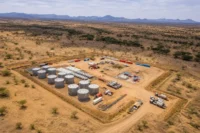
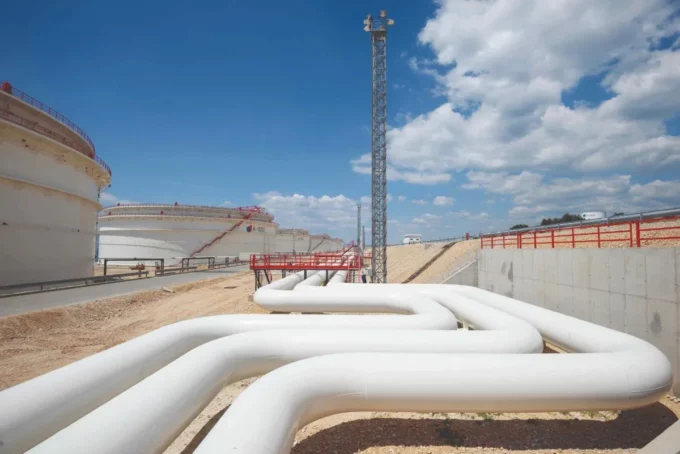
The planned assembly programme will use AVA’s existing operations rather than require the construction of a completely new manufacturing facility.
The KSh1 billion investment covers assembly equipment, factory changes and technician training. This approach allows Simba to build on an established automotive manufacturing operation in Mombasa.
AVA has an annual production capacity of 30,000 vehicles and has assembled passenger cars, pickups, trucks and buses. According to information published by Simba Corporation, the facility has produced more than 150,000 vehicles since its establishment.
The Mombasa facility also has an existing technical workforce supporting electric vehicle operations. TechMoran reported that 60 technicians have undergone training in battery handling and electrical systems.
Its production line is already assembling electric vehicles for public transport and ride-hailing operators. The MG programme would extend this activity into private passenger electric vehicles.
Other electric mobility investments have also been associated with AVA. Rideence Africa, for example, has been linked to a KSh320 million assembly project targeting electric taxis and high-roof matatus.
These projects serve different vehicle segments, but they demonstrate the growing interest in using the Mombasa facility for electric mobility manufacturing.
How Local Assembly Could Reduce MG Vehicle Prices
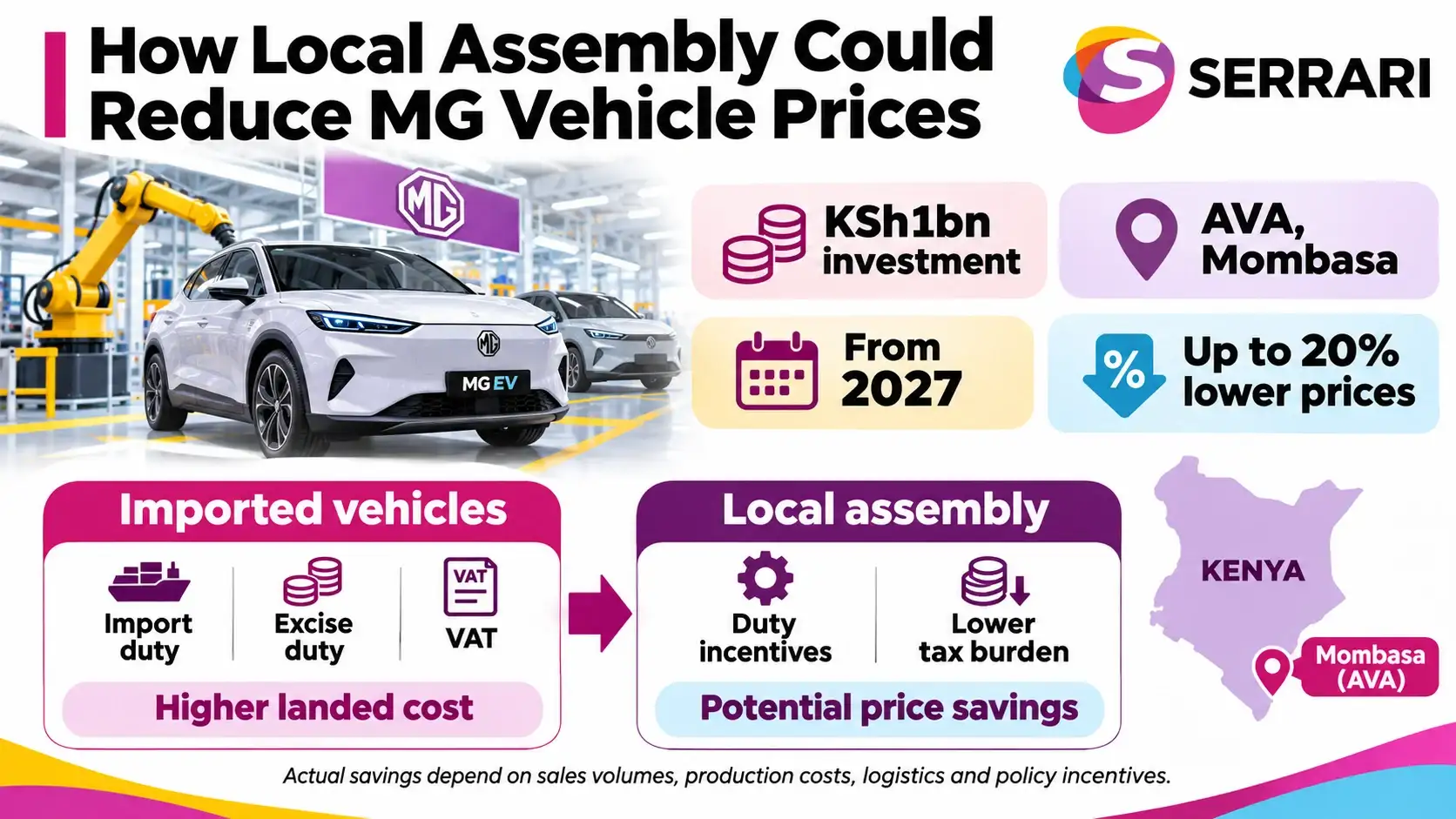
The proposed price reduction is closely linked to Kenya’s tax treatment of imported and locally assembled vehicles.
Fully built vehicles entering Kenya are subject to import duty, excise duty and value-added tax. Locally assembled vehicles can benefit from exemptions on import duty and excise duty under applicable government incentives.
This creates a potential cost advantage for companies that assemble vehicles locally rather than importing them as finished units.
Simba estimates that the difference could allow MG vehicle prices to fall by up to 20% once local assembly begins.
However, the final retail price will depend on more than tax exemptions. Production volumes, imported components, assembly expenses, logistics, exchange rates and the company’s pricing decisions will all influence the savings passed on to customers.
The investment is therefore built around what can be described as a duty-gap advantage: the difference between the taxes applied to fully built imported vehicles and those applicable to locally assembled vehicles.
This also makes the long-term commercial case dependent on government policy. Changes to tax incentives could affect the cost advantage that makes local assembly attractive.
Kenya’s support for electric mobility has already faced policy uncertainty. Excise duty on electric cars was halved to 10 percent in 2023. The National Electric Mobility Policy was launched in February 2026, while a subsequent Finance Bill proposed changes to the VAT treatment of electric buses and batteries. The proposed changes were dropped before the Finance Act took effect on July 1.
For Simba, maintaining a predictable policy environment will matter as it commits capital to local production.
MG Launches Four Models in Kenya
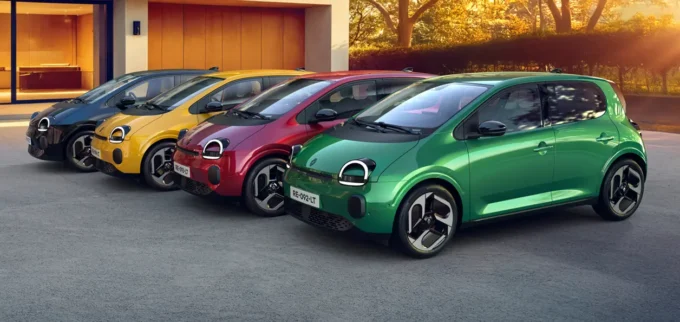
The planned assembly investment follows MG’s formal launch in Kenya, with Simba Corporation introducing four models across electric and conventional vehicle categories.
The launch range comprises:
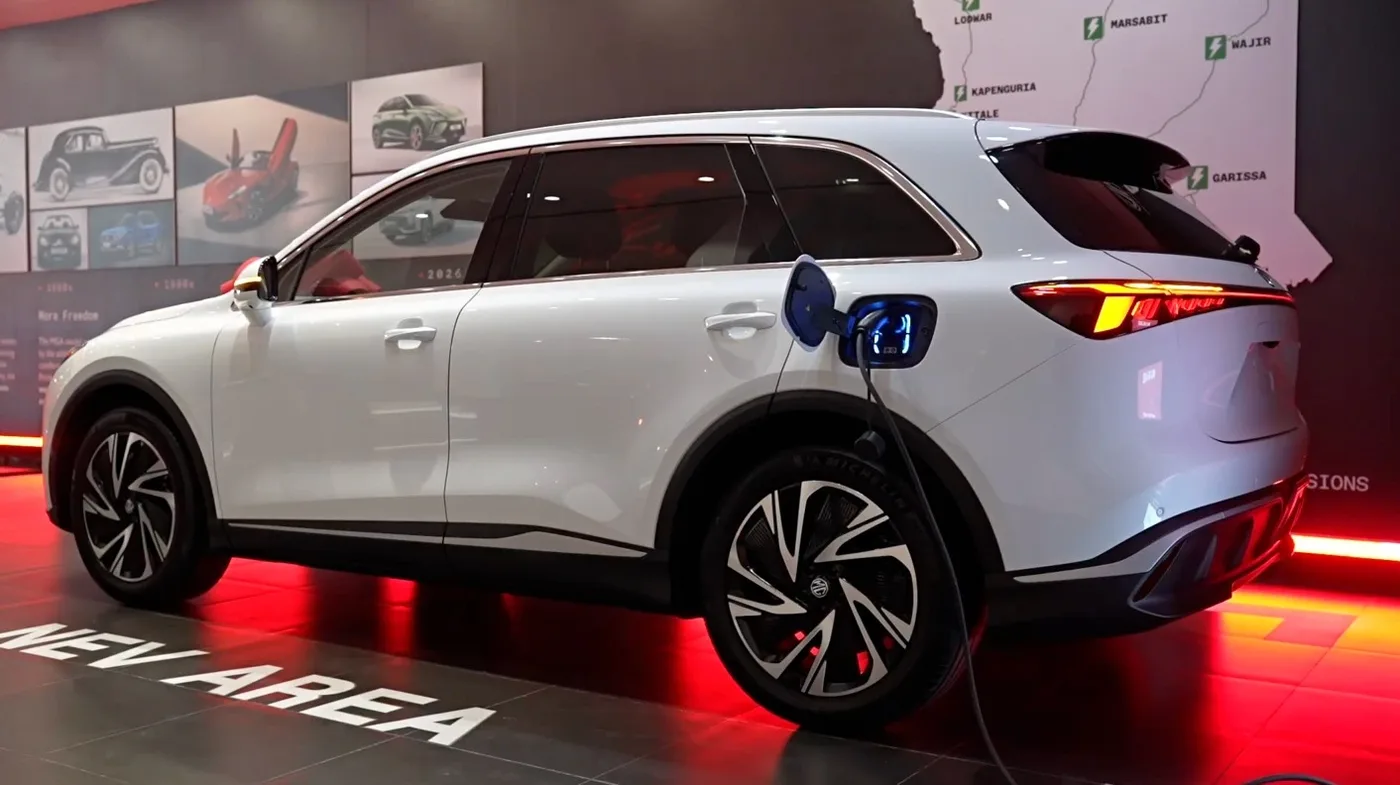
- MG S5 EV: An all-electric, five-seat family SUV with a range of up to 450 kilometres under the WLTP test cycle, priced from KSh7.2 million.
- MG4 EV Urban: An all-electric hatchback designed for city driving, ride-hailing and fleet use, priced from KSh4.5 million.
- MG ZS: A turbo-petrol compact SUV, priced from KSh4.5 million.
- MG D90: A seven-seat, four-wheel-drive SUV available in petrol and diesel, priced from KSh8.3 million.
The first 100 units are being offered at introductory prices to support the brand’s entry into the Kenyan market.
The launch also previewed the MG S6 EV AWD, an all-wheel-drive electric SUV with a manufacturer-stated range of up to 500 kilometres. The model is expected to go on sale in Kenya in 2027, with pre-bookings already open.
MG was founded in Oxford, England, in 1924 and is now part of China’s SAIC Motor. Its range includes petrol, hybrid and fully electric vehicles.
Context is everything. Stay ahead of shifting trends with today’s market updates, and uncover emerging opportunities using the Serrari Group Market Index and Marketplace. Then, take control of your own financial future by exploring our Money & Life Reset Transformation Blueprint ™ to build stronger habits, create better systems, and design a path toward lasting wealth.
Drive Electric and Kenya Power Become Early Fleet Customers
Institutional purchases are already forming part of MG’s market entry strategy.
Drive Electric purchased 25 vehicles as MG’s first fleet customer in Kenya, while Kenya Power took delivery of four MG electric vehicles at its Ruaraka Transport Hub.
The utility’s purchases form part of its transition from petrol and diesel vehicles to electric vehicles.
These orders provide an early indication of institutional interest in the brand, particularly among organisations looking at electric vehicles for their operations.
Simba has also said MG accounted for more than 40% of Kenya’s sales of new electric passenger cars and SUVs in 2026 before its formal launch. The company has not published the unit numbers behind that market-share figure.
The fleet market is important because commercial buyers often assess vehicles through running costs, maintenance requirements and operational efficiency, in addition to the initial purchase price.
However, fleet adoption and private consumer demand are not interchangeable. The planned assembly programme will need sufficient and sustained sales volumes to support production.
Simba Expands EV Charging and Aftersales Support
Alongside vehicle distribution and local assembly, Simba Corporation is investing in the infrastructure and services needed to support electric vehicle ownership.
The company plans to convert its Aspire Centre in Westlands, Nairobi, into a full electric vehicle workshop. The facility is intended to bring charging, specialised servicing and diagnostics under one roof for private owners and fleet operators.
Adil Popat, Group Chairman of Simba Corporation, said the company’s investment extends beyond vehicle sales.
“Simba Corporation is evolving. We are investing in the infrastructure, skills and services that electric mobility needs to last, from local assembly at AVA to dedicated support for owners. Kenya has an opportunity to build more of this industry at home, and we are committed to playing our part through sustained investment and partnerships,” Popat said.
Dinesh Kotecha, Group CEO of Simba Corporation, said the Kenyan rollout would focus on purchase prices, running costs and aftersales support.
“Our strategy is to make MG a practical choice for Kenyan motorists, including buyers who would traditionally consider a used vehicle. Customers want to know what the car costs, what it will cost to run and what support they will get long after they drive away. We have built a range that answers all three, backed by our local aftersales network,” Kotecha said.
These investments address an important part of EV ownership: customers need access to charging, maintenance and technical support after purchasing a vehicle.
Kenya’s Electric Mobility Market and Manufacturing Ambitions
The MG assembly plan comes as Kenya’s electric mobility sector expands, although private passenger electric cars remain a relatively small part of the market.
Much of the country’s EV growth has come from electric motorcycles, public transport vehicles and commercial fleets.
Government figures cited in the supplied reports show cumulative electric vehicle registrations reaching 39,324 by the end of 2025, compared with 1,378 in 2022. Another report cites more than 50,000 registered electric vehicles by June 2026, with electric motorcycles accounting for most of the total.
The figures use different reporting dates and should not be treated as directly comparable without further clarification.
Kenya’s wider automotive manufacturing sector also has room to expand. The supplied reporting indicates that local plants assembled 10,221 vehicles between January and July 2026, while installed assembly capacity was estimated at approximately 46,000 units annually.
This available capacity provides an opportunity for companies such as Simba to introduce additional vehicle production without building an entirely new factory.
The MG programme would add private passenger EVs to an assembly ecosystem that has increasingly attracted investment in electric mobility.
The Bigger Picture
Simba Corporation’s KSh1 billion investment reflects a shift from importing and distributing electric vehicles towards developing local manufacturing capacity.
The strategy combines vehicle sales, assembly infrastructure, technical skills and aftersales support. It also relies on Kenya’s tax incentives to make locally assembled vehicles more competitive against fully built imports.
For Kenya, the potential benefits extend beyond vehicle prices. Local assembly can support industrial activity, technical employment and the development of skills related to electric vehicle manufacturing.
However, the commercial case is not guaranteed. Simba has made clear that assembly will only begin once sales volumes are sufficient. The company must also operate within a policy environment where tax incentives remain important to the economics of local production.
Why Does This Matter Now?
Kenya’s electric mobility market is growing, but the cost of private passenger EVs remains a significant consideration for potential buyers.
MG’s entry brings electric hatchbacks and SUVs into a market where many consumers still rely on used imports. The possibility of reducing prices through local assembly could help broaden the range of buyers able to consider new electric vehicles.
The timing also matters for Kenya’s manufacturing ambitions. By using AVA’s existing facility, Simba is seeking to establish local production while building on infrastructure already supporting electric mobility operations.
The key question is whether demand can grow enough to make the assembly line commercially viable and whether the potential savings will reach customers.
Outlook
Simba Corporation expects to begin assembling MG electric and petrol vehicles at AVA in Mombasa from 2027, subject to sufficient sales volumes.
The company has not confirmed the first models to enter local production or announced revised retail prices. Until assembly begins, MG vehicles will continue to arrive as fully built imports.
The next developments to watch include the growth of MG sales, the start of production at AVA, the models selected for assembly and whether the estimated price reductions of up to 20% are reflected in the market.
The success of the programme will depend on demand, manufacturing costs and the continued availability of tax incentives. If these conditions align, local assembly could help make new electric passenger vehicles more accessible while strengthening Kenya’s automotive manufacturing base.
Frequently Asked Questions
1. When will Simba Corporation begin assembling MG electric vehicles in Kenya?
Simba expects local assembly to begin in 2027, once sales volumes are sufficient to support production at AVA in Mombasa.
2. How much is Simba Corporation investing in local MG assembly?
The company has committed KSh1 billion, approximately $7.7 million, towards a dedicated EV assembly line, including equipment, factory changes and technician training.
3. How much cheaper could MG vehicles become through local assembly?
Simba estimates that local assembly could reduce vehicle prices by up to 20%. The actual reduction will depend on production costs, tax incentives and pricing decisions.
4. Which MG electric vehicles are currently available in Kenya?
The launch range includes the MG S5 EV, an electric family SUV priced from KSh7.2 million, and the MG4 EV Urban, an electric hatchback priced from KSh4.5 million. The MG S6 EV AWD is expected in 2027.
Your financial future isn’t something you wait for—it’s something you build.
The real question is: when do you begin?
Move beyond simply staying informed.
Navigate the markets with clarity—track trends through the Serrari Group Market Index, uncover opportunities in the Serrari Marketplace, and build practical knowledge with our Curated Wealth Builder Platform.
Stay connected to what truly matters.
Get daily insights on macro trends and financial movements across Kenya, Africa, and global markets—delivered through the Serrari Newsletter.
Growth opens doors.
Advance your career through professional programs including ACCA, HESI A2, ATI TEAS 7 , HESI EXIT , NCLEX – RN and NCLEX – PN, Financial Literacy!🌟—designed to move you forward with confidence.
See where money is flowing—clearly and in real time.
Track Money Market Funds, Treasury Bills, Treasury Bonds, Green Bonds, and Fixed Deposits, alongside global and African indexes, key economic indicators, and the evolving Crypto and stablecoin landscape—all within Serrari’s Market Index.