



Standard Chartered Vietnam has signed two memoranda of understanding with Dai Dung Group and Stavian Group to explore sustainable financing opportunities worth up to US$200 million combined. The proposed financing includes up to US$50 million for Dai Dung to support sustainable manufacturing facilities and green construction projects, and up to US$150 million for Stavian Group’s eligible investments. The partnerships also include environmental, social and governance (ESG) advisory services. Announced on the sidelines of COP31 in Antalya, Türkiye, the agreements come as Vietnam seeks to mobilise international capital for industrial decarbonisation, renewable energy, carbon market development and its longer-term net-zero emissions target for 2050.
Key Takeaways
- Standard Chartered Vietnam has signed two MoUs to explore up to US$200 million in sustainable financing for Vietnamese businesses.
- Dai Dung Group could access up to US$50 million for sustainable manufacturing facilities and green projects.
- Stavian Group could receive financing of up to US$150 million for eligible projects.
- The partnerships combine financing solutions with ESG advisory services and emissions-reduction initiatives.
- The agreements were signed on November 17 on the sidelines of COP31 in Antalya, Türkiye.
- Standard Chartered is also engaging with Vietnam on renewable energy, the ASEAN Power Grid, carbon markets and the Just Energy Transition Partnership (JETP).
Standard Chartered Explores US$200 Million in Sustainable Financing
Standard Chartered Vietnam has signed two memoranda of understanding (MoUs) with Dai Dung Group and Stavian Group to explore financing opportunities worth up to US$200 million combined, supporting sustainable investment, production expansion and the companies’ green transition.
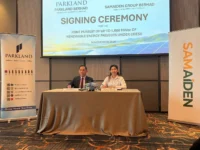
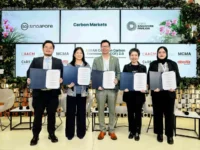
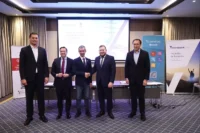
The agreements were signed on November 17 on the sidelines of the 31st Conference of the Parties to the United Nations Framework Convention on Climate Change (COP31) in Antalya, Türkiye, in the presence of Vietnam’s Deputy Prime Minister Ho Quoc Dung and representatives of relevant government ministries and agencies.
The proposed financing comprises up to 50 million USD for Dai Dung Corporation and 150 million USD for Stavian Group. Alongside potential funding, Standard Chartered will explore environmental, social and governance (ESG) advisory services to help both businesses identify suitable financing solutions and improve their sustainability practices.
Importantly, the agreements are MoUs to explore financing opportunities rather than confirmation that the full US$200 million has already been disbursed or committed as loans. Funding will depend on project eligibility and the bank’s relevant financing frameworks.
The partnerships combine financing solutions and environmental, social and governance (ESG) advisory to support eligible investments and advance the companies’ sustainability priorities.
Nguyen Thuy Hanh, General Director of Standard Chartered Vietnam, said the partnerships aim to connect international capital with the sustainable growth ambitions of Vietnamese businesses.
She explained that the bank would draw on its sustainable finance expertise, local knowledge and network spanning 55 markets to help clients identify financing solutions and decarbonisation opportunities.
“By combining access to capital with our sustainable and transition finance capabilities, we aim to help businesses strengthen their competitiveness and accelerate their shift towards lower-carbon operations,” she said.
The agreements reflect growing interest in financing that supports both business expansion and environmental objectives. For manufacturers and industrial companies, access to suitable capital can help fund production upgrades, improve resource efficiency and address increasingly demanding sustainability requirements.
Dai Dung Group: Up to US$50 Million for Sustainable Manufacturing
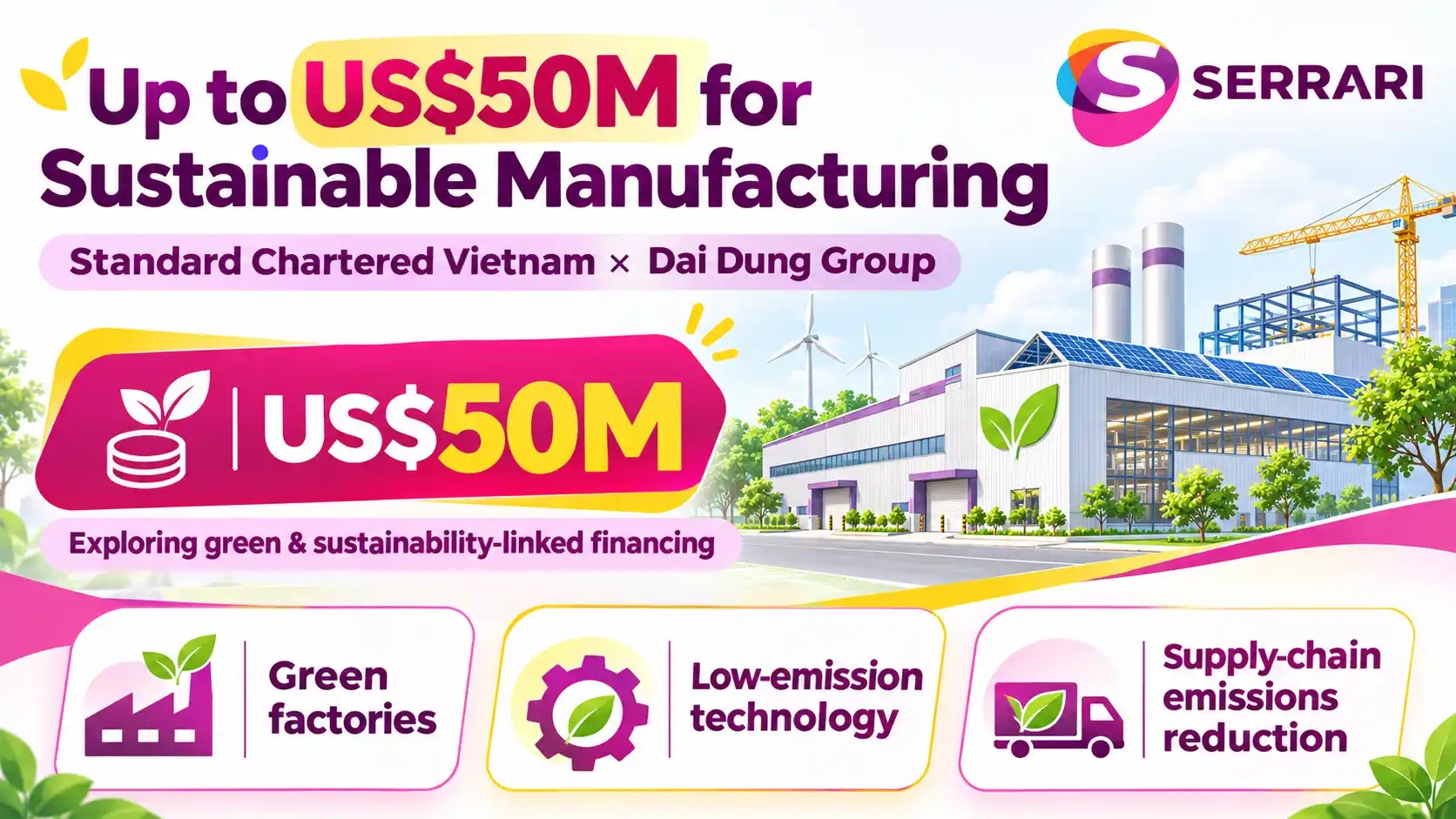
Under its MoU with Dai Dung Group, Standard Chartered will explore up to US$50 million in green and/or sustainability-linked financing.
The proposed funding is expected to support the expansion of manufacturing facilities that meet international industry standards and sustainable factory criteria. It could also help the company participate in green and sustainable construction projects in domestic and international markets.
The two parties will additionally explore cooperation in ESG initiatives, emissions reduction and green transition activities.
Dai Dung’s priorities include investing in green factories, adopting low-emission manufacturing technologies and gradually reducing emissions across its supply chain.
These priorities are relevant to manufacturers seeking to strengthen their position in international industrial value chains. Businesses supplying global markets increasingly need to demonstrate that their production processes meet environmental and sustainability requirements.
For Dai Dung, the proposed financing could support the investment needed to upgrade its facilities and align manufacturing operations with these expectations.
Trinh Tien Dung, Chairman and Chief Executive Officer of Dai Dung Group, said sustainability was central to the company’s long-term growth strategy.
He noted that the partnership would help the company explore financing solutions suited to its transition plans while strengthening its competitiveness and participation in global industrial value chains.
The agreement also extends beyond Dai Dung’s own factories. Supporting green and sustainable projects developed for its customers could allow the company’s transition efforts to reach a wider range of industrial and construction activities.
Stavian Group: Up to US$150 Million for Eligible Projects
The second agreement covers potential financing of up to US$150 million for Stavian Group.
Standard Chartered will explore financing solutions for projects in the company’s pipeline that meet the bank’s eligibility requirements, its Green and Sustainable Product Framework and relevant sectoral principles.
The proposed funding is intended to support sustainable investment while encouraging the integration of ESG considerations into Stavian’s business and investment activities.
The partnership opens up access to sustainable financing solutions and international capital, Stavian Group Chairman Dinh Duc Thang said, adding that the arrangement would support projects that meet sustainability criteria, improve resource efficiency and create long-term value.
The agreement builds on an existing relationship between the two companies. In October 2026, Standard Chartered completed a $120 million syndicated loan for Stavian Group, marking the third consecutive year of the bank’s participation in such a transaction.
The new MoU therefore represents an expansion of their cooperation into additional sustainable financing opportunities.
The proposed US$150 million is also the larger portion of the two agreements, reflecting the potential financing requirements of Stavian’s eligible project pipeline. However, the final amount and terms will depend on the projects considered and their compliance with the bank’s framework.
Context is everything. Stay ahead of shifting trends with today’s market updates, and uncover emerging opportunities using the Serrari Group Market Index and Marketplace. Then, take control of your own financial future by exploring our Money & Life Reset Transformation Blueprint ™ to build stronger habits, create better systems, and design a path toward lasting wealth.
Why Sustainable Financing Matters for Vietnam’s Industrial Sector
The agreements come as Vietnam seeks to balance industrial expansion with its climate commitments.
Manufacturing and industrial businesses need investment to expand production capacity, improve technology and maintain competitiveness. At the same time, they face growing pressure to reduce emissions, use resources more efficiently and meet environmental requirements in international supply chains.
This creates a financing challenge. Companies may need significant capital to upgrade factories, adopt lower-emission technologies and change production processes. Sustainable and transition finance can provide funding structures that support these investments while incorporating environmental and social considerations.
The proposed financing for Dai Dung and Stavian illustrates how banks can connect businesses with international capital while supporting their sustainability priorities.
For companies, the benefit is not limited to obtaining funds. ESG advisory services can also help identify emissions-reduction opportunities, assess sustainability requirements and develop investment plans that align with eligible financing frameworks.
For Vietnam, supporting industrial decarbonisation could help domestic manufacturers maintain access to international markets where environmental standards are becoming increasingly important.
However, the impact of the agreements will depend on the projects eventually financed, the scale of investment and the measurable sustainability outcomes achieved.
Standard Chartered’s Wider Climate Finance Engagement in Vietnam
The two financing agreements formed part of Standard Chartered’s broader engagement with Vietnam at COP31.
The bank has partnered with the Vietnamese government since 2021, when the country committed to achieving net-zero emissions by 2050. During COP31, Standard Chartered held bilateral discussions with government leaders and participated in a high-level climate discussion alongside Vietnam’s Ministry of Agriculture and Environment.
At the Vietnam Pavilion, representatives of Standard Chartered Group met Deputy Prime Minister Ho Quoc Dung to discuss financing opportunities supporting Vietnam’s energy transition and wider climate objectives.
The discussions covered investment opportunities related to the ASEAN Power Grid, implementation of the Just Energy Transition Partnership (JETP), development of Vietnam’s carbon market and potential connections with other ASEAN carbon markets.
They also explored opportunities in nature finance and the circular economy.
These areas extend the bank’s engagement beyond individual corporate financing agreements. They point to the broader capital requirements involved in changing how energy is generated, distributed and consumed, as well as how businesses manage resources and emissions.
For example, developing the ASEAN Power Grid requires investment in electricity infrastructure and regional connectivity. Carbon market development, meanwhile, involves creating systems that support emissions measurement, carbon trading and connections with international markets.
Standard Chartered said it would continue using its international network, financing expertise and advisory capabilities to connect Vietnam’s green investment needs with global capital.
COP31 Discussion Highlights Vietnam’s Need for Climate Finance
Alongside its discussions with government leaders, Standard Chartered Vietnam and the Climate Change Department of the Ministry of Agriculture and Environment co-hosted a high-level side event titled “Vietnam’s Response to Climate Change in the New Era”.
The event brought attention to practical priorities in climate policy, finance and partnerships.
Discussions focused on mobilising climate finance, supporting the effective operation of Vietnam’s carbon market and improving its connections with international carbon markets.
Participants also examined financing requirements for industrial decarbonisation, resource efficiency, the circular economy and climate resilience.
These priorities are important because achieving lower emissions requires investment across several parts of the economy. Financing is needed not only for renewable energy projects but also for industrial upgrades, more efficient resource use and infrastructure that can withstand climate-related risks.
The discussions also connect to Vietnam’s longer-term climate commitments. The country has set a target of achieving net-zero emissions by 2050, requiring sustained investment and cooperation between government, businesses and financial institutions.
Standard Chartered’s Global Sustainable Finance Commitments
The bank’s activities in Vietnam form part of its wider sustainable finance strategy.
Globally, Standard Chartered aims to achieve net-zero emissions from its financial operations by 2050 and raise $300 billion in sustainable finance by 2030.
Its network across 55 markets gives it a role in connecting businesses and governments with international financing opportunities, particularly in emerging markets where investment requirements for energy and industrial transitions can be substantial.
The Vietnam agreements demonstrate one way this strategy can translate into local business partnerships: exploring financing for manufacturing facilities, supporting ESG integration and helping companies identify opportunities to reduce emissions.
However, the proposed US$200 million in financing for Dai Dung and Stavian should be viewed separately from the bank’s wider US$300 billion global sustainable finance ambition. The former represents potential financing under two specific MoUs, while the latter is a broader institutional target.
The Bigger Picture
Standard Chartered’s agreements with Dai Dung and Stavian reflect a wider shift in sustainable finance, where banks are increasingly exploring ways to connect business expansion with environmental performance.
For manufacturers, the transition involves more than adopting renewable energy. It can require investment in factory infrastructure, production technologies, supply-chain improvements and resource efficiency.
The financing arrangements also demonstrate the growing importance of ESG considerations in corporate investment decisions. Access to international capital may increasingly depend on whether businesses can demonstrate that their projects meet relevant environmental and sustainability requirements.
Vietnam’s climate finance needs extend beyond individual companies. Renewable energy, electricity grid development, carbon markets, nature finance and climate resilience all require investment and coordination between public and private sector participants.
The two MoUs therefore represent part of a broader financing effort rather than a standalone solution to Vietnam’s climate investment requirements.
Why Does This Matter Now?
The timing of the agreements is significant because Vietnam is working towards its 2050 net-zero emissions target while seeking to maintain industrial growth and strengthen its position in global supply chains.
Companies need to invest in lower-emission production and more efficient operations, while financial institutions have an opportunity to help mobilise the capital required for these changes.
The partnerships also come amid wider discussions at COP31 about how developing economies can access financing for climate action and energy transition projects.
For Dai Dung and Stavian, the agreements provide an opportunity to explore additional funding for eligible investments. For Vietnam, they demonstrate how international banks can support domestic businesses while contributing to broader sustainability objectives.
The actual impact, however, will depend on whether the proposed financing moves forward into completed transactions and delivers measurable improvements in production efficiency and emissions performance.
Outlook
Standard Chartered’s MoUs with Dai Dung and Stavian establish a framework for exploring up to US$200 million in sustainable financing, alongside ESG advisory support.
The next stage will involve identifying eligible projects, assessing financing requirements and determining which investment proposals meet the bank’s Green and Sustainable Product Framework and other relevant criteria.
Beyond the two companies, Standard Chartered’s wider engagement with Vietnam points to continued opportunities in renewable energy, grid development, carbon markets, industrial decarbonisation and climate resilience.
As Vietnam works towards its 2050 net-zero target, access to international capital and practical financing solutions will remain important for businesses seeking to upgrade their operations and meet sustainability requirements.
The significance of the agreements will ultimately be measured not by the potential financing amount alone, but by the investments completed and the environmental and economic outcomes they deliver.
Frequently Asked Questions
1. How much sustainable financing is Standard Chartered exploring in Vietnam?
Standard Chartered Vietnam has signed two MoUs to explore financing opportunities worth up to US$200 million combined. This includes up to US$50 million for Dai Dung Group and up to US$150 million for Stavian Group.
2. What will the proposed financing support?
The potential financing will support eligible investments, including sustainable manufacturing facilities, production expansion, green construction projects, emissions reduction and other projects meeting the bank’s sustainability criteria.
3. What is the significance of the agreements being signed at COP31?
The agreements were signed alongside wider discussions on Vietnam’s climate and energy transition priorities. They demonstrate how international banks can connect domestic businesses with capital and expertise to support lower-emission operations.
4. What are Standard Chartered’s global sustainable finance targets?
Standard Chartered aims to achieve net-zero emissions from its financial operations by 2050 and raise US$300 billion in sustainable finance by 2030.
Your financial future isn’t something you wait for—it’s something you build.
The real question is: when do you begin?
Move beyond simply staying informed.
Navigate the markets with clarity—track trends through the Serrari Group Market Index, uncover opportunities in the Serrari Marketplace, and build practical knowledge with our Curated Wealth Builder Platform.
Stay connected to what truly matters.
Get daily insights on macro trends and financial movements across Kenya, Africa, and global markets—delivered through the Serrari Newsletter.
Growth opens doors.
Advance your career through professional programs including ACCA, HESI A2, ATI TEAS 7 , HESI EXIT , NCLEX – RN and NCLEX – PN, Financial Literacy!🌟—designed to move you forward with confidence.
See where money is flowing—clearly and in real time.
Track Money Market Funds, Treasury Bills, Treasury Bonds, Green Bonds, and Fixed Deposits, alongside global and African indexes, key economic indicators, and the evolving Crypto and stablecoin landscape—all within Serrari’s Market Index.