



Croatian oil pipeline operator JANAF has repaired a damaged section of the Sisak–Slavonski Brod pipeline and resumed regular crude oil transportation for Serbia’s oil company NIS. The pipeline was damaged on November 6 during construction works, causing 568 cubic metres of oil to leak. The disruption forced Serbia to rely on state oil reserves and other available stocks to maintain operations at its Pančevo refinery. Although deliveries have resumed, the incident highlighted Serbia’s dependence on JANAF as its main crude oil import route, as well as wider uncertainties surrounding NIS, which remains under US sanctions and faces a proposed takeover by Hungary’s MOL Group.
Key Takeaways
- JANAF has completed repairs to the damaged Sisak–Slavonski Brod pipeline section and resumed crude oil deliveries to NIS.
- The November 6 incident resulted in a leak of 568 cubic metres of oil, which was recovered and returned to the pipeline system.
- Serbia released up to 66,000 tonnes of crude oil from its state reserves to support NIS’s Pančevo refinery.
- The disruption did not affect crude oil supplies to refineries in Hungary and Slovakia.
- NIS remains under US sanctions because of its majority Russian ownership, while a proposed takeover by Hungary’s MOL Group is pending.
- JANAF’s transportation contract with NIS expires at the end of 2026, adding another issue to the Serbian company’s supply outlook.
JANAF Restores Crude Oil Deliveries to Serbia’s NIS
Croatian oil pipeline operator JANAF has completed repairs to the damaged Sisak–Slavonski Brod section of its pipeline, allowing crude oil transportation to Serbia’s oil company NIS to resume.
The interruption began on November 6, when a construction machine damaged the pipeline during maintenance works carried out by an external contractor near Nova Gradiška in Croatia.
With the resumption of transportation on this pipeline section, Janaf is continuing to fulfil its contractual obligations to NIS, the Croatian operator said in a press release.
At the site, 568 cubic metres of oil leaked. JANAF recovered the spilled crude and transported it by tanker to its terminal, where it was returned to the pipeline system. Environmental remediation at the affected site is continuing.
The repair restores an important supply connection for NIS, which relies on JANAF as its main crude oil import route.
Although transportation was suspended on the affected section, the disruption did not affect supplies to refineries in Hungary and Slovakia.
Serbia Relied on Emergency Oil Reserves to Keep Its Refinery Running
The pipeline interruption created an immediate supply challenge for Serbia because NIS operates the country’s only oil refinery, located in Pančevo.
With its main crude oil import route temporarily unavailable, the refinery introduced emergency measures to maintain operations for as long as possible.
According to Serbia’s Ministry of Mining and Energy, the refinery reduced its oil processing volumes while the fuel shortfall was covered using operational and commercial stocks. The government also approved an emergency release of crude oil from national reserves.
The outgoing Government of Serbia approved NIS’s request for an emergency injection from oil reserves, deciding to release up to 66,000 tons.
The crude was intended to ensure the continued operation of the Pančevo refinery and maintain supplies to the domestic fuel market.
The use of national reserves illustrates the importance of maintaining alternative supply arrangements when a country’s main oil import route experiences disruption.
The interruption also raised concerns among fuel consumers in Serbia and neighbouring countries, with potential rationing becoming a concern as the extent of the damage and the repair timeline remained uncertain.
The resumption of JANAF transportation therefore removes an immediate supply constraint and reduces the need to rely on emergency stock releases to support refinery operations.
Why the Pipeline Matters Beyond Serbia
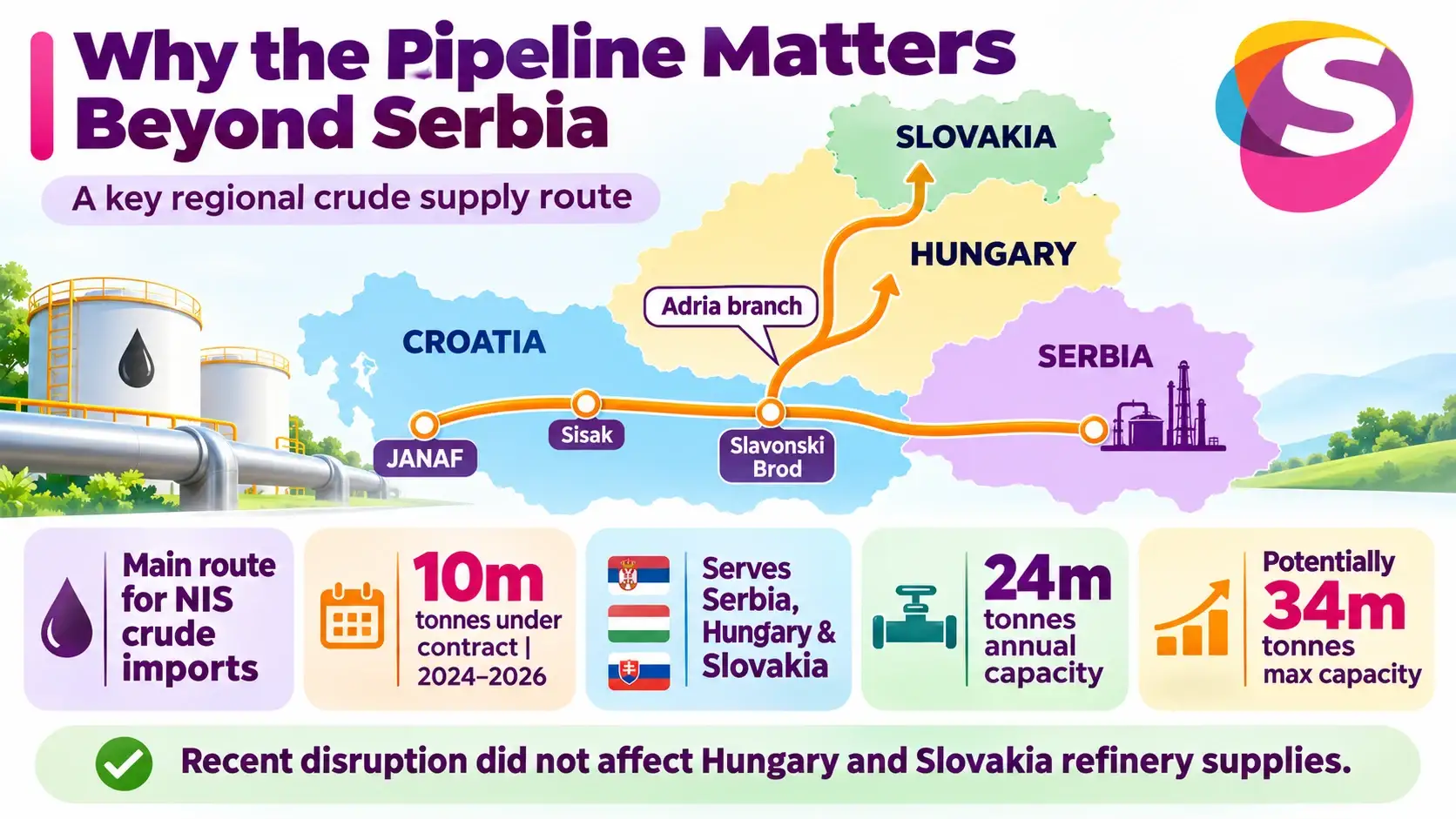
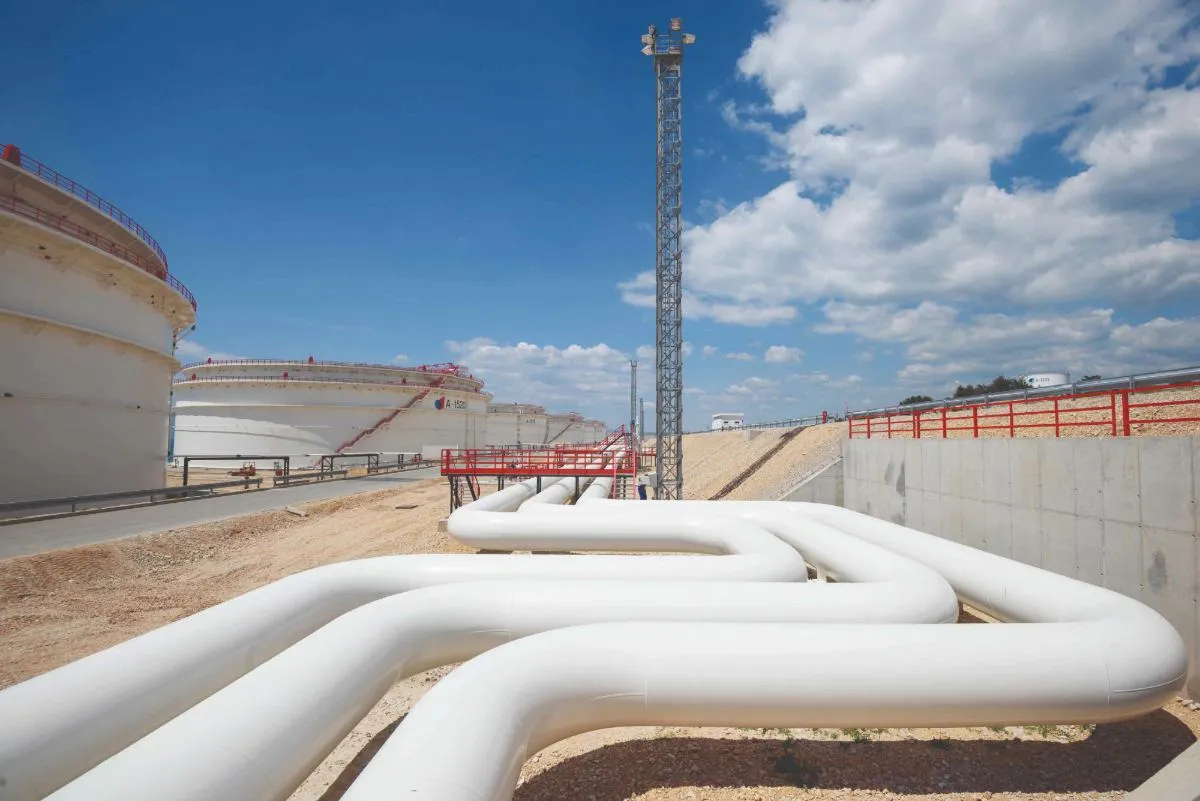
JANAF is a major part of the regional oil transportation network, connecting the Croatian terminal on the island of Krk with refineries and other facilities in Central and Southeast Europe.
For Serbia, the pipeline is particularly important because it provides the main route through which NIS imports crude oil for processing at Pančevo.
Janaf is NIS’s main crude oil import route. The Croatian operator has a transportation contract with NIS covering 10 million tonnes of crude between January 1, 2024, and December 31, 2026.
This dependence means that disruptions to the pipeline can have consequences beyond the transportation infrastructure itself. If crude deliveries are interrupted for an extended period, the impact can reach refinery operations and the availability of petroleum products.
The pipeline also serves Hungary and Slovakia through the Adria branch, which provides an alternative to the Russian Druzhba pipeline.
The two countries’ reliance on the same wider infrastructure highlights JANAF’s importance to regional energy supply. However, the recent interruption on the Sisak–Slavonski Brod section did not affect deliveries to their refineries.
The JANAF system has a transportation capacity of up to 24 million tonnes annually, which can reportedly be increased to a maximum of 34 million tonnes without physical expansion.
This capacity gives the infrastructure a wider role in regional oil transportation, particularly as countries consider alternatives to Russian crude supply routes.
Context is everything. Stay ahead of shifting trends with today’s market updates, and uncover emerging opportunities using the Serrari Group Market Index and Marketplace. Then, take control of your own financial future by exploring our Money & Life Reset Transformation Blueprint ™ to build stronger habits, create better systems, and design a path toward lasting wealth.
NIS Faces Wider Uncertainty Over US Sanctions and Proposed MOL Takeover
Although the pipeline repairs restore crude transportation, NIS continues to face a separate challenge involving its ownership and the US sanctions imposed on the company.
NIS is under US sanctions because it is majority-owned by Russia’s state-owned Gazprom. The company has been operating under a temporary licence from the administration of US President Donald Trump while discussions over a proposed takeover by Hungarian energy company MOL Group continue.
The deadline for the proposed takeover process is December 11, according to the supplied report.
This situation adds another layer of uncertainty to NIS’s operating environment. The company needs reliable crude supplies to maintain refinery operations, while the sanctions and proposed ownership changes create additional questions about its longer-term position.
The proposed takeover is particularly relevant because MOL is already an important regional energy company and has interests in the wider oil transportation network served by JANAF.
Meanwhile, the transportation contract between JANAF and NIS expires on December 31, 2026. Its renewal and the future arrangements between the two companies will therefore be important developments to watch.
The pipeline’s return to service resolves the immediate physical disruption, but it does not independently settle the ownership, sanctions or contractual issues affecting NIS.
Environmental Remediation Continues After Oil Spill
Beyond the supply disruption, the pipeline incident also created an environmental challenge.
The leak released 568 cubic metres of crude oil into an excavation trench during the construction works. JANAF recovered the spilled oil and transported it to its terminal, where it was returned to the pipeline system.
However, the completion of mechanical repairs does not mean that all work related to the incident has ended.
Environmental remediation is continuing, indicating that the affected site still requires attention after the oil has been recovered.
The incident also highlights the risks associated with construction and maintenance activities around critical energy infrastructure. Damage to a pipeline can affect transportation operations while creating additional environmental responsibilities for the operator.
The Bigger Picture: Regional Energy Security and Alternative Oil Routes
The JANAF incident comes at a time when Central and Southeast European countries continue to navigate changes in their energy supply arrangements.
The Adria pipeline provides Hungary and Slovakia with an alternative crude oil transportation route to the Russian Druzhba system. For Serbia, JANAF is especially important because of NIS’s reliance on the Croatian infrastructure.
The recent interruption demonstrates how dependence on a limited number of supply routes can create operational challenges when infrastructure is damaged.
It also highlights the importance of emergency reserves. Serbia’s release of up to 66,000 tonnes of crude provided temporary support while the pipeline was unavailable, helping the refinery continue operating.
However, emergency reserves are not a permanent replacement for regular crude imports. Maintaining reliable transportation arrangements remains important for refinery operations and fuel supply.
The wider situation involving NIS also shows that energy security is influenced by more than physical infrastructure. Ownership, international sanctions, commercial contracts and regional relationships can all affect how crude oil reaches refineries.
Why Does This Matter Now?
The restoration of JANAF transportation comes at an important moment for Serbia’s oil sector.
The immediate pipeline disruption has been resolved, but several developments remain relevant over the coming weeks. NIS faces a December 11 deadline linked to the proposed MOL takeover process, while its transportation contract with JANAF expires at the end of the year.
These developments matter because the company operates Serbia’s only refinery and depends on the Croatian pipeline for its main crude oil import route.
For Serbia, the priority is maintaining refinery operations and uninterrupted fuel supplies. For Hungary and Slovakia, JANAF remains part of the infrastructure supporting alternative crude oil deliveries.
For the wider region, the incident is a reminder that disruptions to shared energy infrastructure can create supply concerns even when they do not affect every country connected to the same network.
Outlook
With repairs completed, JANAF has resumed regular crude oil transportation to NIS, removing the immediate interruption caused by the November 6 incident.
Attention will now turn to the continued operation of the Pančevo refinery, environmental remediation at the damaged site and the future of the transportation agreement between JANAF and NIS.
The proposed MOL takeover and the December 11 deadline will also remain important developments for the Serbian oil company.
While the pipeline’s return to service restores an essential supply route, the longer-term outlook for NIS will depend on how its ownership, sanctions and transportation arrangements are resolved.
Frequently Asked Questions
1. What caused the JANAF pipeline disruption?
The pipeline was damaged on November 6, 2026, when part of a construction machine fell during maintenance works carried out by an external contractor near Nova Gradiška in Croatia. The incident caused 568 cubic metres of oil to leak.
2. Has JANAF resumed crude oil deliveries to Serbia?
Yes. JANAF completed repairs to the Sisak–Slavonski Brod section and resumed regular crude oil transportation for Serbia’s NIS.
3. How did Serbia keep its refinery operating during the interruption?
Serbia relied on operational and commercial stocks and approved the release of up to 66,000 tonnes of crude oil from state reserves to support NIS’s Pančevo refinery.
4. Why is JANAF important to Serbia’s oil supply?
JANAF is NIS’s main crude oil import route. Since NIS operates Serbia’s only refinery, reliable transportation through the pipeline is important for maintaining crude processing and fuel supplies.
Your financial future isn’t something you wait for—it’s something you build.
The real question is: when do you begin?
Move beyond simply staying informed.
Navigate the markets with clarity—track trends through the Serrari Group Market Index, uncover opportunities in the Serrari Marketplace, and build practical knowledge with our Curated Wealth Builder Platform.
Stay connected to what truly matters.
Get daily insights on macro trends and financial movements across Kenya, Africa, and global markets—delivered through the Serrari Newsletter.
Growth opens doors.
Advance your career through professional programs including ACCA, HESI A2, ATI TEAS 7 , HESI EXIT , NCLEX – RN and NCLEX – PN, Financial Literacy!🌟—designed to move you forward with confidence.
See where money is flowing—clearly and in real time.
Track Money Market Funds, Treasury Bills, Treasury Bonds, Green Bonds, and Fixed Deposits, alongside global and African indexes, key economic indicators, and the evolving Crypto and stablecoin landscape—all within Serrari’s Market Index.