Kenya is advancing plans for a $692 million liquefied natural gas (LNG) power project in Mombasa through a strategic partnership between Greek energy company Amaco Energy S.A. and Arise Integrated Industrial Platforms (Arise IIP) Kenya. Known as Project Hercules, the development will initially generate 250 megawatts (MW) of electricity, with the potential to expand to 1 gigawatt (GW). It will supply dedicated electricity, cooling systems and digital infrastructure to the Coast Integrated Industrial Park in Dongo Kundu, supporting energy-intensive industries, port operations and artificial intelligence (AI) data centres. The project remains subject to technical, financial, environmental and regulatory assessments.
Key Takeaways
- Kenya is advancing a proposed $692 million (approximately KSh90 billion) LNG power project in Mombasa.
- Project Hercules will initially generate 250MW, with the potential to increase capacity to 1GW as demand grows.
- The development is a partnership between Greek energy company Amaco Energy and Arise IIP Kenya.
- The project will combine LNG-based electricity generation, advanced cooling systems and digital infrastructure for AI and hyperscale data centres.
- The facility will serve the 500-acre Coast Integrated Industrial Park in Dongo Kundu, near the Port of Mombasa.
- The project is expected to create more than 1,500 construction jobs and approximately 550–650 direct and indirect jobs once operational.
- Construction and implementation will depend on outstanding technical, commercial, environmental, regulatory and financial assessments.
What Is Kenya’s $692 Million LNG Power Project?
Kenya is advancing plans for a $692 million liquefied natural gas (LNG) electricity generation project in Mombasa as it seeks to attract energy-intensive industries and large-scale digital infrastructure investments.
The proposed development, known as Project Hercules, is being undertaken through a strategic partnership between Greek energy company Amaco Energy S.A. and Arise Integrated Industrial Platforms (Arise IIP) Kenya.
The project will provide dedicated electricity, cooling and digital infrastructure to support industrial operations, port activities and artificial intelligence (AI) data centres at the Coast Integrated Industrial Park in Dongo Kundu.
Valued at approximately KSh90 billion, the facility will initially generate 250 megawatts (MW) of electricity. Its capacity could eventually expand to 1 gigawatt (GW) as demand increases.
The development is intended to provide a reliable, round-the-clock electricity supply for businesses that require substantial and consistent power to operate. These include manufacturing facilities, port-related industries and large computing operations.
The project also reflects Kenya’s efforts to strengthen its industrial and digital infrastructure, particularly along the coast, where proximity to the Port of Mombasa and international telecommunications connections offers opportunities for industrial development.
However, the proposed development is still subject to several assessments and approvals. The partnership agreement establishes a framework for advancing the project rather than confirming that construction has begun.
How Will Project Hercules Generate Electricity?
Project Hercules will use liquefied natural gas to generate electricity for the Coast Integrated Industrial Park.
Its initial power-generation phase is expected to use a floating power barge equipped with gas turbines. These turbines will convert LNG into electricity before it is supplied to industrial and digital infrastructure customers.
Amaco already has a strategic cooperation agreement with US energy technology company GE Vernova, signed in August 2026, to supply gas turbines for the proposed facility.
This partnership provides a technology framework for the project’s electricity-generation component.
The initial 250MW capacity is expected to meet the industrial park’s early electricity requirements, with the possibility of increasing generation to 1GW as additional businesses and digital infrastructure facilities are established.
The power system will operate independently of Kenya’s national electricity grid. This arrangement is intended to allow industrial and digital infrastructure customers to access a dedicated electricity supply rather than depending entirely on the national grid.
For energy-intensive businesses, a consistent electricity supply is particularly important because interruptions can affect production schedules, manufacturing costs and digital services.
The proposed expansion capacity also provides room for the project to accommodate increasing electricity demand as the industrial park develops.
Why Does the Project Include Cooling and Digital Infrastructure?
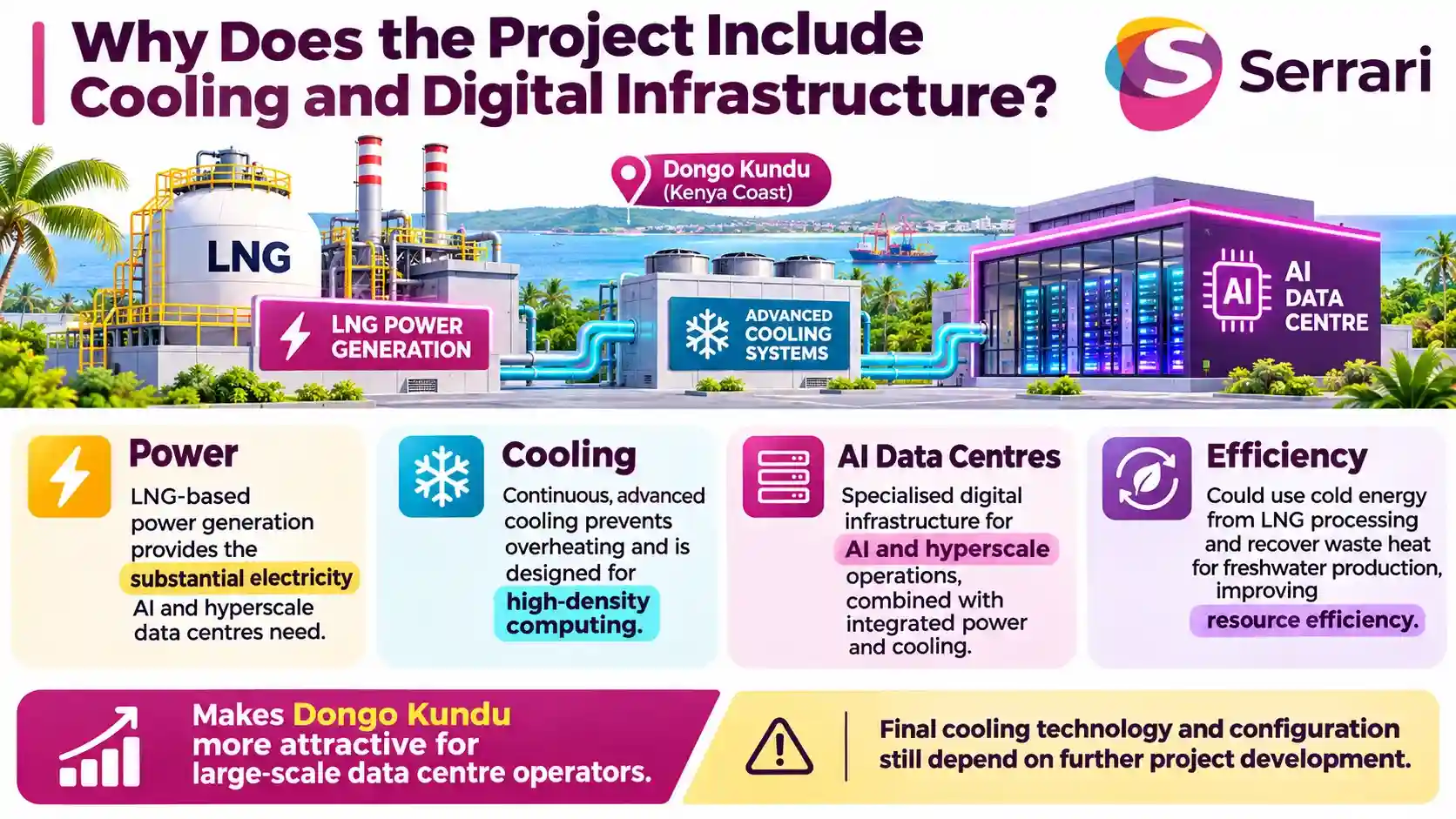
Project Hercules is not limited to electricity generation. It is designed to integrate three major infrastructure components: LNG-based power generation, advanced cooling systems and specialised digital infrastructure.
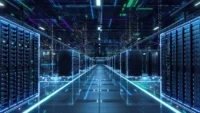
These components are particularly relevant to the development of AI and hyperscale data centres, which require substantial electricity and continuous cooling to operate.
Data centres house computer servers and other equipment that process, store and manage large volumes of digital information. As computing activity increases, particularly with the expansion of artificial intelligence, these facilities require reliable power and effective cooling systems to prevent equipment from overheating.
The proposed Hercules development will incorporate cooling infrastructure designed to support high-density computing operations.
It could also utilise cold energy associated with LNG processing and recover waste heat for freshwater production. This approach is intended to improve resource efficiency by making use of energy and heat generated during different stages of the process.
The combination of electricity generation and cooling infrastructure could therefore make the industrial park more attractive to operators seeking locations for large-scale computing facilities.
However, the specific cooling technology, its final configuration and the extent of its freshwater production capacity will depend on further project development.
Why Is Dongo Kundu Industrial Park Central to the Project?
The proposed power plant will be integrated into Arise IIP Kenya’s 500-acre Coast Integrated Industrial Park (CIIP), located in Dongo Kundu, Mombasa, within the Dongo Kundu Special Economic Zone (SEZ).
The industrial park is being developed as part of Kenya’s wider industrialisation and export-manufacturing strategy under the Kenya-Afreximbank Country Program.
Its location near the Port of Mombasa is an important advantage for businesses involved in manufacturing, logistics and international trade.
Port access can facilitate the movement of raw materials, manufactured products and other industrial cargo, supporting companies that depend on efficient import and export operations.
The industrial park is intended to attract investments in heavy industries, manufacturing, logistics, technology and digital infrastructure.
The 500-acre Coast Integrated Industrial Park at Dongo Kundu in Mombasa is developed by Arise, which is backed by the African Export-Import Bank and the Africa Finance Corporation.
The development also benefits from Mombasa’s international telecommunications infrastructure.
The coastal city hosts seven submarine fibre-optic cable connections, providing international connectivity that could support regional data centres and hyperscale computing facilities.
For data centre operators, reliable international connectivity is important because it allows facilities to exchange information with users, businesses and digital networks across different countries.
By combining dedicated electricity generation, cooling systems, port access and international telecommunications connectivity, Project Hercules aims to establish an integrated industrial and digital infrastructure hub in coastal Kenya.
What Is the Project’s Potential to Create Jobs?
Project Hercules is expected to generate employment opportunities during construction and once the facility becomes operational.
The development is projected to create more than 1,500 jobs during construction. Once operations begin, approximately 550 to 650 direct and indirect employment opportunities are anticipated.
These opportunities are expected to cover several areas, including:
- Power generation and plant operations.
- Cooling systems and infrastructure management.
- Digital infrastructure operations.
- Technical and maintenance services.
- Supporting industrial and logistics activities.
The employment opportunities could also extend beyond the power facility itself as businesses establish operations within the Coast Integrated Industrial Park.
Manufacturing companies, logistics operators and data centre businesses could create additional demand for technical, operational and professional skills.
However, the projected employment figures remain estimates linked to the proposed development and its eventual implementation.
Context is everything. Stay ahead of shifting trends with today’s market updates, and uncover emerging opportunities using the Serrari Group Market Index and Marketplace. Then, take control of your own financial future by exploring our Money & Life Reset Transformation Blueprint ™ to build stronger habits, create better systems, and design a path toward lasting wealth.
Could Project Hercules Expand Beyond Natural Gas?
Although the proposed facility will initially rely on LNG for electricity generation, its design is intended to accommodate a potential transition towards hydrogen and renewable energy as technologies and commercial conditions evolve.
This provides a possible pathway for adapting the power system as alternative energy technologies develop.
The potential transition is particularly relevant as energy infrastructure investors face increasing pressure to consider long-term emissions, fuel costs and the changing economics of electricity generation.
However, the project is currently based on LNG-powered generation. The supplied project details do not confirm a specific hydrogen conversion date, renewable energy capacity or emissions-reduction target.
The possibility of future integration should therefore be understood as a proposed design consideration rather than a confirmed commitment to replace LNG.
What Happens Next Before Construction Begins?
Amaco Energy and Arise IIP Kenya signed their strategic partnership agreement in November 2026 to advance Project Hercules.
However, the agreement does not mean that construction has already started. The companies must first complete several assessments and development requirements.
These include:
- Technical assessments: Evaluating the proposed power-generation system, gas turbines, cooling infrastructure and overall engineering requirements.
- Commercial assessments: Establishing the project’s commercial structure and potential demand from industrial and digital infrastructure customers.
- Environmental assessments: Evaluating the project’s environmental implications and meeting applicable requirements.
- Regulatory approvals: Obtaining the necessary authorisations before implementation.
- Financial arrangements: Establishing how the estimated $692 million development will be financed.
- Commercial agreements: Securing arrangements with prospective electricity consumers.
Amaco’s Chief Executive Officer, Theodore Theodoropoulos, has indicated that the project could enter full operation within approximately 20 to 24 months.
However, this is a projected timeframe rather than a confirmed commissioning date. The actual implementation schedule will depend on the completion of the outstanding assessments, financing arrangements and approvals.
The Bigger Picture: Kenya Is Positioning Its Coast for Industrial and Digital Investment
Project Hercules reflects the growing relationship between energy infrastructure and the expansion of industrial and digital economies.
Manufacturing facilities, ports and data centres require dependable electricity to operate efficiently. For countries seeking to attract these investments, access to reliable power can influence where companies choose to establish their operations.
Kenya’s proposed LNG project is designed to address this requirement by providing dedicated electricity to an industrial park with access to port facilities and international telecommunications connections.
The development also highlights the increasing electricity requirements associated with artificial intelligence. AI and hyperscale data centres need substantial computing capacity, which in turn requires reliable power and cooling infrastructure.
By combining these services within one industrial location, the project could help attract businesses that require more than conventional industrial facilities.
Nevertheless, the use of LNG also raises questions about the project’s long-term environmental implications and how its proposed future transition towards hydrogen and renewable energy could be implemented.
The project’s eventual contribution to Kenya’s industrialisation and digital economy will therefore depend on both its ability to deliver reliable infrastructure and the commercial and environmental sustainability of its operations.
Why Does This Matter Now?
Kenya is seeking to attract more investment into manufacturing, logistics and digital infrastructure, but these industries require substantial and dependable electricity supplies.
Project Hercules could provide an additional source of dedicated power for businesses operating within the Coast Integrated Industrial Park, while supporting the development of AI and hyperscale data centres.
Its proposed 250MW initial capacity and potential expansion to 1GW make it a significant planned infrastructure development for the coastal region.
The project could also strengthen Mombasa’s appeal to investors by bringing together electricity generation, cooling facilities, port access and international telecommunications connectivity.
However, the development is still at the planning and assessment stage. Its ability to deliver these benefits will depend on financing, approvals, construction and the eventual demand from businesses.
Outlook: Can Project Hercules Become a Major Energy Hub for Coastal Kenya?
Project Hercules could become an important part of Kenya’s efforts to expand its industrial and digital infrastructure.
Its proposed LNG power plant, cooling systems and digital facilities are designed to support businesses that require continuous electricity, particularly manufacturers and large-scale data centre operators.
The planned 250MW initial generation capacity, with the potential to expand to 1GW, offers room to accommodate additional demand as the Coast Integrated Industrial Park develops.
The immediate developments to watch include the completion of technical and environmental assessments, financing arrangements, regulatory approvals and agreements with prospective electricity consumers.
The proposed 20-to-24-month operational timeline will also depend on how quickly these requirements are addressed.
Ultimately, the success of Project Hercules will depend on whether Amaco Energy and Arise IIP Kenya can translate their partnership into a fully financed and operational facility capable of delivering reliable power and supporting the industrial and digital investments Kenya hopes to attract.
Frequently Asked Questions (FAQs)
1. What is Project Hercules in Kenya?
Project Hercules is a proposed $692 million LNG-powered electricity generation and digital infrastructure development in Dongo Kundu, Mombasa. It is being advanced by Amaco Energy S.A. and Arise IIP Kenya to support industrial operations and AI data centres.
2. How much electricity will the LNG power plant generate?
The facility is expected to initially generate 250MW of electricity, with the potential to expand its capacity to 1GW as demand increases.
3. Where will the LNG power project be located?
The project will be integrated into the 500-acre Coast Integrated Industrial Park in Dongo Kundu, Mombasa, within the Dongo Kundu Special Economic Zone.
4. When will Project Hercules become operational?
Amaco’s CEO has indicated that the project could enter full operation within approximately 20 to 24 months. However, this remains a projected timeframe subject to technical, commercial, environmental, regulatory and financial requirements.
Your financial future isn’t something you wait for—it’s something you build.
The real question is: when do you begin?
Move beyond simply staying informed.
Navigate the markets with clarity—track trends through the Serrari Group Market Index, uncover opportunities in the Serrari Marketplace, and build practical knowledge with our Curated Wealth Builder Platform.
Stay connected to what truly matters.
Get daily insights on macro trends and financial movements across Kenya, Africa, and global markets—delivered through the Serrari Newsletter.
Growth opens doors.
Advance your career through professional programs including ACCA, HESI A2, ATI TEAS 7 , HESI EXIT , NCLEX – RN and NCLEX – PN, Financial Literacy!🌟—designed to move you forward with confidence.
See where money is flowing—clearly and in real time.
Track Money Market Funds, Treasury Bills, Treasury Bonds, Green Bonds, and Fixed Deposits, alongside global and African indexes, key economic indicators, and the evolving Crypto and stablecoin landscape—all within Serrari’s Market Index.