Uzbekistan and Saudi Arabia’s ACWA Power have signed a memorandum of understanding at COP31 in Antalya, Türkiye, to strengthen cooperation on carbon markets and international mechanisms for reducing greenhouse gas emissions. The agreement will explore opportunities for ACWA Power’s renewable energy projects in Uzbekistan to participate in carbon market mechanisms under the Paris Agreement. The projects include the Bash, Dzhankeldy, Kungrad and Karatau wind power developments. The memorandum also covers carbon credit generation, monitoring and reporting systems, technical cooperation and climate resilience for renewable energy infrastructure.
Key Takeaways
- Uzbekistan and ACWA Power signed a memorandum of understanding on carbon market cooperation at COP31 in Antalya, Türkiye.
- The agreement aims to explore participation in international carbon market mechanisms under the Paris Agreement.
- Four renewable energy projects are included: Bash, Dzhankeldy, Kungrad and Karatau.
- The parties will examine opportunities to generate, transfer and use carbon credits and emissions-reduction outcomes.
- Cooperation will include improvements to monitoring, reporting and verification systems.
- The memorandum also addresses climate risks affecting wind farms and energy storage systems, including extreme temperatures, dust storms and sandstorms.
What Is the Uzbekistan–ACWA Power Carbon Markets Agreement?
Uzbekistan and Saudi Arabia’s ACWA Power have signed a memorandum to develop cooperation on carbon markets and international mechanisms for reducing greenhouse gas emissions.
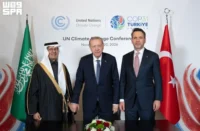
The memorandum was signed at the COP31 climate conference in Antalya by Aziz Abdukhakimov, presidential adviser and chairman of Uzbekistan’s National Committee for Ecology and Climate Change, and Mohammad Abdullah Abunayyan, founder and chairman of ACWA Power.
The agreement aims to strengthen cooperation on the application of mechanisms established under the Paris Agreement, including international cooperation to reduce greenhouse gas emissions, develop carbon markets and advance sustainable development goals.
The agreement provides for exploring opportunities for ACWA’s projects in Uzbekistan to participate in international carbon market mechanisms under the Paris Agreement.
This means the parties will assess whether selected renewable energy projects can participate in international mechanisms that support emissions reductions and the generation and transfer of carbon credits.
The memorandum establishes a framework for cooperation and assessment. It does not confirm that the projects have already been approved for carbon credit issuance or registered under international carbon market mechanisms.
Which Renewable Energy Projects Are Included in the Agreement?
The memorandum identifies four renewable energy projects in Uzbekistan that could potentially participate in international carbon market mechanisms.
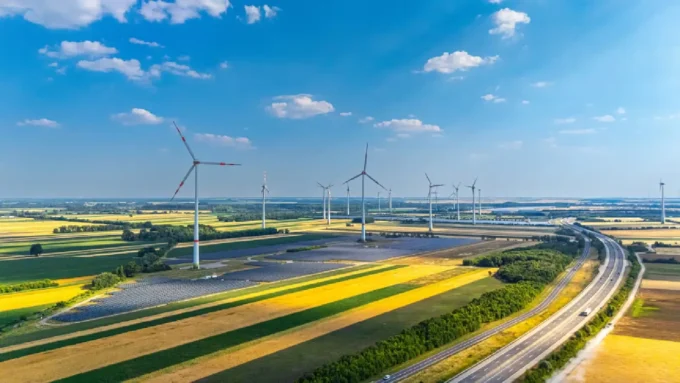
These include the Bash, Dzhankeldy and Kungrad wind farms, including a battery energy storage system, as well as the Karatau wind power project.
The parties intend to assess the projects’ compliance with the requirements and criteria of the Paris Agreement.
They will also examine approval and registration procedures and explore opportunities for generating, transferring and using carbon credits and emissions-reduction outcomes.
The inclusion of these projects links Uzbekistan’s renewable energy development with its participation in international climate cooperation.
However, the agreement does not establish that all four projects will automatically qualify for carbon credits. Their eligibility will depend on the assessment process and applicable approval and registration requirements.
How Will the Projects Generate Carbon Credits?
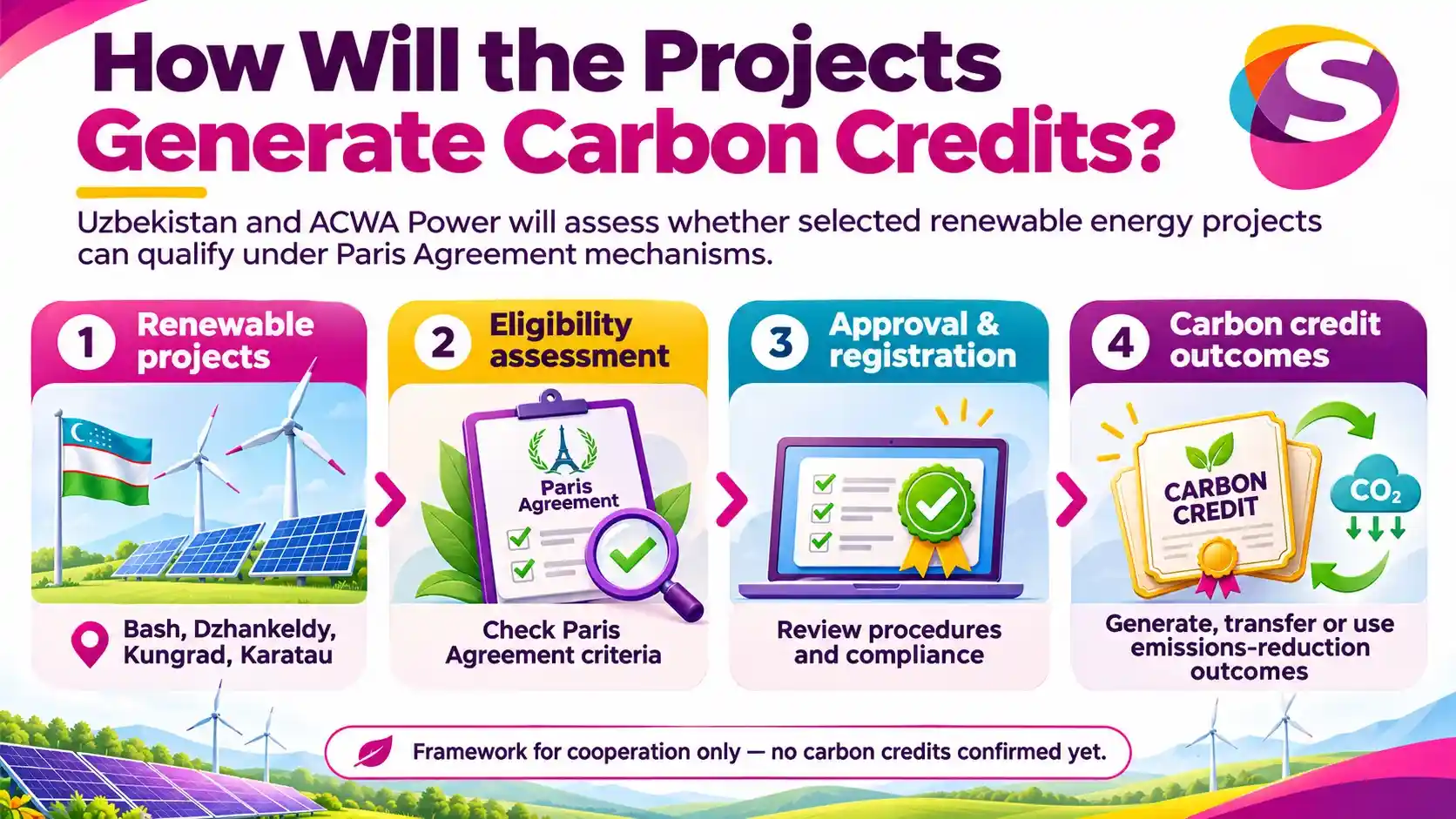
Carbon markets allow emissions reductions to be represented by carbon credits or other recognised emissions-reduction outcomes, which may be transferred or used under applicable market mechanisms.
Under the Paris Agreement, international cooperation can enable countries and other eligible participants to support emissions reductions through approved mechanisms.
The parties plan to assess whether these projects meet the Paris Agreement’s criteria and examine procedures for their approval and registration. They will also explore opportunities to generate, transfer and use carbon credits and emission reduction outcomes.
For ACWA Power’s renewable energy projects, the assessment will determine whether their emissions-reduction outcomes can qualify for participation in the relevant international mechanisms.
The memorandum therefore focuses on exploring the potential of the projects rather than announcing confirmed carbon credit volumes or completed transactions.
The parties will also need to consider the technical and regulatory requirements involved in measuring and verifying emissions reductions.
What Technical and Regulatory Cooperation Will the Agreement Cover?
Beyond exploring carbon credit opportunities, the memorandum provides for technical and regulatory cooperation between Uzbekistan and ACWA Power.
This includes exchanging knowledge and experience in carbon markets, improving monitoring, reporting and verification systems, and strengthening institutional capacity.
Monitoring, reporting and verification (MRV) systems are important in carbon markets because they help establish how emissions reductions are measured, documented and independently assessed.
Reliable MRV systems help ensure that claimed emissions reductions are properly accounted for and that carbon credits are supported by credible information.
The agreement also provides for the exchange of expertise and knowledge on carbon markets and capacity-building activities.
These measures could help strengthen Uzbekistan’s institutional ability to participate in international carbon market mechanisms and assess renewable energy projects for potential carbon credit opportunities.
Context is everything. Stay ahead of shifting trends with today’s market updates, and uncover emerging opportunities using the Serrari Group Market Index and Marketplace. Then, take control of your own financial future by exploring our Money & Life Reset Transformation Blueprint ™ to build stronger habits, create better systems, and design a path toward lasting wealth.
How Will the Agreement Address Climate Risks to Renewable Energy Projects?
Another important part of the memorandum focuses on strengthening the climate resilience of renewable energy facilities and energy infrastructure.
The parties also intend to cooperate on improving the climate resilience of renewable energy facilities and energy infrastructure.
In particular, they plan to exchange information on climate risk assessments for wind farms and energy storage systems.
The factors under consideration include extreme temperatures, dust and sand storms.
These conditions can affect renewable energy infrastructure and its operation. Wind farms and battery energy storage systems need to be assessed for their exposure to changing climate conditions and extreme weather-related risks.
The parties will also explore the use of climate information and early warning systems to protect energy facilities.
The work will consider the effects of extreme temperatures, dust and sandstorms, as well as the use of climate information and early warning systems.
This part of the agreement is significant because renewable energy investment involves not only developing new generation capacity but also ensuring that infrastructure can continue operating under changing environmental conditions.
What Does the Agreement Mean for Uzbekistan’s Climate Goals?
The memorandum aims to expand Uzbekistan’s participation in international climate cooperation and use the potential of renewable energy to help achieve the country’s climate goals.
By exploring carbon market opportunities for ACWA Power’s projects, the agreement could create additional routes for linking renewable energy development with international emissions-reduction mechanisms.
The technical cooperation component could also strengthen the country’s ability to assess, monitor and report emissions reductions.
At the same time, the focus on climate risk assessments and early warning systems recognises the importance of protecting renewable energy infrastructure from environmental threats.
The signing of the Memorandum marks an important step in advancing cooperation between Uzbekistan and ACWA Power on international climate action, expanding the country’s opportunities to participate in carbon markets and harnessing the potential of renewable energy to achieve national climate targets.
However, the agreement remains a framework for cooperation. The supplied information does not specify expected carbon credit volumes, project approval dates, investment amounts or a timeline for implementation.
The Bigger Picture
The Uzbekistan–ACWA Power memorandum highlights how renewable energy projects can be linked to international carbon market mechanisms under the Paris Agreement.
The agreement brings together two areas of climate action: reducing greenhouse gas emissions through renewable energy development and strengthening the systems needed to measure, verify and potentially transfer emissions-reduction outcomes.
It also recognises that renewable energy infrastructure must be resilient to climate-related risks, including extreme temperatures, dust storms and sandstorms.
For Uzbekistan, the cooperation could provide an opportunity to explore international carbon markets while strengthening technical and institutional capacity.
For ACWA Power, it creates a framework to assess whether its renewable energy projects in the country can participate in international emissions-reduction mechanisms.
Why Does This Matter Now?
The agreement comes as countries and companies explore ways to connect renewable energy investments with international climate finance and carbon markets.
For Uzbekistan, participation in carbon market mechanisms could create additional opportunities to support its climate goals through emissions-reduction projects.
However, the potential benefits will depend on whether the identified projects meet the relevant Paris Agreement criteria and complete the required approval and registration processes.
The agreement’s focus on monitoring, reporting and verification is also important because credible emissions-reduction accounting is essential for the integrity of carbon markets.
Beyond carbon credits, the cooperation on climate risk assessments could help protect renewable energy investments from environmental conditions that may affect infrastructure and operations.
Outlook
The Uzbekistan–ACWA Power memorandum establishes a framework for exploring carbon market opportunities linked to four renewable energy projects in the country.
The next steps will involve assessing project eligibility under the Paris Agreement, examining approval and registration procedures, and strengthening monitoring, reporting and verification systems.
The parties will also explore climate risk assessments and early warning systems for renewable energy facilities and energy infrastructure.
Whether the cooperation leads to registered carbon credits or transferable emissions-reduction outcomes will depend on the outcome of these assessments and the relevant approval processes.
Frequently Asked Questions
1. What did Uzbekistan and ACWA Power sign at COP31?
They signed a memorandum of understanding to strengthen cooperation on carbon markets and international mechanisms for reducing greenhouse gas emissions under the Paris Agreement.
2. Which ACWA Power projects in Uzbekistan are included?
The projects include the Bash, Dzhankeldy, Kungrad and Karatau wind power developments. The Kungrad project includes a battery energy storage system.
3. Will the renewable energy projects automatically receive carbon credits?
No. The parties will first assess whether the projects meet the Paris Agreement’s criteria and examine the required approval and registration procedures.
4. What climate risks will the cooperation address?
The parties will exchange information on climate risk assessments for wind farms and energy storage systems, focusing on extreme temperatures, dust storms and sandstorms. They will also explore climate information and early warning systems to protect energy facilities.
Your financial future isn’t something you wait for—it’s something you build.
The real question is: when do you begin?
Move beyond simply staying informed.
Navigate the markets with clarity—track trends through the Serrari Group Market Index, uncover opportunities in the Serrari Marketplace, and build practical knowledge with our Curated Wealth Builder Platform.
Stay connected to what truly matters.
Get daily insights on macro trends and financial movements across Kenya, Africa, and global markets—delivered through the Serrari Newsletter.
Growth opens doors.
Advance your career through professional programs including ACCA, HESI A2, ATI TEAS 7 , HESI EXIT , NCLEX – RN and NCLEX – PN, Financial Literacy!🌟—designed to move you forward with confidence.
See where money is flowing—clearly and in real time.
Track Money Market Funds, Treasury Bills, Treasury Bonds, Green Bonds, and Fixed Deposits, alongside global and African indexes, key economic indicators, and the evolving Crypto and stablecoin landscape—all within Serrari’s Market Index.