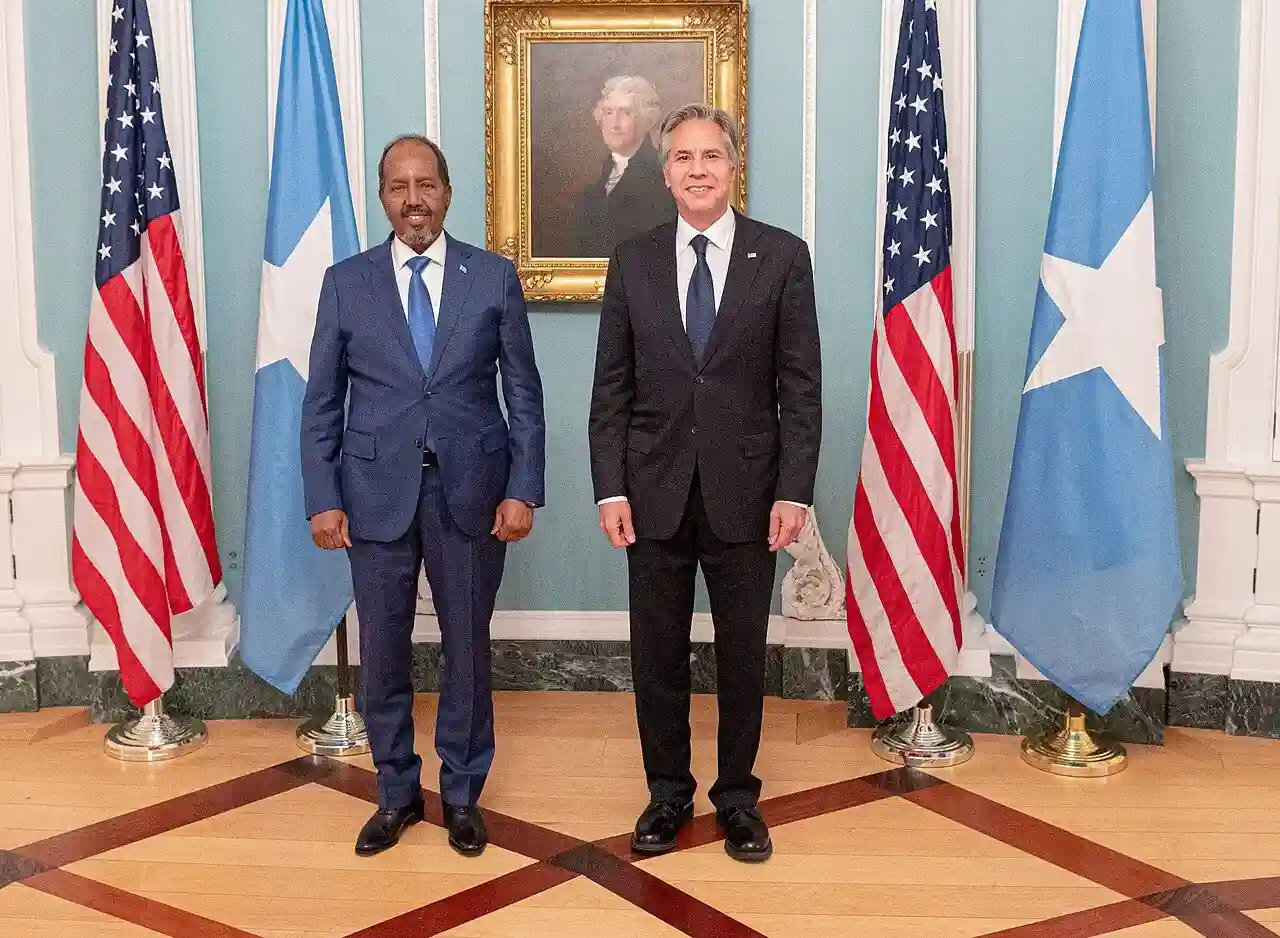
Somalia has launched a national climate investment plan estimated to require $12.8 billion between 2026 and 2035 to address the growing impact of climate change. Unveiled by President Hassan Sheikh Mohamud at COP31 in Antalya, Türkiye, the plan comprises seven pillars, 27 programmes and 44 investment initiatives covering agriculture, livestock, fisheries, water, energy, healthcare and environmental protection. A preliminary financing gap of $10.1 billion has been identified, while approximately $2.7 billion is associated with projects already identified.
Key Takeaways
- Somalia estimates it needs $12.8 billion between 2026 and 2035 to implement its national climate investment plan.
- President Hassan Sheikh Mohamud launched the plan at COP31 in Antalya, Türkiye.
- The plan comprises seven pillars, 27 programmes and 44 investment initiatives.
- Priority sectors include agriculture, livestock, fisheries, water, energy, healthcare and environmental protection.
- A preliminary financing gap of $10.1 billion has been identified, with approximately $2.7 billion associated with projects already identified.
- The 44 investment opportunities are currently at the concept stage.
What Is Somalia’s $12.8 Billion Climate Investment Plan?
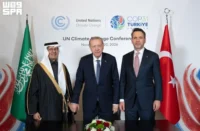
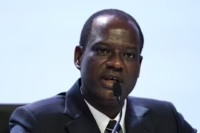
Somali President Hassan Sheikh Mohamud on Wednesday launched a national climate investment plan requiring an estimated $12.8 billion over the next decade to help the country address the growing impact of climate change.
Hassan, accompanied by Environment and Climate Change Minister Bashir Mohamed Jama, unveiled the National Investment Plan under Somalia’s Third National Climate Initiative in the Turkish city of Antalya.
The launch took place during the COP31 climate summit, where Somalia presented its investment priorities and outlined the resources required to strengthen its response to climate-related challenges.
The plan comprises seven pillars, 27 programmes and 44 investment initiatives targeting key sectors, including agriculture, livestock, fisheries, water, energy, healthcare and environmental protection.
The proposed investment period runs from 2026 through 2035. Its focus is to strengthen the country’s capacity to respond to climate risks while supporting development across key economic sectors.
The estimated $12.8 billion requirement highlights the scale of resources Somalia says it needs to implement its climate priorities over the next 10 years.
Why Does Somalia Need $12.8 Billion for Climate Investment?
Somalia is among the countries highly vulnerable to climate-related disasters, particularly recurrent droughts and flooding, which have affected livelihoods, food security and access to essential services.
Droughts affect water availability, agricultural production and livestock, which are important to livelihoods and economic activity. Flooding also threatens communities, infrastructure and access to essential services.
These challenges have made climate resilience an important part of Somalia’s development priorities.
Speaking at the launch, Hassan said his government had made considerable efforts to develop strategies for addressing environmental challenges but stressed that international financing and cooperation were essential to implementing them.
He called for greater international support to reduce the impact of droughts and floods and strengthen communities’ resilience to climate change.
The investment plan therefore seeks to connect climate priorities with development across sectors that are directly affected by climate risks.
How Will the $12.8 Billion Be Used?
The National Investment Plan groups its proposals into 27 programmes under seven headings, covering several sectors of the Somali economy.
These include water supply, agriculture, livestock, fishing and renewable energy, alongside infrastructure, health and environmental protection.
The proposed investment initiatives are intended to address climate-related challenges while supporting economic growth and strengthening resilience.
For example, investment in water supply could help communities respond to water shortages associated with drought. Support for agriculture and livestock could strengthen sectors affected by changing weather conditions, while renewable energy investment could contribute to the country’s energy priorities.
However, the supplied plan summary does not provide a detailed breakdown of the full $12.8 billion across the seven pillars or individual programmes. The specific allocation for each sector has therefore not yet been established in the available information.
How Much of the Climate Investment Plan Is Still Unfunded?
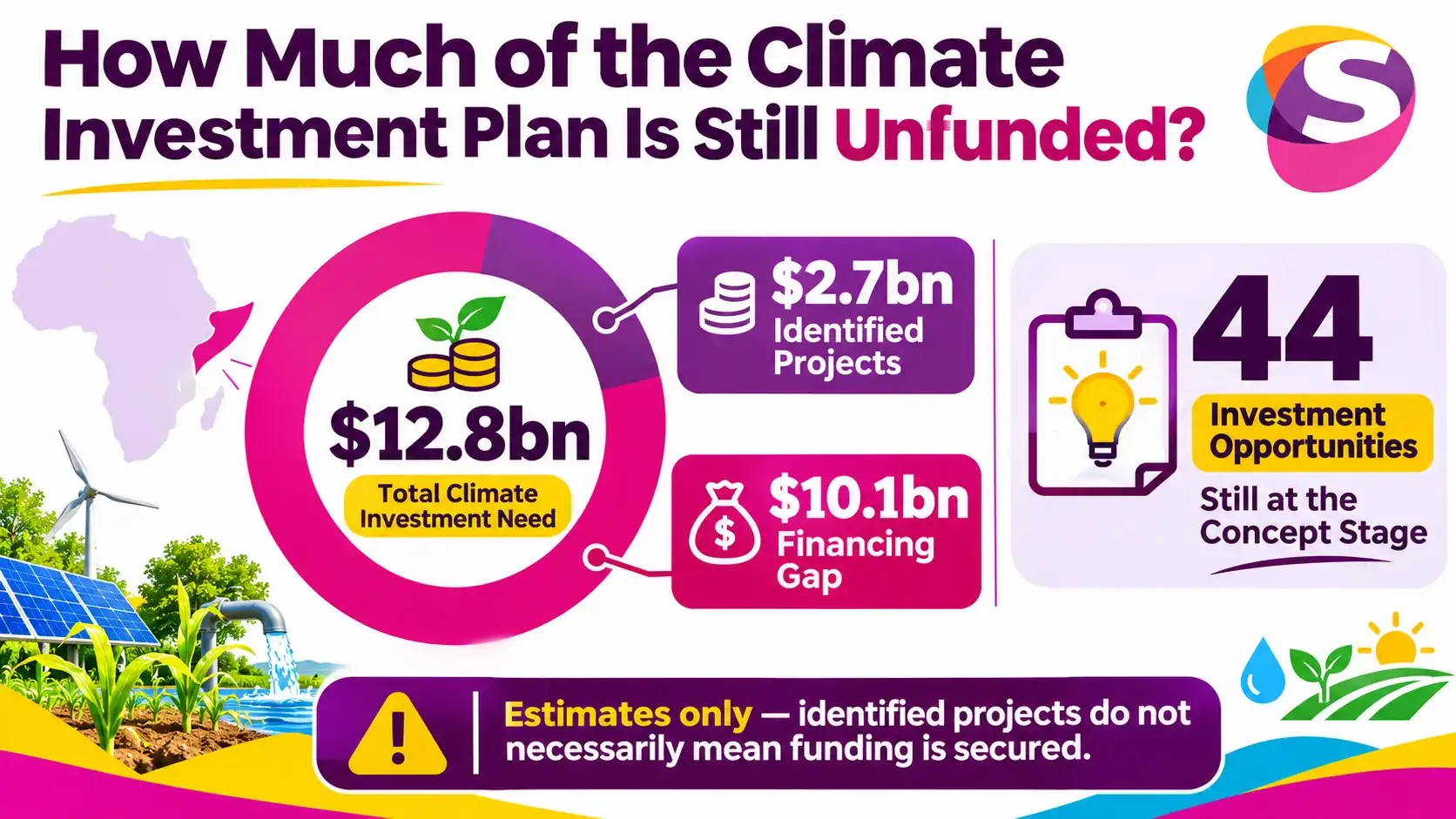
Although Somalia estimates that it will need $12.8 billion to implement the plan, the financing breakdown indicates that a substantial funding gap remains.
The Somali delegation’s summary puts the preliminary financing gap at US$10.1 billion, with about US 2.7 billion associated with projects it has already identified.
This distinction is important because the $12.8 billion represents the estimated overall investment requirement, while the $10.1 billion figure represents the preliminary financing gap.
The delegation also describes the 44 investment opportunities as being at the concept stage. This means they have been identified as potential investment opportunities, but the available information does not establish that they have secured funding or reached implementation.
The published figures are estimates and the summary does not detail how much money has been committed or disbursed.
Consequently, the $2.7 billion associated with identified projects should not automatically be interpreted as funding already secured or received.
The next challenge will be turning the identified opportunities into investment-ready projects and securing the financing required to implement them.
Context is everything. Stay ahead of shifting trends with today’s market updates, and uncover emerging opportunities using the Serrari Group Market Index and Marketplace. Then, take control of your own financial future by exploring our Money & Life Reset Transformation Blueprint ™ to build stronger habits, create better systems, and design a path toward lasting wealth.
What Financing Options Is Somalia Considering?
Somalia is seeking international financing and institutional support to move the climate investment plan forward.
Representatives from the Danish government, the World Bank, United Nations agencies and the African Development Bank attended the launch.
The participants discussed potential financing opportunities and institutional support for implementing the plan, which aims to strengthen Somalia’s capacity to respond to climate risks while supporting development across key economic sectors.
The Somali delegation has identified project preparation and the choice of financing as areas for discussion.
Its proposals include using grants, loans on preferential terms and private investment where appropriate.
The delegation also highlighted the need to clarify the responsibilities of federal institutions, member states and local partners in delivering the proposed initiatives.
These financing options are important because different projects may require different funding arrangements. Grants and concessional loans could support initiatives where commercial returns are limited, while private investment may be suitable for projects with clearer revenue-generating potential.
However, the available information does not confirm which financing option will be used for each project or how much funding individual development partners may provide.
What Role Will International Partners Play?
International cooperation will be important in addressing the financing and institutional requirements of Somalia’s climate investment plan.
The participation of the Danish government, World Bank, United Nations agencies and African Development Bank at the launch provided an opportunity to discuss possible financing and institutional support.
Somalia has called for greater international support to reduce the impact of droughts and floods and strengthen communities’ resilience to climate change.
However, participation in the launch and discussions about financing do not necessarily mean that these institutions have committed specific amounts to the plan.
The distinction between potential support, financing commitments and actual disbursements will be important as the initiative progresses.
The Bigger Picture
Somalia’s $12.8 billion climate investment plan highlights the financial challenges faced by climate-vulnerable countries seeking to strengthen resilience while supporting economic development.
The plan connects climate action with sectors such as agriculture, livestock, fisheries, water, healthcare and energy. These are areas where climate-related disasters can affect livelihoods, food security and access to essential services.
The financing gap also highlights the difference between identifying climate investment priorities and securing the resources needed to implement them.
With 44 investment opportunities still at the concept stage, project preparation, financing arrangements and coordination between federal institutions, member states and local partners will be important to turning the proposals into actual projects.
Why Does This Matter Now?
The launch comes as Somalia seeks international support to address the growing impact of droughts and flooding. These climate-related challenges continue to affect livelihoods, food security and essential services.
The $12.8 billion plan provides a framework for identifying investment priorities across key economic sectors. However, the preliminary $10.1 billion financing gap shows the scale of funding still required.
For international development partners and potential private investors, the plan presents identified areas where financing and institutional support could contribute to climate resilience and economic development.
The next important step will be to move the 44 investment opportunities beyond the concept stage, establish project-specific financing arrangements and clarify implementation responsibilities.
Outlook
Somalia’s National Climate Investment Plan sets out a 10-year investment requirement of $12.8 billion to address climate risks and support development across key sectors.
While the plan identifies 44 investment opportunities under 27 programmes and seven pillars, its implementation will depend on securing the necessary financing and preparing projects for investment.
The preliminary financing gap of $10.1 billion underlines the scale of the challenge. How Somalia works with international partners, development institutions and private investors to close this gap will be central to determining whether the plan translates into practical climate resilience projects between 2026 and 2035.
Frequently Asked Questions
1. How much does Somalia need for its national climate investment plan?
Somalia estimates that it needs $12.8 billion between 2026 and 2035 to implement its national climate investment priorities.
2. Who launched Somalia’s climate investment plan?
President Hassan Sheikh Mohamud launched the National Investment Plan under Somalia’s Third National Climate Initiative at COP31 in Antalya, Türkiye.
3. Which sectors will benefit from the investment plan?
The plan targets agriculture, livestock, fisheries, water, energy, healthcare, infrastructure and environmental protection.
4. How much funding does Somalia still need?
The Somali delegation’s summary identifies a preliminary financing gap of $10.1 billion. Approximately $2.7 billion is associated with projects already identified, although the summary does not specify how much has been committed or disbursed.
Your financial future isn’t something you wait for—it’s something you build.
The real question is: when do you begin?
Move beyond simply staying informed.
Navigate the markets with clarity—track trends through the Serrari Group Market Index, uncover opportunities in the Serrari Marketplace, and build practical knowledge with our Curated Wealth Builder Platform.
Stay connected to what truly matters.
Get daily insights on macro trends and financial movements across Kenya, Africa, and global markets—delivered through the Serrari Newsletter.
Growth opens doors.
Advance your career through professional programs including ACCA, HESI A2, ATI TEAS 7 , HESI EXIT , NCLEX – RN and NCLEX – PN, Financial Literacy!🌟—designed to move you forward with confidence.
See where money is flowing—clearly and in real time.
Track Money Market Funds, Treasury Bills, Treasury Bonds, Green Bonds, and Fixed Deposits, alongside global and African indexes, key economic indicators, and the evolving Crypto and stablecoin landscape—all within Serrari’s Market Index.