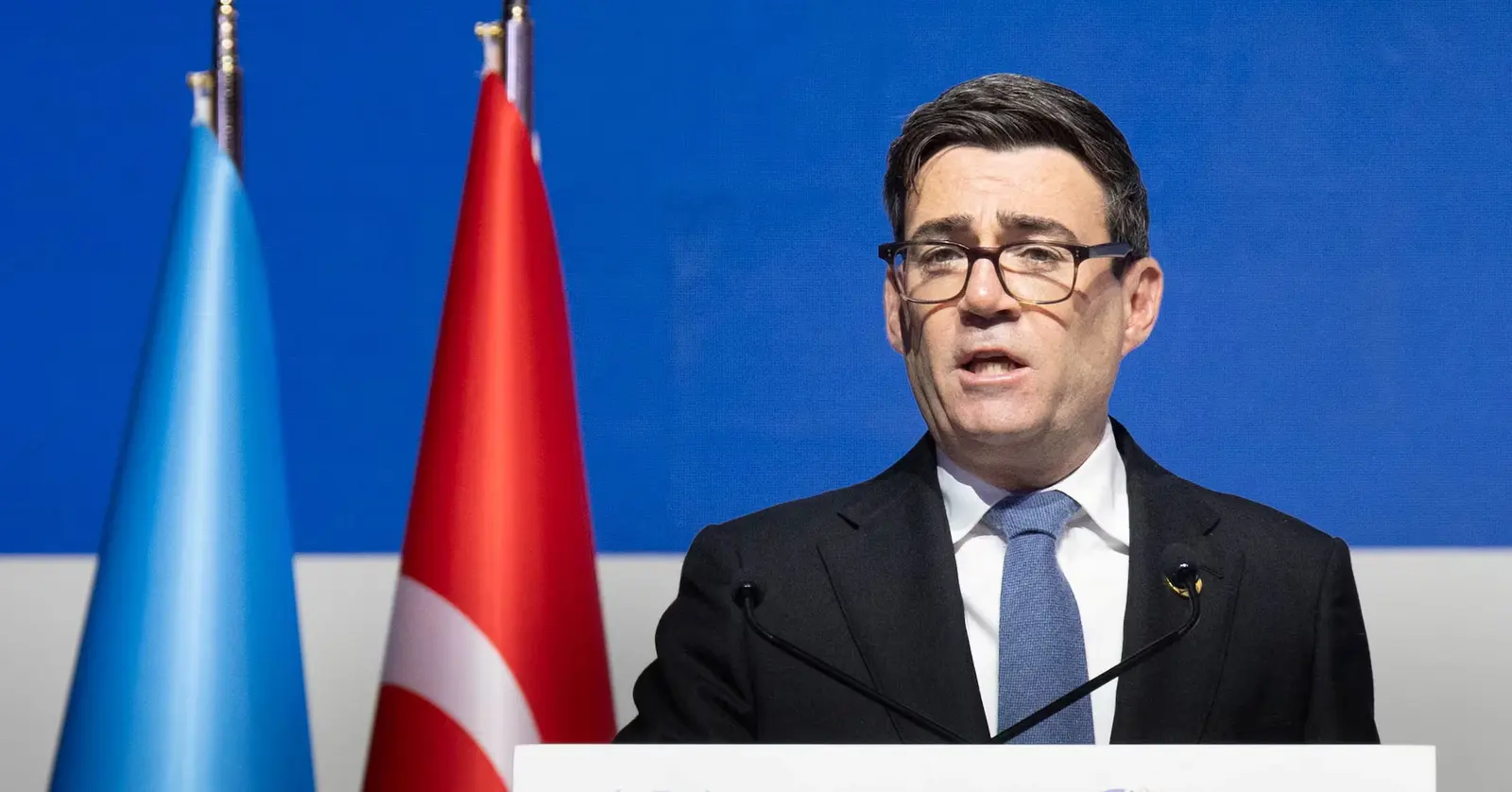
British International Investment (BII), FinDev Canada and Norfund have launched 10by30, a collaboration aimed at delivering $10 billion in climate finance in emerging markets by 2030. Announced at COP31 in Antalya, Türkiye, the initiative will support projects in renewable energy, electricity transmission and distribution, energy storage, sustainable fuels and industrial decarbonisation. The three development finance institutions will share investment pipelines and market intelligence, coordinate due diligence, co-invest in major transactions and improve methodologies for measuring climate and development impacts. The $10 billion target includes private capital mobilised through the institutions’ investments.
Key Takeaways
- BII, FinDev Canada and Norfund have launched 10by30, targeting $10 billion in climate finance for emerging markets by 2030.
- The initiative was announced at COP31 in Antalya, Türkiye.
- Funding will support renewable energy, transmission and distribution infrastructure, energy storage, sustainable fuels and industrial decarbonisation.
- The $10 billion target includes private capital mobilised through the institutions’ investments.
- The institutions will share investment pipelines, coordinate due diligence and co-invest in major transactions.
- The partnership aims to reduce duplicated work, improve investment efficiency and accelerate decisions on shared transactions.
- The initiative builds on existing climate investment programmes operated by the three institutions.
What Is the 10by30 Climate Finance Initiative?
British International Investment (BII), FinDev Canada and Norfund, the development finance institutions of the UK, Canada and Norway, have announced the launch of 10by30, a new collaboration aimed at delivering $10 billion in climate finance in emerging markets by 2030.
Launched at COP31 in Antalya, Türkiye, the financing from the new collaboration, which will include private capital, will go to projects across renewable energy, transmission and distribution infrastructure, energy storage, sustainable fuels and industrial decarbonisation.
The initiative brings together three development finance institutions to scale investment in clean energy and climate-related infrastructure across developing economies.
The $10 billion target includes private capital mobilised through the institutions’ investments, rather than representing funding provided exclusively from their own resources.
Under a memorandum of understanding, the institutions will strengthen their collaboration on climate and energy-transition investment in emerging markets, with the aim of reducing duplicated work and speeding up decisions on shared transactions.
The three institutions said they would collaborate more closely on climate and energy-transition investments in emerging markets, with the objective of reducing duplication, improving investment efficiency and accelerating decisions on joint transactions.
The partnership is intended to combine their financial resources, technical expertise and market presence to attract greater private-sector participation in climate finance.
Which Climate Projects Will Receive Investment?
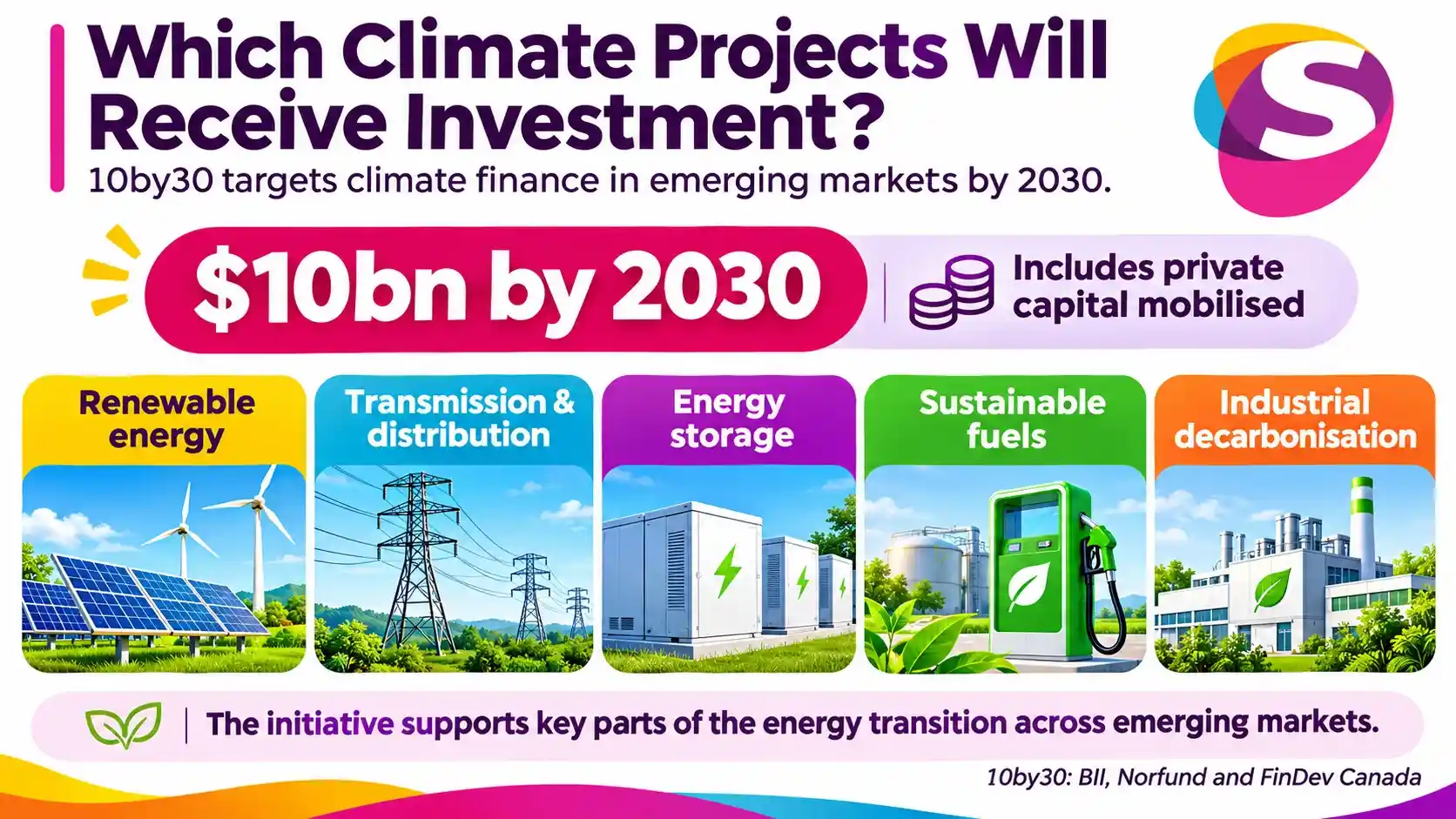
The 10by30 initiative will focus on several areas of climate investment, particularly those supporting the transition towards cleaner energy and lower industrial emissions.
The $10 billion, including private capital mobilised, will be invested in projects across renewable energy, transmission and distribution infrastructure, energy storage, sustainable fuels and industrial decarbonisation.
These areas address different parts of the energy transition.
Renewable energy projects can increase the supply of electricity generated from cleaner sources such as solar, wind and other renewable technologies. However, expanding generation capacity also requires investment in electricity transmission and distribution infrastructure to deliver power to consumers.
Energy storage is another priority because it can help manage fluctuations in renewable electricity generation and improve the reliability of electricity systems.
The initiative will also support sustainable fuels and industrial decarbonisation. These areas are important for reducing emissions in sectors where transitioning away from conventional fossil fuels can be more challenging.
By covering several parts of the energy system, 10by30 seeks to support a broader range of climate investment opportunities across emerging markets.
How Will BII, Norfund and FinDev Canada Work Together?
The collaboration is built around closer coordination between the three institutions, particularly when identifying and financing projects.
Key points of collaboration will include working together to identify investment opportunities, share pipeline and market intelligence, coordinate due diligence and co-invest in flagship transactions, as well as to advance methodologies for measuring climate and development effects and coordinate engagement to improve enabling conditions and advance best practice on mobilizing private capital for climate finance projects.
The institutions will share investment pipelines and market intelligence to identify opportunities that could benefit from joint financing.
They will also coordinate due diligence, which involves assessing the financial, operational and other risks associated with potential investments before making funding decisions.
Co-investment in major transactions is another important part of the arrangement. Rather than financing projects independently, the institutions can work together on selected investments and combine their resources.
The partnership will also seek to improve methodologies for measuring climate and development impacts. This will help the institutions assess the emissions reductions and wider development outcomes associated with their investments.
The new collaboration is designed to reduce duplicated activity between the institutions and accelerate decision-making on joint transactions.
This approach is intended to make their investment processes more efficient and help move projects towards financing and implementation more quickly.
Why Are Development Finance Institutions Joining Forces?
The initiative comes as developing economies face growing financing requirements to fund energy transitions and build climate-resilient infrastructure.
Climate projects often require significant upfront investment, while some emerging markets face challenges attracting private investors because of perceived financial, regulatory and project-related risks.
Development finance institutions can help address some of these challenges by providing capital, technical expertise and financing structures that make projects more attractive to private investors.
The three institutions said that they share similar aims and approaches, including using their capital, expertise and market presence to de-risk investments, avoid emissions at scale and mobilize private capital.
De-risking investments means using financial and other support to reduce some of the risks that may discourage private investors from participating in a project.
For example, development finance institutions can provide financing or blended-finance structures that help make commercially viable climate projects more attractive to additional sources of capital.
The 10by30 initiative seeks to build on this role by coordinating the institutions’ activities and encouraging greater private-sector participation.
Erik Sandersen, CEO of Norfund, said:
“Climate finance needs both scale and speed. Working together lets us use our capital and teams more efficiently, so we can move faster and mobilise more private capital where the most emissions can be avoided.”
Leslie Maasdorp, Chief Executive of BII, also highlighted the importance of bringing the institutions together.
“Today’s signing brings together three global leaders in climate finance in emerging markets. Our shared determination is to create the opportunities that will move private capital at an unprecedented scale to where it is needed the most.”
What Existing Climate Investment Programmes Will Support 10by30?
The three development finance institutions already operate dedicated climate investment initiatives. The new collaboration will build on these existing programmes rather than replace them.
Each of the development institutions has set up their own dedicated climate investment initiatives, including: The Norwegian Climate Investment Fund, British Climate Partners, and the Climate Mobilization Strategy.
These programmes provide a foundation for the institutions’ participation in the new partnership.
Norfund’s Norwegian Climate Investment Fund supports climate-related investments, while BII’s British Climate Partners and FinDev Canada’s Climate Mobilization Strategy provide their respective platforms for mobilising capital towards climate and energy-transition opportunities.
The institutions said they share similar objectives and approaches, particularly in using their capital, expertise and market presence to reduce investment risks and mobilise private finance.
Erik Sandersen said the Norwegian Climate Investment Fund gives Norfund a strong platform to help deliver the shared $10 billion goal.
Lori Kerr, CEO of FinDev Canada, said:
“Meaningful climate impact requires scaling investment into commercially viable mitigation opportunities, particularly in higher-emitting emerging markets. Thanks to our fresh capital, blended finance products, and technical assistance, we are able to attract larger volumes of private capital to make sure investment opportunities have the highest impact on reducing GHG emissions and accelerating the energy transition.”
The use of blended finance and technical assistance is particularly relevant in markets where climate projects may need additional financial or technical support to attract private investment.
Context is everything. Stay ahead of shifting trends with today’s market updates, and uncover emerging opportunities using the Serrari Group Market Index and Marketplace. Then, take control of your own financial future by exploring our Money & Life Reset Transformation Blueprint ™ to build stronger habits, create better systems, and design a path toward lasting wealth.
How Does 10by30 Fit Into Global Climate Finance Targets?
The launch of 10by30 comes amid wider international efforts to increase the amount of climate finance available to developing countries.
At COP29 in 2024, countries agreed to a goal of mobilising at least $300 billion annually for developing countries by 2035, while calling for climate finance from all sources to reach $1.3 trillion annually.
These targets highlight the scale of financing required to support climate action in developing economies.
Developing countries need funding for renewable energy generation, electricity infrastructure, industrial decarbonisation and other climate-related investments.
The 10by30 initiative contributes to these wider efforts by bringing together three development finance institutions to mobilise investment in emerging markets.
However, its $10 billion target is a separate initiative and should not be confused with the wider international climate finance goals agreed at COP29.
The COP31 Presidency has also described this year’s conference as a “COP of implementation and acceleration”, reflecting the focus on moving climate commitments towards practical action.
The partnership’s emphasis on identifying investment opportunities, coordinating due diligence and co-investing in major transactions is intended to support that implementation focus.
What Have the Leaders Said About the Initiative?
Representatives from the three institutions and their respective governments highlighted the importance of mobilising private capital and accelerating investment in emerging markets.
Lucy Rigby, UK Economic Secretary to the Treasury, said:
“The UK is backing practical action to unlock investment for the energy transition in emerging markets. By mobilising $10 billion of private finance for the energy transition by 2030, we will help public finance go further and support greater investment in clean energy, sustainable growth and economic opportunity.”
Åsmund Aukrust, Norway’s Minister of International Development, said:
“The world is running out of time and must speed up the global energy transition to limit the climate crisis. This collaboration, and the shared ambition of Norfund, BII and FinDev Canada, is a concrete contribution to making this year’s climate summit about how we deliver to succeed.”
Lori Kerr emphasised the importance of commercially viable mitigation opportunities, particularly in higher-emitting emerging markets.
The statements from the participating institutions and governments point to a shared objective: using development finance to attract larger volumes of private investment into climate projects.
The Bigger Picture
The 10by30 initiative highlights the role of development finance institutions in helping emerging markets attract investment for the energy transition.
By combining their capital, expertise and market presence, BII, Norfund and FinDev Canada aim to reduce investment risks and increase private-sector participation in climate-related projects.
The initiative also recognises that climate finance requires more than funding commitments. Projects need to be identified, assessed, financed and implemented, while their climate and development impacts must be measured.
Its focus on renewable energy, electricity infrastructure, energy storage, sustainable fuels and industrial decarbonisation covers several areas that require investment as countries work towards lower-emissions economies.
However, the $10 billion target includes private capital mobilised through the institutions’ investments. The actual contribution from each institution and the private sector will depend on the projects financed under the collaboration.
Why Does This Matter Now?
Emerging markets face growing financing requirements as they seek to expand clean energy, improve electricity infrastructure and reduce emissions from industrial activities.
The 10by30 initiative provides a framework for three development finance institutions to coordinate their investments and mobilise additional private capital towards these priorities.
For project developers, the collaboration could create opportunities to access financing and technical support for eligible climate projects.
For private investors, the institutions’ involvement could help reduce some investment risks and make commercially viable opportunities more attractive.
For emerging economies, the initiative could support the development of renewable energy and other climate-related infrastructure.
The next important development will be how the three institutions translate the memorandum of understanding into joint investments and actual financing commitments.
Outlook
BII, Norfund and FinDev Canada’s 10by30 initiative sets a shared target of delivering $10 billion in climate finance to emerging markets by 2030.
Its success will depend on the institutions’ ability to identify viable projects, coordinate investment decisions and attract private capital at scale.
The focus on renewable energy, transmission and distribution infrastructure, energy storage, sustainable fuels and industrial decarbonisation provides a broad investment framework.
The partnership’s progress will be measured not only by the amount of financing mobilised but also by the climate and development outcomes achieved through the projects it supports.
Frequently Asked Questions
1. What is the 10by30 climate finance initiative?
10by30 is a collaboration between British International Investment, FinDev Canada and Norfund aimed at delivering $10 billion in climate finance in emerging markets by 2030.
2. Which organisations are involved in 10by30?
The initiative brings together British International Investment (BII) of the UK, FinDev Canada of Canada and Norfund of Norway.
3. Which sectors will receive investment under the initiative?
The initiative will support renewable energy, transmission and distribution infrastructure, energy storage, sustainable fuels and industrial decarbonisation.
4. Does the $10 billion target include private investment?
Yes. The $10 billion target includes private capital mobilised through the institutions’ investments, meaning the initiative is intended to combine development finance with additional private-sector funding.
Your financial future isn’t something you wait for—it’s something you build.
The real question is: when do you begin?
Move beyond simply staying informed.
Navigate the markets with clarity—track trends through the Serrari Group Market Index, uncover opportunities in the Serrari Marketplace, and build practical knowledge with our Curated Wealth Builder Platform.
Stay connected to what truly matters.
Get daily insights on macro trends and financial movements across Kenya, Africa, and global markets—delivered through the Serrari Newsletter.
Growth opens doors.
Advance your career through professional programs including ACCA, HESI A2, ATI TEAS 7 , HESI EXIT , NCLEX – RN and NCLEX – PN, Financial Literacy!🌟—designed to move you forward with confidence.
See where money is flowing—clearly and in real time.
Track Money Market Funds, Treasury Bills, Treasury Bonds, Green Bonds, and Fixed Deposits, alongside global and African indexes, key economic indicators, and the evolving Crypto and stablecoin landscape—all within Serrari’s Market Index.