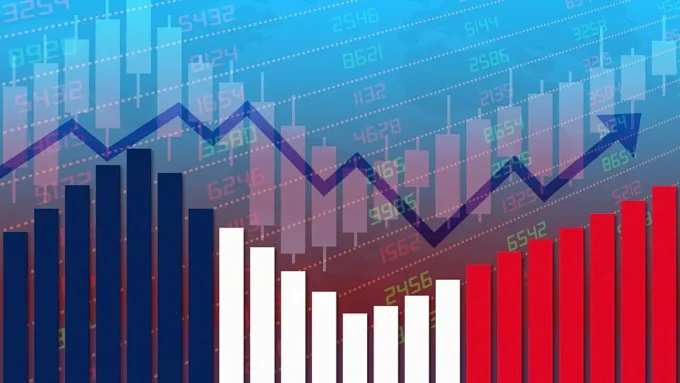
The world economy is bracing for a significant deceleration in global trade as the cascading effects of the U.S.-Israeli war on Iran, volatile energy markets, and disrupted supply chains converge to cloud the outlook for 2026. According to the World Trade Organization’s latest Global Trade Outlook and Statistics report released on March 19, world merchandise trade growth is expected to slow to just 1.9% this year — a sharp drop from the 4.6% expansion recorded in 2025. The deceleration marks a return to more subdued growth after last year’s surprisingly strong performance, which was fuelled by a boom in artificial intelligence-related goods and a wave of front-loaded imports by businesses scrambling to get ahead of new U.S. tariffs.
WTO Director-General Ngozi Okonjo-Iweala acknowledged the resilience that global trade has demonstrated, particularly in high-technology sectors and digitally delivered services. However, she cautioned that the baseline forecast is increasingly under threat from the expanding military conflict in the Middle East, which has sent energy prices surging, disrupted critical maritime chokepoints, and triggered a growing crisis in global fertilizer supply chains.
Markets move fast; don’t get left behind. We’ve paired the Serrari Group Market Index with a curated Marketplace and a comprehensive Wealth Builder Course to ensure you have the data—and the skills—to act on it.
A Conflict Reshaping Global Commerce
The war between the United States, Israel, and Iran — which began with coordinated airstrikes on February 28 — has rapidly evolved from a regional military confrontation into a systemic shock for global trade and commodity markets. Iran’s retaliatory closure of the Strait of Hormuz, through which roughly 20% of the world’s oil supply and up to 30% of global fertilizer exports normally transit, has choked one of the most critical maritime corridors on the planet.
The WTO report laid out a sobering downside scenario: if crude oil and liquefied natural gas prices remain elevated throughout 2026 due to the conflict, global merchandise trade growth could be slashed to just 1.4%. Sustained high energy prices could shave 0.5 percentage points off global merchandise growth, with net fuel-importing regions in Asia and Europe absorbing the heaviest impact. Services trade, which grew by 5.3% in 2025, faces a projected decline from the baseline forecast of 4.8% to 4.1% in 2026 due to shipping and aviation disruptions across the region.
The International Energy Agency has described the situation as the greatest global energy security challenge in history. According to its March 2026 Oil Market Report, Brent crude prices surged to within touching distance of $120 per barrel in the days following the outbreak of hostilities, with global oil supply projected to plunge by 8 million barrels per day in March alone. Gulf states including Saudi Arabia, the UAE, Kuwait, and Iraq have been forced to cut oil production by at least 10 million barrels per day as storage fills up and tanker traffic through Hormuz has collapsed. IEA member countries responded by agreeing to release 400 million barrels from emergency reserves — the largest coordinated stockpile release in history — but analysts warn that even this unprecedented measure can only buy a limited window of relief.
The World Economic Forum noted in its analysis that the economic fallout extends well beyond oil. The war is imposing what amounts to a global surcharge through rising shipping costs and insurance premiums, while disrupted petrochemical flows are forcing factories in Asia and beyond to curtail production. Japan, which depends on the Middle East for approximately 90% of its crude oil imports, and South Korea, which sources around 70% of its crude from the region, face particularly acute exposure.
The Fertilizer Crisis and Food Security Threat
Beyond the headlines on oil prices, the WTO report highlighted a less visible but potentially devastating consequence of the Strait of Hormuz blockade: the disruption to global fertilizer supply chains. The Gulf region is a vital supplier of urea, ammonia, and sulphur — key inputs for agricultural production worldwide. By choking off roughly one-third of global fertilizer urea imports, a prolonged blockade risks hitting major agricultural producers like India, Thailand, and Brazil, fuelling food security risks across the developing world.
The Center for Strategic and International Studies reported that urea prices at the New Orleans import hub surged 32% in a single week, jumping from $516 per metric ton on February 27 to $683 on March 5. One ton of urea now costs U.S. farmers the equivalent of 126 bushels of corn, up dramatically from 75 bushels in December 2025. The strait’s closure has arrived at the worst possible time for Northern Hemisphere agriculture, as the spring planting season typically sees peak fertilizer demand in March and April.
The crisis is compounded by the fact that QatarEnergy, which supplies approximately 20% of the world’s LNG, declared force majeure on its export contracts after hostilities disrupted operations at the giant Ras Laffan facility. Since LNG is a critical feedstock for producing synthetic nitrogenous fertilizers, the disruption has cascaded through production chains far beyond the Gulf. Fertilizer manufacturers in India, Bangladesh, and Pakistan have begun shutting down plants or accelerating maintenance as gas supplies evaporate.
The Carnegie Endowment for International Peace warned that the fertilizer situation threatens to become a global food crisis. Unlike during the 2022 supply shock following Russia’s invasion of Ukraine, when fertilizer shipments could be rerouted, the closure of the Strait of Hormuz presents fewer alternative pathways. Brazil, the world’s largest fertilizer importer — bringing in over 49 million metric tons in 2025 — is particularly exposed, given its heavy dependence on Gulf-sourced nitrogen and phosphate products. India, the world’s largest importer of DAP fertilizers, faces similar vulnerabilities, with key suppliers like Saudi Arabia and Oman caught directly in the conflict zone. The American Farm Bureau Federation has urged the Trump administration to take proactive steps to safeguard fertilizer supply chains and protect American agriculture from the fallout.
AI Trade: The Bright Spot with an Uncertain Future
The WTO report was not entirely bleak. It credited the extraordinary surge in trade in artificial intelligence-enabling goods as a key factor behind 2025’s better-than-expected performance. Trade in AI-related products — encompassing semiconductors, advanced chips, and data transmission equipment — grew by 21.9% year-on-year to reach $4.18 trillion in 2025. This category alone accounted for 42% of total global trade growth last year, despite representing only about one-sixth of overall merchandise trade.
The semiconductor industry has entered what analysts are calling a historic expansion cycle, driven by insatiable demand for AI infrastructure. According to Deloitte’s 2026 outlook, the global semiconductor market is expected to reach $975 billion in annual sales this year, with generative AI chips alone approaching $500 billion in revenue — roughly half of the entire industry’s output. Many of these high-tech products remained largely exempt from new tariff measures in 2025, while the suspension of certain duties and limited retaliatory actions further insulated the sector from trade turmoil.
However, the WTO cautioned that the ongoing strength of investment in the AI sector remains “a big question mark for 2026 and beyond.” While the technology-driven expansion has played a critical role in stabilizing global trade amid policy uncertainty, questions are mounting over whether the pace of capital spending can be sustained. The semiconductor industry is notoriously cyclical, and the concentration of trade growth in a single sector introduces its own vulnerabilities if demand plateaus or geopolitical restrictions tighten further.
Context is everything. While you follow today’s updates, use the Serrari Market Index and Marketplace to spot emerging shifts. Need to sharpen your edge? Our Wealth Builder Course turns these insights into a professional-grade strategy.
Regional Divergences and the Tariff Landscape
The WTO’s regional forecasts paint a picture of widening divergences. Asia is expected to lead merchandise import growth in 2026, with imports rising 3.3% and exports climbing 3.5%. Africa follows with imports up 3.2% and exports growing 1.2%. By contrast, North American imports are projected to remain essentially flat at just 0.3%, while European exports are forecast to stagnate at 0.5% and Middle East export growth is expected to slow sharply to just 0.6%.
The combined growth rate for goods and services trade is forecast at 2.7% for 2026, closely tracking global GDP growth of 2.8% — a notable convergence from the gap seen in 2025, when trade expanded at 4.7% compared to GDP growth of 2.9%. This alignment suggests that the exceptional factors that turbocharged trade last year — the AI surge and tariff-driven front-loading — are now largely exhausted.
On the tariff front, the WTO report estimated that approximately 72% of world trade is still being conducted on a Most-Favoured-Nation basis, down from around 80% at the start of 2025. The decline followed the imposition of higher import tariffs by the Trump administration under various emergency and national security authorities. The Peterson Institute for International Economics noted that only about 10% of U.S. merchandise imports now enter under true MFN terms, owing to the combination of exceptional tariffs and preferential trade agreements — a dramatic erosion of the non-discrimination principle that has underpinned the multilateral trading system for decades.
The tariff landscape shifted again in February 2026 when the U.S. Supreme Court ruled that the International Emergency Economic Powers Act does not authorize tariffs, invalidating a significant portion of the levies imposed during 2025. The Tax Foundation estimates that following the ruling, the average effective tariff rate dropped from 13.8% to 6.7%, though the administration quickly responded by imposing a new 10% tariff on nearly all countries under Section 122 of the Trade Act, scheduled to remain in effect for 150 days.
The Road to Yaoundé: Can the Rules-Based System Hold?
Against this turbulent backdrop, trade ministers from 166 WTO member nations are set to gather in Yaoundé, Cameroon from March 26 to 29 for the organization’s 14th Ministerial Conference. The meeting is expected to focus on long-overdue reforms to the multilateral trading system, including the restoration of a functioning dispute settlement mechanism, progress on fisheries subsidies, and the politically charged question of extending the moratorium on customs duties for electronic transmissions.
Expectations for MC14 are modest at best. The conference takes place against the backdrop of a fragmented and increasingly strained trading order, with the U.S. having suspended budget contributions to the WTO and its dispute settlement system remaining dysfunctional. Key negotiations on agriculture, including the sensitive issue of public stockholding for food security that is critical to India, remain deeply deadlocked.
Yet Okonjo-Iweala struck a note of cautious defiance. She pointed to the fact that 72% of global trade still operates on an MFN basis as evidence that the system, while damaged, retains its foundational relevance. Ahead of the Cameroon summit, she declared that the rules-based trading system “may be battered, but it is far from broken” — a message clearly directed at those who question whether multilateral trade governance can survive the current era of unilateralism and geopolitical fragmentation.
Glimmers of Hope in a Darkening Outlook
The WTO noted that the outlook is not entirely one-directional. If the Middle East conflict is resolved quickly and the boom in AI-related spending continues through 2026 and into 2027, merchandise trade growth could be boosted by 0.5 percentage points to around 2.4% — a scenario that would represent a meaningful improvement over the baseline. Least-developed countries are forecast to see merchandise import growth of 4.5% and export growth of 2.9% under the baseline scenario, offering some evidence of broadening participation in global commerce.
But the balance of risks tilts firmly to the downside. The convergence of military conflict, energy market disruption, fertilizer shortages, food security threats, and a fraying multilateral rules system presents what the World Economic Forum has described as a structural shock to the world economy, delivered at a moment of profound geoeconomic fragility. The trajectory of global trade in the months ahead will depend on the duration of the Iran conflict, the path of energy prices, the resilience of AI-driven demand, and the willingness of major powers to recommit to the cooperative frameworks that have governed international commerce for nearly eight decades.
As ministers prepare to convene in Cameroon, the stakes could hardly be higher. The question is no longer simply whether global trade will slow — it will. The question is whether the institutions designed to manage that slowdown can adapt quickly enough to prevent a more damaging unravelling.
Your financial future isn’t something you wait for—it’s something you build.
The real question is: when do you begin?
Move beyond simply staying informed.
Navigate the markets with clarity—track trends through the Serrari Group Market Index, uncover opportunities in the Serrari Marketplace, and build practical knowledge with our Curated Wealth Builder Course.
Stay connected to what truly matters.
Get daily insights on macro trends and financial movements across Kenya, Africa, and global markets—delivered through the Serrari Newsletter.
Growth opens doors.
Advance your career through professional programs including ACCA, HESI A2, ATI TEAS 7 , HESI EXIT , NCLEX – RN and NCLEX – PN, Financial Literacy!🌟—designed to move you forward with confidence.
See where money is flowing—clearly and in real time.
Track Money Market Funds, Treasury Bills, Treasury Bonds, Green Bonds, and Fixed Deposits, alongside global and African indexes, key economic indicators, and the evolving Crypto and stablecoin landscape—all within Serrari’s Market Index.