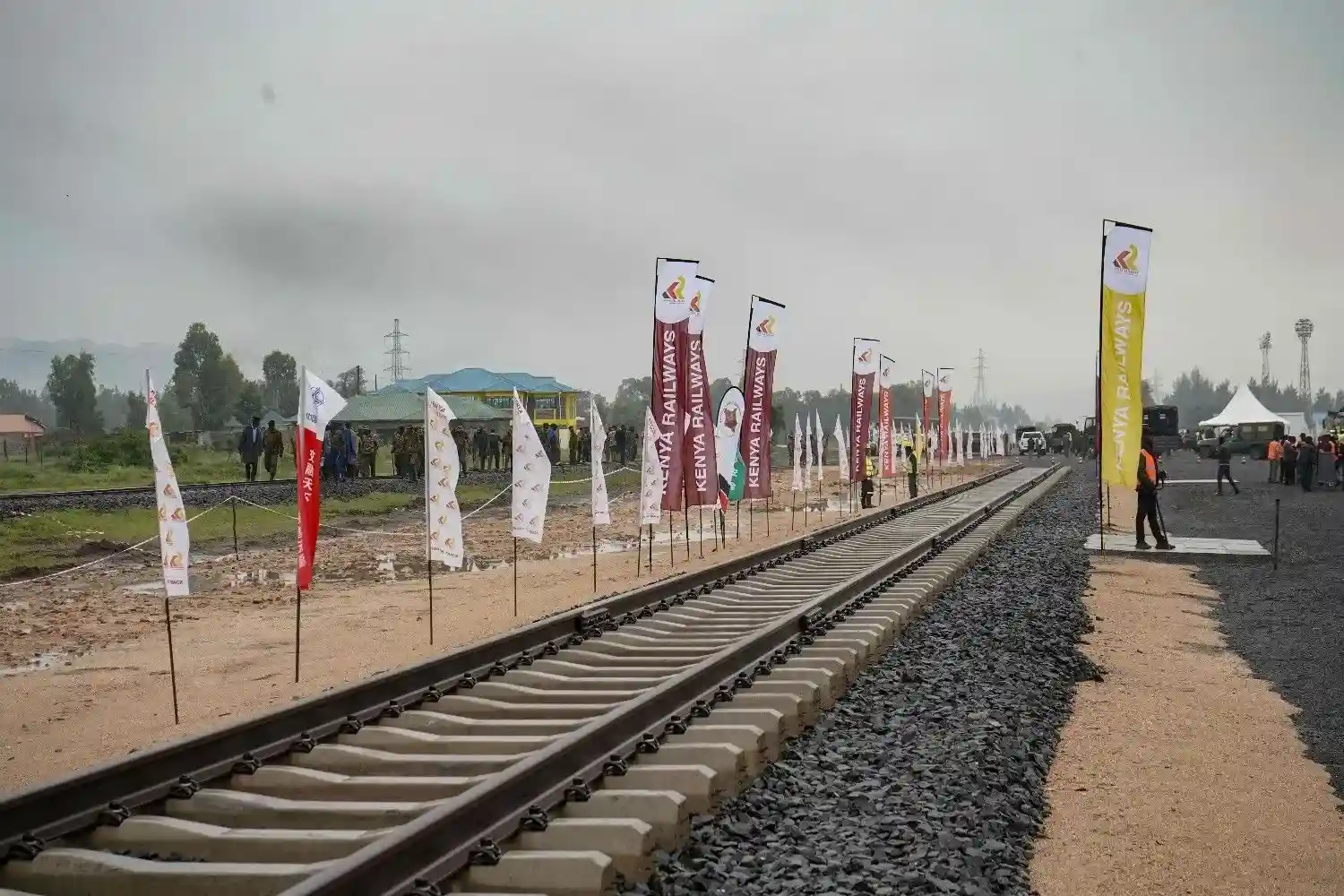
Kenya and Uganda have taken a decisive step toward connecting East Africa’s economic hinterland to the Indian Ocean by breaking ground on Phase 2C of the Standard Gauge Railway, a 107-kilometre extension from Kisumu to the border town of Malaba that will eventually link to Uganda’s own planned rail line to Kampala. The $943 million project was launched on March 21 at Kibos in Kisumu County, with Kenyan President William Ruto and Ugandan President Yoweri Museveni jointly presiding over a ceremony that both leaders described as a turning point for regional trade, transport, and economic integration.
The Kisumu-Malaba phase is the final Kenyan segment of a broader vision to create a continuous rail artery stretching nearly 1,000 kilometres from the Port of Mombasa through Nairobi, Naivasha, and western Kenya to the Ugandan border. When combined with Phase 2B — the 262-kilometre stretch from Naivasha through Narok to Kisumu, launched two days earlier at Motonyi in Narok County — the project represents one of the most ambitious infrastructure undertakings in East Africa’s modern history and a critical link in the Northern Corridor, which handles over 85% of trade for the East African Community.
Markets move fast; don’t get left behind. We’ve paired the Serrari Group Market Index with a curated Marketplace and a comprehensive Wealth Builder Course to ensure you have the data—and the skills—to act on it.
A Railway That Promises to Reshape Regional Trade
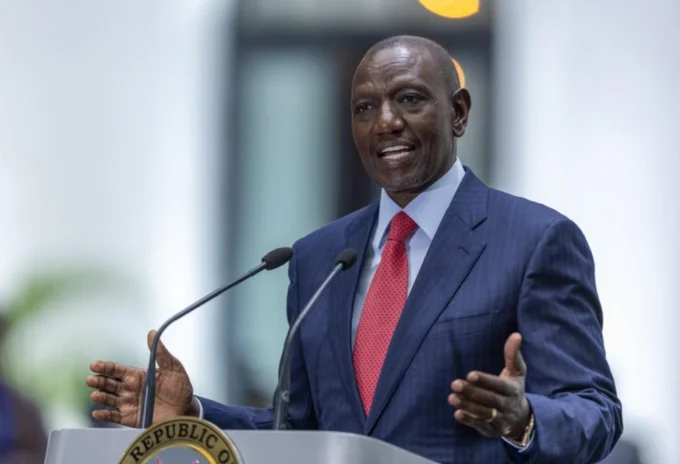
President Ruto described the SGR extension as a transformative project that would reshape the country’s economic geography. Speaking at the Narok launch, he emphasised that the railway would establish a direct connection between Kenya’s western agricultural heartlands — which produce tea, maize, sugar, rice, and support a major fisheries sector around Lake Victoria — and the Port of Mombasa, dramatically reducing the time and cost of moving both imports inland and exports outward.
“By extending this railway to Kisumu and ultimately to Malaba, we are consolidating Kenya’s role as the logistical backbone of East and Central Africa,” Ruto said, adding that the project would create a continuous railway corridor of nearly 1,000 kilometres from Mombasa to Malaba.
The economic case for the extension rests on the current inefficiency of road-based transport along the Northern Corridor. Thousands of trucks currently ply the Nairobi-Kisumu highway daily, contributing to severe road damage, frequent accidents, and high transportation costs. A recent study by the East African Business Council found that transporters pay $1.80 per kilometre on every container of cargo along the Northern Corridor — nearly twice the international average — while countries along the route spend approximately $2,160 per kilometre annually on road repairs.
The SGR extension is expected to reduce freight costs by at least 40% per tonne per kilometre and cut transit times by nearly 30%, with a significant share of cargo shifting from road to rail. The new line will feature passenger trains running at 120 km/h and freight trains at 80 km/h, with multiple stations along the route including Narok, Bomet, Sotik, Sondu, and Ahero. Engineering works will include 79 bridges, eight tunnels, and hundreds of culverts, with the line accommodating freight trains of up to 4,000 tonnes.
Ruto pointed to the existing SGR’s performance as evidence that the investment is justified. Freight operations on the Mombasa-Nairobi-Naivasha line now generate more than Ksh 1.3 billion ($10 million) every month, while passenger revenue has grown by about 40%, surpassing Ksh 4 billion ($30 million) annually. In December 2025 alone, passenger revenue reached Ksh 602 million ($4.65 million).
Uganda’s Parallel Push: The Malaba-Kampala Line
The Kenyan extension is only half of the picture. Uganda is simultaneously advancing its own SGR from Malaba to Kampala, a 272-kilometre line that will complete the cross-border connection. After years of delays — originally caused by a failed arrangement with a Chinese contractor — Uganda signed a turnkey construction contract with Turkish firm Yapı Merkezi in October 2024. The $2.7 billion project is expected to take four years, with full construction scheduled to begin in April 2026.
President Museveni used the Kisumu ceremony to articulate Uganda’s strategic rationale. He explained that the country’s transport system is “irrational and wasteful” because passengers, light cargo, heavy cargo, and petroleum products are all concentrated on the roads. Uganda’s long-term plan is to transfer heavy cargo to the railway, petroleum products to pipelines, and water transport to Lake Victoria, while reserving roads mainly for passengers and light goods.
The economic stakes for landlocked Uganda are substantial. It currently costs approximately $3,500 to move a container by road from Mombasa to Kampala; using the SGR, the same journey is projected to cost about $2,000. Kenyan government estimates suggest the rail link would also reduce travel time between Kampala and Nairobi from 14 hours to approximately four hours. Once operational, the combined Kenya-Uganda SGR network is projected to handle up to 30 million tonnes of cargo annually.
Uganda secured a crucial financing breakthrough in May 2025 when it signed an $800 million agreement with the Islamic Development Bank during the bank’s 50th Annual Meetings in Algiers. The three-year agreement forms part of Uganda’s Country Engagement Framework for 2025-2027. A limited notice to proceed has already been issued along with $83 million in funding to enable Yapı Merkezi to begin preparatory work, including surveys, design, and construction of logistics camps. The International Railway Journal reported that the IsDB proposed a concessional loan and co-financing arrangement for the project, with the government of Uganda committing €75 million to fund early works. Under the broader funding plan, Uganda covers 15% of costs, development institutions provide 65%, and export credit agencies supply the remaining 20% for equipment. Kampala is also pursuing a syndicated loan involving UK Export Finance, Turkish Exim Bank, and China Exim Bank.
Notably, Uganda’s SGR will be electrified — a different technical specification from Kenya’s diesel-powered Chinese-model trains. Technical teams from both countries held bilateral meetings in November 2025 to harmonise standards for seamless cargo transfer, including designs, signalling systems, and rolling stock.
Context is everything. While you follow today’s updates, use the Serrari Market Index and Marketplace to spot emerging shifts. Need to sharpen your edge? Our Wealth Builder Course turns these insights into a professional-grade strategy.
The Financing Question: Kenya’s Biggest Challenge
While the groundbreaking ceremonies were heavy on optimism, the most pressing question surrounding the Kenyan side of the project remains unresolved: how exactly will it be paid for? The combined cost of Phases 2B and 2C is estimated at approximately Ksh 500 billion ($5 billion), a staggering sum for a government already managing significant debt obligations from the earlier SGR phases.
The earlier SGR segments — from Mombasa to Nairobi and then to Naivasha — were funded almost entirely by China’s Export-Import Bank, which provided up to 90% of the $5.08 billion cost. However, the Chinese lender withdrew from financing subsequent phases, citing concerns over Kenya’s rising indebtedness and the project’s commercial viability. The SGR stalled at Suswa in Narok County, leaving the line stranded more than 350 kilometres from the Ugandan border.
Following President Ruto’s visit to China in 2024, the lender reportedly agreed to finance up to 30% of the extension, with Kenya providing another 30% and a consortium of lenders covering the remainder. In November 2025, Transport Cabinet Secretary Davis Chirchir announced plans to issue a Ksh 390 billion ($3 billion) bond backed by the Railway Development Levy Fund, a 2% charge on imported goods that currently generates approximately Ksh 40 billion per year. Chirchir said the bond would be structured as a 15-year instrument and that the new railway line would be tolled to help repay investors.
To accelerate this securitisation strategy, President Ruto on March 13 signed into law the Miscellaneous Fees and Levies (Amendment) Act, 2026, which created a dedicated Railway Development Levy Fund and allows up to 90% of its collected revenues to be used as collateral for borrowing. Over Ksh 35 billion collected through the levy will be channelled directly into the fund. According to Bloomberg reporting, the government plans to borrow Ksh 60 billion in the first half of 2026, with the remainder expected in the 2026/27 fiscal year.
Treasury Cabinet Secretary John Mbadi has also indicated that the government is exploring the issuance of a Panda bond — denominated in Chinese yuan — to bridge the funding gap. However, neither the Panda bond nor the proposed RDLF-backed bond has yet been issued, and no budgetary allocation has been made for the SGR in the next three financial years. Transport CS Chirchir has reassured taxpayers that the government is “determined to finish the railway without accruing additional debt,” framing the shift away from Chinese bilateral loans as a deliberate move toward financial independence.
The contractor for the Kenyan phases will be China Communications Construction Company, the same firm that built the Nairobi-Naivasha stretch. CCCC Chairman Song Hailiang met President Ruto at State House the day before the groundbreaking, underscoring the continuing role of Chinese firms in Africa’s infrastructure development even as Beijing scales back its state-backed lending.
A Broader Vision: Rail Across East and Central Africa
The Naivasha-Kisumu-Malaba line is itself just one piece of a much larger puzzle. Both presidents framed the project as the foundation for a regional rail network that would ultimately connect Uganda, Rwanda, South Sudan, the Democratic Republic of Congo, Tanzania, and Burundi. The extension is part of the East African Railway Master Plan, which envisages replacing existing metre-gauge railways across the region with modern standard gauge lines.
Uganda’s SGR blueprint alone spans more than 1,700 kilometres across four corridors: Malaba-Kampala, Tororo-Gulu-South Sudan, Kampala-Kasese-Mpondwe (connecting to the DRC), and a spur to Rwanda through Kabale. South Sudan has also expressed interest in extending the line from its border to Juba, giving the world’s newest nation access to the Mombasa port corridor.
Kenya Railways described the groundbreaking as a defining moment in the country’s railway journey, noting that the project would connect Nairobi’s industrial corridor with key agricultural regions — including Narok, Bomet, Nyamira, and Kericho — before linking to Kisumu, a critical commercial hub on Lake Victoria. The regional implications extend beyond cargo: the line is expected to stimulate the creation of special economic zones, logistics hubs, and agro-processing facilities along the route, creating jobs and drawing investment to areas that have historically been underserved by modern infrastructure.
Political Dimensions and Lingering Scepticism
The project also carries significant political weight. The Daily Nation noted that Ruto is leaning on the mega-project to shore up support in vote-rich western Kenya and Nyanza ahead of future elections. The four-day development tour of the region, during which the SGR launches took place, included meetings with local leaders and briefings on government initiatives — all clearly designed to signal that the administration is delivering tangible benefits to communities that have long felt marginalised from major infrastructure investment.
Leaders present at the launches largely focused on the project’s economic potential, sidestepping the harder questions about financing. Among those attending were Prime Cabinet Secretary Dr. Musalia Mudavadi, Roads and Transport CS Davis Chirchir, Kisumu Governor Anyang’ Nyong’o, and on the Ugandan side, First Deputy Prime Minister Rebecca Alitwala Kadaga and Works and Transport Minister General Katumba Wamala.
Yet scepticism persists. The Kenya ministry of transport’s own documents indicate that construction was supposed to begin at the start of this year, and no budgetary allocation has been made for the SGR for the next three financial years. The gap between the ceremonial launch and the reality of financing is significant. Analysts have pointed out that the securitisation strategy, while creative, narrows future fiscal flexibility and depends on the new railway generating sufficient trade volumes to justify the levy assumptions. If freight and passenger demand falls short of projections, Kenya could face a funding gap that adds hidden strain to public finances already burdened by the earlier SGR debt.
The IMF has warned that Kenya is at significant risk of debt distress, and how the securitised instruments are treated in Kenya’s debt calculations could have significant implications for the country’s ability to secure future IMF-backed programmes.
A Test of Ambition and Execution
Despite the uncertainties, the scale of ambition is undeniable. The combined Kenya-Uganda project is estimated at $8.5 billion, with the Kenyan section accounting for $5.5 billion and Uganda’s at $3 billion. If successfully completed, it would represent one of the most significant cross-border infrastructure projects in sub-Saharan Africa, fundamentally altering the economics of trade for a region of more than 300 million people.
President Ruto captured the aspiration in his closing remarks at the Kisumu ceremony: “Some 100 years from now, when future generations look back on this moment, let them see it as a turning point — the moment when we laid the foundation for their prosperity, strengthened the bonds of regional integration, and set in motion a new era of growth, dignity, and shared opportunity for our region and our continent.”
Whether the financing can match the rhetoric remains the central question. The bolts have been symbolically tightened. Now the harder work — raising billions, managing debt, harmonising cross-border standards, and delivering a railway that actually transforms the region’s economy — begins in earnest.
Your financial future isn’t something you wait for—it’s something you build.
The real question is: when do you begin?
Move beyond simply staying informed.
Navigate the markets with clarity—track trends through the Serrari Group Market Index, uncover opportunities in the Serrari Marketplace, and build practical knowledge with our Curated Wealth Builder Course.
Stay connected to what truly matters.
Get daily insights on macro trends and financial movements across Kenya, Africa, and global markets—delivered through the Serrari Newsletter.
Growth opens doors.
Advance your career through professional programs including ACCA, HESI A2, ATI TEAS 7 , HESI EXIT , NCLEX – RN and NCLEX – PN, Financial Literacy!🌟—designed to move you forward with confidence.
See where money is flowing—clearly and in real time.
Track Money Market Funds, Treasury Bills, Treasury Bonds, Green Bonds, and Fixed Deposits, alongside global and African indexes, key economic indicators, and the evolving Crypto and stablecoin landscape—all within Serrari’s Market Index.